From shelter to strength: How disaster refuges protect lives in Palau

Palau’s biodiversity is threatened by rising sea levels.

Climate change, a personal issue

For Techitong, these climate related hazards are deeply personal.

“I fear the places I grew up in might be underwater in the next decades,” he said. “I don’t want future generations to only hear stories about what Palau used to be. That’s what drives me.”

Today, he works with the International Organization for Migration (IOM) in Palau alongside the National Emergency Management Office (NEMO), overseeing the strengthening of climate-resilient disaster shelters across the country.

Techitong visits one of the IOM-supported disaster shelters.

Strengthening national resilience

Techitong’s work is part of a broader effort by the United Nations to support Palau’s resilience to the adverse effects of extreme weather events through an integrated, long-term approach.

The UN works alongside the Government of Palau and civil society across four interconnected pillars: People, planet, prosperity, and peace.

Building community resilience to extreme weather events and strengthening disaster risk reduction cuts across all four of these pillars, as resilience is not only environmental, but also social, economic and institutional.

The shelters Techitong oversees put this vision into practice.

Techitong speaks to one of the construction workers building shelters.

The shelters are designed to function as a connected national network of safe spaces accessible to all people during emergencies.

Built to withstand high winds, heavy rainfall and flooding, they will be equipped with typhoon shutters, rainwater catchment systems, solar lighting, generators, and water filtration systems.

Four out of the eight shelters have already been strengthened and handed over to the community in Palau.

“The strengthened shelters consider the needs of persons with disabilities and other vulnerable people, so no one is left behind during emergencies,” said Alex Iyar, a community member involved in the consultations that led to the development of this project.

Beyond infrastructure, the project is strengthening local capacity. Community-based Red Cross Disaster Action Teams are being trained to manage shelters before, during and after emergencies, reinforcing local leadership and ownership.

It gives me hope that my children still be able to enjoy the best parts of Palau that I grew up with.

Addressing displacement risk and protecting social cohesion

Across the Pacific, climate displacement is increasingly common. According to IOM data on global displacement trends, weather-related disasters have triggered hundreds of millions of internal displacements over the past decade.

Disaster events are fundamentally reshaping patterns of mobility worldwide, disproportionately affecting small island States like Palau.

While disaster shelters cannot stop the sea from rising, they can buy time, protect lives and help communities remain rooted for as long as possible.

For Di Maech, a local Palauan conservation worker, this matters deeply. “In Palau, our communities are learning, growing, and finding ways to be resilient in the face of disasters thanks to UN-supported projects.

“It gives me hope that my children still be able to enjoy the best parts of Palau that I grew up with.”

UN Micronesia/Carlota Nunez

Di Maech is a Palauan conservation worker.

Investing in youth leadership

IOM’s Techitong believes the shelters are central to national resilience. “These shelters are not just emergency refuges, they are community hubs that support preparedness, connection and adaptation,” he said.

Techitong still swims in the ocean when he can. The water remains beautiful, powerful and deeply familiar, even as it carries new uncertainty.

“I grew up learning how to move with the waves,” he says. “Now my work is about making sure our communities can do the same. Adapt, protect each other, and keep Palau standing.”

UN Micronesia/Carlota Nunez

Young Palauans play volleyball in Kuabes park, an area that could be underwater in the next 30 years.

Aid cuts leave refugee agency unable to shelter six in 10 fleeing war in Sudan

Globally, $1.4 billion of the agency’s programmes are being shuttered or put on hold, UNHCR said in a new report.

“We can’t stop water, you can’t stop sanitation, but we’re having to take decisions when it comes, for example, to shelter,” said UNHCR Director of External Relations, Dominique Hyde.

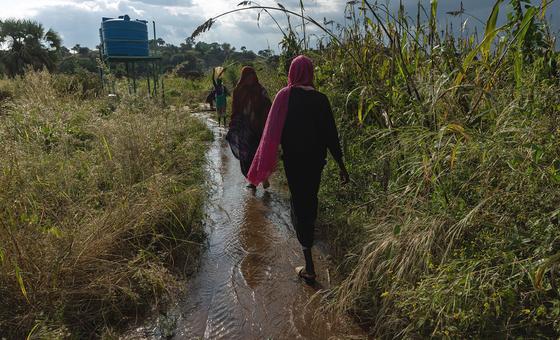
“We’re have people arriving on a daily basis from Sudan, from the Darfur regions…arriving in Chad, not able to be given any shelter.”

In an urgent appeal for flexible funding from donors, Ms. Hyde noted that up to 11.6 million refugees and others risk losing access this year to direct humanitarian assistance from UNHCR. The figure represents about one-third of those reached by the organization last year.

On the Sudan-Chad border, the UN agency is now unable to provide “even basic shelter” to more than six in 10 refugees fleeing the conflict. Thousands more vulnerable people have been left stranded in remote border locations in South Sudan, too. “If we just had a bit more support, we could get them to settlements,” she insisted.

Because of the funding cuts, basic activities have already been hit hard. These include refugee registration, child protection, legal counselling and prevention of and responses to gender-based violence.

Every aid sector hit

In South Sudan, 75 per cent of safe spaces for women and girls supported by UNHCR have closed, leaving up to 80,000 refugee women and girls without access to medical care, psychosocial support, legal aid, material support or income-generating activities. This includes survivors of sexual violence, UNHCR noted.

“Behind these numbers are real lives hanging in the balance,” Ms. Hyde said.

“Families are seeing the support they relied on vanish, forced to choose between feeding their children, buying medicines or paying rent, while hope for a better future slips out of sight. Every sector and operation has been hit and critical support is being suspended to keep life-saving aid going.”

Libya influx

Many of those impacted by the war in Sudan have taken the decision to move from Chad and Egypt to Libya, into the hands of people smugglers who dangerously overload boats with desperate people seeking to cross the Mediterranean Sea to Europe.

“What we’re observing now is that in terms of arrivals in Europe of…Sudanese refugees, [it] has increased since the beginning of the year by about 170 per cent compared to the first six months of 2024,” said UNHCR spokesperson Olga Sarrado.

Support slashed from Niger to Ukraine

In camps hosting Myanmar’s Rohingya refugees in Bangladesh, education for some 230,000 children could now be suspended. Meanwhile in Lebanon “UNHCR’s entire health programme is at risk of being shuttered by the end of the year”, Ms. Hyde continued.

In Niger and other emergency settings, cuts in financial aid for shelter have left families in overcrowded structures or at risk of homelessness. In Ukraine, financial aid has also been slashed, “leaving uprooted families unable to afford rent, food or medical treatment”, Ms. Hyde noted.

Assistance to returning Afghans has also become another victim of the global aid cuts. Around 1.9 million Afghan nationals have returned home or been forced back since the start of the year, “but financial aid for returnees is barely enough to afford food, let alone rent, undermining efforts to ensure stable reintegration”, UNHCR said.

Legal aid halted

Overall, several UNHCR operations hit by severe funding gaps have now had to curtail investments in strengthening asylum systems and promoting regularization efforts.

In Colombia, Ecuador, Costa Rica and Mexico, any prolonged lack of legal status means prolonged insecurity for people on the move, the UN agency said. This results in deepening poverty “as refugees are excluded from formal employment and greater exposure to exploitation and abuse,” Ms. Hyde explained.

Approximately one in three of the agency’s 550 offices around the world has been impacted by the cuts, Ms. Hyde told journalists in Geneva:

“We’re not in a position to do so much contingency planning; what we’re able to do is make decisions on priorities – and at this point the priorities as I mentioned are dramatic.”

For 2025 UNHCR needs $10.6 billion. Only 23 per cent of this amount has been provided.

“Against this backdrop, our teams are focusing efforts on saving lives and protecting those forced to flee,” Ms. Hyde said. “Should additional funding become available, UNHCR has the systems, partnerships and expertise to rapidly resume and scale up assistance.”
Source link

Shelter and safety elude Afghan women returnees from Iran and Pakistan

Since September 2023, more than 2.43 million undocumented Afghan migrants have returned from Iran and Pakistan.

Women and girls account for about half of the returnees from Pakistan, while their share among those returning from Iran has been steadily rising, reaching around 30 per cent in June.

The escalating pace of returns is straining Afghanistan’s overstretched humanitarian system, with women and girls bearing the brunt of the impact, reported the Gender in Humanitarian Action Working Group, a consortium of humanitarian actors led by UN Women and the UN reproductive health agency (UNFPA).

Vulnerabilities at the border

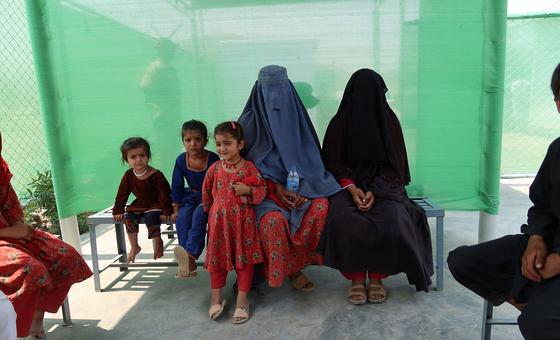
Women and girls are arriving with little protection or support.

“A tent would be my only protection. I have no appropriate clothes or hijab to wear, no food to eat, no contact number and no relatives to stay with,” one woman told UN Women at the border.

Those traveling without a mahram – a male guardian – face particular risks. Interviews and discussions conducted by Working Group revealed reports of extortion, harassment and threats of violence at border crossings.

“They took 6,000 rupees (about $21) and gave me only 2,000 back. Now, I do not know where to go with this money,” said a woman at Torkham. In Islam Qala, others reported “mistreatment and harassment…causing fear and distress.”

Heightened protection risks

Returnees face rising exposure to gender-based violence, early and forced marriage, trafficking and transactional sex – exacerbated by a lack of basic resources.

A humanitarian worker in Kandahar recounted: “A widow with four daughters was looking to see if she could sell one or two daughters to someone here to have money for survival.”

Humanitarian agencies report a critical shortage of safe spaces and Mental Health and Psychosocial Support Services (MHPSS), especially at border crossings, where many women arrive distressed and disoriented.

Shelter, livelihoods and education

Across provinces, women cite shelter, livelihoods and girls’ education as top needs.

“We need a place to stay, a chance to learn and a way to earn,” said a returnee woman in Nangarhar province.

Only 10 per cent of women-headed households live in permanent shelters, and nearly four in ten fear eviction. In Herat, 71 per cent of women reported rent disputes, and 45 per cent of women-headed households were living in inadequate housing.

“Many families lack sufficient financial resources to afford food and basic necessities,” said a woman in Herat.

Women who previously worked in trades such as tailoring or handicrafts now struggle to restart due to a lack of tools, restrictions on movement, and limited networks or documentation.

Looking ahead

With forced returns expected to continue, humanitarian agencies urge the scale-up of gender-responsive services, including safe spaces, mental health care, livelihood support and education access.

UN Women and its partners are calling for increased funding and sustained international support to meet the urgent and long-term needs of Afghan returnee women and girls.

Source link

New horror in Gaza as double strike on school shelter kills 30

The UN agency for Palestine refugees, UNRWA, maintained that Israeli forces hit the school in Al Bureij, Middle Gaza, at around 6pm on Tuesday and again at 10.20pm.

The school sustained severe damage and a fire broke out in the shelter, making it difficult to evacuate the casualties. Residents had to open a hole in the wall to evacuate the dead and wounded,” UNRWA told UN News.

Since the start of the war between Hamas and Israel on 7 October 2023, more than 400 schools have received a direct hit, according to satellite imagery analyzed by the UN.

Deadly aftermath

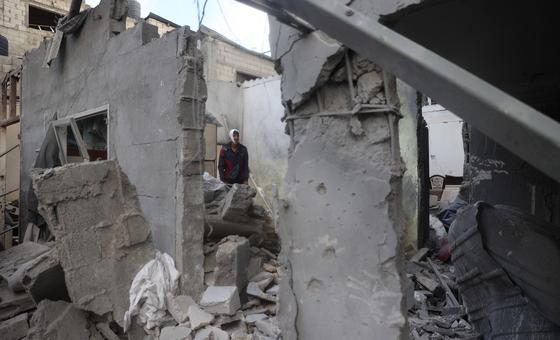
Footage from the scene provided by the UN agency showed walls and floors blown out in the main school building.

In the courtyard, hundreds of people can be seen standing amid crumpled metal sheeting on the morning after the attack, with rubble and wooden planks strewn around where their shelters had been standing just hours earlier.

“Our colleagues are reporting that surviving parents and children are trying to salvage their belongings among the blood and body parts of their relatives and neighbours,” UNRWA said.

The agency noted that fatalities included women and children, while search and rescue operations are ongoing for several people still missing.

Many of those living at the school when it was hit have been displaced “countless times” by the war, which began on 7 October 2023, following Hamas-led terror attacks on Israel, UNRWA stressed.

The attack also sparked a fire in an adjacent school where more tents and temporary shelters were burned and damaged.

Education destroyed

According to the UN Satellite Service, UNOSAT, 95.4 per cent of schools in Gaza have sustained damage since the start of the war.

Of the enclave’s 564 schools, 501 will either need full reconstruction or major rehabilitation work to be functional again.

“There is no humanity left in Gaza, and no humanity left as the world continues to watch day after day as families are bombed, burned alive and starved,” UNRWA said after the latest attack.

Failed strategy won’t work: Türk

In a related development, the UN human rights chief Volker Türk on Wednesday condemned Israel’s reported plans to forcibly transfer Gaza’s population to a small area in the south of the Strip.

The move fuels concern that Israel’s intention is to make life for Palestinians “increasingly incompatible with their continued existence in Gaza”, he said in a statement.

Surviving parents and children are trying to salvage their belongings among the blood and body parts of their relatives and neighbours – UNRWA

“There is no reason to believe that doubling down on military strategies, which, for a year and eight months, have not led to a durable resolution, including the release of all hostages, will now succeed,” insisted the UN High Commissioner for Human Rights.

Expanding the offensive on Gaza “will almost certainly cause further mass displacement, more deaths and injuries of innocent civilians, and the destruction of Gaza’s little remaining infrastructure”, he continued.

Rights experts warn of irreversible consequences

Escalating atrocities in Gaza mark a critical moral turning point and demand urgent international action, UN-appointed independent human rights experts said in a statement.

While States debate terminology – is it or is it not genocide? – Israel continues its relentless destruction of life in Gaza,” they warned, citing attacks by land, air and sea, and a soaring civilian death toll.

“No one is spared – not children, persons with disabilities, nursing mothers, journalists, health professionals, aid workers, or hostages,” they said, noting that on 18 March alone, 600 Palestinians were reportedly killed, 400 of them children. The independent experts are appointed by the Human Rights Council, are not UN staff members and receive no salary for their work.

Occupied West Bank update

In the occupied West Bank, meanwhile, UN aid teams warned of worsening conditions for Palestinian communities because of “violence by Israeli forces and settlers”.

The alert comes after Israeli forces on Monday demolished more than 30 structures in Khallet Athaba, a hamlet in Hebron governorate, displacing nearly a dozen families – or around 50 people.

“This constitutes most of the structures in the community and marks the third and largest demolition there since February,” said UN aid coordination office, OCHA. It noted that the area is designated by Israel as a military training zone.

In addition, Israeli forces also began demolishing six homes in Nur Shams refugee camp in Tulkarm on Monday, impacting 17 families. They are among more than 100 buildings slated for demolition, following an Israeli notice issued at the start of the month.

Forcible transfer fears

OCHA described how dozens of families in the camp were given little time on Monday to collect their belongings before their homes were demolished.

The agency highlighted the “strong push” to uproot Palestinians living in the area “once again raising concerns about the risks of forcible transfer of the population”.

Under international law, Israel as the occupying power, has the responsibility to protect Palestinians in the West Bank and ensure their safety and dignity, OCHA insisted.

Humanitarian partners are mobilizing assistance, but urgent international engagement is needed to stop these coercive measures and protect vulnerable communities, the UN aid office said.

Source link