Sevilla conference on development financing shows optimism for multilateralism

Today, a $4 trillion financing gap is hindering progress toward achieving the Sustainable Development Goals (SDGs) by the end of this decade.

In response, the Fourth International Conference on Financing for Development (FFD4) will take place in Sevilla, Spain, beginning on 30 June, bringing together stakeholders to advance solutions to the financing challenges threatening sustainable development.

“We’ve seen mounting debt burdens and declining investment, and we’ve seen reduced aid and growing trade barriers. The current system is certainly not delivering for the people it was designed to support,” said Deputy Secretary-General Amina Mohammed at a briefing on Wednesday about the conference.  

She was joined by Ambassador Héctor Gómez Hernández of Spain, and Ambassador Chola Milambo of Zambia.  

Role of stakeholders

More than 70 heads of state and government will attend the Conference, along with leaders of international financial institutions, civil society, philanthropies and the private sector, including those from energy, food systems and digital industries.

“The collective presence alone, I believe, sends a good signal for multilateralism at a time when we’re facing quite a bit of pushback,” said Ms. Mohammed.

Seville Commitment

On 17 June, Member States agreed on the Compromiso de Sevilla, or Seville Commitment, to adopt at the Conference.  

Ms. Mohammed stressed that the Commitment addresses the debt crisis in developing countries that are particularly vulnerable to financing shortfalls, as many spend more on debt interest than on essential services, straining the opportunity for sustainable development.  

Ambassador Milambo explained that this will be done through greater transparency, a global debt registry, and amplifying the voices of debtor countries.

It also aims to catalyse investment by tripling Multilateral Development Bank (MDB) lending, doubling Official Development Assistance (ODA) to developing countries, leveraging private sector investment and ensuring the international financing system is more inclusive and effective.

“This is an agenda that world leaders can do something about. They do have the tools – and the political clout – to make it happen,” said Ms. Mohammed.

Test of multilateralism

Ambassador Hernández emphasised that the Conference comes at a critical time for multilateralism.

“This conference is an appeal to action, and we have the extraordinary opportunity to send a very strong message to defend the international community’s commitment to the multilateral system,” he said.  

Ambassador Milambo later added that the consensus on the Seville Commitment “sends a real message of hope to the world that we can tackle the financing challenges that stand in the way of the SDGs and that multilateralism can still work.”

Despite the consensus, the United States recently announced it will not send a delegation to the Conference.

Speakers urged observers to keep the broader picture in mind: “It is regrettable, but it doesn’t stop us from continuing to engage with that Member State” and urge a change in the course of action, said Ms. Mohammed.

She concluded by noting that, especially given the recent agreement of the Commitment, the discussions the UN is having with other donors on how they are trying to use resources more efficiently will hopefully go a long way.  

Source link

What is financing for development?

These are part of 17 goals agreed by nearly every country, called the Sustainable Development Goals (SDGs). The plan is to hit these targets by 2030.

But we’re falling behind. One big reason? There just isn’t enough consistent funding to make real progress.

That’s why world leaders, economists, and other decision-makers are meeting at the end of this month in Sevilla, Spain, for a major event called the Fourth International Conference on Financing for Development. It’s being called a “once-in-a-decade opportunity” to rethink how the world pays for sustainable development.

What is financing for development?

At its core, financing for development works to answer a simple question – how does the world pay for a fairer and more balanced system of aid, trade and development? 

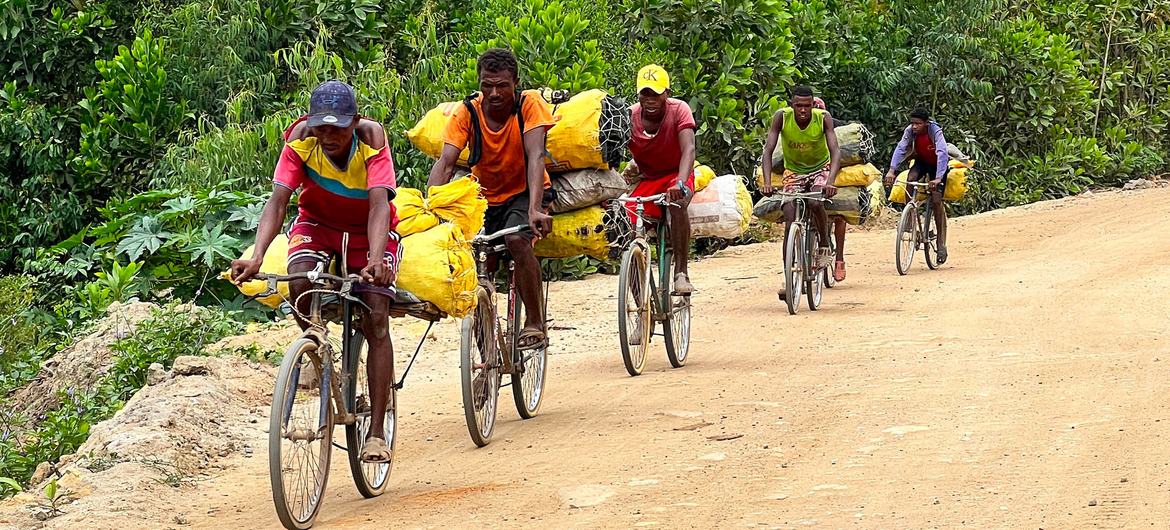
Traders in Madagascar. one of the most under-developed countries in Africa, transport charcoal to market.

The answer from the global community has been to create a system which mobilizes the entire international financial architecture – taxes, subsidies, trade, financial and monetary policies — towards the development agenda.

The architecture aspires to be as inclusive as possible, engaging a wide array of funding sources empowering countries to become more self-sufficient so their citizens can lead healthy, productive, prosperous and peaceful lives.

Financing for development is basically about “changing the way the system works to make it so that developing countries are able to…actually invest in their futures,” Shari Spiegel, Director of Financing for Sustainable Development at the UN’s Department of Economic and Social Affairs (DESA), told UN News

Among these sources of financing are multilateral development banks that provide financial and technical support to developing countries. Revised international and national trade and tax policies also work to jump-start developing economies.

And, official development assistance (ODA) creates a channel through which aid from developed countries can flow directly to developing countries.

Why is financing for development important? 

From rising debt and falling investment to shrinking aid and missed development goals, the current system is failing the people it is meant to serve. 

People everywhere are paying the price:

  • Debt is rising, investment is falling, and donor aid is shrinking.
  • 600 million people could still be living in extreme poverty by 2030 if we don’t change course and it will take many more decades to reach the SDGs.
  • Today, 3.3 billion people live in countries that spend more on paying off debt than on health or education.
  • Moreover, billions of people will continue to live in countries which must prioritize debt payments over development.
  • That means less money for schools, hospitals, clean water, and jobs – the  basics that people need to thrive.

And for the people who face the consequences of the world’s inaction, this is an unacceptable timeline.

What systemic changes need to be made?

With trade barriers growing and official development assistance decreasing annually, a business-as-usual approach to financing for development is unsustainable. 

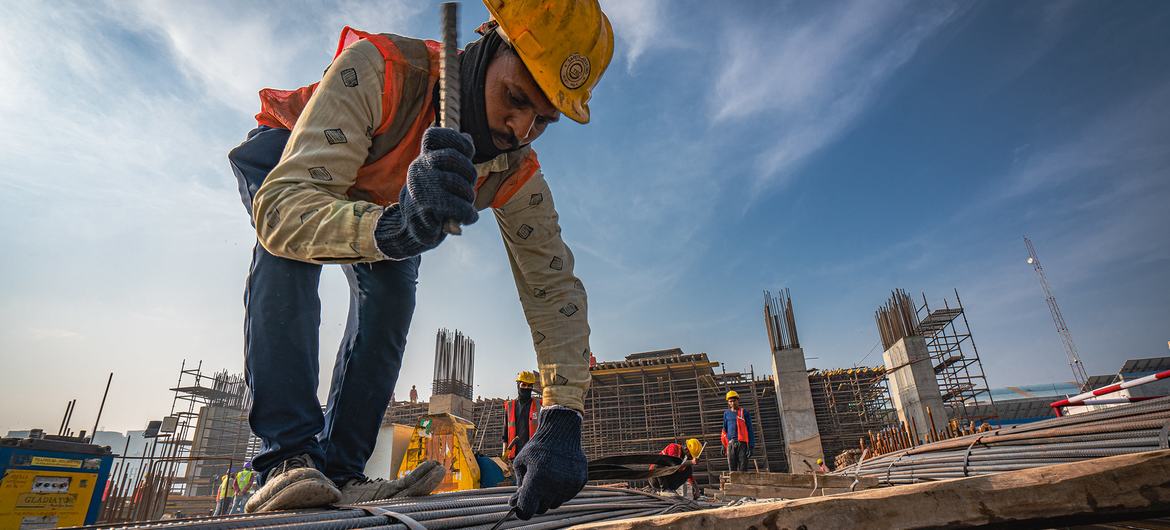
Work has begun on a rapid transit system connecting Delhi to Meerut in Uttar Pradesh, India.

The upcoming conference in Sevilla provides an opportunity to change course, to mobilize finance at scale and reform the rules of the system to put people’s needs at the centre.

The conference will bring together countries, civil society representatives and financial experts to discuss new approaches to financing for development.

Crucially, this conference will also give developing countries a seat at the table, so their needs are addressed in international financial decision-making. 

What role does debt play?

In the current financing system, developing countries continue to pay exorbitant amounts to service their debt while also facing borrowing costs which can be as much as two or four times higher than their developed counterparts.

These costs tend to rise especially during or directly after times of crisis, creating a feedback loop through which developing countries cannot afford to develop the very structures which would enable them to pay these costs.

“Faced with sky-high debt burdens and cost of capital, developing countries have limited prospects of financing the sustainable development goals,” the UN Secretary-General, António Guterres said. 

© UNICEF/Allessio Romenzi

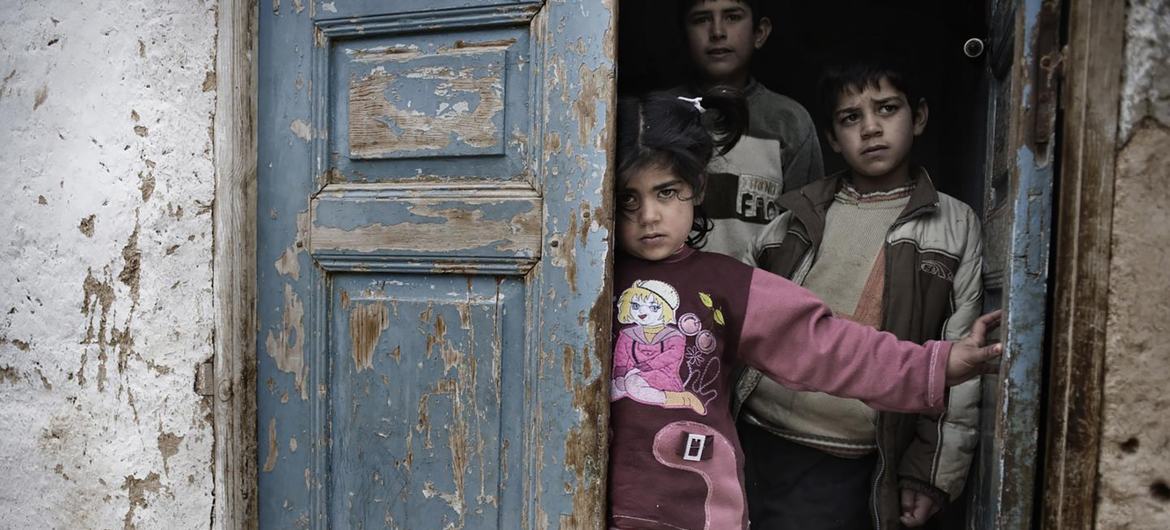
Children stand in the doorway of a home in a poverty stricken neighborhood in Lebanon. (file)

What can be expected from the conference?

The Secretary-General has said that it will take “big ideas” and “ambitious reforms” to get back on track to ending poverty, hunger and inequality.

“[The conference] presents a unique opportunity to reform an international financial system that is outdated, dysfunctional and unfair,” UN chief António Guterres has said.

Member States reached agreement on a draft which will launch an ambitious package of reforms and actions countries need to take to close the $4 trillion financing gap.

The United States pulled out of the conference process on Tuesday during final negotiations over the outcome document, saying that it couldn’t get on board with the draft. 

Reform will come in part from effectively mobilizing all stakeholders – private and public, formal and informal, developing and developed – and aligning their incentives and commitments towards a sustainable future.   

This includes emphasising multilateralism as the foundation of all development, increasing taxes which directs public funds towards international development goals, lowering the cost of capital for developing countries, restructuring existing debt and searching for even more innovative methods of finance.

“Sevilla is a moment in time. It’s really the beginning, not the end of the process. So now the question is, how do we implement the commitments?” said Ms. Spiegel.

Reforming a broken financing system is challenging but Ms. Spiegel is optimistic that multilateralism is up to the task. 

Source link

WHO warns of a health financing emergency

Speaking at the regular Friday press briefing in Geneva for humanitarian agencies, she warned that as wealthier nations make deep spending cuts, both international aid and national health systems are facing serious disruption.

Dr. Chalkidou highlighted recent decisions by the United States, several European governments, and EU bodies to freeze or scale down health aid.

WHO forecasts indicate that global health investment is likely to drop by up to 40 per cent this year, down $10 billion from just over $25 billion in 2023. The estimated $15 billion spent on health aid would bring the figure down to the lowest level in a decade.

Impacts in developing countries

This funding shortage is creating a health finance emergency in many developing countries – particularly in sub-Saharan Africa – which depend on external aid to finance their health systems.

In numerous countries, US-financed healthcare programmes were the primary source of external aid, accounting for as much as 30 per cent of current health spending in countries like Malawi, and around 25 per cent in Mozambique and Zimbabwe.

Since 2006, external aid per capita in low-income countries has consistently exceeded domestic health spending.

Many sub-Saharan nations face soaring debt burdens – some spending twice as much on debt servicing as on health – making reallocation of resources difficult.

The consequences are severe: Dr. Chalkidou referred to a survey by WHO showing that countries today are reporting health service disruptions “not seen since the peak of COVID-19”.

Solutions

To address this crisis, WHO is urging countries to reduce aid dependency, boost revenue through improved taxation—including health taxes on products like tobacco and alcohol—and work with multilateral banks to secure low-interest loans for cost-effective health investments.

WHO also plans to attend the upcoming International Conference on Financing for Development in Seville, where global leaders are expected to address the health financing crisis and hopefully make new commitments.