Myanmar begins defence in landmark genocide case at UN World Court


Addressing judges in The Hague, Ko Ko Hlaing, speaking as Myanmar’s agent, said his country fully recognizes the importance of the 1948 Convention on the Prevention and Punishment of the Crime of Genocide but firmly denies breaching its obligations under international law.

“A finding of genocide would place an indelible stain on my country and its people,” he said, describing the proceedings as “of fundamental importance for my country’s reputation and future.”

Mr. Hlaing accused the applicant of relying on what he called rudimentary and partisan, including reports by a fact-finding mission, “which are neither reliable nor objective, and were a condemnation without trial of Myanmar.”


UN Photo/ICJ-CIJ/ Frank van Beek

Ko Ko Hlaing, Agent of Myanmar, addresses judges at the International Court of Justice (ICJ) in The Hague.

Myanmar acted against terrorists

Myanmar also rejected claims that its military’s so-called “clearance operations” in northern Rakhine state in 2016 and 2017 were genocidal in intent, maintaining they were counter-terrorism operations launched in response to attacks by the armed groups.

“Obviously, Myanmar was not obliged to remain idle and allow terrorists to have free rein of northern Rakhine state,” Mr. Hlaing told the Court, while acknowledging that civilians were killed and large numbers of people fled to Bangladesh as a result of the clashes.

He further disputed allegations that Myanmar denies the existence or rights of the Muslim population in northern Rakhine state, arguing that questions of citizenship, terminology and identity “have nothing to do with genocide.”

Myanmar said it has complied with all procedural orders of the Court, including provisional measures issued in January 2020, and has submitted regular reports on steps taken.

It also reiterated its stated commitment to the repatriation of displaced people from Bangladesh, citing bilateral agreements and delays caused by the COVID-19 pandemic and natural disasters.

The case before the ICJ

The case stems from an application filed by Gambia in November 2019, accusing Myanmar of violating the Genocide Convention through acts allegedly committed during military operations in Rakhine state.

Those operations escalated in 2017, forcing more than 700,000 Rohingya to flee to Bangladesh amid widespread killings, sexual violence and village burnings, according to UN investigations. Nearly one million Rohingya remain refugees in Bangladesh.

The hearings, which will continue through late January, mark the first time the Court is examining the merits of the case. The Court’s final judgment, which could take months after the hearings conclude, will be legally binding.


Once-in-a-decade push for the ‘locked out’: Global leaders set for landmark UN conference in Turkmenistan

Backed by the new Awaza Programme of Action, the Third UN Conference on Landlocked Developing Countries or LLDC3 will push for freer transit, smarter trade corridors, stronger economic resilience and fresh financing to lift development prospects for the 570 million people living in those countries.

For landlocked nations, geography has long dictated destiny.  

Trade costs are up to 74 per cent higher than the global average and it can take twice as long to move goods across borders compared to coastal countries. As a result, landlocked nations are left with just 1.2 per cent of world trade.

UN Video | What to expect from LLDC3 in Awaza, Turkmenistan

And amid global economic shifts, these countries face the huge risk of being left behind.

LLDC3 is a pivotal opportunity to reverse this trajectory,” said Rabab Fatima, UN High Representative for Landlocked Developing Countries.

At its heart, this conference is about people – it is about the millions of children who lack internet or digital tools, the farmers who cannot get their goods to market because of poor roads, and the entrepreneurs whose dreams are held back by border delays and limited access to funding.

Broad engagement

The four-day event, from 5 to 8, August will feature plenary sessions, five high-level roundtables, and a Private Sector Forum focused on building partnerships and boosting investment.  

Dedicated forums with parliamentarians, women leaders, civil society and youth will bring voices from across society into the heart of the discussions.

UN Secretary-General António Guterres is expected to attend, underlining the urgency of the agenda.

World Bank/Curt Carnemark

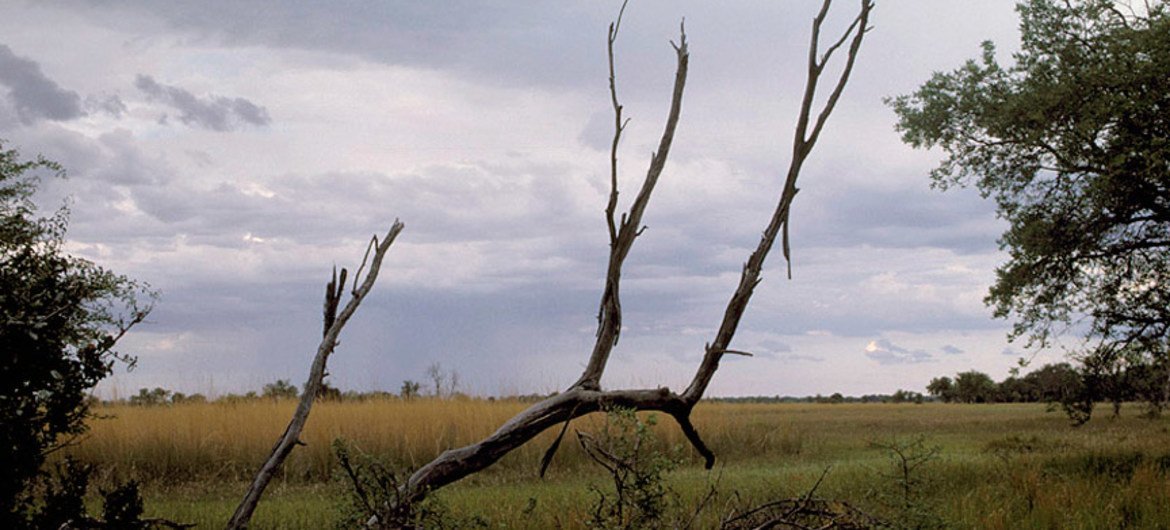
Many landlocked countries, such as Botswana (pictured) are also on the frontlines of the impact of climate change, highlighting their vulnerability.

The Awaza Programme of Action

Central to the conference is the Awaza Programme of Action for 2024-2034, adopted by the UN General Assembly in December.  

It lays out five priority areas – structural transformation, infrastructure and connectivity, trade facilitation, regional integration, and resilience building – supported by five flagship initiatives.  

These include:

  • A global infrastructure investment facility to close financing gaps.
  • Regional agricultural research hubs to boost food security.
  • A high-level UN panel on freedom of transit, ensuring smoother cross-border flows.
  • Digital connectivity initiatives to bridge the digital divide.
  • A dedicated landlocked developing countries trade work programme at the WTO.

© UNICEF/Giacomo Pirozzi

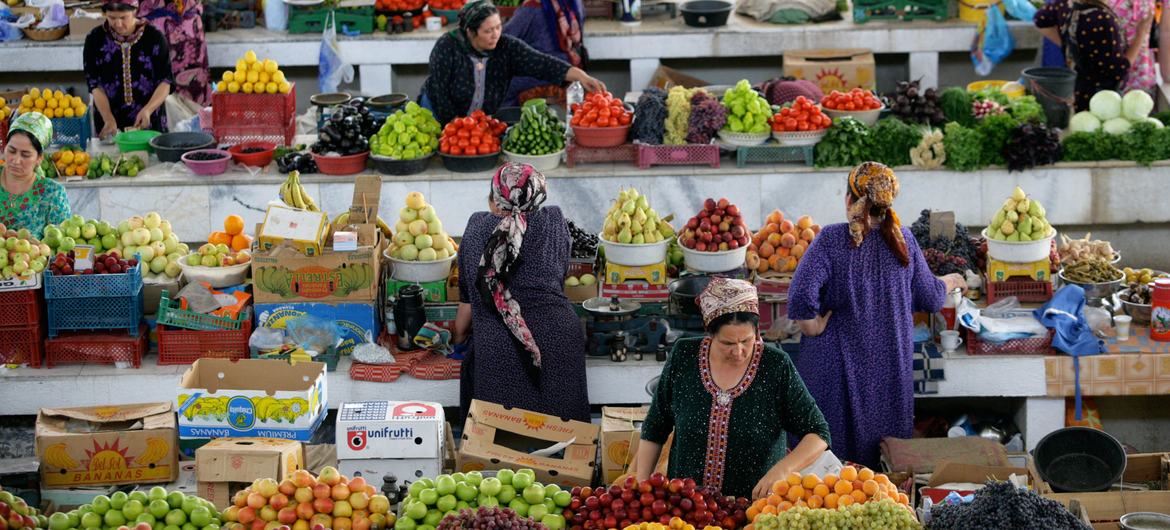
Women shop at a vegetable market in Ashgabat, the capital of Turkmenistan. Boosting food security is one of the priority areas of the Awaza Programme of Action.

Turkmenistan

For Turkmenistan, hosting LLDC3 is both a diplomatic milestone and a statement of intent.

We are proud to host it on the Caspian Sea coast in Turkmenistan,” said Aksoltan Ataeva, Ambassador and Permanent Representative to the UN.

We look forward to welcoming [everyone] to Awaza for a transformative, action-oriented conference that puts landlocked countries at the heart of global partnerships.

Organizers promise state-of-the-art facilities, cultural showcases and networking spaces designed to spur collaboration. Delegates will also experience Turkmen heritage firsthand, from local art to Caspian cuisine.

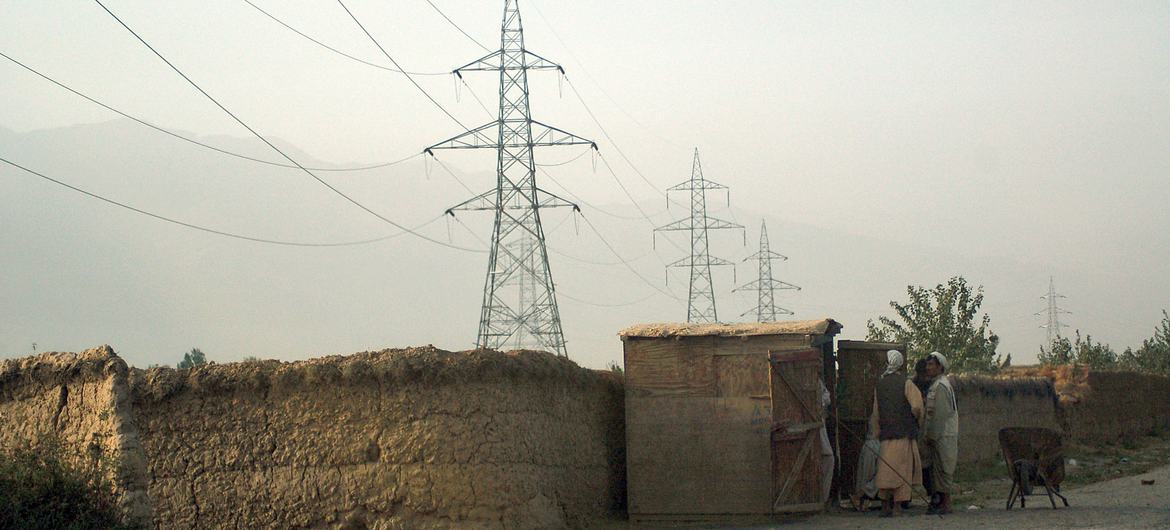
Cross-border infrastructure, such as these power lines, are crucial connections linking LLDCs with the regional and global electric grids.

The bigger picture

For the landlocked developing countries, the stakes are existential.  

These countries are among the most climate-vulnerable, least connected and furthest from global value chains. Without bold action, progress on the 2030 Agenda for Sustainable Development will remain out of reach.

The destiny of humanity is inseparably linked to the destiny of these countries,” said Diego Pacheco, Ambassador of Bolivia, who currently chairs the LLDC Group at the UN.

Together, we can unlock the potential of landlocked developing countries – not just for the benefit of our nations, but for the shared future of all humanity and the Mother Earth.

As the countdown to Awaza begins, expectations are high – not about whether geography matters (it does), but whether global solidarity can transcend its limits.

LLDC3 aims to prove that it can.

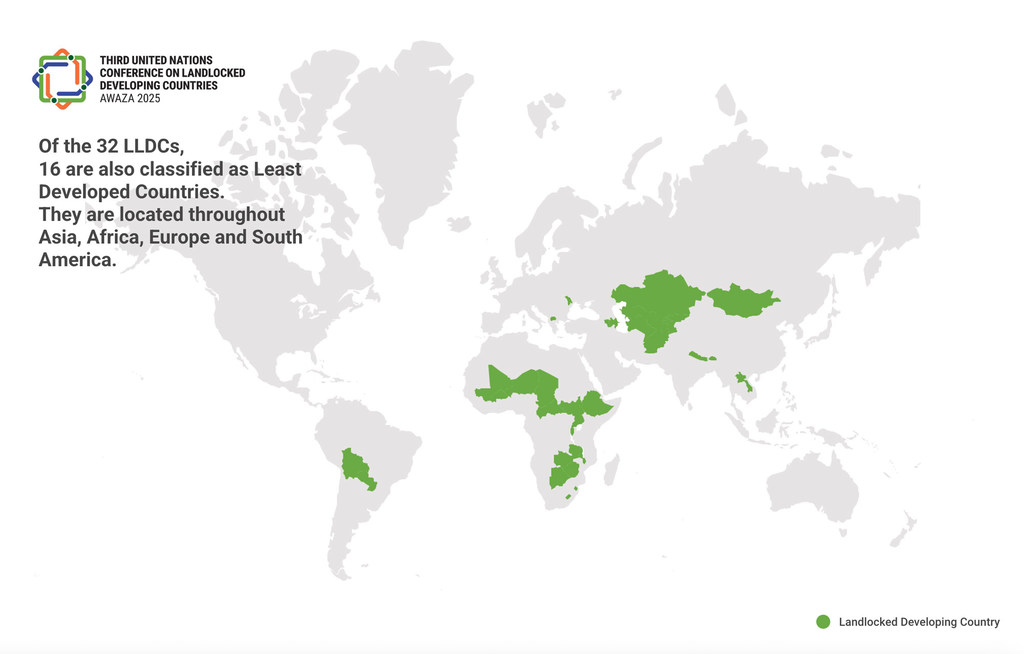
There are 32 landlocked developing countries, of which 16 are also least developed.

Source link

Ahead of UN summit, countries finalise landmark ‘Compromiso de Sevilla’

On Tuesday, Member States at UN Headquarters endorsed the finalized outcome document, known as the Compromiso de Sevilla (the Seville Commitment), following months of intensive intergovernmental negotiations.

It is intended as the cornerstone of a renewed global framework for financing sustainable development, particularly amid a widening $4 trillion annual financing gap faced by developing countries.

A reinvigorated framework

Co-facilitators of the outcome document – Mexico, Nepal, Zambia and Norway – hailed the agreement as an ambitious and balanced compromise that reflects a broad base of support across the UN membership.

“This draft reflects the dedication, perseverance, and constructive engagement of the entire membership,” said Ambassador Alicia Buenrostro Massieu, Deputy Permanent Representative of Mexico.

“Sevilla is not a new agenda. It is a strengthening of what already exists. It renews our commitment to the Addis Ababa Action Agenda and aligns fragmented efforts under a single, reinvigorated framework,” she added.

Nepal’s Ambassador Lok Bahadur Thapa called the outcome a “historic opportunity” to confront urgent financing challenges.

“It recognizes the $4 trillion financing gap and launches an ambitious package of reforms and actions to close this gap with urgency,” he said, highlighting commitments to boost tax-to-GDP ratios and improve debt sustainability.

Opening of third International Conference on Financing for Development, in 2015, which adopted the historic Addis Ababa Action Agenda.

United States withdrawal

The agreement came despite sharp divisions on several contentious issues, culminating in the United States decision to exit the process entirely.

“Our commitment to international cooperation and long-term economic development remains steadfast,” said Jonathan Shrier, Acting US Representative to the Economic and Social Council.

“However, the United States regrets that the text before us today does not offer a path to consensus.”

Mr. Shrier voiced his country’s objection to proposals in the draft, which he said interfered with the governance of international financial institutions, introduced duplicative mechanisms, and failed to align with US priorities on trade, tax and innovation.

He also opposed proposals calling for a tripling of multilateral development bank lending capacity and language on a UN framework convention on international tax cooperation.

Renewal of trust

Under-Secretary-General for Economic and Social Affairs Li Junhua welcomed the adoption of the document, calling it a clear demonstration that “multilateralism works and delivers for all.”

He praised Member States for their flexibility and political will in finalizing the agreement, despite challenges.

“The FFD4 conference presents a rare opportunity to prove that multilateralism can deliver tangible results. A successful and strong outcome would help to rebuild trust and confidence in the multilateral system by forging a renewed financing framework,” Mr. Li said.

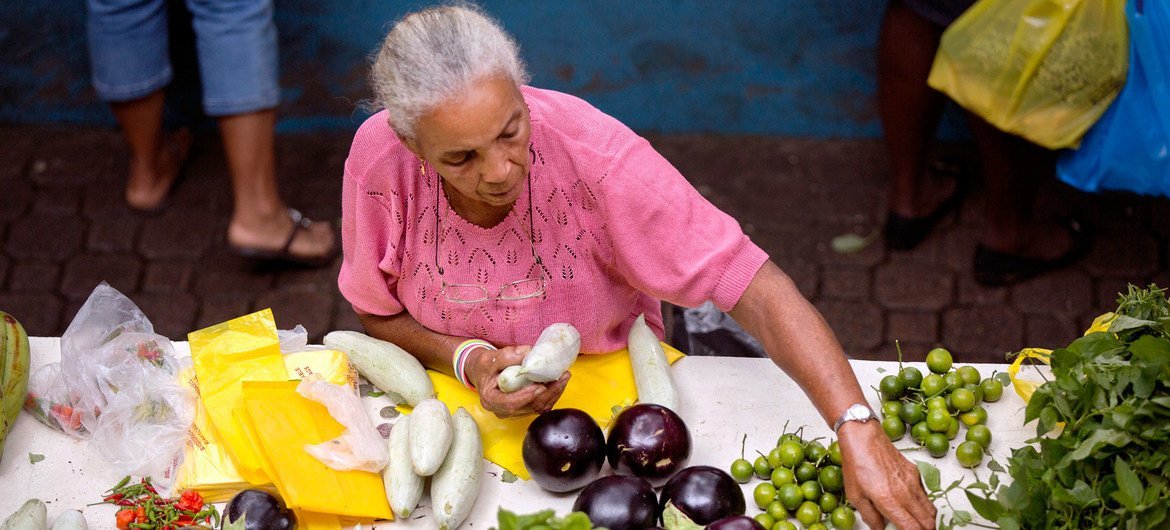
A woman sells vegetables in a market in Seychelles. Despite ongoing efforts, progress toward achieving several SDGs — including those on women’s empowerment – remains off track for 2030.

For the common good

The Sevilla conference, to be held from 30 June to 3 July will mark the fourth major UN conference on financing for development, following Monterrey (2002), Doha (2008) and Addis Ababa (2015).

It is expected to produce concrete commitments and guide international financial cooperation in the lead-up to and beyond the 2030 deadline of the Sustainable Development Goals (SDGs).

“We firmly believe that this outcome will respond to the major challenges we face today and deliver a real boost to sustainable development,” said Ambassador Thapa of Nepal.

Source link

Pandemics to pollution: WHO Assembly delivers landmark health decisions

In addition, the Assembly endorsed a wide range of measures to promote health equity, reduce air pollution, and strengthen protections for vulnerable populations.

The words ‘historic’ and ‘landmark’ are overused, but they are perfectly apt to describe this year’s World Health Assembly,” WHO Director-General Tedros Adhanom Ghebreyesus said at the Assembly’s closing, ending nine days of intense debate and decisions.

The centrepiece of the Assembly’s outcomes was the WHO Pandemic Agreement, adopted on 20 May after more than three years of negotiations.

The agreement, seen as a once-in-a-generation opportunity to improve global preparedness and response to future pandemics, aims to strengthen international coordination, enhance equity in access to medical tools and ensure that no country is left behind in future health crises.

A key next step will be consultations on access to pathogen and benefit-sharing, which seeks to guarantee equitable sharing of medical countermeasures derived from pathogens.

Boost for WHO budget

Another major outcome was the approval of a 20 per cent increase in assessed contributions – the core, mandatory funding from Member States that underpins WHO’s work.

By 2030-2031, these contributions will cover 50 per cent of the agency’s core budget, a crucial step toward financial sustainability.

Health leaders also pledged at least $210 million to WHO’s ongoing Investment Round, adding to the $1.7 billion already raised and expanding the agency’s donor base.

A healthier world

The Assembly also delivered a sweeping slate of resolutions addressing a wide range of health challenges.

For the first time, nations adopted global resolutions on lung and kidney health, aligning with the growing recognition of noncommunicable diseases as a global priority.

Countries also set an ambitious new target to halve the health impacts of air pollution by 2040 and in an innovative move, adopted a resolution on social connection, acknowledging mounting evidence linking social isolation to poor health outcomes.

They also endorsed measures to combat the digital marketing of formula milk and baby foods, and addressed rare diseases, a lead-free future and the eradication of Guinea worm disease.

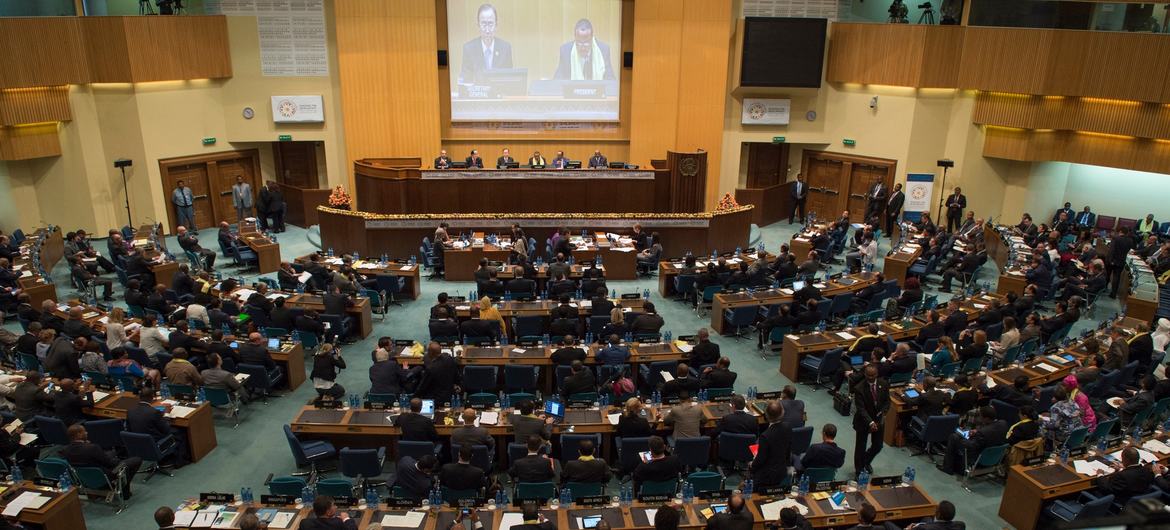
Delegates meeting in a committee at the 78th World Health Assembly.

History is made

In conclusion, Director-General Tedros urged countries to continue the momentum beyond the Assembly, highlighting the spirit of cooperation and commitment to health for all.

You, the nations of the world, made history,” he said.

“Yes, there is conflict in our world, but you have shown that there is also cooperation. Yes, there is inequity, but you have shown a commitment to equity. Yes, there is disease, but you have shown a commitment to health – health for all.”

World News in Brief: South Sudan urged to avoid slide to war, Türk calls on EU not to weaken landmark law, Ukraine and Mali updates

The Quartet is calling on the country’s leaders to end hostilities and return to dialogue to fully implement the 2018 peace agreement known as the Revitalized Agreement on the Resolution of the Conflict in the Republic of South Sudan (R-ARCSS).

South Sudan, the world’s youngest nation, gained independence in 2011 but soon descended into a brutal civil war. A 2018 peace agreement has held together but now threatens to fully unwind between the president and his vice presidential rival.

Regional pressure

In recent weeks, the Quartet has observed air and ground attacks that have led to loss of life, the destruction of homes, and the displacement of civilians. Humanitarian facilities have also been targeted, while hate speech and ethnic tensions are on the rise.

The Quartet welcomed a recent joint visit by the African Union and IGAD to South Sudan as a sign of regional support for peace. It also called on all sides to cooperate with ceasefire monitors investigating recent violence.

South Sudan’s leaders must commit to inclusive dialogue, the release of political detainees, and renewed efforts to carry out the peace deal, the Quartet stressed.

A return to war would betray the people’s hope for peace and stability, they warned. Only a political solution can ensure free and fair elections at the end of the current transitional period.

UN rights chief urges EU not to weaken landmark corporate responsibility law

UN human rights chief Volker Türk has called on the European Union to protect a key law that holds large companies accountable for human rights and environmental harm.

The EU’s Corporate Sustainability Due Diligence Directive (CSDDD), adopted last year, requires businesses to identify and address any negative impact their activities may have on people or the planet.

But changes now being discussed in Brussels as part of a broader reform package could weaken the law, Mr. Türk warned on Wednesday.

“The CSDDD, by far the most ambitious business and human rights regulatory initiative anywhere in the world, has rightly been welcomed by companies, policy makers, civil society, and national human rights institutions alike,” he said.

“A large number of businesses have already taken steps to ensure they comply with it.”

Detailed review

UN human rights office, OHCHR, has published a detailed review of the EU proposal, pointing to ways it could undermine this groundbreaking directive.

Mr. Türk urged lawmakers to keep the law in line with global standards, such as the UN Guiding Principles on Business and Human Rights.

“While some streamlining… could be advantageous, it would be counterproductive to water down its alignment with international standards,” he said.

April deadliest month for civilians in Ukraine since September

April was the deadliest month for civilians in Ukraine since September 2024, with at least 209 people killed and 1,146 injured, the UN Human Rights Monitoring Mission in Ukraine (HRMMU) reported on Wednesday.

In its monthly update, the Mission said that 97 per cent of casualties occurred in areas controlled by Ukraine, with nearly half caused by missile and loitering munitions attacks by Russian forces.

“Kryvyi Rih, Sumy, Dnipro, Zaporizhzhia, Kyiv, and Kharkiv all endured devastating attacks,” said Danielle Bell, Head of HRMMU. “The sharp rise in casualties was mainly due to the intensified use of ballistic missiles in major cities.”

Among the deadliest incidents:

  • On 4 April, a missile strike on Kryvyi Rih killed 20 civilians and injured 63.
  • On Palm Sunday (13 April), two missiles hit Sumy, killing at least 31 and injuring 105.
  • A 24 April attack on Kyiv killed 11 and injured 81.

Children were especially affected. At least 19 were killed and 78 injured in April – the highest monthly total since June 2022.

The wave of attacks continued into May, with cities including Kharkiv, Odesa and Kyiv again coming under fire.

UN experts raise alarm over Mali’s suspension of political parties

Independent UN human rights experts have strongly criticised Mali’s military authorities for suspending all political parties and activities, calling the move a clear violation of basic rights.

© MINUSMA/Harandane Dicko

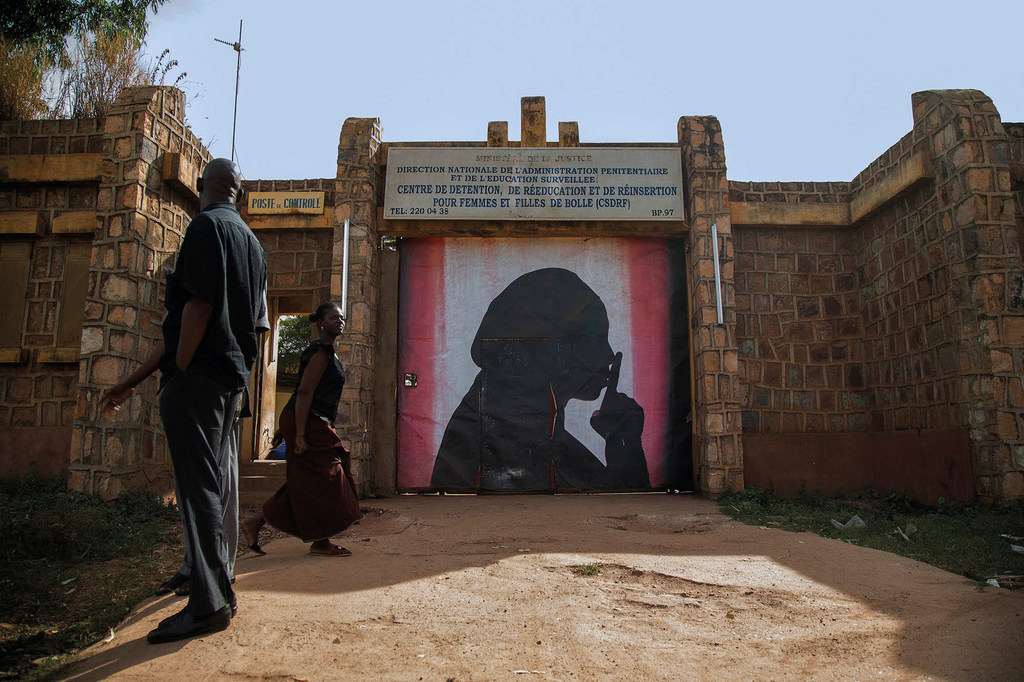
A detention centre in Bamako, Mali. (file)

The decision, announced on 7 May via state television, halts political activity “until further notice.” The junta, which took power following coups in 2020 and 2021, said the suspension was necessary to maintain public order.

The three UN Human Rights Council-appointed experts described it as a direct violation of human rights and called for the order’s immediate repeal.

They also called on the National Transitional Council to strike down a bill introduced on 30 April, which repealed legislation governing how political parties operate.

“If passed into law, the 30 April bill will place Mali in contravention of its human rights obligations, notably on freedoms of association and expression,” the experts stressed.”

Protests

In response to the 30 April bill, opposition parties organised a pro-democracy rally in the capital Bamako on 3 May which drew hundreds of demonstrators. The parties reportedly demanded a timeline to end military rule and a return to constitutional order.

Another protest is planned for Friday to oppose the decree against political parties.

The experts said Malian authorities must work to counteract “the current climate of suppression of the civic space”.

“The right to peacefully assembly is essential to the health of a vibrant political community,” the experts said. “The Malian Transitional authorities must scrupulously respect it and abstain from acts of intimidation and repression that risk the physical integrity and the rights of demonstrators.”

Special Rapporteurs and Independent Experts are appointed by the Geneva-based Human Rights Council. They serve in their individual capacity, independent of the UN system and national governments. They are not UN staff and draw no salary


Source link