The Sevilla Commitment: A vital step to rebuild trust in global cooperation

Activists, many from the Global South, attending the talks in Spain, are calling for greater leadership and commitment from wealthier nations to help address long-standing structural inequalities.

The 4th International Conference on Financing for Development (FFD4) carries strong symbolic weight, reflected in the agreed priorities of the Sevilla Commitment.

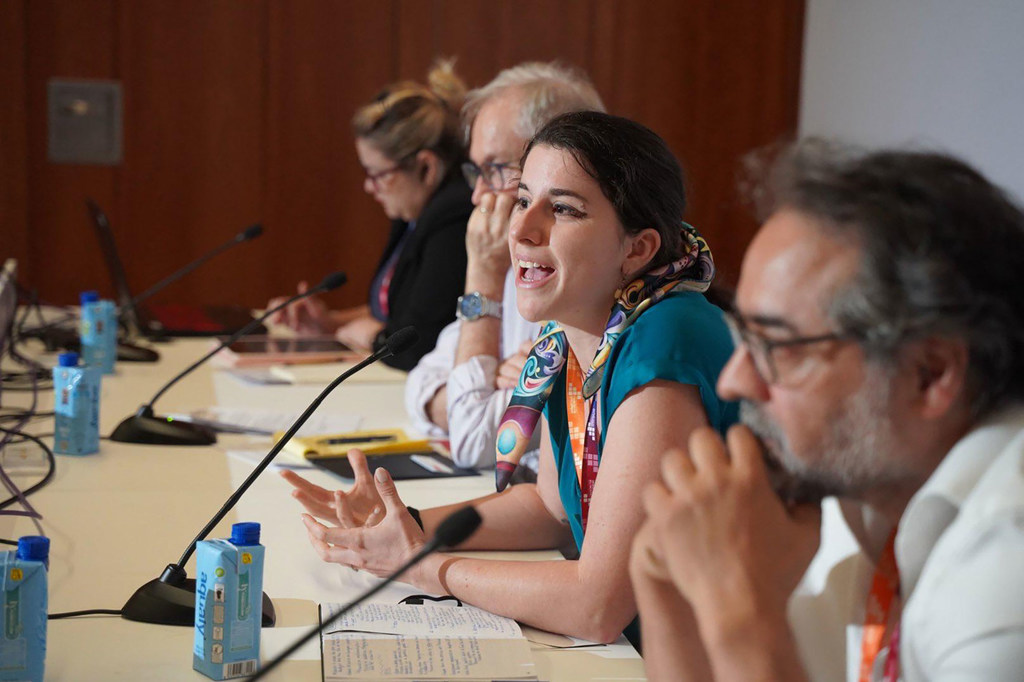
Courtesy of Paula Sevilla

Paula Sevilla, International Institute for Environment and Development.

However, organizations warn that there is still a long way to go before promises translate into tangible action.

Good timing

That is the message from Paula Sevilla, a representative of the International Institute for Environment and Development (IIED) – a London-based research centre – who has worked for decades on sustainability and climate justice in Latin America, Africa, and Asia.

“This summit has come at a crucial time to try to restore faith in international cooperation, especially after the pandemic, which exposed a lack of global solidarity,” she stated.

One of IIED’s main goals in Sevilla has been to ensure that the announced financial commitments actually reach local communities at the forefront of the climate crisis.

To that end, the organization emphasizes the need to address issues such as external debt – draining public budgets – and to support innovative mechanisms like blended finance to direct resources to those who need them most.

“We’re seeing countries spend more on debt payments than on healthcare or education, while inequalities are deepening,” the expert warned, speaking shortly after a respectful but forceful protest inside the conference centre.

A place to call home

Housing solutions linked to sustainable development are notably absent from the summit’s final document.

“It’s regrettable that it’s not even mentioned, at a time when we are facing a global cost-of-living crisis – not only in the Global South but also here in Spain. Housing is a source of anguish and distrust among citizens, and it has been completely ignored,” Ms. Sevilla said.

Despite this, her organization is working to leverage the Sevilla outcome to find ways to channel funding into providing more affordable homes.

Commenting on the initiative led by Spain and Brazil to work towards fair taxation and push back against tax avoidance by the world’s richest – promoting more transparency and accountability – the IIED representative said it could be a useful path toward correcting structural inequalities.

Tax for development

We need leadership from the Global North, where many of the world’s major tax-avoiding corporations are based. Without their commitment, we won’t move forward,” she stated.

She also criticized the absence of the United States from the summit – not  only as a diplomatic setback but also as a worrying precedent following the dismantling of its international development agency, USAID.

“We’re talking about people counting their pills to figure out how many days of life they have left. This is dramatic,” she emphasised.

With just five years remaining to meet the Sustainable Development Goals, Ms. Sevilla warned that time is running out – and that the Sevilla Commitment will be meaningless without real change.

We need political leadership, a will to cooperate, and a commitment to protect democratic space. In the end, it’s organized people who keep hope alive and hold leaders accountable,” Sevilla concluded.

The Sevilla Commitment in brief:

  • The Sevilla Commitment sets out a new global roadmap to raise the trillions of dollars needed each year to achieve sustainable development, building on previous international agreements
  • It calls for fairer tax systems, cracking down on tax evasion and illicit financial flows, and strengthening public development banks to support national priorities
  • The agreement highlights the need for new tools to ease debt pressures on vulnerable countries, including debt-swap schemes, options to pause payments during crises, and better transparency
  • Countries committed to boosting the capacity of multilateral development banks, increasing the use of special drawing rights, and attracting more private investment to support development
  • It also aims to make the global financial system more inclusive and accountable, with improved coordination, stronger data systems, and broader participation from civil society and others

The Commitment launches the Sevilla Platform for Action, which includes over 130 initiatives already underway to turn the pledges into real-world results.

Source link

Gaza: UN relief chief welcomes growing support for aid teams to resume vital work

We value the support of more and more Member States who are joining our call: Let us work,” Mr. Fletcher said, his comments coinciding with the announcement that the US and Israeli-backed aid hub in southern Gaza operating independently of the UN had been suspended on Wednesday.

“The world is watching, day after day, horrifying scenes of Palestinians being shot, wounded or killed in Gaza while simply trying to eat,” Mr. Fletcher said.

New Security Council resolution

The development comes ahead of a Security Council meeting on Gaza on Wednesday seeking agreement on a draft resolution calling for an immediate ceasefire and the release of all remaining hostages taken during Hamas-led terror attacks in Israel on 7 October 2023.

The resolution push is the result of lobbying by the body’s 10 non-permanent Members. It remains to be seen if it will garner the support of the US and the four other countries that hold just five permanent seats on the 15-Member body: China, France, the UK and Russia. Any one of them could veto it.

Meanwhile in Gaza, local authorities on Wednesday claimed that at least 12 people including children had been killed in an Israeli strike on a school-turned-shelter in the southern city of Khan Younis.

In his appeal, Mr. Fletcher noted that medical teams had confirmed treating “hundreds of trauma cases” in recent days after footage showed chaotic scenes of Palestinians rushing to take food from the US and Israeli-run aid hubs in southern Gaza.

Yesterday alone, dozens were declared dead at hospitals after Israeli forces said they had opened fire,” Mr. Fletcher continued.

He insisted: “Open the crossings – all of them. Let in lifesaving aid at scale, from all directions. Lift the restrictions on what and how much aid we can bring in. Ensure our convoys aren’t held up by delays and denials.”

Countries set to adopt ‘vital’ pandemic preparedness accord

The stakes are high for this year’s World Health Assembly, the UN’s premier health forum, where officials will tackle a sweeping agenda – from pandemic readiness and climate-related health risks to mental health, maternal care, and environmental justice. But with geopolitical tensions running high, international collaboration on these and other vital issues will be tested.

Here are some of the key areas set to dominate discussion:

1. ‘Cautious optimism’: Signing off on a pandemic accord

The COVID-19 pandemic showed that there are stark inequities in access to diagnostics, treatments, and vaccines, both within and between countries. Healthcare services were overwhelmed, economies were severely disrupted and nearly seven million lives were lost.

This was the motivation for countries to come together to work on an accord to ensure that the world handles the next pandemic in a fairer and more efficient way. When the delegates arrive in Geneva on Monday 19 May, they will thrash out the text of the agreement, which Tedros Adhanom Ghebreyesus, the head of the World Health Organization (WHO), described as “vital for future generations.”

If the agreement is adopted, it will be a major breakthrough in the way the world handles pandemics and health crises. Negotiations, though, remain politically delicate: several nations, including the United States, have raised concerns about national sovereignty and intellectual property rights. Still, in recent weeks, Dr. Tedros has expressed “cautious optimism” that consensus can be reached.

A woman wearing a mask, Malawi.

2. Climate Change: An existential threat

The climate crisis isn’t just about rising temperatures – it’s putting lives at risk. Extreme weather and disease outbreaks are on the rise, threatening the health of millions. An action plan created by WHO calls for climate and health policies to work together, strengthens resilience, and ensures funding to safeguard vulnerable communities.

A draft version of the plan was released following a resolution adopted at the 2024 conference and, this year, delegates are expected to finalise the draft, which includes strategies to adapt to and mitigate climate-related health risks.

3. Health for all: Getting universal health care back on track

Ensuring that all people have affordable access to the full range of quality health services they need is one of the Sustainable Development Goals (SDGs), which all UN Member States signed up to in 2015. However, the health target is way off track: in fact, improvements to health services have stagnated over the last ten years.

Nevertheless, universal health care (UHC) will be a top priority at the Assembly, where delegates will discuss strategies to strengthen primary healthcare systems, secure sustainable financing and provide care for vulnerable populations.

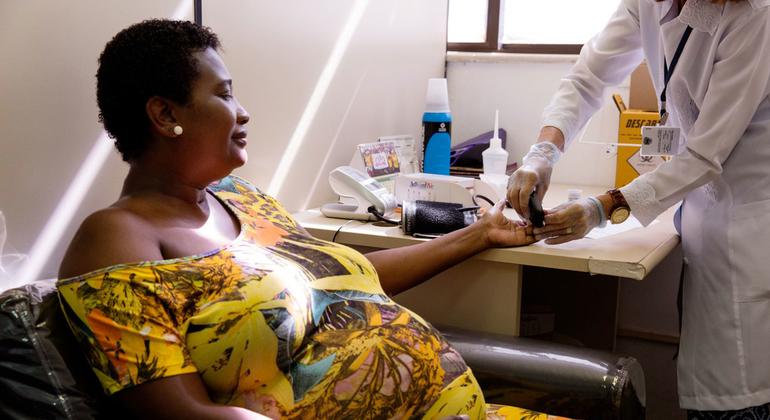
© WHO/Panos/Eduardo Martino

4. Healthy Beginnings: Maternal and newborn health

Close to 300,000 women lose their life due to pregnancy or childbirth each year, while over two million babies die in their first month of life In April, WHO launched a year-long campaign to end preventable maternal and newborn deaths.

Titled “Healthy beginnings, hopeful futures,” it will urge governments and the health community to ramp up efforts to end preventable maternal and newborn deaths, and to prioritize women’s longer-term health and well-being.

Expect new targets and renewed commitments to end preventable deaths to be announced at the Assembly.

5. Closing the gaps: Noncommunicable diseases

Noncommunicable diseases (NCDs), such as heart disease, cancer, and diabetes, kill tens of millions of people each year. Around three-quarters of those deaths are in low and middle-income countries.

Many lives could be saved if more countries had strong national responses, providing detection, screening and treatment, as well as palliative care.

In preparation for a WHO meeting on NCDs and mental health in September, delegates will review the way the UN health agency collaborates with governments, civil society, and the private sector to prevent and control these diseases, and address ways to improve access to essential medicines and health technologies.

6. Getting the finances in order

This year has been described as one of the most challenging ever at the UN, which is being buffeted by extreme pressures on its finances. The US, a major donor announced that it would be leaving WHO in January, and other countries have also cut development and aid funding.

This year’s Assembly will see Member States negotiating a 50 per cent increase in the base budget, something that has been in the works since the 2022 meeting. If a funding boost is approved, it will provide a vital boost to at a challenging time.  WHO is also seeking additional voluntary contributions, and additional pledges are anticipated from member states and philanthropic organisations.

Follow the sessions at the World Health Assembly here