
‘Decisive battle’: Guterres calls for youth power in fight to phase out fossil fuels

On Tuesday in Belém, ministers from Colombia, Germany, Kenya, the Marshall Islands, Sierra Leone, the United Kingdom and several other countries, voiced strong support for Brazil’s proposal to elevate the issue in this year’s round of UN climate negotiations.

The coalition called on negotiators to reinforce language around the fossil fuel transition in the draft text, slated for approval on Wednesday. Their aim: to accelerate action and keep global warming within 1.5°C.

Then a hush fell. The ministers listened as COP30 Youth Champion Marcele Oliveira stepped forward, carrying the urgency of an entire generation.

“Fossil fuels are destroying dreams,” she warned, calling the shift away from them “the most important climate justice mobilization of this generation.”

COP30 Youth Climate Champion, Marcele Oliveira, speaks at the UN Climate Change Conference taking place in Belém, Brazil.

Protecting the future

Speaking with UN News, Ms. Oliveira stressed that children and young people must be at the heart of every COP30 discussion.

“We had a decision from the International Court of Justice stating that countries’ inaction on climate change constitutes an environmental crime. Therefore, we need to pressure countries to make better climate decisions, and this is also a priority,” she told us.

“Of course, we need to move away from fossil fuels, invest in forest protection, and protect those who protect them. And of course, for young people, recognition of collective action at the local level, led by young people, is very important.”

Participants during UN Secretary-General António Guterres’s Youth Roundtable at COP30 in Belém, Brazil.

Guterres: A ‘decisive battle’

Later in the day, UN Secretary-General António Guterres met with youth delegates and offered an apology – one heavy with recognition. Past generations, he said, failed to contain the climate crisis. Scientific projections confirm temperatures will surpass the 1.5°C threshold.

Now, he urged young people to stand with him in what he called the “decisive battle” to ensure that this overshoot is as short as possible.

The transition from fossil fuels to renewables, he emphasized, is essential, and requires confronting powerful lobby groups that “put profits above the well-being of the international community and the planet.” Youth pressure, he said, is indispensable at COP30.

‘We just want to be children!’

Sixteen-year-old João Victor da Silva, from Brazil, told the UN chief: “We don’t want to be activists, we just want to be children and adolescents, but unfortunately adults are not making the right decisions.”

From Aruba, Nigel Maduro shared a painful truth: the beaches where he learned to swim are disappearing. Negotiations, he warned, move slowly – perhaps too slowly for his island nation, which faces soaring temperatures and rising seas.

Youth from several countries echoed the same plea: act now to secure a habitable future.

The Secretary-General agreed that greater youth participation – especially from Indigenous communities – would lead to better outcomes. He acknowledged calls for more direct, less bureaucratic financing for Indigenous peoples and pledged to improve conditions to make that possible.

Children make their voices heard at the UN Climate conference in Belém, Brazil.

‘Protests are a defining feature of COP30’

Indigenous leader Txai Suruí described the youth meeting as one of the most hopeful moments of COP30. But she warned that the Amazon is dangerously close to a tipping point that could push the forest toward desertification.

“The protests are a distinguishing feature of this COP, because [though] some countries may not like them, but Brazil is a democratic country, and the protests also serve to ensure that these leaders actually make decisions in favor of life.”

Ms. Txai noted that corporate lobbying remains larger than all delegations combined – and certainly larger than Indigenous representation – creating an imbalance of voices. Yet she sees growing recognition of Indigenous communities as guardians of nature.  

A ‘just transition’

Meanwhile, for Ms. Oliveira, the transition away from fossil fuels must be just—an approach that “listens to, welcomes, and hears the territories.” Measures such as demarcating Indigenous lands, she said, are essential to ensure this shift does not further harm populations already affected.

UN News is reporting from Belém, bringing you front-row coverage of everything unfolding at COP30. 

The battle to quiet the sea: Can the shipping industry turn down the volume?

As global trade surges, so does the underwater noise generated by commercial shipping. From the Arctic to the Great Barrier Reef, scientists have documented how this constant mechanical hum can disorient whales, disrupt migration routes, and drown out the acoustic cues that many marine species rely on to survive.

As the issue intensifies, the United Nations agency responsible for regulating international shipping is now focused on reducing underwater noise.

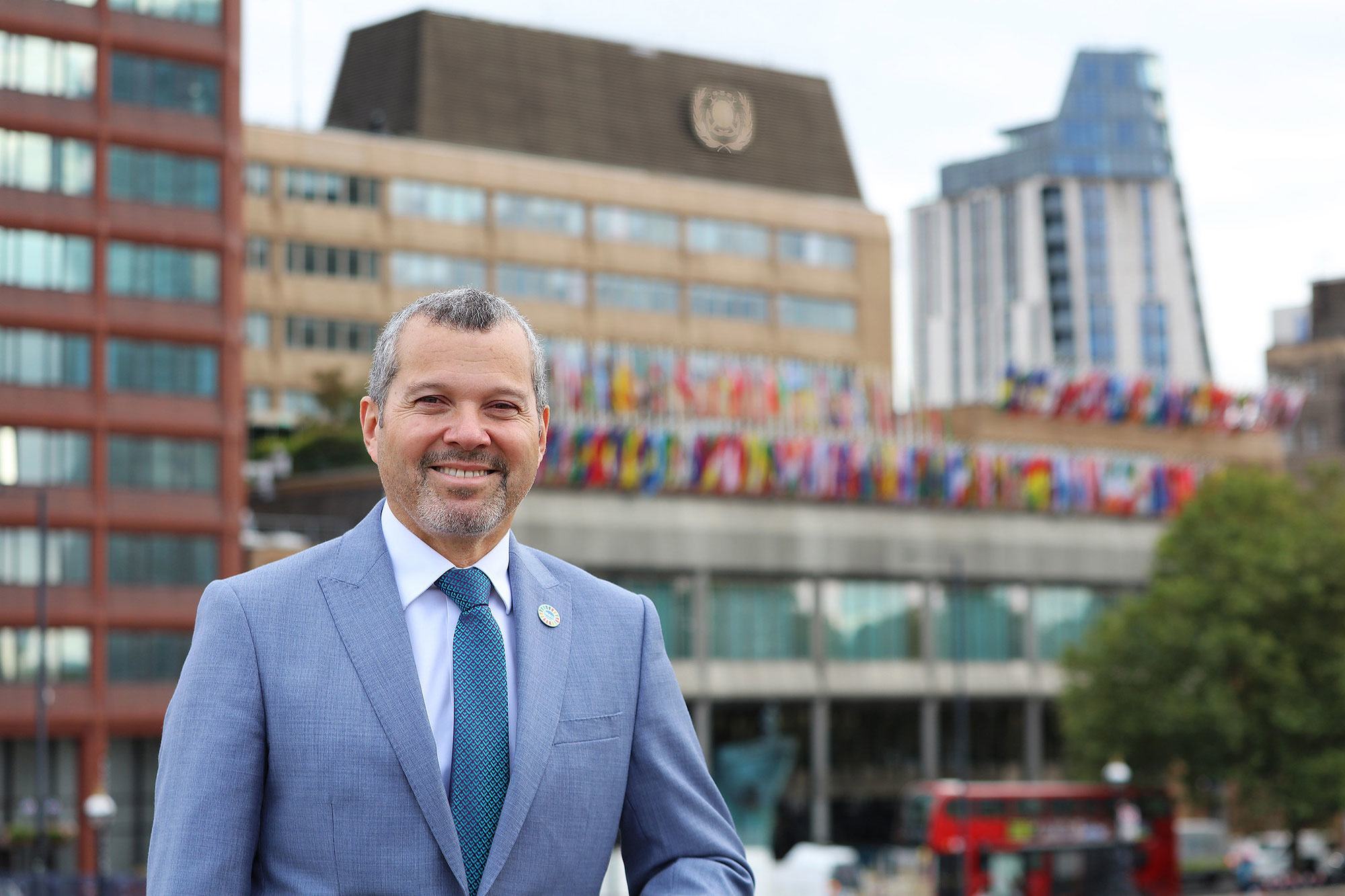
Arsenio Dominguez, Secretary-General of the International Maritime Organization (IMO).

Arsenio Dominguez, Secretary-General of the UN International Maritime Organization (IMO), has recognized underwater-radiated noise as a critical but emerging concern. “We know the negative impact that shipping has at the bottom of the ocean, even though we’re also the main users,” he told UN News in Nice during the third UN Ocean Conference (UNOC3), in Nice. “That’s why we’re taking this very seriously.”

New guidelines

More than 80 per cent of global goods are transported by sea. Propellers, hull vibrations, and engines generate low-frequency sounds that travel vast distances underwater. Unlike oil spills or visible trash, noise pollution leaves no trace – but its impact is no less acute.

To address the issue, the IMO has issued new guidelines for the reduction of ship noise and launched a comprehensive Underwater Radiated Noise (URN) Action Plan.

A three-year “experience building phase,” during which countries are invited to share lessons and help develop best practices about the new guidelines, is currently underway.

“We now have an action plan to develop mandatory mechanisms learning from this,” Mr. Dominguez.

These voluntary guidelines – first adopted in 2014 and updated in 2023 – offer a range of technical recommendations for shipbuilders and operators, including hull design, propeller optimization, and operational measures like speed reduction.

According to the IMO, these changes can significantly reduce noise, especially in “Particularly Sensitive Sea Areas” such as the Galápagos Islands, in Ecuador, and the Tubbataha Reefs, in the Philippines, where marine ecosystems and Indigenous communities are particularly vulnerable.

New technologies and pilot initiatives

Scientists have documented how the constant mechanical hum of ships can disorient whales, disrupt migration routes, and drown out the acoustic cues that many marine species rely on to survive.

The issue of shipborne noise pollution is also gaining traction at UNOC3, as part of its broader discussions on ocean health, marine biodiversity, and the regulation of industrial impacts on the sea. The UN maritime agency is using the gathering to raise the profile of its recently updated guidelines.

Mr. Dominguez pointed to the importance of new technologies in reducing underwater noise: “By enhancing the biofouling and the cleaning of the hulls of the vessels and introducing new technologies, including propellers, we can actually start reducing the negative effects of underwater radiated noise on board the ships.”

He added: “Another measure that is effective is speed optimization. By reducing the speeds of the ship, we also reduce underwater radiated noise.”

Together with the UN Development Programme (UNDP) and the Global Environment Facility (GEF), the IMO has launched an initiative called the GloNoise Partnership, which aims at reducing the acoustic footprint of shipping across in a few pilot countries, including Argentina, Chile, Costa Rica, India, South Africa, and Trinidad and Tobago.

The IMO is on board

“We need to do everything within our power to protect [the ocean],” Mr. Dominguez said. “It’s not just the food that we sometimes have on our plates, but it’s the goods that are transported by sea. And without them, I don’t think the civilizations would actually be able to continue.”

The stakes, he warned, go beyond biodiversity.

“This will have a positive impact in relation to the marine conservations in the ocean… Once we gather all this information, we will be able to enhance the quality of shipping when it comes to its efficiency and reduction of underwater radiating noise.”

As scientists continue to sound the alarm, Mr. Dominguez said the IMO must move faster: “The big message that I will have from everyone participating in [UNOC3] is let’s focus on tangible results. We’ve made the statements in the past. We have made commitments. It’s time to start acting on those commitments and see what has been done and what else needs to be done.”

“We are not against this,” he concluded. “We are on board.”