Cold and dark: UN rights chief condemns Russian strikes on Ukraine’s power grid

Volker Türk said he was outraged by renewed overnight attacks that knocked out power and heating in major cities – including Kyiv and Odesa – as temperatures plunged well below zero and civilians bear the brunt of what he described as unlawful assaults on civilian infrastructure.

He said the Russian strikes “can only be described as cruel. They must stop. Targeting civilians and civilian infrastructure is a clear breach of the rules of warfare.

According to Ukrainian authorities, the latest long-range attacks triggered emergency power and heating outages across several regions.

In Kyiv alone, the city’s mayor reported that 5,635 multi-storey residential buildings were left without heating on Tuesday morning, nearly 80 per cent of which had only recently had heating restored after similar strikes earlier this month.

Since October last year, Russian armed forces have renewed systematic large-scale attacks against Ukraine’s energy infrastructure, with strikes recorded in at least 20 regions of the country.

Mr. Türk called on Russian authorities to immediately halt the attacks, warning that continued strikes on essential civilian infrastructure risk compounding human suffering.

Humanitarian consequences

“This means that hundreds of thousands of families are now without heating and several areas, including a significant part of Kyiv, are also without water,” Mr. Türk said, warning that the impact falls most heavily on children, older people and persons with disabilities.

The humanitarian toll was underscored by Matthias Schmale, the UN Humanitarian Coordinator for Ukraine, who said that over the past 48 hours tens of thousands of civilians once again woke to freezing homes and severe disruptions to basic services.

Parents cannot prepare hot meals for their children, and many older people have been left isolated in cold homes yet again,” he said. “The hideous strikes on energy that have such a huge negative impact on the lives of the civilian population violate international humanitarian law and should end immediately.”

Nuclear safety risks

The attacks have also raised fresh concerns over nuclear safety. The International Atomic Energy Agency (IAEA) said several electrical substations vital for nuclear safety were affected.

Chernobyl Nuclear Power Plant temporarily lost all off-site power, while power lines to other nuclear facilities were also impacted. “The IAEA is actively following developments in order to assess impact on nuclear safety,” Director General Rafael Grossi said.

Chernobyl was the site of the world’s worst nuclear accident in April 1986, when a reactor explosion released massive amounts of radioactive material across Ukraine, Europe and beyond.

Although the plant has long ceased power generation, it requires a stable electricity supply to maintain cooling systems, radiation monitoring and the safe management of nuclear waste, making uninterrupted power critical to preventing new safety risks.

Source link

Will AI kickstart a new age of nuclear power?

The world’s demand for electricity is soaring at an unprecedented pace. Projections indicate that by 2035, global consumption will surge by over 10,000 terawatt-hours, a figure matching the combined current usage of every advanced economy on Earth today.

A primary driver of this explosive growth is the rise of artificial intelligence. The technology is fueled by vast data centers, whose energy needs are staggering. A single medium-sized data center now consumes as much electricity as 100,000 homes. According to the International Energy Agency, demand from these facilities skyrocketed by more than 75% between 2023 and 2024. By 2030, they are expected to be responsible for over 20 percent of all electricity demand growth in advanced nations.

In the United States, the epicenter of the AI industry, the scale is even more pronounced. Forecasts suggest that before this decade ends, the power required for AI data processing will surpass the total combined electricity consumption of the country’s entire aluminium, steel, cement, and chemical manufacturing sectors.

The Nuclear Industry Sees Its Moment

Facing this daunting challenge, a unique summit took place last December. Policymakers, tech executives, and nuclear leaders from across the globe gathered at the International Atomic Energy Agency (IAEA) headquarters in Vienna. Their mission: to explore a symbiotic future where nuclear power enables AI’s expansion, and AI, in turn, innovates the nuclear sector.

The logic is rooted in AI’s relentless operational needs. Training a top-tier AI model can require tens of thousands of computer processors to run non-stop for months. Meanwhile, daily AI applications are spreading into every corner of society, from healthcare and transport to education and agriculture. Every digital interaction consumes power.

“We need clean, stable zero-carbon electricity that is available around the clock,” said Manuel Greisinger, a senior manager at Google focused on AI. “This is undoubtedly an extremely high threshold, and it is not achievable with wind and solar power alone. AI is the engine of the future, but an engine without fuel is almost useless. Nuclear energy is not only an option, but also an indispensable core component of the future energy structure.”

A Bullish Vision for Atomic Energy

This view is championed at the highest levels. IAEA Director General Rafael Mariano Grossi believes the nuclear industry is destined to be the bedrock of the AI revolution. “Only nuclear energy can meet the five needs of low-carbon power generation, round-the-clock reliability, ultra-high power density, grid stability and true scalability,” he declared.

The industry is mobilizing. Currently, 71 new reactors are under construction worldwide, adding to the 441 already operating. The United States, which hosts 94 plants has plans for ten more.

Tech giants are putting their money where their data is. Major companies have pledged support for the goal of trippling global nuclear capacity by 2050. In a landmark move, Microsoft signed a 20-year power purchase agreement that directly facilitated the restart of Unit One at Pennsylvania’s Three Mile Island nuclear plant.

The trend is worldwide. “Europe has the world’s densest digital corridors, with Frankfurt, Amsterdam and London as hubs,” explained Grossi. Traditional nuclear powers like France and the UK are reinvesting heavily, while newcomers like Poland are accelerating plans.

Russia remains a dominant exporter and developer of reactor technology. China is achieving parallel leadership, leading the world simultaneously in both AI development and the construction of new nuclear reactors. Japan is upgrading its data center infrastructure, and the United Arab Emirates has coupled its new nuclear program with ambitions to become a regional AI hub.

The Promise of Smaller, Faster Reactors

The urgent timeline is fueling interest in small modular reactors (SMRs). Unlike traditional mega-projects that take a decade to build, SMRs offer a nimble alternative.

“These kinds of reactors have a small footprint and upgraded safety systems, and can be deployed in nearby industrial areas, including data centre campuses,” Grossi said. “Tech companies that use them don’t have to worry about regional grid supply constraints or transmission losses. This will be a decisive advantage in areas where grid upgrades are slow.”

Though still emerging from the development phase, progress is swift. Google has signed a pioneering global agreement to purchase nuclear power from a fleet of SMRs, targeting operational status by 2030.

The search for reliable power is pushing boundaries. Google is also looking skyward, researching space-based solar networks to power massive machine-learning operations in orbit, taking advantage of constant, unfiltered sunlight. The company plans to launch two prototype satellites in early 2027 to test the concept.

Whether it’s reviving dormant reactors, betting on compact new designs, building traditional plants, or even gazing at the stars, the trajectory is clear. The world’s digital and energy futures are converging, pointing toward an energy system fundamentally reliant on nuclear power to sustain the civilization of tomorrow.

Training cutting-edge AI models requires tens of thousands of central processing units (CPUs) to run continuously for weeks or even months. At the same time, the daily application of artificial intelligence is expanding to almost all sectors such as hospitals, public administration, transportation, agriculture, logistics and education.

Every query, every simulation, every recommendation consumes power. “We need clean, stable zero-carbon electricity that is available around the clock,” says Manuel Greisinger, a senior manager at Google, focusing on AI. “This is undoubtedly an extremely high threshold, and it is not achievable with wind and solar power alone. AI is the engine of the future, but an engine without fuel is almost useless. Nuclear energy is not only an option, but also an indispensable core component of the future energy structure.”

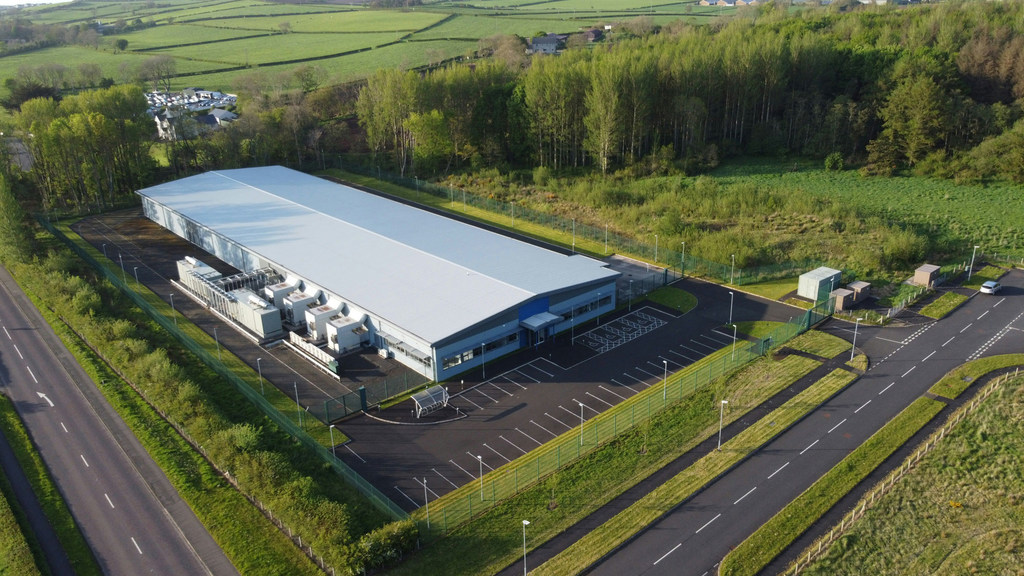
A data centre in Ireland © Unsplash/Geoffrey Moffett


Bullish nuclear industry

Mr. Greisinger’s view is shared by IAEA Director General Manuel Grossi, who believes that the nuclear industry is destined to be the energy partner of the AI revolution. “Only nuclear energy can meet the five needs of low-carbon power generation, round-the-clock reliability, ultra-high power density, grid stability and true scalability,” he declared.

The nuclear industry appears to be in bullish mood. Seventy-one new reactors are under construction, adding to the 441 that are currently operating globally. Ten are scheduled to be built in the US, which is already home to 94 plants, the largest amount of any country.

The tech giants that are using the data centres have pledged to support the goal of at least tripling global nuclear power capacity by 2050. Microsoft, for example, has signed a 20-year power purchase agreement that allowed Unit One of the Three Mile Island nuclear power plant in Pennsylvania, USA, to be restarted.
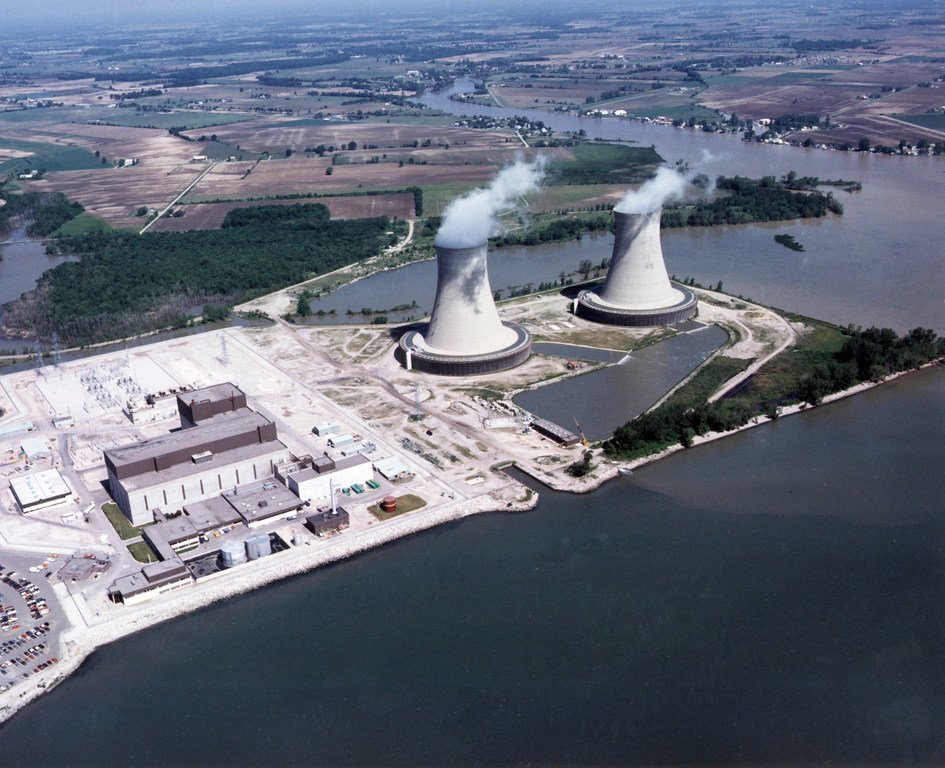
NOAA/OAR/Great Lakes Environmental Research Laboratory

Russia, with a research base proficient in mathematics and computer science, remains the world’s largest exporter in the field of nuclear energy, and is a leading operator and developer of advanced reactor technology, whilst China is making major achievements in both AI and nuclear energy.

“AI technology and the construction of artificial intelligence data centres are advancing simultaneously, and the number of new nuclear reactors in the world also ranks first in the world during the same period,” said the UN nuclear agency chief.

Japan is investing heavily in building and upgrading data centres to meet growing demand whilst, in the Middle East, the United Arab Emirates has established a nuclear energy programme and has emerged as a regional AI hub.
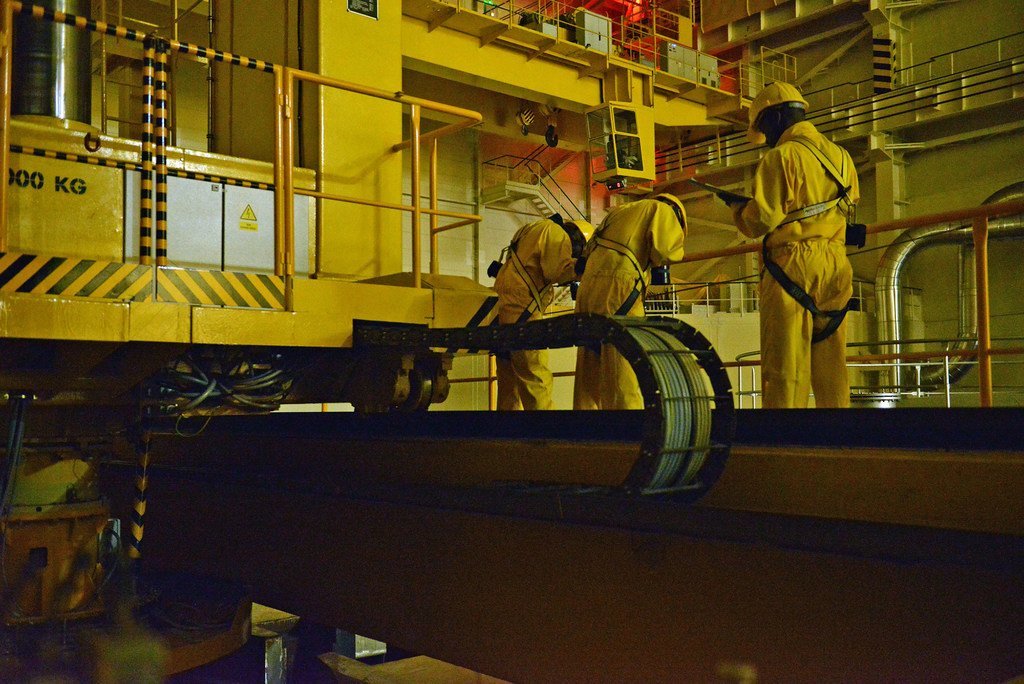
The IAEA supports training to ensure the safety of nuclear power plants like this one in the Czech Republic.

 

‘Decisive battle’: Guterres calls for youth power in fight to phase out fossil fuels

On Tuesday in Belém, ministers from Colombia, Germany, Kenya, the Marshall Islands, Sierra Leone, the United Kingdom and several other countries, voiced strong support for Brazil’s proposal to elevate the issue in this year’s round of UN climate negotiations.

The coalition called on negotiators to reinforce language around the fossil fuel transition in the draft text, slated for approval on Wednesday. Their aim: to accelerate action and keep global warming within 1.5°C.

Then a hush fell. The ministers listened as COP30 Youth Champion Marcele Oliveira stepped forward, carrying the urgency of an entire generation.

“Fossil fuels are destroying dreams,” she warned, calling the shift away from them “the most important climate justice mobilization of this generation.”

COP30 Youth Climate Champion, Marcele Oliveira, speaks at the UN Climate Change Conference taking place in Belém, Brazil.

Protecting the future

Speaking with UN News, Ms. Oliveira stressed that children and young people must be at the heart of every COP30 discussion.

“We had a decision from the International Court of Justice stating that countries’ inaction on climate change constitutes an environmental crime. Therefore, we need to pressure countries to make better climate decisions, and this is also a priority,” she told us.

“Of course, we need to move away from fossil fuels, invest in forest protection, and protect those who protect them. And of course, for young people, recognition of collective action at the local level, led by young people, is very important.”

Participants during UN Secretary-General António Guterres’s Youth Roundtable at COP30 in Belém, Brazil.

Guterres: A ‘decisive battle’

Later in the day, UN Secretary-General António Guterres met with youth delegates and offered an apology – one heavy with recognition. Past generations, he said, failed to contain the climate crisis. Scientific projections confirm temperatures will surpass the 1.5°C threshold.

Now, he urged young people to stand with him in what he called the “decisive battle” to ensure that this overshoot is as short as possible.

The transition from fossil fuels to renewables, he emphasized, is essential, and requires confronting powerful lobby groups that “put profits above the well-being of the international community and the planet.” Youth pressure, he said, is indispensable at COP30.

‘We just want to be children!’

Sixteen-year-old João Victor da Silva, from Brazil, told the UN chief: “We don’t want to be activists, we just want to be children and adolescents, but unfortunately adults are not making the right decisions.”

From Aruba, Nigel Maduro shared a painful truth: the beaches where he learned to swim are disappearing. Negotiations, he warned, move slowly – perhaps too slowly for his island nation, which faces soaring temperatures and rising seas.

Youth from several countries echoed the same plea: act now to secure a habitable future.

The Secretary-General agreed that greater youth participation – especially from Indigenous communities – would lead to better outcomes. He acknowledged calls for more direct, less bureaucratic financing for Indigenous peoples and pledged to improve conditions to make that possible.

Children make their voices heard at the UN Climate conference in Belém, Brazil.

‘Protests are a defining feature of COP30’

Indigenous leader Txai Suruí described the youth meeting as one of the most hopeful moments of COP30. But she warned that the Amazon is dangerously close to a tipping point that could push the forest toward desertification.

“The protests are a distinguishing feature of this COP, because [though] some countries may not like them, but Brazil is a democratic country, and the protests also serve to ensure that these leaders actually make decisions in favor of life.”

Ms. Txai noted that corporate lobbying remains larger than all delegations combined – and certainly larger than Indigenous representation – creating an imbalance of voices. Yet she sees growing recognition of Indigenous communities as guardians of nature.  

A ‘just transition’

Meanwhile, for Ms. Oliveira, the transition away from fossil fuels must be just—an approach that “listens to, welcomes, and hears the territories.” Measures such as demarcating Indigenous lands, she said, are essential to ensure this shift does not further harm populations already affected.

UN News is reporting from Belém, bringing you front-row coverage of everything unfolding at COP30. 

‘The extraordinary power of ordinary people’: World leaders spotlight youth as agents of progress

Annalena Baerbock, President of the General Assembly and one of the youngest persons to ever hold the office, stressed that youth are “the designers of their future” but should not have to build it alone.

Drawing on conversations with young leaders from Ethiopia to Afghanistan, she highlighted the challenges today’s youth face – from conflict and crisis to cyberbullying and unemployment – as well as the transformative change they are driving, such as digital innovation and climate advocacy.

The recent landmark International Court of Justice (ICJ) advisory opinion on climate obligations, prompted by youth activists, underscores how determined young people can reshape global policy. Their commitment can spark hope and intergenerational solidarity.

Bangladesh: Youth driving democratic renewal

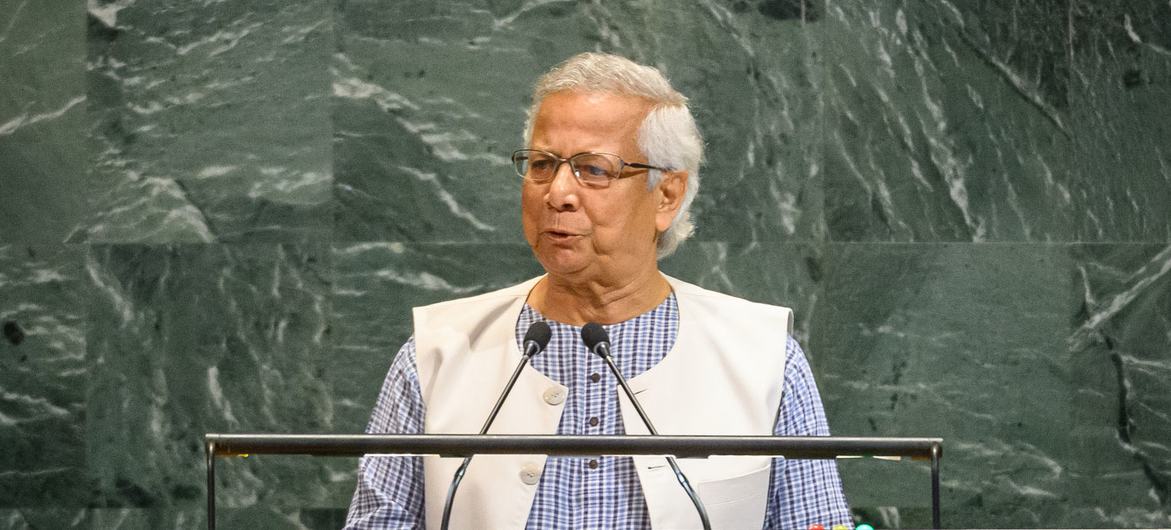
Muhammad Yunus, Chief Adviser of the interim Government of Bangladesh, addresses the general debate of the General Assembly’s eightieth session.

The transformative potential of youth was starkly evident in Bangladesh, one year after the ‘July Revolution’ ended decades of authoritarian rule.

At the Assembly’s general debate fourth day, Chief Adviser Muhammad Yunus described the uprising as “a reminder of the extraordinary power of ordinary people,” crediting the country’s young majority with defeating tyranny and opening the path toward a more just and equal society.

Stemming from the demands of the movement, 11 independent commissions – addressing themes that ran from governance to women’s rights – have now been established and over 30 political parties signed a ‘July Declaration’ pledging to uphold democratic reforms.

Looking ahead, he stressed the importance of empowering Bangladesh’s young majority and women, noting that the country aims “to shape every young person, not only as a job seeker, but also as a job creator,” while advancing protections against harassment and expanding women’s public roles.

▶ Watch the address.

Greece: Safeguards in the digital age

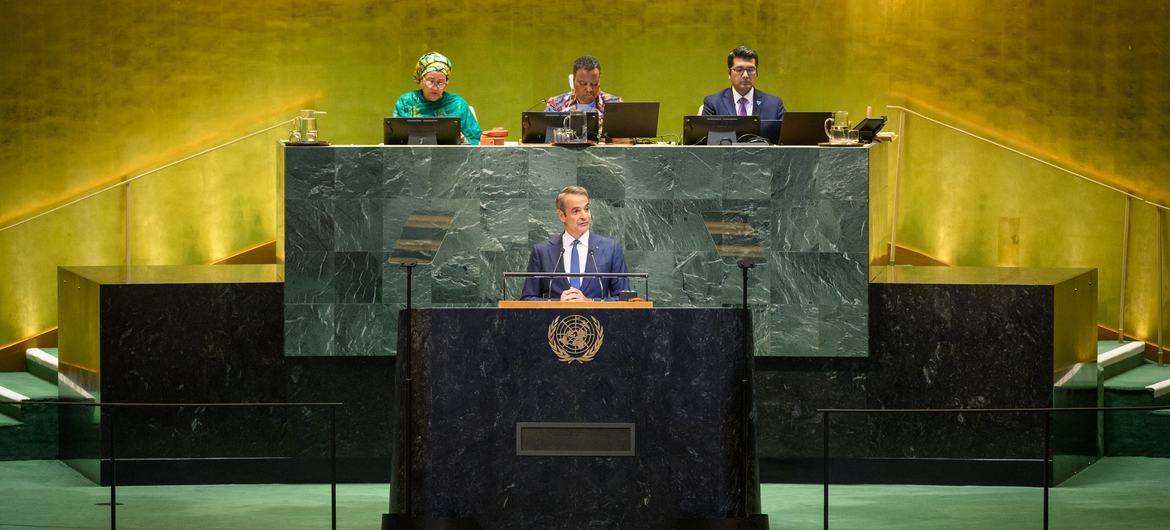
Prime Minister Kyriakos Mitsotakis of Greece addresses the general debate of the General Assembly’s 80th session.

Prime Minister Kyriakos Mitsotakis of Greece emphasized the mental health and safety of children in an era dominated by digital technology and artificial intelligence.

Warning that “we are running a massive unsupervised experiment with the brains of our children and teenagers,” he highlighted the dangers of cyberbullying, addictive content and harmful material online.

Greece has banned phones in schools and launched Kids Wallet, a government-backed app enabling parents with simple, effective tools to manage their children’s smartphone use.

Mr. Mitsotakis also proposed a pan-European “digital age of majority” to ensure age-appropriate access to online platforms, framing these measures as part of a broader effort to protect young minds while supporting safe engagement with technology.

“Just as society once set firm rules for smoking, drinking or wearing a seatbelt, we must now confront today’s challenge with equal clarity: big platforms can no longer profit at the expense of our children’s mental health,” he said.

▶ Watch the address.

Solomon Islands: Youth leading climate action

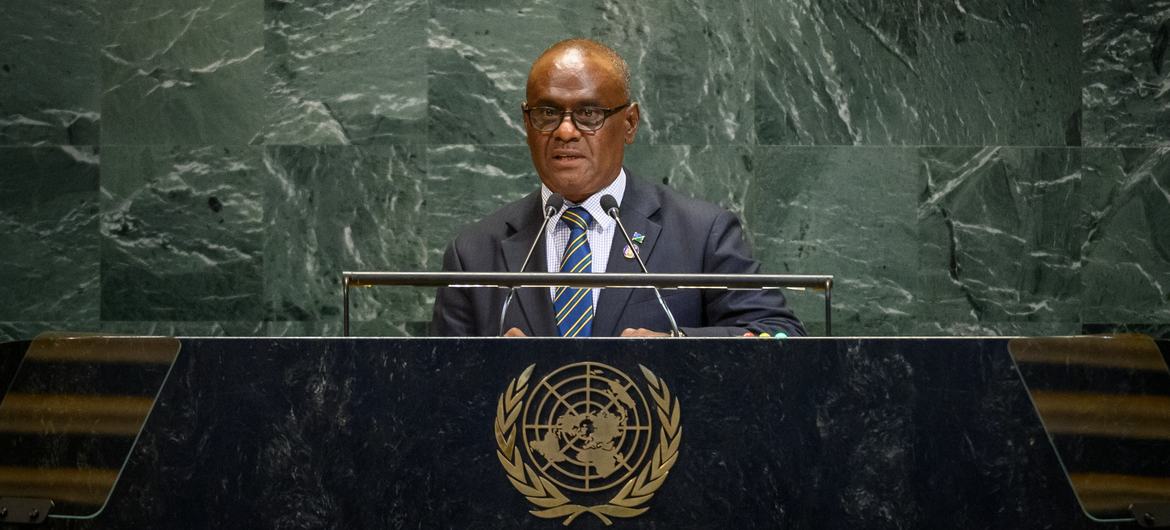
Prime Minister Jeremiah Manele of Solomon Islands addresses the general debate of the General Assembly’s 80th session.

The pivotal role of youth in global challenges was further highlighted by Prime Minister Jeremiah Manele of the Solomon Islands.

He noted that the youth in the Pacific “have stood at the forefront of this initiative, reminding us that the strength of the Pacific lies in our unity,” referencing the youth-led campaign that prompted the International Court of Justice (ICJ)’s landmark advisory opinion on climate obligations.

Mr. Manele emphasized that the ruling, which affirmed States’ responsibilities to protect the climate for present and future generations, is more than a legal finding – it is “a call to the international community that only together can we honour the 1.5°C commitment, protect the most vulnerable, and secure a just and sustainable future for all nations and peoples.”

Youth-led advocacy, he said, has brought the urgency of small island communities’ climate plight to the global stage, demonstrating how collective action can protect the most vulnerable and safeguard the planet for future generations.

▶ Watch the address.

Trinidad and Tobago: Small nations, global impact

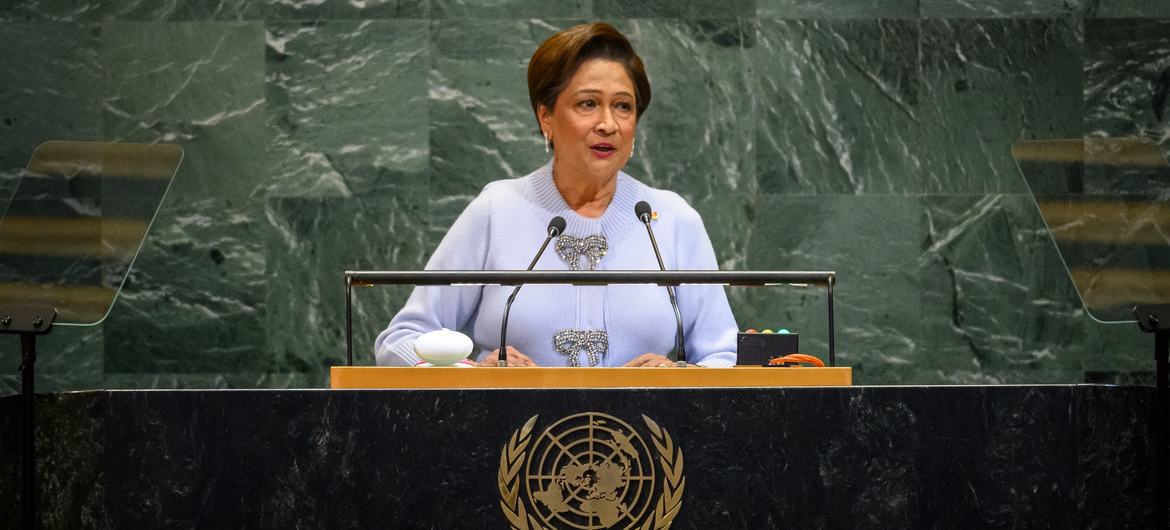
Prime Minister Kamla Persad-Bissessar of Trinidad and Tobago addresses the general debate of the General Assembly’s 80th session.

Prime Minister Kamla Persad-Bissessar of Trinidad and Tobago illustrated how even smaller nations can wield global influence when youth and children’s welfare are prioritized.

She highlighted domestic initiatives such as the Children’s Authority and Children’s Life Fund, expanded early childhood education and alignments with the global development agenda – all efforts aimed at ensuring the next generation thrives.

The Prime Minster also stressed that gender equality is inseparable from sustainable peace and development, noting that “women and girls must be equal partners in peace and sustainability.”

▶ Watch the address.

Malta: Real benefits of multilateralism

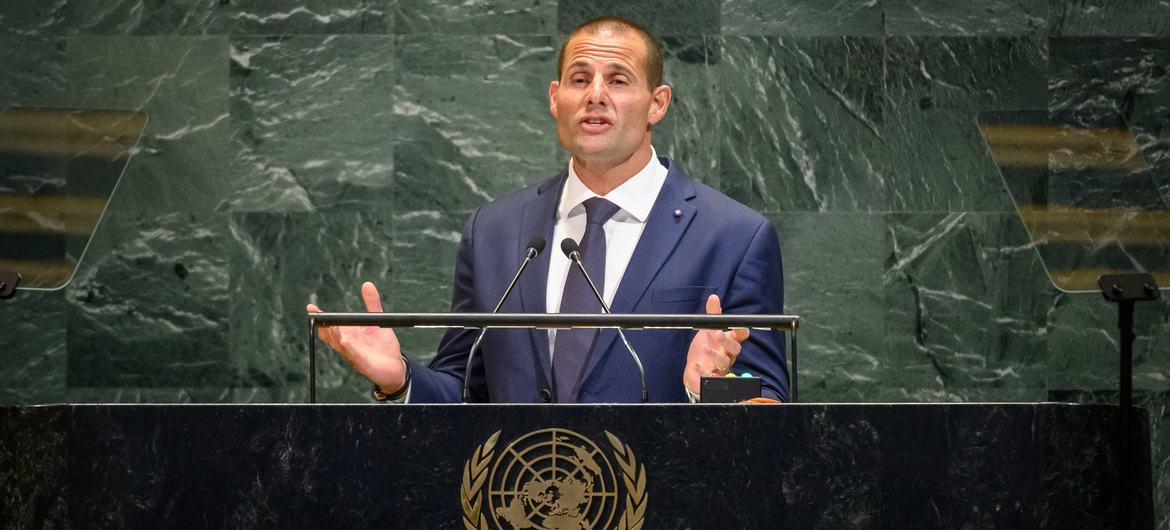
Prime Minister Robert Abela of Malta addresses the general debate of the General Assembly’s 80th session.

Prime Minister Robert Abela of Malta offered a reminder that words alone cannot end conflict, hunger, or child malnutrition – but collective action can.  

He said the life expectancy of children born in 1945, which hovered in the mid-forties, with those born in 2025, who can now expect to live into their mid-seventies.  

“That didn’t happen by luck or accident,” Mr. Abela said. “It happened by will and resolve. It happened by effort. And it happened also because of the positive work conducted by the agencies of this United Nations.”  

Reflecting on these gains, he emphasized that multilateralism remains critical:  

“We won’t keep our peoples safe, our planet protected or our prosperity preserved unless we work together, listen to each other and act in concert.”

▶ Watch the address.

Power to the people; funding community-led development in Somalia

In the heart of Galmudug State, Somalia, the dream of two young women, Iftin and Aminaa, to attend university in Abudwaq was fraught with challenges.

Frequent power cuts and a long, dark and possibly dangerous road between the campus and town made it nearly impossible for them and other girls to attend evening classes.

Determined to find a solution, they approached the International Organization for Migration’s (IOM) Co-Funding System (CFS), which provides matching funding for community-led projects and which is designed to empower local communities in Somalia to take charge of their development and recovery.

© IOM/Spotlight Communications

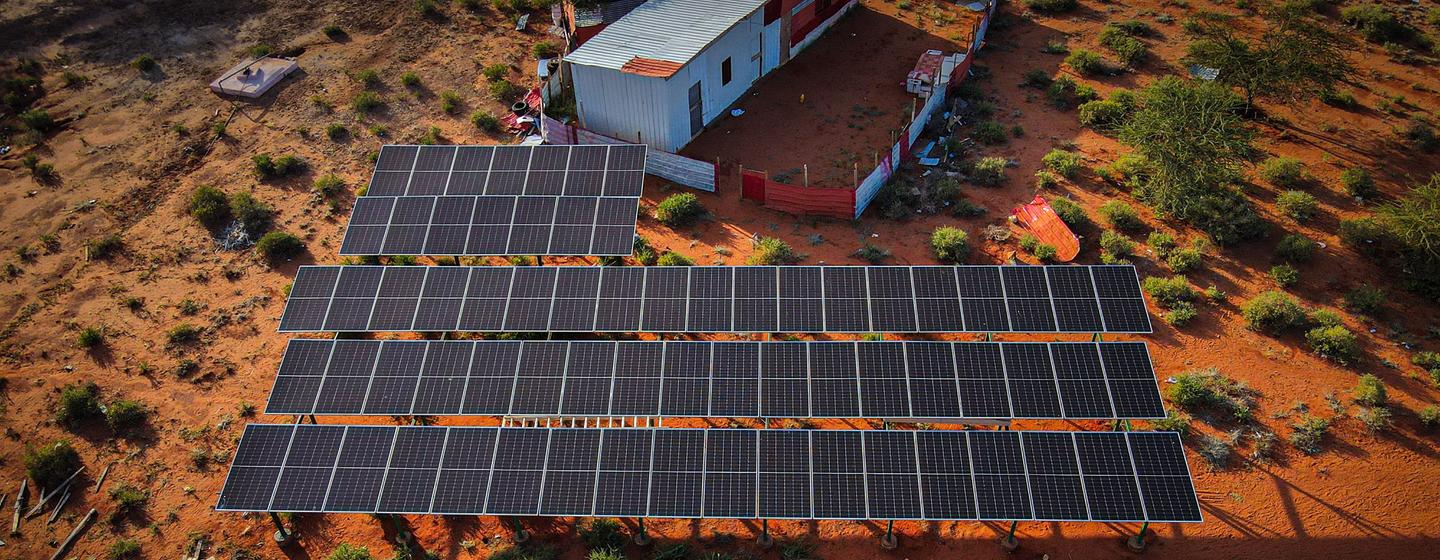
Solar panels provide consistent power to the university in Abudwaq, Galmadug.

Rallying 19 other women students, Iftin and Aminaa submitted a simple yet transformative proposal….. to crowdfund for solar streetlights and a solar energy system for the school.

By July 2022, the girls had raised $10,000. IOM matched this amount and added $50,000 more.

The result was a well-lit and secure road from Abudwaq town to the university and a fully functional solar energy system.

The system now powers the university around the clock with clean energy.

The impact didn’t stop there.

The community later decided to connect a nearby borehole to the system, providing clean, free water to all of Abudwaq and nearby pastoralist communities, who now bring their livestock to drink and graze near the water source.

Animals water at a borehole powered by solar energy.

“Abudwaq was not one of our original target locations,” explained Mohamed Mohamud Hussein, an IOM officer working on community-based planning. “But we considered the proposal because it was well thought out, transformational for the community, and aligned with the CFS’s mandate and priorities around ownership and sustainability.”

Iftin and Aminaa’s determination set an example for other communities across Somalia.

Community power

Piloted by IOM in 2021, the CFS has become one of Somalia’s most innovative recovery tools. It puts power in the hands of local communities.

By the end of 2024, 42 projects had been completed, reaching over 580,000 people across 22 districts in central Somalia.

Nine more are ongoing. Close to 1,600 community and diaspora members contributed, raising over $500,000, which IOM matched with $2.3 million.

Even in fragile settings, collective action is making a difference. In Farjano, a settlement for internally displaced persons in Galmudug State, the construction of a new primary school did more than provide classrooms. It has restored hope.

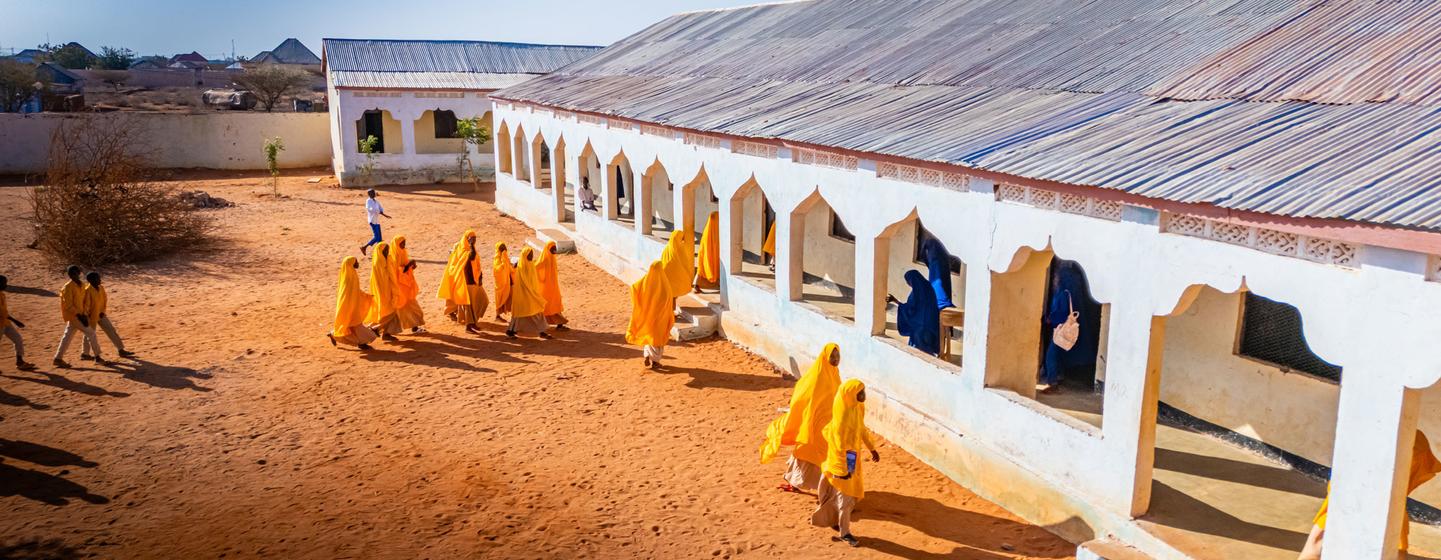
A new primary school was built in Farjano financed by IOM’s Co-Funding System.

“For the very first time, all my children could go to school – and it was free,” said Shamso, a mother of three.

In Mataban, a newly built youth stadium fostered unity and a sense of shared identity. Groups that had once avoided each other began to spend time together. “The stadium brought us together in ways we never imagined,” said Mustaf, a resident of Mataban. “It’s not just for sports – it’s where our community feels united.”

By requiring communities to identify their needs and raise initial funds, the CFS takes a bottom-up rather than traditional top-down approach to development.

It ensures that projects are not only community-driven but also have a higher chance of long-term success and impact

The Fourth International Conference on Financing for Development (FFD4) which begins in Sevilla, Spain on 30 June, aims to reform financing at all levels, and will no doubt consider the local solutions and community-driven initiatives which have proven so successful in Somalia.

Source link

Power of football inspires team effort towards development goals

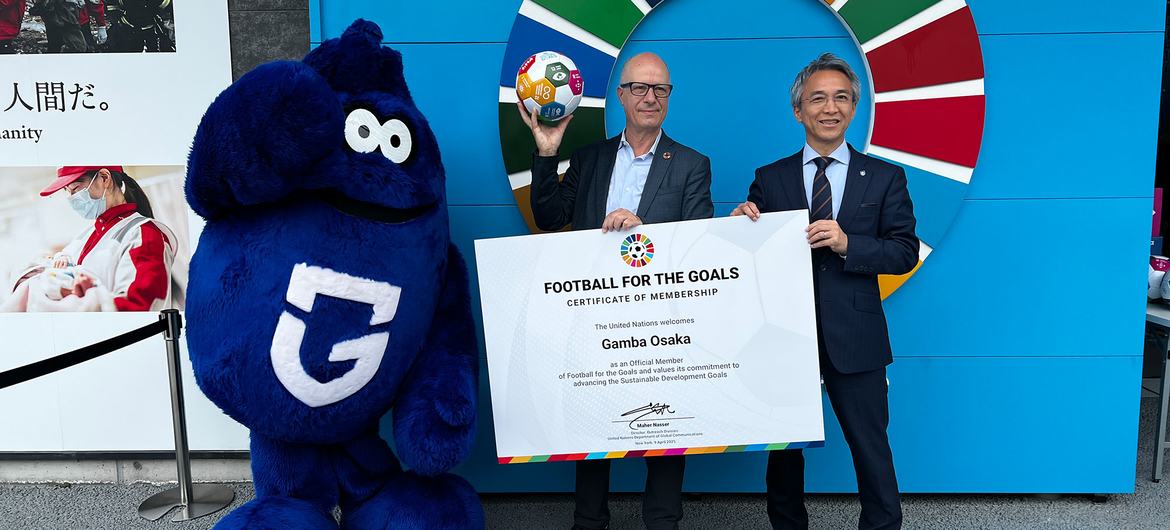
As the football Club World Cup gets underway in the United States, on the other side of the globe, Japanese club Gamba Osaka has reaffirmed its commitment to sustainable development by becoming the first team in the country’s professional league to join the United Nations’ Football for the Goals initiative.

The initiative provides a platform for the global football community to engage with and promote the internationally agreed Sustainable Development Goals (SDGs).

The UN’s Maher Nasser (left) and Shinji Ito of Gamba Osaka mark the Japanese club’s membership of the Football for the goals initiative.

Shinji Ito, an external affairs executive for the football team, Gamba Osaka, told UN News at the United Nations Pavilion at Expo 2025 in Osaka that supporting the Sustainable Development Goals (SDGs) is important to his club.

“As a football club we can work with supporters towards changing attitudes and behaviour on issues like the environment, climate, sustainability, health and disability, which are part of the SDGs.”

The multicoloured SDG logo is prominently displayed at the club’s stadium in Osaka, Japan’s second largest city, it has featured on the team kit and players have visited local schools to explain why the SDGs are important.

At the stadium, efforts are made to encourage fans to separate recycling trash, a behaviour which many in Japan believe needs to be highlighted and stepped up.  Paper cups have replaced plastic cups and the player’s team shirts are made from more sustainable and environmentally-friendly materials.

“We are seeing increased awareness about the importance of the SDGs,” said Mr Ito. “We recognize that this is a long-term commitment and that significant change takes place over 10 years or longer.”

Team effort

Gamba Osaka is now signed up to the UN’s Football for the Goals initiative, making it a first for Japan’s professional game. 

Taro Shinzato (left) visited the UN Pavilion with Satoka Shinzato.

The initiative aims to inspire and guide all those involved in the sport who see the value of sustainability, from confederations, national associations, leagues and clubs to players’ associations, organized fan groups, as well as media and commercial partners.

It’s encouraging them to build on existing sustainability approaches and to implement strategies that lead to behavioural change.

Launched in 2022, at a time when progress towards the SDGs was and continues to falter, there are now some 370 entities signed up.

“The global football industry is extremely influential and has the power to communicate with billions of people across the world,” said Maher Nasser, Commissioner-General of the United Nations at Expo 2025.

“Our members will inspire action by demonstrating how sustainable practices can be mainstreamed through any business model, including sport,” he added.

Keeping an eye on the ball

The SDGs are part of the Japanese school curriculum,  so many young people are aware of their importance.

Taro Shinzato, who supports rival team Nagoya Grampus 8, visited the UN Pavilion at Expo 2025, telling us: “When we think of the SDGs, we focus on the environment and sustainable living in Japan. We perhaps don’t think enough about the SDGs in other countries, which is very important as we all share the same Earth.” 

Football for the Goals

  • Football for the Goals was launched in July 2022.
  • The initiative has 370 members from over 120 countries.
  • All six of FIFA’s regional confederations are members.
  • Each member has committed to integrating sustainable practices into their operations and to promoting the SDGs.

Mobile phone app accurately detects COVID-19 infection in people’s voices

Artificial intelligence (AI) can be used to detect COVID-19 infection in people’s voices by means of a mobile phone app, according to research to be presented on Monday at the European Respiratory Society International Congress in Barcelona, Spain [1].

The AI model used in this research is more accurate than lateral flow/rapid antigen tests and is cheap, quick and easy to use, which means it can be used in low-income countries where PCR tests are expensive and/or difficult to distribute.

Ms Wafaa Aljbawi, a researcher at the Institute of Data Science, Maastricht University, The Netherlands, told the congress that the AI model was accurate 89% of the time, whereas the accuracy of lateral flow tests varied widely depending on the brand. Also, lateral flow tests were considerably less accurate at detecting COVID infection in people who showed no symptoms.

COVID-19 infection usually affects the upper respiratory track and vocal cords, leading to changes in a person’s voice.

Covid/commons.wikimedia.org

“These promising results suggest that simple voice recordings and fine-tuned AI algorithms can potentially achieve high precision in determining which patients have COVID-19 infection,” she said.Moreover, they enable remote, virtual testing and have a turnaround time of less than a minute. They could be used, for example, at the entry points for large gatherings, enabling rapid screening of the population.”

The app is installed on the user’s mobile phone, the participants report some basic information about demographics, medical history and smoking status, and then are asked to record some respiratory sounds. These include coughing three times, breathing deeply through their mouth three to five times, and reading a short sentence on the screen three times.

The researchers used a voice analysis technique called Mel-spectrogram analysis, which identifies different voice features such as loudness, power and variation over time.

“In this way we can decompose the many properties of the participants’ voices,” said Ms Aljbawi. “In order to distinguish the voice of COVID-19 patients from those who did not have the disease, we built different artificial intelligence models and evaluated which one worked best at classifying the COVID-19 cases.”

Its overall accuracy was 89%, its ability to correctly detect positive cases (the true positive rate or “sensitivity”) was 89%, and its ability to correctly identify negative cases (the true negative rate or “specificity”) was 83%.

“These results show a significant improvement in the accuracy of diagnosing COVID-19 compared to state-of-the-art tests such as the lateral flow test,” said Ms Aljbawi.

The patients were “high engagers”, who had been using the app weekly over months or even years to record their symptoms and other health information, record medication, set reminders, and have access to up-to-date health and lifestyle information. Doctors can assess the data via a clinician dashboard, enabling them to provide oversight, co-management and remote monitoring.