

Smurf your voice: Global campaign urges everyone to speak up for a better future

Launched in June, the eight-week digital campaign draws on the enduring popularity of the beloved Smurfs to encourage young people – along with their parents and caregivers – to raise their voices on issues that matter to them.

The initiative is part of the UN’s ActNow effort for the Sustainable Development Goals (SDGs) and aims to empower individuals, especially children, to speak out and take action in their communities.

Voices for change

Featuring Rihanna, Hannah Waddingham, Billie Lourd and Amy Sedaris – who voice various characters in an upcoming Smurfs film – the campaign includes vibrant public service announcements (PSAs) and colourful social media cards.

The Smurfs know the importance of speaking up and speaking out because everyone, every child, has the right to be heard,” said Hannah Waddingham, who voices Jezebeth in the movie.

The power to create change is already inside you. You just have to act,” added Billie Lourd (Worry Smurf).

Amy Sedaris (Jaunty) summed it up simply: “It’s easy if you follow the Smurfs’ blueprint. Small actions can add up to make a big difference.

The videos, produced in multiple formats, direct viewers to a dedicated “Speak Up with the Smurfs” section on the ActNow platform, which offers child-friendly tools and resources.

Join the Smurfs and speak up for a better world! | UN ActNow and UNICEF

Smurfing it up

To smurf things up a bit – campaign invites everyone to “smurf their voice” and help smurf a brighter future, one action at a time. Whether you’re five or fifty-five, there’s always a way to smurf positive change.

In Smurf-speak, “smurf” can mean just about anything – noun, verb, or adjective – but the message here is clear: smurf your voice, smurf your rights, smurf the future.

UNICEF’s involvement centres on ensuring the message reaches children everywhere – and that they are equipped to participate meaningfully in decisions affecting their lives.

Global rollout

The campaign is being promoted across Paramount Global’s platforms – including CBS, MTV, Nickelodeon, BET, Comedy Central, streaming services like Paramount+ and Pluto TV, and the free-to-air network Net 10 in Australia.

Smurf-themed content will also light up Times Square in New York City and appear in markets across Europe, Latin America and Asia.

Content is available in over a dozen languages, including Arabic, French, Spanish, Hindi, Kiswahili, and Japanese, to ensure broad accessibility.

About the Smurfs

First introduced in 1958, the Smurfs are small blue fictional characters known for their teamwork, mischief, and unique way of speaking.

Generations of children (like this author and his little ones) have followed their adventures, and their continued appeal has made them ideal messengers for values like cooperation, kindness and now, global citizenship.

By rallying a new generation to speak up – or smurf up – the campaign hopes to inspire meaningful, lasting change for children (and adults) everywhere.

Source link

Mobile phone app accurately detects COVID-19 infection in people’s voices

Artificial intelligence (AI) can be used to detect COVID-19 infection in people’s voices by means of a mobile phone app, according to research to be presented on Monday at the European Respiratory Society International Congress in Barcelona, Spain [1].

The AI model used in this research is more accurate than lateral flow/rapid antigen tests and is cheap, quick and easy to use, which means it can be used in low-income countries where PCR tests are expensive and/or difficult to distribute.

Ms Wafaa Aljbawi, a researcher at the Institute of Data Science, Maastricht University, The Netherlands, told the congress that the AI model was accurate 89% of the time, whereas the accuracy of lateral flow tests varied widely depending on the brand. Also, lateral flow tests were considerably less accurate at detecting COVID infection in people who showed no symptoms.

COVID-19 infection usually affects the upper respiratory track and vocal cords, leading to changes in a person’s voice.

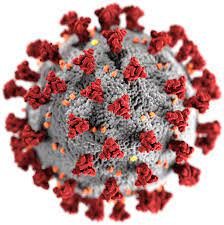
Covid/commons.wikimedia.org

“These promising results suggest that simple voice recordings and fine-tuned AI algorithms can potentially achieve high precision in determining which patients have COVID-19 infection,” she said.Moreover, they enable remote, virtual testing and have a turnaround time of less than a minute. They could be used, for example, at the entry points for large gatherings, enabling rapid screening of the population.”

The app is installed on the user’s mobile phone, the participants report some basic information about demographics, medical history and smoking status, and then are asked to record some respiratory sounds. These include coughing three times, breathing deeply through their mouth three to five times, and reading a short sentence on the screen three times.

The researchers used a voice analysis technique called Mel-spectrogram analysis, which identifies different voice features such as loudness, power and variation over time.

“In this way we can decompose the many properties of the participants’ voices,” said Ms Aljbawi. “In order to distinguish the voice of COVID-19 patients from those who did not have the disease, we built different artificial intelligence models and evaluated which one worked best at classifying the COVID-19 cases.”

Its overall accuracy was 89%, its ability to correctly detect positive cases (the true positive rate or “sensitivity”) was 89%, and its ability to correctly identify negative cases (the true negative rate or “specificity”) was 83%.

“These results show a significant improvement in the accuracy of diagnosing COVID-19 compared to state-of-the-art tests such as the lateral flow test,” said Ms Aljbawi.

The patients were “high engagers”, who had been using the app weekly over months or even years to record their symptoms and other health information, record medication, set reminders, and have access to up-to-date health and lifestyle information. Doctors can assess the data via a clinician dashboard, enabling them to provide oversight, co-management and remote monitoring.