Sudan War: Cholera Vaccination Campaign Begins in Darfur

The World Health Organization (WHO)’s Deputy Representative to the country Hala Khudari reported on Tuesday that the outbreak, which started in July 2024 in Kassala, has spread to all 18 states of the country.

More than 113,600 cases have been registered so far and over 3,000 deaths – a “concerning case fatality rate” of 2.7 per cent.

Speaking from Port Sudan, she said that the past year saw surges in White Nile and Khartoum among other states, resulting from the impact of the conflict and increased population movement. This critical situation has been compounded by severely limited basic services such as water, food and health, caused by ongoing heavy fighting between the Sudanese army and the paramilitary Rapid Support Forces.

Cholera is an acute intestinal infection that spreads through bacteria-contaminated food and water. According to WHO, it can kill within hours when not treated, and case fatality rates above one per cent indicate “serious gaps in case management and delayed access to care”.

Conditions ripe for disease

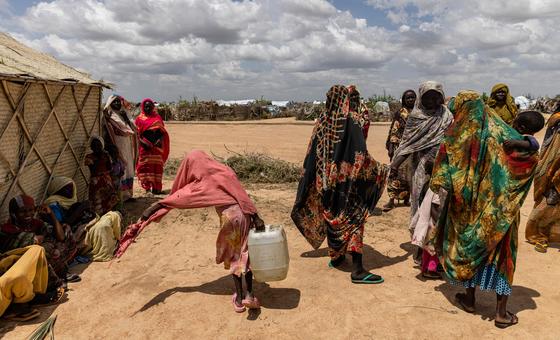
The resurgence of cholera in Sudan has been fuelled by heavy rains and flooding, overcrowding and lack of access to clean water in displacement sites and within communities.

In the Darfur region, where cholera has been spreading since May, the number of cases continues to increase amid “severe access constraints” which are impeding the response, including inaccessible roads due to the rainy season, Ms. Khudari said. As of two days ago 12,739 cases and 358 deaths were reported in more than half of all the localities of the five Darfur states.

In certain localities in West Darfur, the case fatality rate has been as high as 11.8 per cent, she said.

Ms. Khudari explained that WHO and partners have been working to control the outbreak with a vaccination campaign in the worst-hit communities. It began last Sunday “after weeks of preparations to overcome access, transport and logistical challenges”.

The campaign aims to protect 1.86 million people in six priority localities of the Darfurs.

The WHO representative said that the “biggest challenge” in launching the campaign was to “actually get the vaccines there”. She described the difficulties in delivering the life-saving immunizations and supporting supplies via “long routes” to Nyala in South Darfur state earlier this month, amid ongoing security concerns.

El Fasher survivors

Preparations are ongoing to launch the campaign by the end of September in Tawila in North Darfur State, which hosts more than 575,000 internally displaced people, most of whom have fled from the besieged city of El Fasher.

The vaccines are being deployed in Sudan with the support of the UN Children’s Fund (UNICEF), whose spokesperson Ricardo Pires raised the alarm over the severe risks of cholera for children.

Children under five have been “disproportionately affected”, he told reporters, and so far at least 380 have died.

Access to life-saving treatment for cholera in Sudan is limited as the almost two-and-a-half-year-old violent conflict has devastated the health system.

The outbreak comes at a time when “more than 70 per cent of hospitals in conflict-affected areas are non-operational, with health centres being damaged or destroyed during the conflict, lacking supplies and even staff, as well as facilities being often used as shelter,” Mr. Pires stressed.

The UNICEF spokesperson also underscored the impact of “relentless” attacks on the country’s power and water infrastructure which have off cut millions of people including many children from safe and clean water, forcing families to collect water from unsafe and contaminated sources.
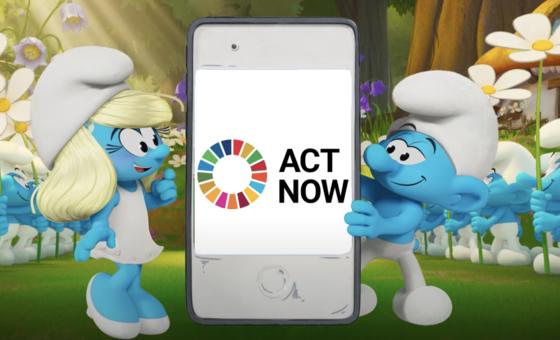
 

Smurf your voice: Global campaign urges everyone to speak up for a better future

Launched in June, the eight-week digital campaign draws on the enduring popularity of the beloved Smurfs to encourage young people – along with their parents and caregivers – to raise their voices on issues that matter to them.

The initiative is part of the UN’s ActNow effort for the Sustainable Development Goals (SDGs) and aims to empower individuals, especially children, to speak out and take action in their communities.

Voices for change

Featuring Rihanna, Hannah Waddingham, Billie Lourd and Amy Sedaris – who voice various characters in an upcoming Smurfs film – the campaign includes vibrant public service announcements (PSAs) and colourful social media cards.

The Smurfs know the importance of speaking up and speaking out because everyone, every child, has the right to be heard,” said Hannah Waddingham, who voices Jezebeth in the movie.

The power to create change is already inside you. You just have to act,” added Billie Lourd (Worry Smurf).

Amy Sedaris (Jaunty) summed it up simply: “It’s easy if you follow the Smurfs’ blueprint. Small actions can add up to make a big difference.

The videos, produced in multiple formats, direct viewers to a dedicated “Speak Up with the Smurfs” section on the ActNow platform, which offers child-friendly tools and resources.

Join the Smurfs and speak up for a better world! | UN ActNow and UNICEF

Smurfing it up

To smurf things up a bit – campaign invites everyone to “smurf their voice” and help smurf a brighter future, one action at a time. Whether you’re five or fifty-five, there’s always a way to smurf positive change.

In Smurf-speak, “smurf” can mean just about anything – noun, verb, or adjective – but the message here is clear: smurf your voice, smurf your rights, smurf the future.

UNICEF’s involvement centres on ensuring the message reaches children everywhere – and that they are equipped to participate meaningfully in decisions affecting their lives.

Global rollout

The campaign is being promoted across Paramount Global’s platforms – including CBS, MTV, Nickelodeon, BET, Comedy Central, streaming services like Paramount+ and Pluto TV, and the free-to-air network Net 10 in Australia.

Smurf-themed content will also light up Times Square in New York City and appear in markets across Europe, Latin America and Asia.

Content is available in over a dozen languages, including Arabic, French, Spanish, Hindi, Kiswahili, and Japanese, to ensure broad accessibility.

About the Smurfs

First introduced in 1958, the Smurfs are small blue fictional characters known for their teamwork, mischief, and unique way of speaking.

Generations of children (like this author and his little ones) have followed their adventures, and their continued appeal has made them ideal messengers for values like cooperation, kindness and now, global citizenship.

By rallying a new generation to speak up – or smurf up – the campaign hopes to inspire meaningful, lasting change for children (and adults) everywhere.

Source link

Guterres to launch life-saving campaign strengthening mine action worldwide

António Guterres announced the move in a statement issued on Monday, in response to plans by several UN Member States to withdraw from the Anti-Personnel Mine Ban Convention.

The 1997 treaty, also known as the Ottawa Convention, prohibits the use, stockpiling, production and transfer of these weapons. 

Landmark global agreeement

Since then, it “has led to a virtual halt in global production of anti-personnel mines, and a drastic reduction in their deployment,” and “more than 40 million stockpiled mines have been destroyed,” according to the UN Office for Disarmament Affairs (UNODA).

To date, 165 States are party to the treaty and 133 have signed it.  

Five European countries – Estonia, Finland, Latvia, Lithuania and Poland – have recently announced that they intend to leave, or taken steps in this direction, reportedly due to security concerns related to Russia.

Weakening protection, undermining progress

Without naming countries, the Secretary-General expressed grave concern over the development.

“At a time when civilians face heightened risks from widening conflicts, it is imperative that we strengthen the frameworks that protect human life and dignity,” he said. 

“These announcements are particularly troubling, as it risks weakening civilian protection and undermining two decades of a normative framework that has saved countless lives.”

He urged all States “to adhere to humanitarian disarmament treaties and immediately halt any steps towards their withdrawal,” and appealed to the 32 States that have yet to join the treaty to do so without delay.

These countries include China, Iran, Israel, Russia, and the United States.

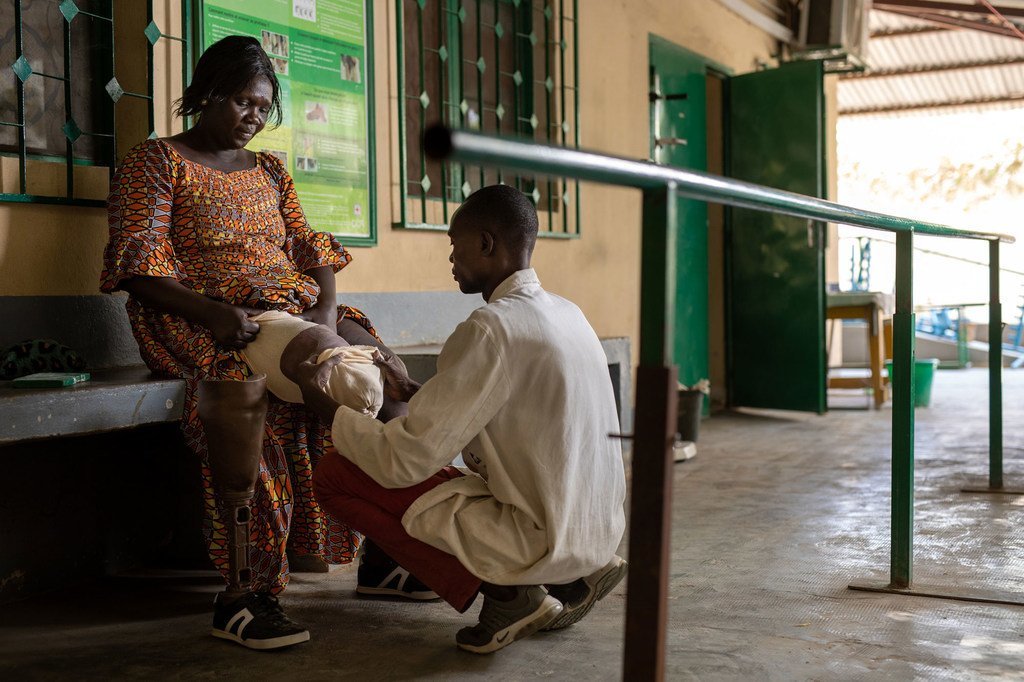
ICBL/Gwenn Dubourthoumieu

A 33-year old landmine survivor tries on a new prosthesis at the fitting and rehabilitation centre in Kabalaye, Chad. (file)

About the campaign

The Secretary-General’s campaign will centre around upholding the norms of humanitarian disarmament, accelerating mine action as an enabler of human rights and sustainable development, and driving forward the vision of a mine-free world.

“To achieve these aims, over the next six months this campaign will aim to re-energise public support for disarmament and will also facilitate concrete actions by States to uphold humanitarian norms and strengthen mine action,” he said.

He concluded by stressing that “the urgency of this matter cannot be overstated,” saying “the protection of innocent lives depends on our collective action and commitment.” 

Source link

Rajamouli, Rajinikanth Support 8-day Swachhata Hi Seva Campaign, 201 Districts OD Free

After 8 days of Swachhata Hi Seva Campaign, 201 Districts are ODF now. Swacchata Hi Seva campaign has fostered collaborations, across the country, to fight against the evils of open defecation. In a major milestone, the rural sanitation coverage has increased with 4 districts being declared ODF today taking the total tally to 201.

After a week of the Swacchata Hi Seva campaign, the movement received support from Bollywood. Superstar Rajinikanth responded to the government’s call by committing to extend full support to Swachhata. Filmmaker S.S. Rajamouli also extended full support to the Swachhata Hi Seva Campaign.

In Balasore, Odisha scientists and staff members of Interim Test Range (ITR) Chandipur, picked up brooms and cleaned roads. As a part of on-going Swachhata Hi Seva programme, several activities have been taken up across Assam.

In response to the government’s invite to be a part of the Swachhata Hi Seva campaign, famous breast cancer expert, Dr P Raghu Ram (Director City Based KIMS-Ushalakshmi Centre, President Association of Breast Surgeons of India), stated, “ I have Decided to conduct the Swachhata Iniative in Ibrahimpur, my adopted village, in remotest part of Telangana State”.

The students of Jawahar Navodaya Vidyalaya, Bihar garnered support to the Swacchata Hi Seva campaign, by undertaking cleanliness drive in their school. The young mascots of Swachhata Hi Seva andolan, undertook numerous activities.

India Tourism, along with Gujarat Tourism, Archaeological Survey of India (ASI), Ahmedabad Municipal Corporation (AMC), Institute of Hotel Management (IHM) Gandhinagar, Travel Agents, Tour Operators, Hoteliers and Approved Guides organized a cleanliness drive at the Shaking Minarets, a world heritage site.

Measles-Rubella (MR) Campaign widens its reach

2nd phase of MR vaccination campaign rolled out.

India, along with ten other WHO South East Asia Region member countries, have resolved to eliminate measles and control rubella/congenital rubella syndrome (CRS) by 2020. In this direction, Ministry of Health & Family Welfare has initiated measles-rubella (MR) vaccination campaign in the age group of 9 months to less than 15 years in a phased manner across the nation. The campaign aims to cover approximately 41 crore children and is going to be the largest ever vaccination campaign worldwide. All children from 9 months to less than 15 years of age will be given a single shot of Measles-Rubella (MR) vaccination during the campaign. Following the campaign, MR vaccine will become a part of routine immunization and will replace measles vaccine, currently given at 9-12 months and 16-24 months of age of child.

The first phase of measles-rubella vaccination campaign has been successfully completed in five states, namely, Tamil Nadu, Karnataka, Goa, Lakshadweep and Puducherry. More than 3.3 crore children were vaccinated, reaching out to 97% of the intended age group. The campaign was carried out in schools, community centers and health facilities. The next round is starting in 8 states/UTs (Andhra Pradesh, Chandigarh, Dadra & Nagar Haveli, Daman & Diu, Himachal Pradesh, Kerala, Telangana and Uttarakhand) from August 2017, aiming to cover 3.4 crore children.

The campaign aims to rapidly build up immunity for both measles and rubella diseases in the community so as to knock out the disease, therefore, all the children should receive MR vaccine during the campaign. For those children who have already received such vaccination, the campaign dose would provide additional boosting to them. In order to achieve maximum coverage during the campaign, multiple stakeholders have been involved, which includes, apart from Ministry of Health & Family Welfare, other Ministries, development partners, Lions clubs, professional bodies, for example, Indian Association of Pediatrics, Indian Medical Association, Civil Society Organizations etc.

The Measles-Rubella campaign is a part of global efforts to reduce illness and deaths due to measles and rubella/CRS in the country. Measles immunization directly contributes to the reduction of under-five child mortality, and in combination with rubella vaccine, it will control rubella and prevent CRS.

President Mukherjee Launches ‘100 Million for 100 Million’ Campaign on Birthday

President of India Mr. Pranab Mukherjee marked his 81st birthday by launching a ‘100 Million for 100 Million’ Campaign organized by the Kailash Satyarthi Children’s Foundation at Rashtrapati Bhavan today (December 11, 2016).

Speaking on the occasion, the President said that he was delighted to launch the campaign led by Nobel peace prize winner, Shri Kailash Satyarthi, from Rashtrapati Bhavan, an institution which symbolises our Republic’s commitment to democracy, pluralism and secularism.

The President said that despite the progress the world has made in science and technology, economic development and in other fields of human endeavour, there are still over a 100 million children who are “out of school”. They are being denied their childhood and are facing exploitation in various ways. The world must realise without further delay that there can be no progress unless our children are safe, secure and unless they are provided the freedom and opportunity to become agents of change for the larger good of humanity. To ensure for them a bright, carefree and secure future, devoid of poverty, violence and want is our bounden duty.

The President said this global effort to mobilize 100 million youth for shaping a better future of 100 million children who are less privileged is the beginning of a change which was long overdue. It is only appropriate that this campaign begins from India, which has one of the largest populations of youth in the world. He expressed hope that the campaign, as it runs for five years, will have a path-breaking impact on the lives of children across the globe. He urged all children and young people from India and abroad to join this campaign and be the torchbearers for a vibrant, compassionate and happy world where every child is free from want, fear and exploitation.

The ‘100 Million for 100 Million’ Campaign aims to mobilise 100 million youth and children for 100 million underprivileged children across the world, to end child labour, child slavery, violence against children and promote the right of every child to be safe, free, and educated, over the next 5 years.

Earlier in the day, the President inaugurated twin tower apartments for staff of Rashtrapati Bhavan; Navachara-II, a hall for permanent exhibition of grassroots innovations at Rashtrapati Bhavan and a museum of vintage carpets & tapestries of Rashtrapati Bhavan.