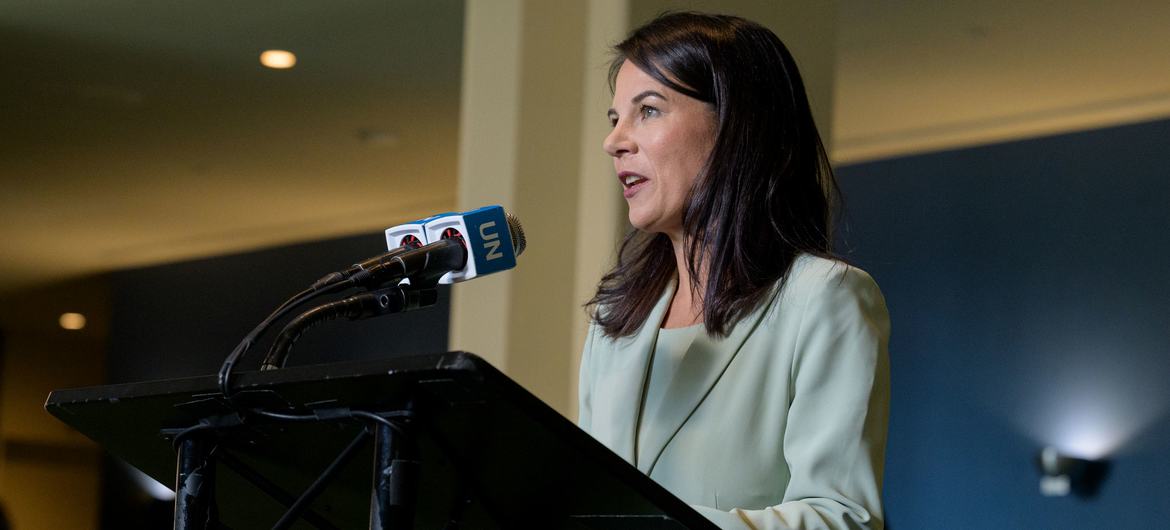
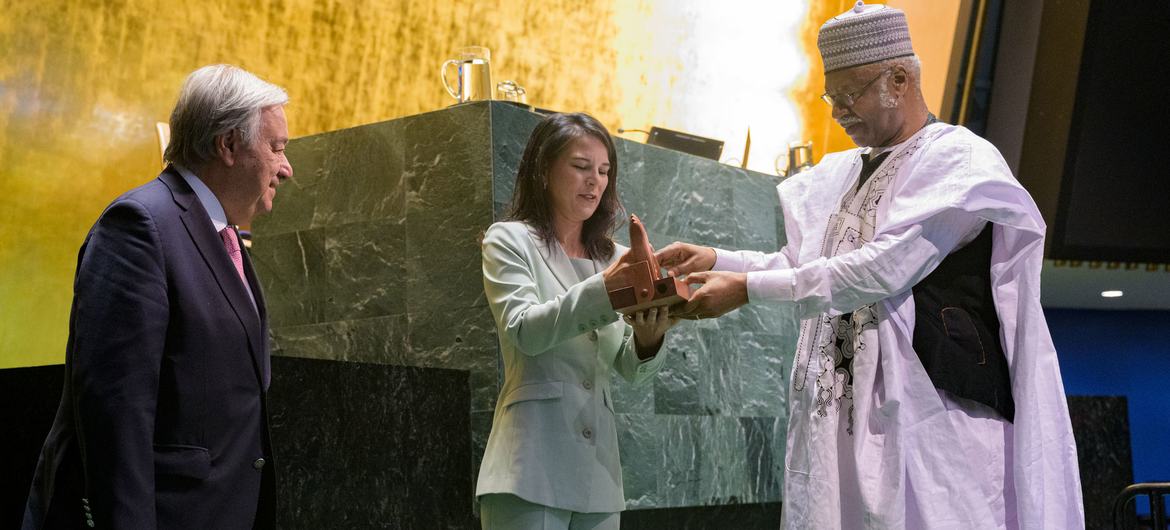
Annalena Baerbock, President of the General Assembly and one of the youngest persons to ever hold the office, stressed that youth are “the designers of their future” but should not have to build it alone.
Drawing on conversations with young leaders from Ethiopia to Afghanistan, she highlighted the challenges today’s youth face – from conflict and crisis to cyberbullying and unemployment – as well as the transformative change they are driving, such as digital innovation and climate advocacy.
The recent landmark International Court of Justice (ICJ) advisory opinion on climate obligations, prompted by youth activists, underscores how determined young people can reshape global policy. Their commitment can spark hope and intergenerational solidarity.
Bangladesh: Youth driving democratic renewal

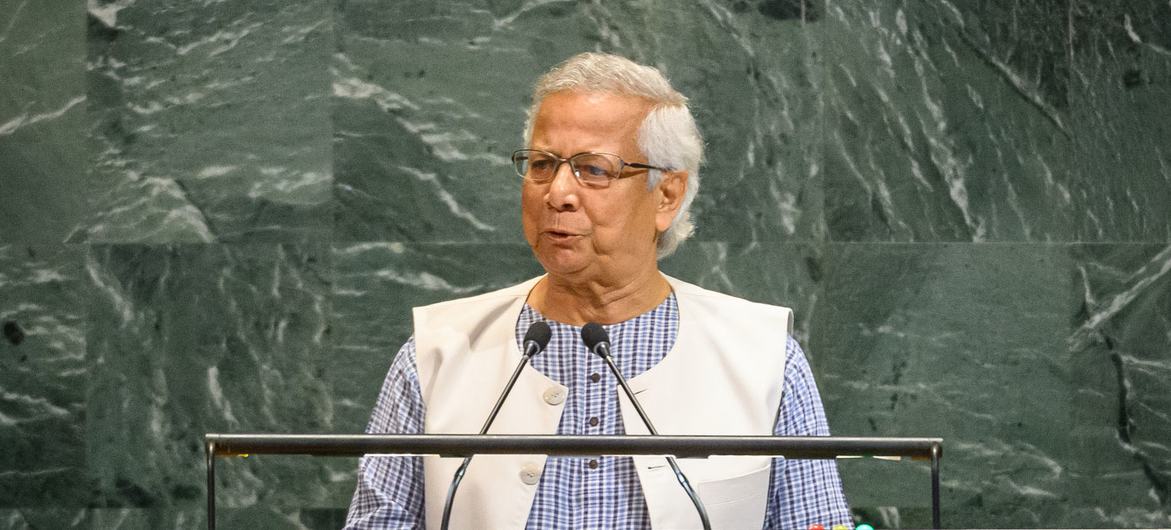
Muhammad Yunus, Chief Adviser of the interim Government of Bangladesh, addresses the general debate of the General Assembly’s eightieth session.
The transformative potential of youth was starkly evident in Bangladesh, one year after the ‘July Revolution’ ended decades of authoritarian rule.
At the Assembly’s general debate fourth day, Chief Adviser Muhammad Yunus described the uprising as “a reminder of the extraordinary power of ordinary people,” crediting the country’s young majority with defeating tyranny and opening the path toward a more just and equal society.
Stemming from the demands of the movement, 11 independent commissions – addressing themes that ran from governance to women’s rights – have now been established and over 30 political parties signed a ‘July Declaration’ pledging to uphold democratic reforms.
Looking ahead, he stressed the importance of empowering Bangladesh’s young majority and women, noting that the country aims “to shape every young person, not only as a job seeker, but also as a job creator,” while advancing protections against harassment and expanding women’s public roles.
Greece: Safeguards in the digital age
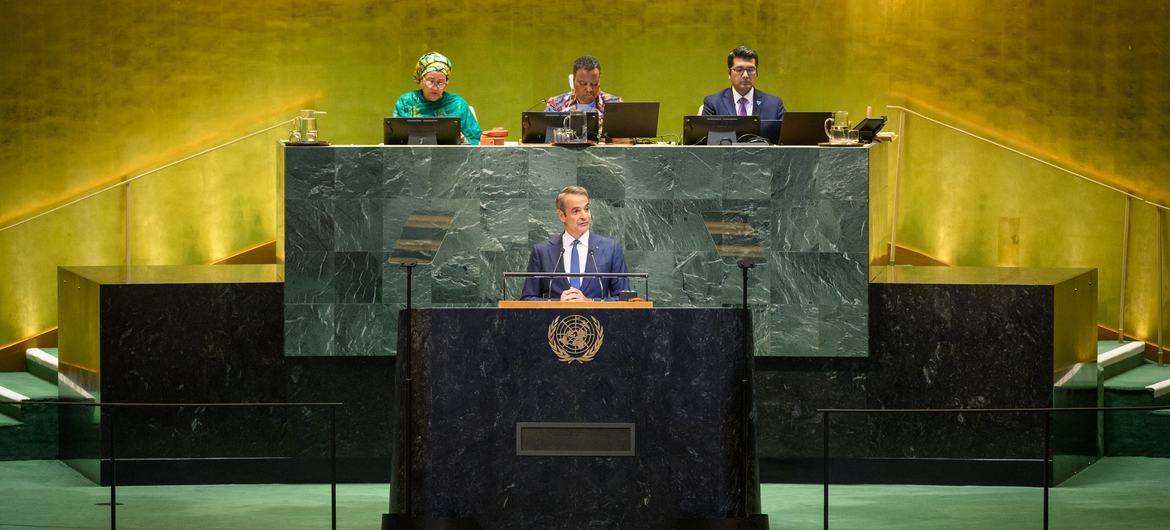
Prime Minister Kyriakos Mitsotakis of Greece addresses the general debate of the General Assembly’s 80th session.
Prime Minister Kyriakos Mitsotakis of Greece emphasized the mental health and safety of children in an era dominated by digital technology and artificial intelligence.
Warning that “we are running a massive unsupervised experiment with the brains of our children and teenagers,” he highlighted the dangers of cyberbullying, addictive content and harmful material online.
Greece has banned phones in schools and launched Kids Wallet, a government-backed app enabling parents with simple, effective tools to manage their children’s smartphone use.
Mr. Mitsotakis also proposed a pan-European “digital age of majority” to ensure age-appropriate access to online platforms, framing these measures as part of a broader effort to protect young minds while supporting safe engagement with technology.
“Just as society once set firm rules for smoking, drinking or wearing a seatbelt, we must now confront today’s challenge with equal clarity: big platforms can no longer profit at the expense of our children’s mental health,” he said.
Solomon Islands: Youth leading climate action
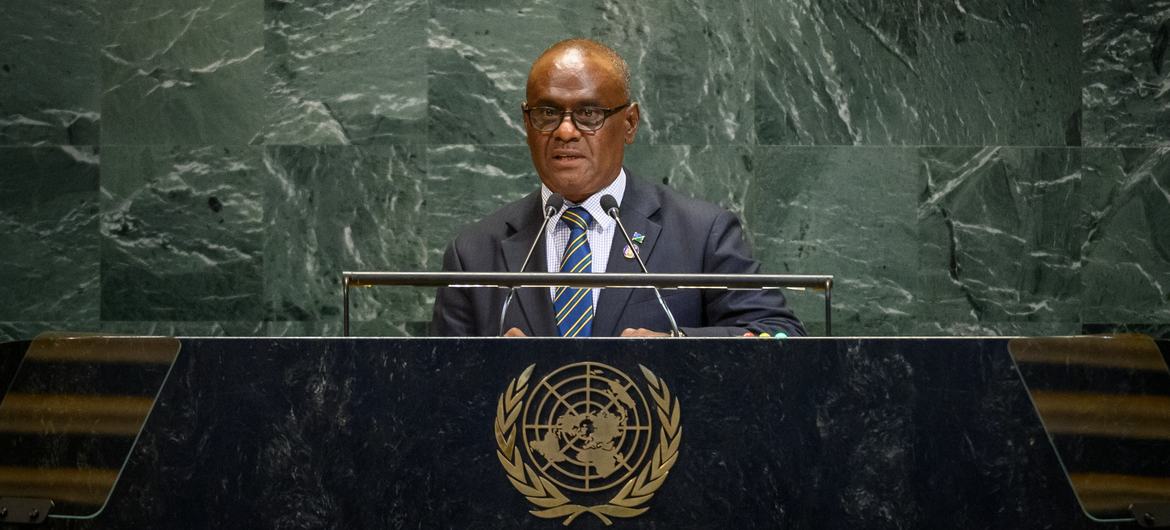
Prime Minister Jeremiah Manele of Solomon Islands addresses the general debate of the General Assembly’s 80th session.
The pivotal role of youth in global challenges was further highlighted by Prime Minister Jeremiah Manele of the Solomon Islands.
He noted that the youth in the Pacific “have stood at the forefront of this initiative, reminding us that the strength of the Pacific lies in our unity,” referencing the youth-led campaign that prompted the International Court of Justice (ICJ)’s landmark advisory opinion on climate obligations.
Mr. Manele emphasized that the ruling, which affirmed States’ responsibilities to protect the climate for present and future generations, is more than a legal finding – it is “a call to the international community that only together can we honour the 1.5°C commitment, protect the most vulnerable, and secure a just and sustainable future for all nations and peoples.”
Youth-led advocacy, he said, has brought the urgency of small island communities’ climate plight to the global stage, demonstrating how collective action can protect the most vulnerable and safeguard the planet for future generations.
Trinidad and Tobago: Small nations, global impact
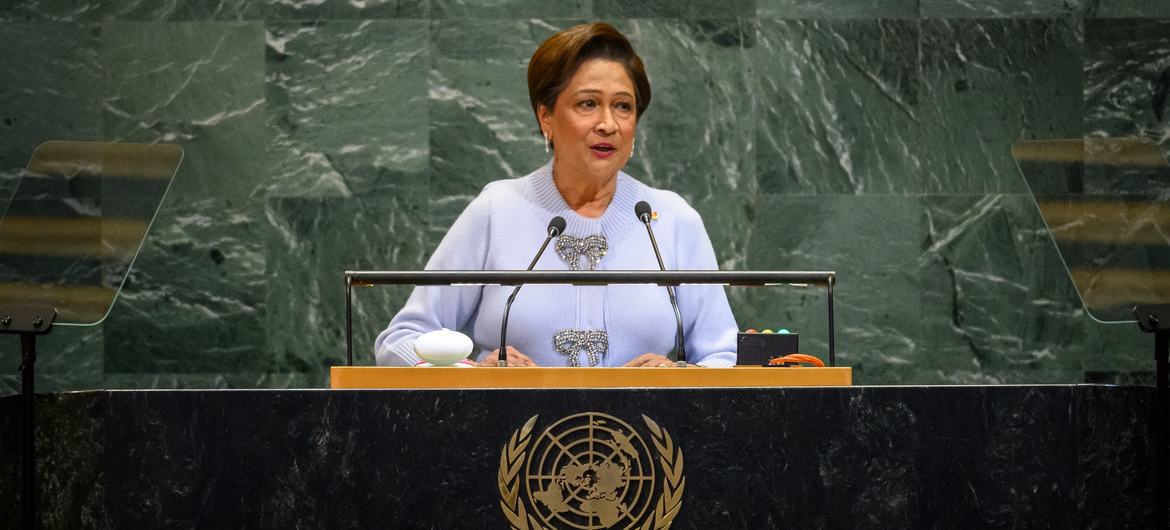
Prime Minister Kamla Persad-Bissessar of Trinidad and Tobago addresses the general debate of the General Assembly’s 80th session.
Prime Minister Kamla Persad-Bissessar of Trinidad and Tobago illustrated how even smaller nations can wield global influence when youth and children’s welfare are prioritized.
She highlighted domestic initiatives such as the Children’s Authority and Children’s Life Fund, expanded early childhood education and alignments with the global development agenda – all efforts aimed at ensuring the next generation thrives.
The Prime Minster also stressed that gender equality is inseparable from sustainable peace and development, noting that “women and girls must be equal partners in peace and sustainability.”
Malta: Real benefits of multilateralism
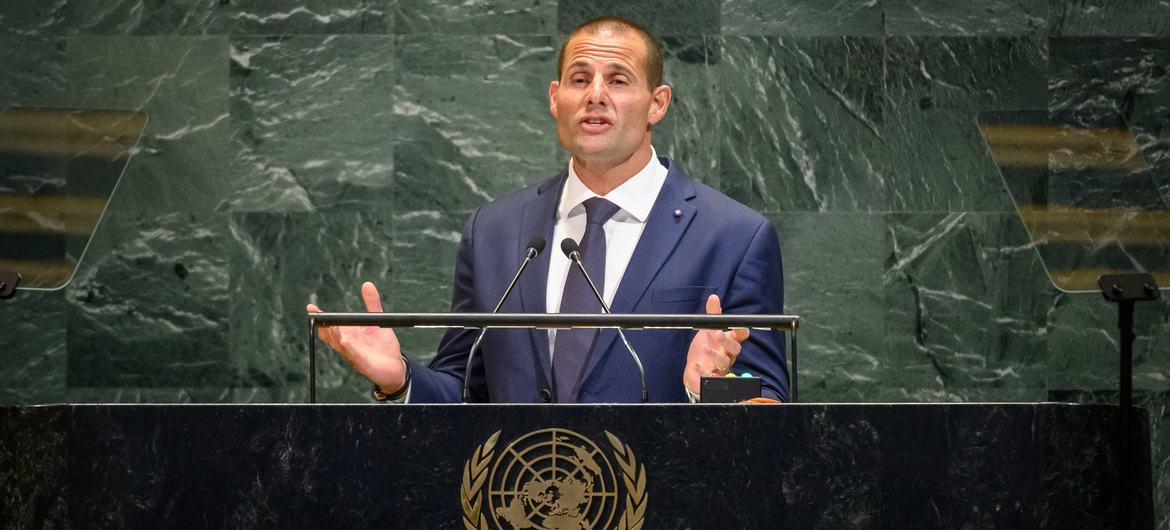
Prime Minister Robert Abela of Malta addresses the general debate of the General Assembly’s 80th session.
Prime Minister Robert Abela of Malta offered a reminder that words alone cannot end conflict, hunger, or child malnutrition – but collective action can.
He said the life expectancy of children born in 1945, which hovered in the mid-forties, with those born in 2025, who can now expect to live into their mid-seventies.
“That didn’t happen by luck or accident,” Mr. Abela said. “It happened by will and resolve. It happened by effort. And it happened also because of the positive work conducted by the agencies of this United Nations.”
Reflecting on these gains, he emphasized that multilateralism remains critical:
“We won’t keep our peoples safe, our planet protected or our prosperity preserved unless we work together, listen to each other and act in concert.”