‘The extraordinary power of ordinary people’: World leaders spotlight youth as agents of progress

Annalena Baerbock, President of the General Assembly and one of the youngest persons to ever hold the office, stressed that youth are “the designers of their future” but should not have to build it alone.

Drawing on conversations with young leaders from Ethiopia to Afghanistan, she highlighted the challenges today’s youth face – from conflict and crisis to cyberbullying and unemployment – as well as the transformative change they are driving, such as digital innovation and climate advocacy.

The recent landmark International Court of Justice (ICJ) advisory opinion on climate obligations, prompted by youth activists, underscores how determined young people can reshape global policy. Their commitment can spark hope and intergenerational solidarity.

Bangladesh: Youth driving democratic renewal

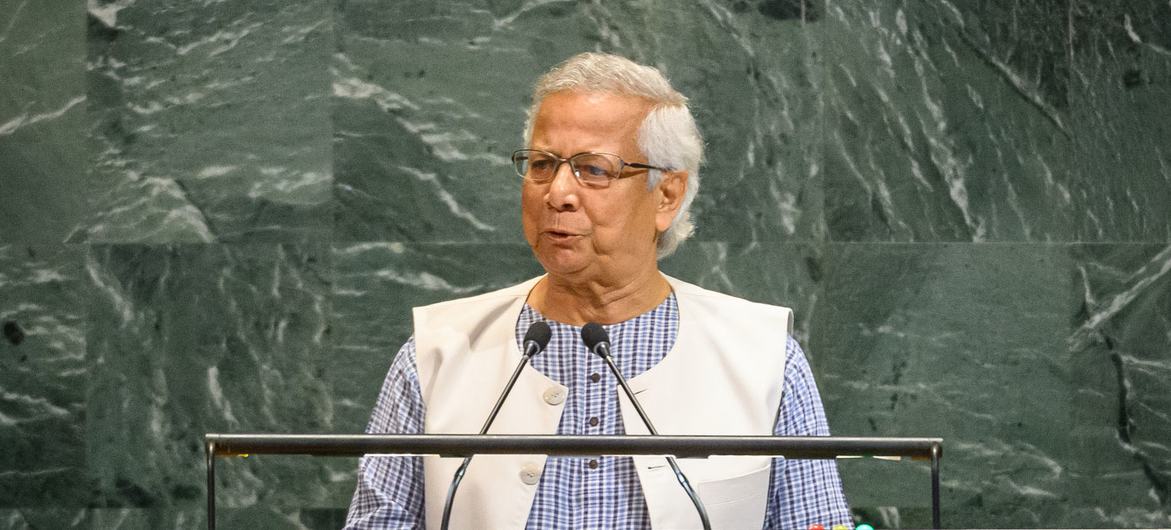
Muhammad Yunus, Chief Adviser of the interim Government of Bangladesh, addresses the general debate of the General Assembly’s eightieth session.

The transformative potential of youth was starkly evident in Bangladesh, one year after the ‘July Revolution’ ended decades of authoritarian rule.

At the Assembly’s general debate fourth day, Chief Adviser Muhammad Yunus described the uprising as “a reminder of the extraordinary power of ordinary people,” crediting the country’s young majority with defeating tyranny and opening the path toward a more just and equal society.

Stemming from the demands of the movement, 11 independent commissions – addressing themes that ran from governance to women’s rights – have now been established and over 30 political parties signed a ‘July Declaration’ pledging to uphold democratic reforms.

Looking ahead, he stressed the importance of empowering Bangladesh’s young majority and women, noting that the country aims “to shape every young person, not only as a job seeker, but also as a job creator,” while advancing protections against harassment and expanding women’s public roles.

▶ Watch the address.

Greece: Safeguards in the digital age
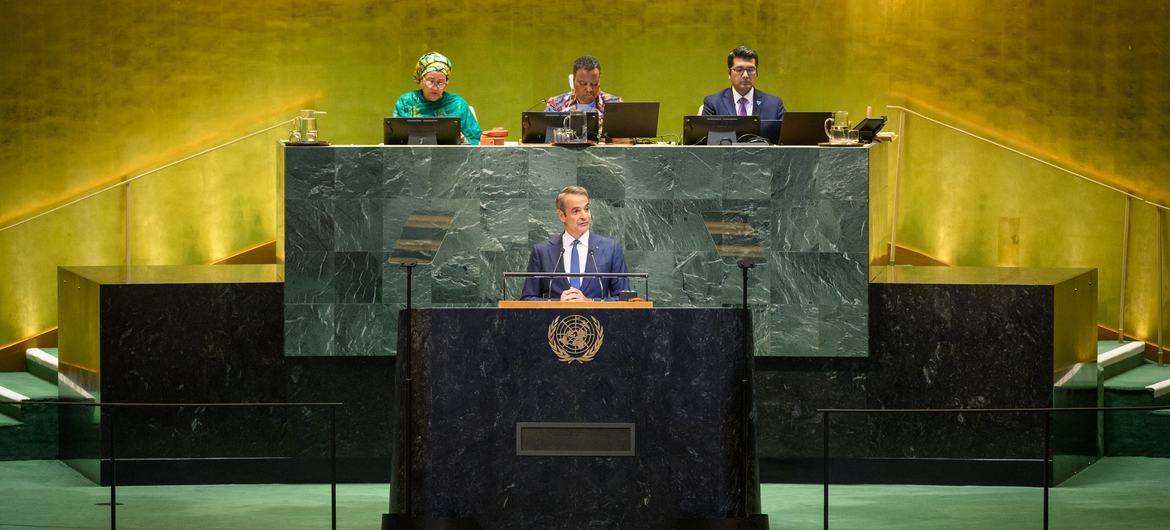
Prime Minister Kyriakos Mitsotakis of Greece addresses the general debate of the General Assembly’s 80th session.

Prime Minister Kyriakos Mitsotakis of Greece emphasized the mental health and safety of children in an era dominated by digital technology and artificial intelligence.

Warning that “we are running a massive unsupervised experiment with the brains of our children and teenagers,” he highlighted the dangers of cyberbullying, addictive content and harmful material online.

Greece has banned phones in schools and launched Kids Wallet, a government-backed app enabling parents with simple, effective tools to manage their children’s smartphone use.

Mr. Mitsotakis also proposed a pan-European “digital age of majority” to ensure age-appropriate access to online platforms, framing these measures as part of a broader effort to protect young minds while supporting safe engagement with technology.

“Just as society once set firm rules for smoking, drinking or wearing a seatbelt, we must now confront today’s challenge with equal clarity: big platforms can no longer profit at the expense of our children’s mental health,” he said.

▶ Watch the address.

Solomon Islands: Youth leading climate action
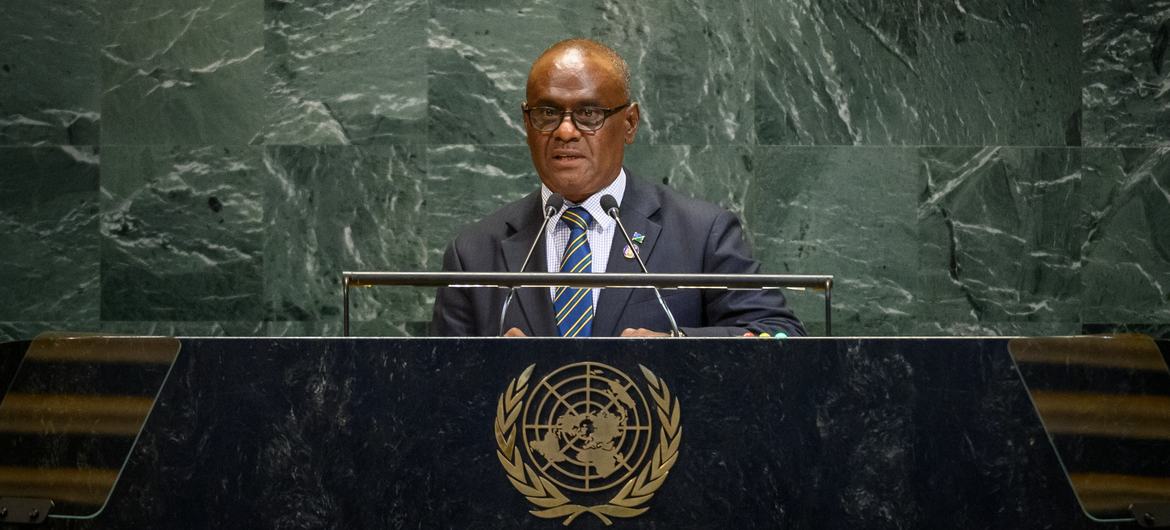
Prime Minister Jeremiah Manele of Solomon Islands addresses the general debate of the General Assembly’s 80th session.

The pivotal role of youth in global challenges was further highlighted by Prime Minister Jeremiah Manele of the Solomon Islands.

He noted that the youth in the Pacific “have stood at the forefront of this initiative, reminding us that the strength of the Pacific lies in our unity,” referencing the youth-led campaign that prompted the International Court of Justice (ICJ)’s landmark advisory opinion on climate obligations.

Mr. Manele emphasized that the ruling, which affirmed States’ responsibilities to protect the climate for present and future generations, is more than a legal finding – it is “a call to the international community that only together can we honour the 1.5°C commitment, protect the most vulnerable, and secure a just and sustainable future for all nations and peoples.”

Youth-led advocacy, he said, has brought the urgency of small island communities’ climate plight to the global stage, demonstrating how collective action can protect the most vulnerable and safeguard the planet for future generations.

▶ Watch the address.

Trinidad and Tobago: Small nations, global impact
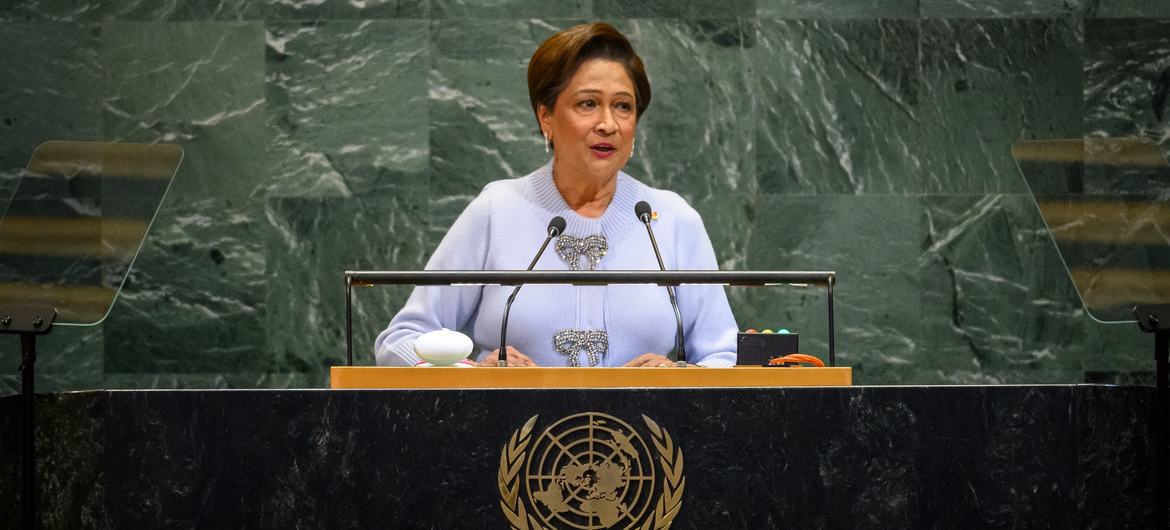
Prime Minister Kamla Persad-Bissessar of Trinidad and Tobago addresses the general debate of the General Assembly’s 80th session.

Prime Minister Kamla Persad-Bissessar of Trinidad and Tobago illustrated how even smaller nations can wield global influence when youth and children’s welfare are prioritized.

She highlighted domestic initiatives such as the Children’s Authority and Children’s Life Fund, expanded early childhood education and alignments with the global development agenda – all efforts aimed at ensuring the next generation thrives.

The Prime Minster also stressed that gender equality is inseparable from sustainable peace and development, noting that “women and girls must be equal partners in peace and sustainability.”

▶ Watch the address.

Malta: Real benefits of multilateralism
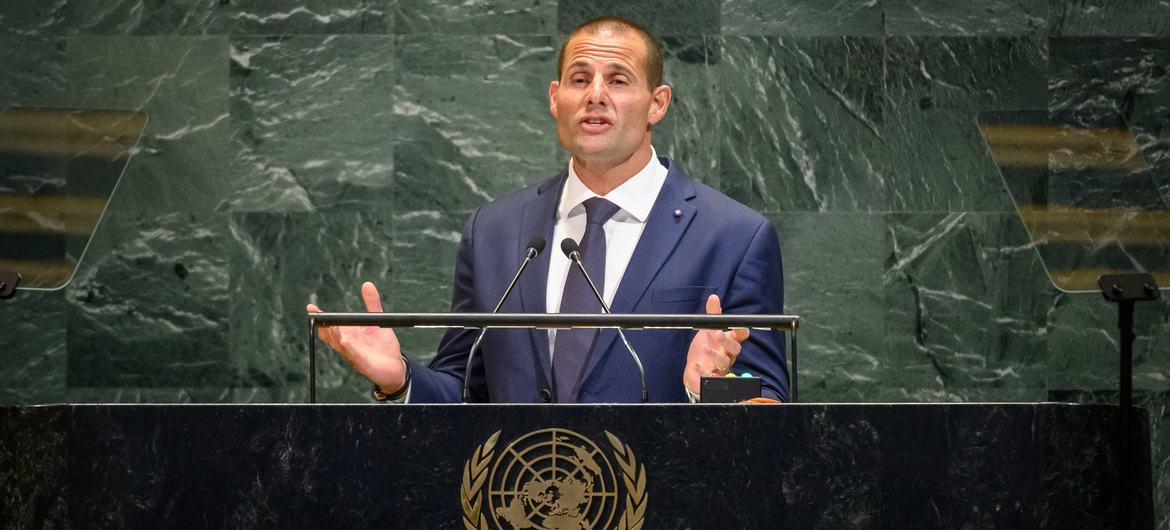
Prime Minister Robert Abela of Malta addresses the general debate of the General Assembly’s 80th session.

Prime Minister Robert Abela of Malta offered a reminder that words alone cannot end conflict, hunger, or child malnutrition – but collective action can.  

He said the life expectancy of children born in 1945, which hovered in the mid-forties, with those born in 2025, who can now expect to live into their mid-seventies.  

“That didn’t happen by luck or accident,” Mr. Abela said. “It happened by will and resolve. It happened by effort. And it happened also because of the positive work conducted by the agencies of this United Nations.”  

Reflecting on these gains, he emphasized that multilateralism remains critical:  

“We won’t keep our peoples safe, our planet protected or our prosperity preserved unless we work together, listen to each other and act in concert.”
▶ Watch the address.

UN forum to spotlight health, gender equality, oceans, in critical bid to meet development goals

The 2025 High-Level Political Forum, or HLPF, follows two recent successful UN conferences focused on vital development issues: one in June in Nice, France, dedicated to ocean protection, and another held in Sevilla, Spain, centred on boosting financing for sustainable initiatives.

The Sevilla meeting ended with a strong call to action: to urgently address the massive $4 trillion annual shortfall in financing needed to achieve the SDGs. It also highlighted the pressing need for greater investment and deep reform of the global financial system.

Held under the auspices of the UN Economic and Social Council (ECOSOC), the forum will take place from 14 to 23 July at UN Headquarters in New York.

Here are five key things to know about this year’s forum:

1. It’s all about accelerating action

The HLPF is the United Nations’ main platform for tracking global progress on the Sustainable Development Goals. It meets each year to review countries’ efforts, share solutions, and push for faster action to meet the 2030 targets

The 2025 forum is convening under the theme:

Advancing sustainable, inclusive, science- and evidence-based solutions for the 2030 Agenda for Sustainable Development and its Sustainable Development Goals leaving no one behind.

This reflects a growing sense of urgency. With the 2030 deadline fast approaching, the forum will emphasise practical, data-driven strategies to close implementation gaps– particularly in the face of intersecting global crisis including climate change, inequality, and economic instability.

The 17 Sustainable Development Goals are all interconnected, for instance progress on SDG 2 to end hunger is closely tied to advances in health and education.

2. Five SDGs in the spotlight

Each year, the HLPF conducts in-depth reviews of selected Goals. In 2025, the focus will be on:

SDG 3: Good health and well-being

SDG 5: Gender equality

SDG 8: Decent work and economic growth

SDG 14: Life below water

SDG 17: Partnerships for the goals

These Goals span a wide range of issues – from public health and gender equity to economic resilience and marine conservation.

SDG 17, which is reviewed annually, highlights the importance of revitalising global partnerships and enhancing means of implementation – including financing, which nations committed to just last month in Sevilla.

© UNICEF/Lasse Bak Mejlvang

3. Countries will share their progress, voluntarily

A hallmark of the HLPF is the Voluntary National Reviews (VNRs) – self-assessments by Member States on their progress toward the SDGs. In 2025, dozens of countries are expected to present their VNRs, offering insights into both achievements and persistent challenges.

These reviews foster transparency, peer learning, and accountability. They also provide a platform for civil society and other stakeholders to engage directly with governments on development priorities.

VNR Labs – interactive sessions focused on national reviews – create space for dialogue, innovation, and collaboration

4. It’s not just governments

While the HLPF is a UN intergovernmental platform, it brings together a diverse range of voices, including youth groups, local authorities, indigenous peoples, NGOs, academics, the private sector, and UN system agencies.

A rich programme of side events, exhibitions, and roundtable-discussions. This inclusive approach reflects the spirit of the 2030 Agenda, which recognises sustainable development is a universal, shared endeavour.

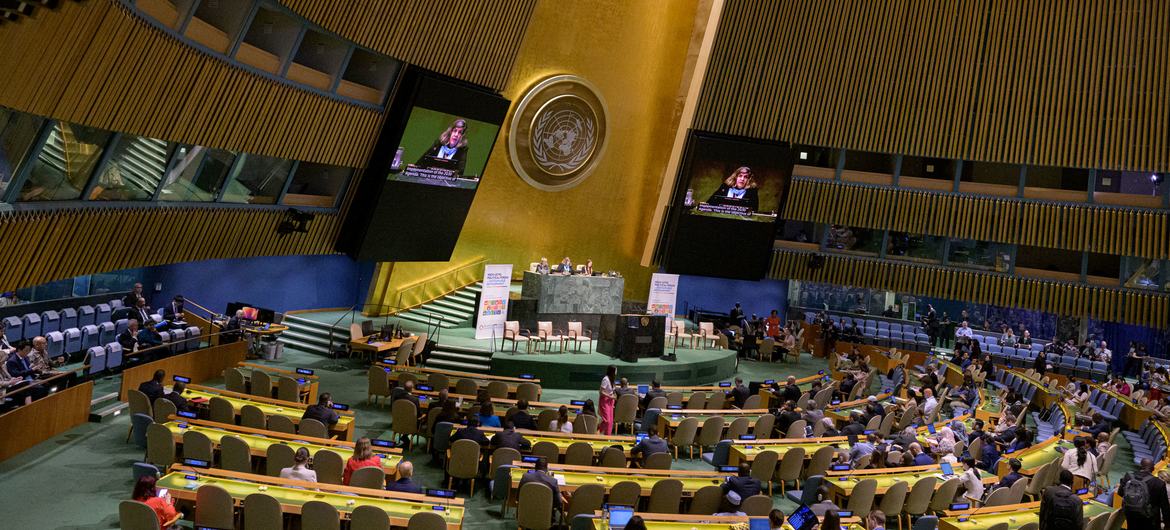
A wide view of the opening of the 2023 High-Level Political Forum on Sustainable Development convened under the auspices of the Economic and Social Council (ECOSOC), held in the General Assembly Hall.

5 – 4 – 3 – 2 – 1 The Final Countdown

With only five years left to deliver on the 2030 Agenda, the 2025 HLPF marks a critical inflection point.

It is more than a yearly check-in. This year’s session comes at a time when science, solidarity, and urgent action must converge. It will help set the tone for the next Sustainable Development Goals Summit in 2027, where world leaders will take stock of collective progress and determine the final push toward 2030.

What happens now – at this two-thirds deadline moment – will shape whether the SDGs will realise a global promise or become a missed opportunity.

Source link

Israel’s restrictions on UN agencies in Gaza in spotlight at world court

The ICJ, which sits in The Hague and is the UN’s top court, is expected to hear from 40 States and four international organizations in proceedings slated to last all week.

Representing Secretary-General António Guterres, UN Legal Counsel Elinor Hammarskjöld reiterated his many calls for a ceasefire, for humanitarian aid to reach all people in need and for all hostages to be freed.

A total of 13 UN entities are present in Gaza, Ms. Hammarskjöld noted, adding that 295 UN personnel have died in Gaza since the war began on 7 October 2023, following Hamas-led terror attacks in Israel.

Legal opinion

The UN legal counsel insisted on the special protections and immunities of UN agencies and personnel which it needs to implement its mandated activities all over the world, including in the OPT.

These protections also apply during armed conflict, Ms. Hammarskjöld said, before highlighting Israel’s obligations as the occupying power under international law.

“The overarching obligation [is] to administer the territory for the benefit of the local population and “to agree to and facilitate relief schemes”, she said “In the specific context of the current situation in the OPT, these obligations entail allowing and facilitating all relevant UN entities to carry out those activities for the benefit of the local population.”

The purpose of the hearings at the ICJ all this week is to establish what’s known as an “advisory opinion” on Israel’s obligations as the occupying power in Gaza and the wider OPT, in accordance with the UN Charter.

It follows a vote at the UN General Assembly in December where Member States voted 137 to 12 to seek the view of the ICJ’s 15 judges, amid ongoing Israeli bombardment and dramatic aid shortages across Gaza.

Although the ICJ judges’ advisory opinion is not binding – as opposed to the legal disputes between countries on which it rules (so-called “contentious cases”) – it provides clarity on legal questions.

Once the court has issued its opinion, the General Assembly would be open to pick up the matter again and decide on further action.

UNRWA shut out

Welcoming the hearings, the head of the UN agency for Palestine refugees, (UNRWA) Philippe Lazzarini, insisted that aid agencies were working “to address overwhelming needs”.

The UNRWA Commissioner-General explained that the Israeli Parliament’s widely condemned “no-contact” policy banning any coordination with UNRWA official have obstructed the delivery of essential relief services and aid.

The move is particularly significant because UNRWA is the largest aid agency in Gaza, where it has provided health, education and other vital public services for decades.

But since these restrictions came into effect at the end of January, UNRWA international staff have not received visas to enter Israel, Mr. Lazzarini said.

Inside Gaza, meanwhile, ordinary Gazans continue to face desperate food shortages linked to the 2 March decision by Israel to seal the enclave’s borders.

“Today people are not surviving in Gaza, those that aren’t being killed with bombs and bullets are slowly dying,” said Jonathan Whittall, local Head of Office for the UN aid coordination wing, OCHA. He insisted that humanitarian agencies are unable to meet soaring needs following Israel’s decision to cut all commercial and relief supplies.

“People here are being suffocated,” he maintained. “What we see around us is endless suffering under a total and complete blockade. A total closure that’s now lasted for almost two months while airstrikes, ground operations are intensifying and displacement orders that are pushing people out of their homes are increasing.”

Witness statements

The following Gaza testimonies have been provided by UNRWA:

Mona, a grandmother living in an UNRWA shelter in Gaza City:

“We only eat one meal a day, I go to sleep thinking about what we will eat tomorrow and how we will provide…I have enough flour for several days. I try to preserve it by making small loaves so that it lasts for a few more days. When children get hungry, I give them my loaf. I no longer take medicine, even if it is available, because treatment requires good food, and that is not available now.”

Wafaa, whose oldest child is seven and whose youngest is three, speaking from an UNRWA school in Gaza City:

“I have two cans of beans, some cans of peas, two cans of chickpeas, some duqqa (a spice mix), and a few kilos of flour that will only last for four days…The flour is mouldy and smells bad, but I can’t complain. When will this nightmare end?”

Source link