United Nations Revises 2026 Budget, Pairing Cost Reductions With Reforms

UN Budget Cuts and Reform Proposals Sent to ACABQ for Review

The United Nations has submitted revised budget estimates to the Advisory Committee on Administrative and Budgetary Questions (ACABQ), proposing a 15.1 per cent reduction in resources and an 18.8 per cent cut in posts in the regular budget compared with 2025. The support account for peacekeeping operations, which underpins missions worldwide, would also see reductions in the 2025/26 period.

The ACABQ, a subsidiary body advising the General Assembly, will assess the proposals before forwarding its recommendations to the Fifth Committee, where all 193 Member States decide on administrative and budgetary matters.

Targeted Reductions

In a letter to Member States, Secretary-General António Guterres explained that the cuts followed an extensive review of mandate delivery and resource allocation. Stressing that reductions were “targeted, not across the board,” he said they had been carefully calibrated to maintain balance across the UN’s three pillars—peace and security, human rights, and sustainable development.

Programmes that directly support Member States—particularly least developed, landlocked, and small island developing States—along with Africa’s development advocacy, the Peacebuilding Fund, and the Resident Coordinator system, will be shielded from reductions. Regional economic commissions will see only modest adjustments, while the Regular Programme for Technical Cooperation will continue to expand to strengthen capacity-building for developing countries.

“Reductions of this magnitude will entail trade-offs,” Guterres wrote, noting possible impacts such as narrowed scope, longer timelines, or reduced frequency of outputs. Mitigation measures will include prioritising high-impact work, pooling expertise, and relying more on virtual platforms and automation.

Reform Measures Under the UN80 Initiative

The budget revision is closely tied to the UN80 Initiative, launched in March 2025 to strengthen the Organisation amid rising global political and financial uncertainty. Alongside the cuts, the revised estimates introduce the first set of proposals under Workstream 1, focused on management and operations.

Key measures include:

  • Establishing administrative hubs in New York and Bangkok.

  • Consolidating payroll into a single global team across New York, Entebbe, and Nairobi.

  • Relocating some functions from high-cost duty stations (New York and Geneva) to lower-cost locations.

  • Vacating two leased New York buildings by 2027, with projected annual savings from 2028.

Collectively, these reforms aim to cut duplication, enhance quality, and protect mandate delivery while improving efficiency.

Three Workstreams of Reform

The UN80 Initiative is structured around three workstreams:

  1. Efficiencies and management improvements – now reflected in the revised estimates, with further measures to come.

  2. Mandate Implementation Review – a report submitted in August is under review by a new Informal Ad Hoc Working Group, meeting on 16 September.

  3. System-wide realignments – proposals on structural and programmatic clusters will be presented later this week.

Together, the workstreams signal a major reorientation of UN operations, aimed at ensuring effectiveness, credibility, and sustainability.

Next Steps and Staff Engagement

The ACABQ will begin hearings this week before passing its recommendations to the Fifth Committee, with a final General Assembly decision expected by December. If approved, changes would be phased in starting 2026, with future budget cycles reflecting additional reforms from the UN80 workstreams.

In a separate letter to UN staff, Guterres acknowledged that the changes will affect daily work and professional life but pledged full support throughout the transition. “You will be fully engaged and supported throughout the process,” he assured, promising regular communication, consultation opportunities, and practical guidance.

Acknowledging the difficulty of the decisions, the Secretary-General emphasised accountability—beginning with him, but also extending to managers and staff. He urged that reforms be carried out with fairness, empathy, and professionalism, underscoring the shared responsibility of upholding UN values during the transition.

 

‘No ordinary session’: Baerbock opens UN General Assembly with call for courage and reform

This will be “no ordinary session,” she pledged, with the multilateral system beset by overlapping crises and heightened disunity.

A former foreign minister of Germany, Ms. Baerbock becomes only the fifth woman in history to preside over the General Assembly.

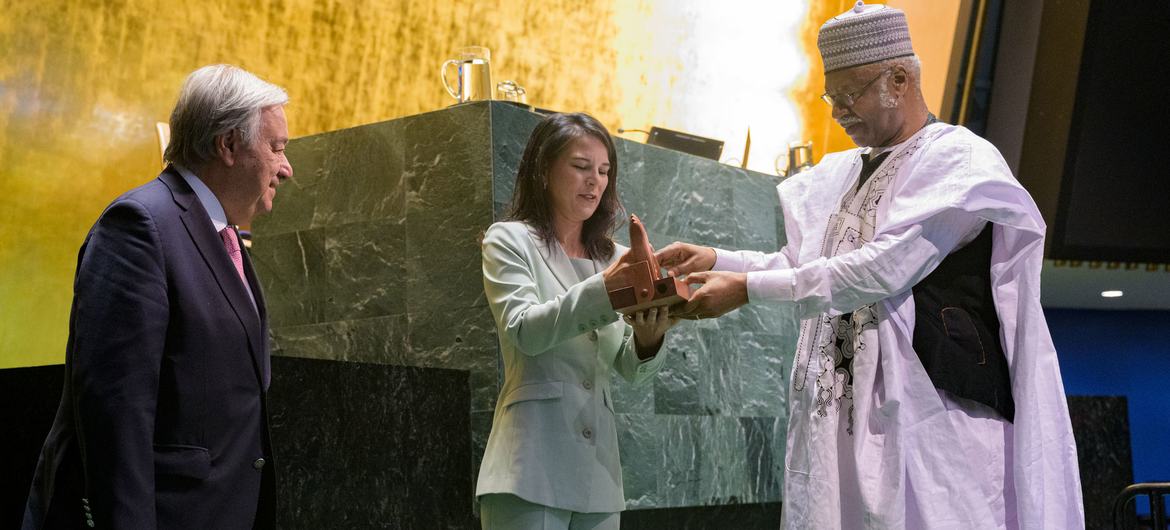
In a symbolic gesture linking past to present, she swore her oath on the UN’s founding Charter from the San Francisco Conference in 1945 – and accepted the Assembly’s ornate gavel from her predecessor, Philémon Yang of Cameroon.

The Charter itself, preserved by the US National Archives, has returned to UN Headquarters for the first time in decades.

Now on display through September, the 1945 document is more than a historical artifact – it is a living reminder of the collective pledge to build peace, uphold human rights and pursue shared values and goals through multilateral cooperation.

The gavel carries its own storied weight. A gift from Iceland, it is larger and more ornate than the ones used in UN conference rooms. The symbol of order in the “parliament of the world,” it is used to open and close meetings, adopt resolutions, and, at times, bring the Assembly to silence.

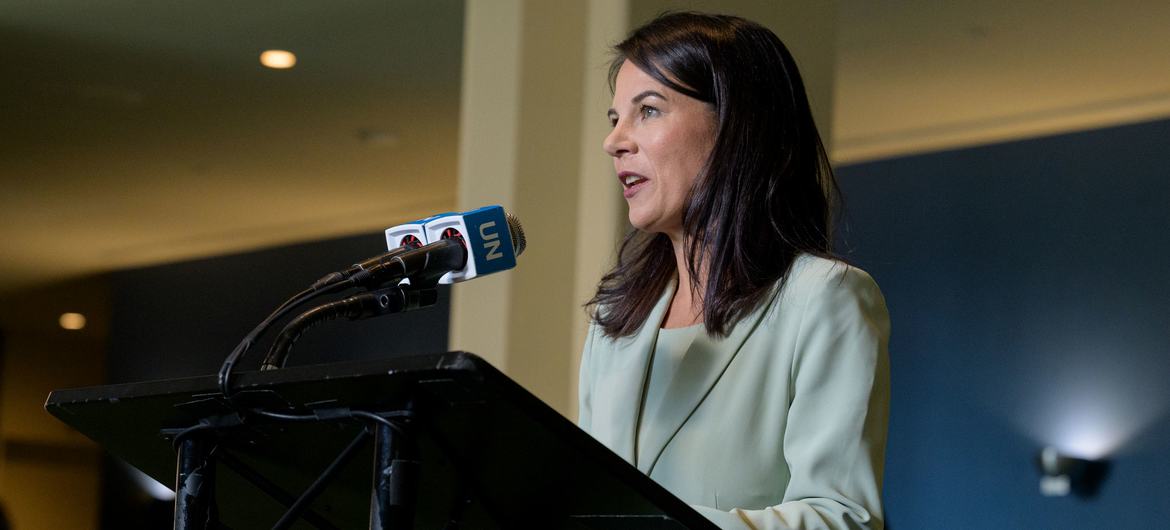
Assembly President Baerbock speaks to reporters outside the General Assembly Hall.

The world needs the United Nations

In her address, Ms. Baerbock acknowledged the grim realities facing millions across the globe – from children starving in Gaza and Afghan girls barred from school – to families in Ukraine hiding from missile attacks, and Pacific Islanders watching their homes swallowed by the sea.

Our world is in pain, indeed,” she told delegates in the General Assembly Hall.

But imagine how much more pain there would be without the United Nations.

Ms. Baerbock underscored the UN’s vital role in humanitarian assistance, citing the millions who rely on agencies such as the UN Children’s Fund (UNICEF), the World Food Programme (WFP) and the World Health Organization (WHO).

She urged Member States to make the UN “fit for the 21st century” by advancing reforms, implementing the Pact for the Future adopted last year, and focusing on substance over procedure.

The General Assembly must focus on its mandates and deliver on its commitments,” she said, promising to serve all 193 members equally, to be “a bridge builder,” and to ensure every voice is heard.

Among the priorities she set for the year ahead are implementing the UN80 reform agenda, guiding the process of selecting the next Secretary-General, and advancing peace, sustainable development, and human rights.

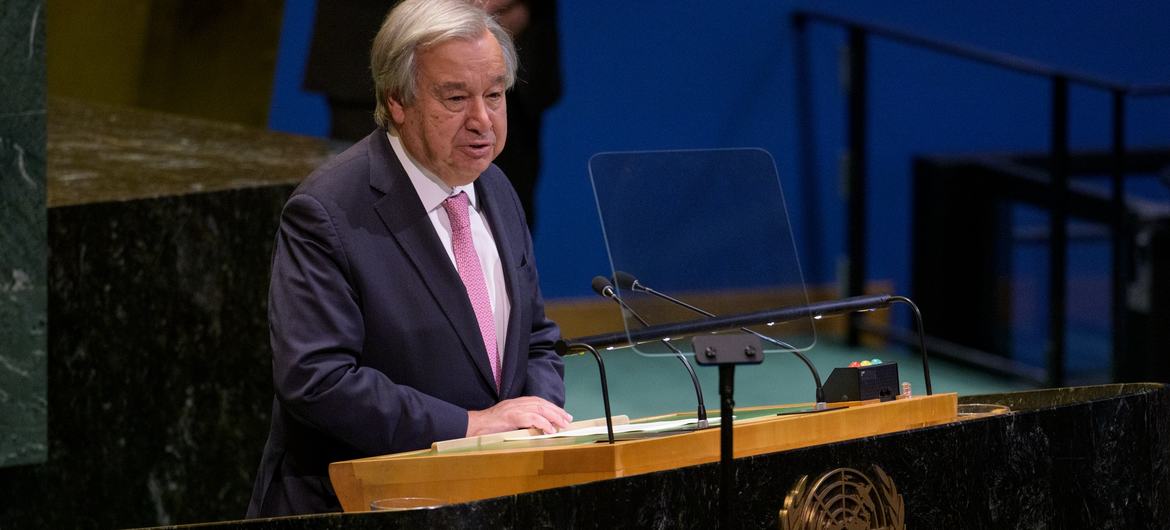
Secretary-General António Guterres addresses the first plenary meeting of the 80th session of the General Assembly.

The Charter is not self-executing: Guterres

Secretary-General António Guterres, congratulating Ms. Baerbock on her election, praised her vision and experience, while urging governments to summon the same resolve that brought nations together to establish the UN 80 years ago.

The United Nations provides the place. The Charter provides the tools,” he said. “But nothing can happen without this Assembly – all of you – working as one.

Mr. Guterres stressed the need to heal divisions, recommit to international law, accelerate action on the Sustainable Development Goals, and transition to renewable energy while supporting developing countries.

He pointed to last year’s Pact for the Future as a “shot in the arm” for multilateralism and called on Member States to “re-build trust and faith in one another.”

Philémon Yang (right), President of the General Assembly at its 79th session presents the Assembly’s iconic gavel to Annalena Baerbock (centre), President of the Assembly at its 80th session. On the left is Secretary-General António Guterres.

‘Collective promise’ remains

Earlier in the day, outgoing Assembly President Philémon Yang closed the 79th session, highlighting initiatives on humanitarian law, small arms control, sustainable development, and child labour – as well as dialogues on multilingualism and the role of women in mediation.

Mr. Yang, who emphasised gender equality and Security Council reform during his tenure, also oversaw the 80th anniversary commemoration.

Member States made clear that in spite of rising global conflicts, the Charter, and the United Nations itself, represent a collective promise for a better future world,” he said.

A year of high stakes

Ms. Baerbock’s presidency comes at a pivotal moment for the United Nations.

Alongside navigating conflicts from Ukraine to Sudan, the Assembly will oversee the implementation of the Pact for the Future and prepare for the critical selection of the next Secretary-General.

She challenged delegates to embrace courage and unity: “If girls in Afghanistan or parents in Gaza can wake up – in the darkest hours of life – and push forward, then so can we. We owe it to them. But we owe it also to ourselves, because there is simply no alternative.”

Source link

A mandate for change: UN releases proposals for streamlining of tasks as part of major reform agenda

Mandates – requests or directives for action issued by the General Assembly, the Security Council and the Economic and Social Council – have multiplied significantly since 1945. Today, there are more than 40,000 active mandates, serviced by around 400 intergovernmental bodies. Together, they require more than 27,000 meetings a year and generate roughly 2,300 pages of documentation every day, at an estimated annual cost of $360 million.

A growing challenge

Mandates guide the UN’s work in over 190 countries and territories, from peacekeeping to humanitarian response and development. But many are outdated or overlapping, and their complexity is increasing. Since 2020, the average word count of General Assembly resolutions has risen by 55 per cent, while Security Council resolutions are now three times longer than they were 30 years ago.

“Let’s face facts,” said Secretary-General António Guterres during a briefing to the General Assembly on Friday, “we cannot expect far greater impact without the means to deliver. By spreading our capacities so thin, we risk becoming more focused on process than on results.”

A lack of coordination adds to the strain. Several UN entities cite the same mandates to justify separate programmes and budgets, leading to duplication and reduced impact. More than 85 per cent of mandates contain no provisions for review or termination. “Effective reviews are the exception, not the rule,” Mr. Guterres said. “The same mandates are discussed year after year – often with only marginal changes to existing texts.”

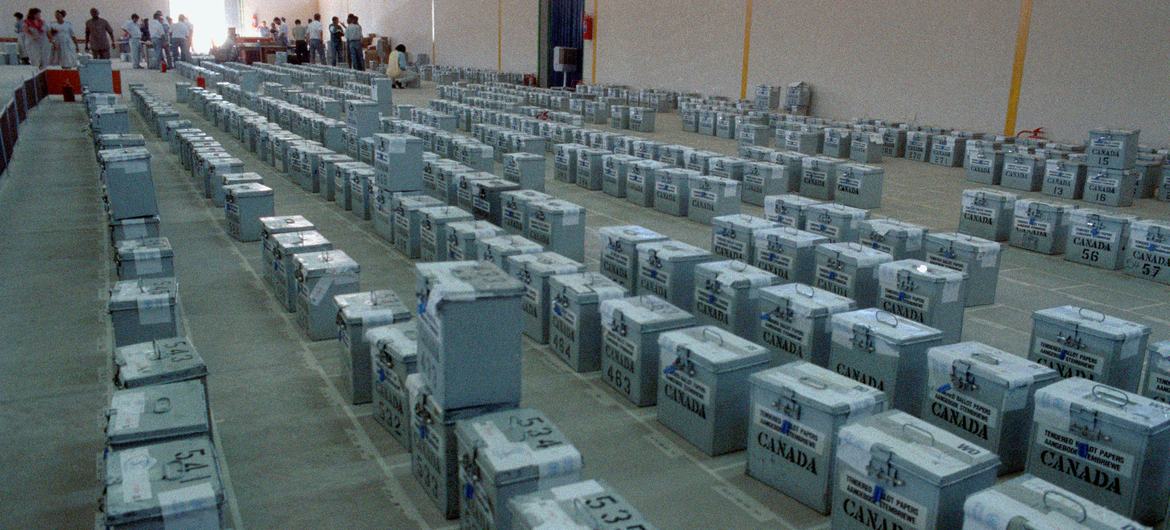
The UN has carried out mandates across the world including certifying the election in Namibia in 1989.

The UN80 Initiative: a systemic approach

The Report of the Mandate Implementation Review, released on 31 July, is part of the Secretary-General’s broader UN80 Initiative – a multi-year effort to modernize how the UN works. Rather than assess mandates individually, the report takes a “lifecycle” approach, looking at how mandates are created, implemented and reviewed, and proposing ways to improve each stage.

“Let me be absolutely clear: mandates are the business of Member States,” Mr. Guterres told the General Assembly. “They are the expression of your will. And they are the sole property and responsibility of Member States. The vital task of creating, reviewing or retiring them lies with you – and you alone. Our role is to implement them – fully, faithfully, and efficiently.”

“This report respects that division,” he added. “It looks at how we carry out the mandates you entrust to us.”

From creation to delivery

To address duplication and complexity, the report calls for digital mandate registries that make it easier to track what has been adopted across different bodies. It also encourages shorter, clearer resolutions with realistic resource requirements. “We cannot expect far greater impact without the means to deliver,” Mr. Guterres said.

The report also highlights the growing operational burden of meetings and reports. Last year, the UN system supported 27,000 meetings and produced 1,100 reports – three out of five on recurring topics. “Meetings and reports are essential,” Mr. Guterres said. “But we must ask: Are we using our limited resources in the most effective way?”

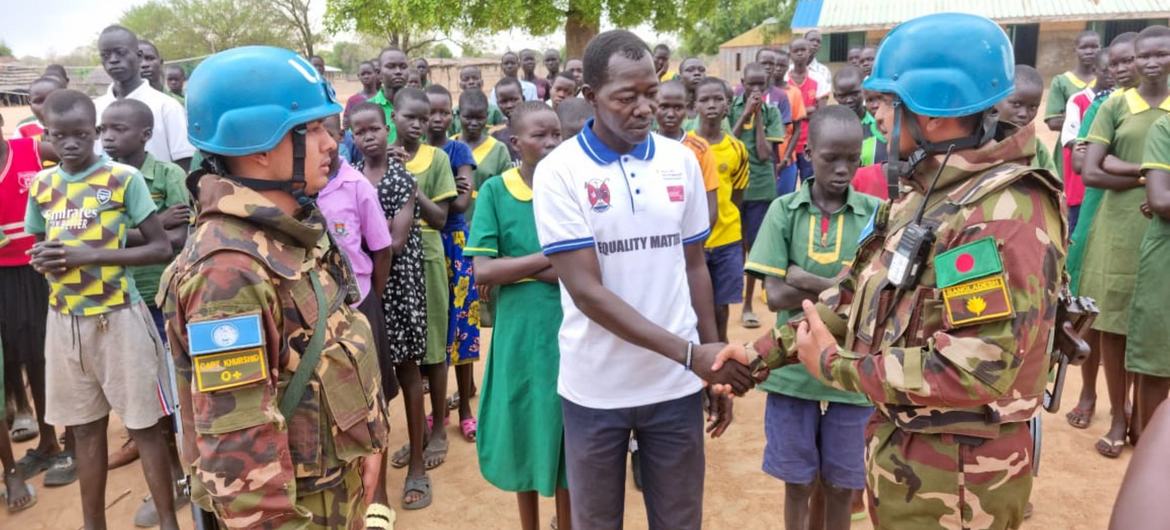
The UN peacekeeping mission in South Sudan, UNMISS, was mandated by the Security Council.

Funding and impact

Proposals include reducing the number of reports and meetings, streamlining formats and monitoring report usage to ensure relevance. The Secretary-General is also calling for stronger coordination among UN entities to avoid overlap and ensure each mandate is linked to clear deliverables.

The report warns that fragmented funding is undermining coherent delivery. In 2023, 80 per cent of the UN’s funding came from voluntary contributions, 85 per cent of which were earmarked. “Fragmented funding, combined with fragmented implementation, leads to fragmented impact,” said Mr. Guterres. “Each of us has a role to play to address this. And each of us must act on the levers within our control.”

Putting people first

For the Secretary-General, reforms are not only about process but about impact. “Mandates are not ends in themselves,” he said. “They are tools – to deliver real results, in real lives, in the real world.”

He praised UN staff as central to this effort. “None of the work in implementing mandates is possible without our staff – the women and men of the United Nations,” Mr. Guterres said. “Their expertise, dedication and courage are indispensable to this endeavor. If we are to improve how we implement mandates, we must also support and empower the people who carry them out.”

Many of the UN’s mandates are agreed at the Security Council at UN Headquarters in New York.

A call to Member States

In his concluding remarks, the Secretary-General underscored that the next steps must come from Member States. “The path forward is yours to decide,” he said. “My responsibility is to ensure that the Secretariat provides the capacities and inputs required by the course of action that you choose.”

The report invites Member States to consider a time-bound intergovernmental process to carry proposals forward and ensure that this effort succeeds where earlier ones have fallen short. The upshot, the report says, would be a more agile, coherent and impactful UN that is better at delivering programmes and services. 

Source link