

Healing the ozone layer: ‘Guided by science, united in action’

Last century, scientists confirmed the alarming reality of a significant depletion in the ozone layer – an invisible shield of gas which surrounds the earth and protects it from the sun’s UV rays.

The collection of ozone-depleting substances included CFCs, or chlorofluorocarbons, which in the mid-1980s were commonly found in everyday products such as air conditioners, fridges and aerosol cans.

Science led to global action. Realising that harmful UV radiation was entering the atmosphere through what was potentially a damaged ozone layer, countries made a commitment under the Vienna Convention in 1985, to do what was needed for the protection of the people and the planet.

The Vienna Convention and its Montreal Protocol became a landmark of multilateral success,” said the UN Secretary General António Guterres in a message for this year’s World Ozone Day.

“Today, the ozone layer is healing,” he said.

What is the Vienna Convention?

Forty years ago, countries came together to take the first step in protecting the ozone layer, “guided by science, united in action,” the UN chief continued.

The Vienna Convention for the Protection of the Ozone Layer, adopted and signed by 28 countries on 22 March 1985, formalised universal cooperation over the protection of the fragile ozone layer.

It is the first treaty to be signed by every country in the world and the precursor to the Montreal Protocol.

The objective of the Montreal Protocol is to monitor the global production and consumption of substances that deplete the ozone layer – and eventually eliminate them.

Multilateralism at its best

In a video message, Inger Andersen, Executive Director of the UN Environment Programme (UNEP), highlighted that through action under the conventions “ozone depleting substances have now been virtually eradicated and the hole in ozone layer is closing.”

After scientists sounded the alarm, countries, nations, and businesses came together and took action for the planet.

“That is multilateralism at its very, very best,” she added.

The Montreal Protocol has been progressing well in both developed and developing countries with most phase-out schedules – the time given for each country to gradually stop the production of harmful substances – adhered to or even surpassed.

This achievement reminds us that when nations heed the warnings of science, progress is possible,” remarked Mr. Guterres.

Next in line, the Kigali Amendment

In his message, Mr. Guterres urged governments to ratify and implement the Kigali Amendment to the Montreal Protocol, which commits to phase down, or reduce, hydrofluorocarbons (HFCs), greenhouse gases used mainly in cooling technologies.

“Implementing the Kigali Amendment could avoid up to 0.5 degrees Celsius of warming by the end of the century,” he said. “Paired with energy-efficient cooling, we could double these gains.”

As outlined in the Paris Agreement, countries have agreed to try and limit the rise of global temperature to 1.5 degrees Celsius.

“On this World Ozone Day, let’s recommit to preserving our ozone layer and to protecting people and planet for generations to come,” the UN chief said. 
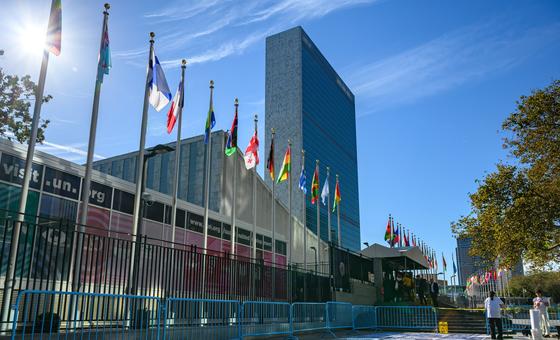
United Nations Revises 2026 Budget, Pairing Cost Reductions With Reforms

UN Budget Cuts and Reform Proposals Sent to ACABQ for Review

The United Nations has submitted revised budget estimates to the Advisory Committee on Administrative and Budgetary Questions (ACABQ), proposing a 15.1 per cent reduction in resources and an 18.8 per cent cut in posts in the regular budget compared with 2025. The support account for peacekeeping operations, which underpins missions worldwide, would also see reductions in the 2025/26 period.

The ACABQ, a subsidiary body advising the General Assembly, will assess the proposals before forwarding its recommendations to the Fifth Committee, where all 193 Member States decide on administrative and budgetary matters.

Targeted Reductions

In a letter to Member States, Secretary-General António Guterres explained that the cuts followed an extensive review of mandate delivery and resource allocation. Stressing that reductions were “targeted, not across the board,” he said they had been carefully calibrated to maintain balance across the UN’s three pillars—peace and security, human rights, and sustainable development.

Programmes that directly support Member States—particularly least developed, landlocked, and small island developing States—along with Africa’s development advocacy, the Peacebuilding Fund, and the Resident Coordinator system, will be shielded from reductions. Regional economic commissions will see only modest adjustments, while the Regular Programme for Technical Cooperation will continue to expand to strengthen capacity-building for developing countries.

“Reductions of this magnitude will entail trade-offs,” Guterres wrote, noting possible impacts such as narrowed scope, longer timelines, or reduced frequency of outputs. Mitigation measures will include prioritising high-impact work, pooling expertise, and relying more on virtual platforms and automation.

Reform Measures Under the UN80 Initiative

The budget revision is closely tied to the UN80 Initiative, launched in March 2025 to strengthen the Organisation amid rising global political and financial uncertainty. Alongside the cuts, the revised estimates introduce the first set of proposals under Workstream 1, focused on management and operations.

Key measures include:

  • Establishing administrative hubs in New York and Bangkok.

  • Consolidating payroll into a single global team across New York, Entebbe, and Nairobi.

  • Relocating some functions from high-cost duty stations (New York and Geneva) to lower-cost locations.

  • Vacating two leased New York buildings by 2027, with projected annual savings from 2028.

Collectively, these reforms aim to cut duplication, enhance quality, and protect mandate delivery while improving efficiency.

Three Workstreams of Reform

The UN80 Initiative is structured around three workstreams:

  1. Efficiencies and management improvements – now reflected in the revised estimates, with further measures to come.

  2. Mandate Implementation Review – a report submitted in August is under review by a new Informal Ad Hoc Working Group, meeting on 16 September.

  3. System-wide realignments – proposals on structural and programmatic clusters will be presented later this week.

Together, the workstreams signal a major reorientation of UN operations, aimed at ensuring effectiveness, credibility, and sustainability.

Next Steps and Staff Engagement

The ACABQ will begin hearings this week before passing its recommendations to the Fifth Committee, with a final General Assembly decision expected by December. If approved, changes would be phased in starting 2026, with future budget cycles reflecting additional reforms from the UN80 workstreams.

In a separate letter to UN staff, Guterres acknowledged that the changes will affect daily work and professional life but pledged full support throughout the transition. “You will be fully engaged and supported throughout the process,” he assured, promising regular communication, consultation opportunities, and practical guidance.

Acknowledging the difficulty of the decisions, the Secretary-General emphasised accountability—beginning with him, but also extending to managers and staff. He urged that reforms be carried out with fairness, empathy, and professionalism, underscoring the shared responsibility of upholding UN values during the transition.