
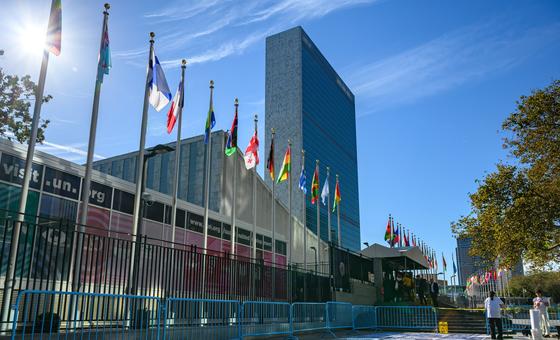
West Bank: New Israeli measures further erode prospects for two-State solution

The measures would make it easier for Jewish settlers to take over Palestinian land, thus expanding Israel’s power in the territory, according to media reports. 

The UN chief warned that the current trajectory on the ground – including this decision – is eroding the prospect for the two-State solution, according to a statement issued by his Spokesperson. 

Settlements are illegal 

He reiterated that all Israeli settlements in the occupied West Bank, including East Jerusalem, and their associated regime and infrastructure, have no legal validity and constitute a flagrant violation of international law, including relevant UN resolutions. 

“Such actions, including Israel’s continued presence in the Occupied Palestinian Territory are not only destabilizing but – as recalled by the International Court of Justice – unlawful,” the statement said. 

 The Secretary-General called on Israel to reverse the measures. 

He also urged all parties “to preserve the only path to lasting peace, a negotiated two-State solution, in line with relevant Security Council resolutions and international law.” 

Heading off course 

UN Spokesperson Stéphane Dujarric was asked about the statement during his regular briefing to journalists in New York. 

“These decisions are not moving us in the right direction,” he said. 

“They are driving us further and further away from a two-State solution and from the ability of the Palestinian authority and the Palestinian people to control their own destiny.” 

Ongoing aid efforts in Gaza 

Meanwhile, humanitarians in the Gaza Strip continue to respond to the immense needs of the population despite impediments and a challenging operating environment. 

The UN and partners are serving hundreds of thousands of meals each day, in addition to providing digital cash and monthly rations, Mr. Dujarric said. 

Colleagues report that Gaza City continues to face a severe shortage of drinking and domestic water despite the recent re-opening of the valve on the Mekorot supply line there that connects Israel to Gaza for fresh water.  

Water and hygiene support 

Currently, only 6,000 cubic metres of water are reaching people in Gaza City every day, with significant losses in hard-to-reach areas.  

“To mitigate this shortfall, we and our partners have increased water production and trucked deliveries from groundwater wells and private sector desalination plants,” he said. 

Aid partners have distributed over 100,000 water jerry cans across the Gaza Strip since late January, he added. 

They have also provided over 700,000 bars of soap, over 25,000 hygiene kits, over 400 household latrines, and 250 anti-lice kits 

Explosive ordnance threat 

Since Wednesday, humanitarians working in mine action have conducted over 200 assessments of potential explosive hazards in support of the removal of debris. 

They reached over 10,000 children and adults last week with education warning them of the risks of explosive ordnance which remains a major threat.  

Thirty-three explosive ordnance incidents have been reported since the ceasefire came into effect last October, resulting in nine deaths and 65 injuries.  

Restrictions and limitations 

UN aid coordination office, OCHA, noted that humanitarians continue to be hampered by restrictions, including limitations on the entry of so-called “dual use” items and those listed as non-humanitarian in nature. 

This includes spare parts and certain shelter materials.  

Humanitarian operations are also being undermined by Israel’s de-registration of some international non-governmental organizations (NGOs) and restrictions imposed on the UN agency that assists Palestine refugees – UNRWA – and sister agencies. 

Source link

Intensifying ISIL threat highlights need to step up counter-terrorism measures

Alexandre Zouev, Acting Under-Secretary-General at the UN Office of Counter-Terrorism (UNOCT), presented its latest report which highlights the group’s intensifying presence in Africa, the Middle East and beyond. 

He said the threat posed by ISIL, also known by its Arabic acronym, Da’esh, has “increased steadily” since the previous report issued in August, “remaining multipolar and increasingly complex.” 

Instability in West Africa  

ISIL and its affiliates have continued to recruit foreign fighters, enhance their use of new and emerging technologies, and maintain access to funding – including through measures such as unlawful taxation and kidnapping for ransom. 

The terrorists have also continued to expand their presence in parts of Africa. 

“Their efforts and demonstrated capacity to control territory are deepening regional instability and further weakening the capacity of national authorities to address interconnected security, human rights, and development challenges,” he said. 

The situation in West Africa and the Sahel remains especially urgent, where the ISIL affiliate in the Lake Chad Basin region “has further expanded its prominence.” 

Attacks in Iraq and Syria 

Da’esh also remains active in Iraq and Syria “with continued attacks and renewed efforts to destabilise local authorities.” 

Syria is undergoing political transition following the overthrow of the Assad regime in December 2024. “The security situation remains fragile, with Da’esh continuing to exploit governance vacuums and incite sectarian tensions,” he said. 

Mr. Zouev also highlighted the situation in the country’s northeast, where tens of thousands of people with alleged ties to the group – mainly women and children – remain in camps in dire conditions. 

The withdrawal of the Kurdish-led Syrian Democratic Forces from notorious Al Hol last month “has also introduced new operational and humanitarian challenges,” he added. 

Meanwhile, ISIL-Khorasan in Afghanistan “continues to pose one of the most serious threats to the region and beyond.”   

The group was behind the “heinous terrorist attack” in the capital, Kabul, on 19 January which killed seven people and injured several others, including a child. 

Use of AI in recruitment  

Mr. Zouev said progress in countering terrorism financing has led Da’esh and other groups to further exploit digital platforms and new technologies, with expanded use of crypto-currencies, drones and other tools. 

Artificial Intelligence is increasingly used by terrorist groups particularly for the radicalisation and recruitment of people, with youth and children among those deliberately targeted,” he said. 

In the face of the intensifying threat posed by Da’esh, the counter-terrorism chief underlined three central calls made by the UN SecretaryGeneral in the report. 

© UNOCHA/Ali Haj Suleiman

Women and children walk through the Al Hol Camp in Syria, a displacement site housing over 30,000 people.

Areas for action 

He urged countries to step up efforts to repatriate people from the camps and detention facilities in northeast Syria. 

As the situation in parts of Africa – particularly the Sahel, West Africa and the Lake Chad Basin – remains deeply concerning, “Member States must exercise political ownership and forge unified, coherent, and joint responses.”  

Mr. Zouev stressed that lasting progress requires comprehensive approaches by both the government and society that are firmly rooted in the rule of law and in full accordance with international human rights norms, 

Therefore, “nationally owned and inclusive prevention” must remain at the heart of international counter-terrorism efforts. 

“The intensification of the threat posed by Da’esh and its affiliates, despite significant national and international efforts, underscores how imperative it is to sustain global cooperation on counter-terrorism,” he said. 

Technical assistance to countries 

Nathalia Gherman, Executive Director of the Counter-Terrorism Committee Executive Directorate (CTED) – the secretariat for the Council’s own Counter-Terrorism Committee (CTC) – also briefed ambassadors. 

She said the last six months have demonstrated that “Da’esh continues to perpetrate and inspire terrorist attacks globally,” with devastating impacts.   

CTED has conducted assessment visits to Austria, Cameroon, Chad, Hungary, Malta, Norway and Somalia over the past year, 

“We work closely with each Member State that we visit to provide tailored recommendations and identify technical assistance needs,” she explained. 

UN counter-terrorism efforts ‘critical’ 

Ms. Gherman gave the example of CTED’s support for a project to address the use of the internet, social media and video games by Da’esh and Al Shabaab in Somalia and the broader region. 

The initiative brought together 70 representatives from national authorities in Somalia, Djibouti, Ethiopia, Kenya, and Uganda, as well as participants from civil society, academia and the private sector. 

The efforts of the United Nations to address the Da’esh threat are critical,” she said, 

“These efforts require adequate resources and the cooperation of all Member States to achieve our shared goal: a world free from terrorism.” 

Source link

United Nations Revises 2026 Budget, Pairing Cost Reductions With Reforms

UN Budget Cuts and Reform Proposals Sent to ACABQ for Review

The United Nations has submitted revised budget estimates to the Advisory Committee on Administrative and Budgetary Questions (ACABQ), proposing a 15.1 per cent reduction in resources and an 18.8 per cent cut in posts in the regular budget compared with 2025. The support account for peacekeeping operations, which underpins missions worldwide, would also see reductions in the 2025/26 period.

The ACABQ, a subsidiary body advising the General Assembly, will assess the proposals before forwarding its recommendations to the Fifth Committee, where all 193 Member States decide on administrative and budgetary matters.

Targeted Reductions

In a letter to Member States, Secretary-General António Guterres explained that the cuts followed an extensive review of mandate delivery and resource allocation. Stressing that reductions were “targeted, not across the board,” he said they had been carefully calibrated to maintain balance across the UN’s three pillars—peace and security, human rights, and sustainable development.

Programmes that directly support Member States—particularly least developed, landlocked, and small island developing States—along with Africa’s development advocacy, the Peacebuilding Fund, and the Resident Coordinator system, will be shielded from reductions. Regional economic commissions will see only modest adjustments, while the Regular Programme for Technical Cooperation will continue to expand to strengthen capacity-building for developing countries.

“Reductions of this magnitude will entail trade-offs,” Guterres wrote, noting possible impacts such as narrowed scope, longer timelines, or reduced frequency of outputs. Mitigation measures will include prioritising high-impact work, pooling expertise, and relying more on virtual platforms and automation.

Reform Measures Under the UN80 Initiative

The budget revision is closely tied to the UN80 Initiative, launched in March 2025 to strengthen the Organisation amid rising global political and financial uncertainty. Alongside the cuts, the revised estimates introduce the first set of proposals under Workstream 1, focused on management and operations.

Key measures include:

  • Establishing administrative hubs in New York and Bangkok.

  • Consolidating payroll into a single global team across New York, Entebbe, and Nairobi.

  • Relocating some functions from high-cost duty stations (New York and Geneva) to lower-cost locations.

  • Vacating two leased New York buildings by 2027, with projected annual savings from 2028.

Collectively, these reforms aim to cut duplication, enhance quality, and protect mandate delivery while improving efficiency.

Three Workstreams of Reform

The UN80 Initiative is structured around three workstreams:

  1. Efficiencies and management improvements – now reflected in the revised estimates, with further measures to come.

  2. Mandate Implementation Review – a report submitted in August is under review by a new Informal Ad Hoc Working Group, meeting on 16 September.

  3. System-wide realignments – proposals on structural and programmatic clusters will be presented later this week.

Together, the workstreams signal a major reorientation of UN operations, aimed at ensuring effectiveness, credibility, and sustainability.

Next Steps and Staff Engagement

The ACABQ will begin hearings this week before passing its recommendations to the Fifth Committee, with a final General Assembly decision expected by December. If approved, changes would be phased in starting 2026, with future budget cycles reflecting additional reforms from the UN80 workstreams.

In a separate letter to UN staff, Guterres acknowledged that the changes will affect daily work and professional life but pledged full support throughout the transition. “You will be fully engaged and supported throughout the process,” he assured, promising regular communication, consultation opportunities, and practical guidance.

Acknowledging the difficulty of the decisions, the Secretary-General emphasised accountability—beginning with him, but also extending to managers and staff. He urged that reforms be carried out with fairness, empathy, and professionalism, underscoring the shared responsibility of upholding UN values during the transition.
 

Trade measures critical to ending plastic pollution

That assessment by UN trade and development body, UNCTAD, comes in an update published on Thursday ahead of the final round of talks to develop a legally binding international instrument against plastic pollution.

“Although plastics are directly linked to the triple planetary crisis – pollution, biodiversity loss, and climate change – there is still no comprehensive international treaty governing their composition, design, production, trade, and disposal,” UNCTAD said.

Polluting our oceans

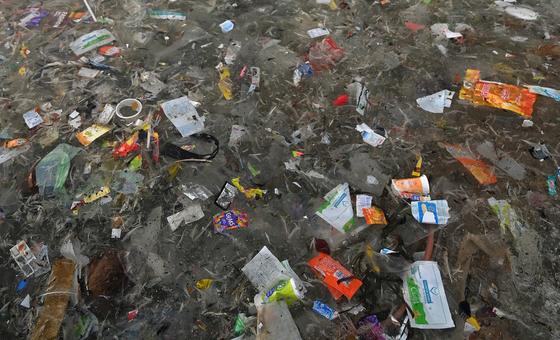
In 2023, plastic production reached 436 million metric tonnes worldwide, with the traded value surpassing $1.1 trillion.  It also accounted for 5 per cent of total merchandise trade.

However, 75 per cent of all plastics ever produced have become waste, most of which has ended up in the world’s oceans and ecosystems.

This pollution also threatens food systems and human well-being, especially in small island and coastal developing countries with limited capacity to cope.

Support for substitutes

UNCTAD is advocating for tariff and non-tariff measures to support ecologically sustainable plastic substitutes which often are derived from natural sources such as minerals, plants or animals, and can be recycled or turned into compost.

Global trade in these substitutes reached $485 billion in 2023, with an annual growth of 5.6 per cent in developing economies.

Scaling up will require action to address challenges related to tariff and non-tariff measures, limited market access and weak regulatory incentives.

Tariff disparities

UNCTAD explained that a reduction in tariffs on plastic and rubber products over the past 30 years – from 34 per cent to 7.2 per cent – has made them “artificially inexpensive”.  Meanwhile, alternatives such as paper, bamboo, natural fibres and seaweed face average tariffs of 14.4 per cent

“These disparities in how materials are treated discourage investment in alternative products and hinder innovation in developing countries that aim to export safer and more sustainable alternatives to fossil fuel-based plastics,” it said.

Currently, 98 per cent of plastics are derived from fossil fuels, meaning that emissions and environmental damage are expected to rise if left unchecked. In response, many countries are using non-tariff measures such as bans, labelling requirements and product standards.

However, these regulations differ, leading to fragmentation and increased compliance costs. Furthermore, small businesses and low-income exporters struggle in the face of overlapping or inconsistent requirements, thus affecting how they can both participate in and benefit from sustainable trade.

Hope for treaty talks

For UNCTAD, the talks towards the plastic pollution treaty are promising. They began in 2022, with the final round taking place next week at the UN in Geneva.

The treaty would cover the entire life cycle of plastics – production, consumption, and waste – within a fair and comprehensive framework.

The UN agency said a successful treaty should include tariff and non-tariff measures to support sustainable substitutes for plastic, investment in waste management and circular infrastructure, digital tools for traceability and customs compliance, as well as policy coherence across frameworks reached through the World Trade Organization (WTO); the UN climate secretariat, UNFCCC; the Basel Convention on hazardous waste, and related regional measures.

Source link

UN chief reports progress in Cyprus talks, urges swift implementation of trust measures

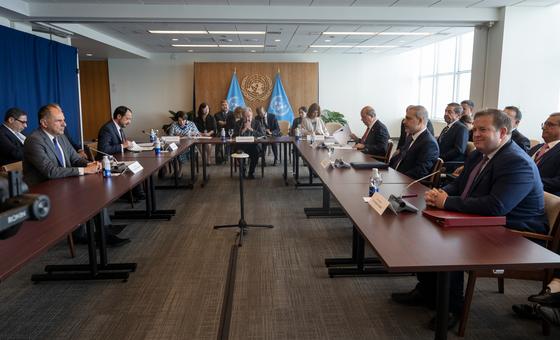
Mr. Guterres was speaking to reporters after hosting Greek Cypriot leader Nikos Christodoulides and Turkish Cypriot leader Ersin Tatar at the UN Headquarters in New York.

Today’s discussions were constructive. Both leaders reviewed the progress on the six initiatives they agreed to in March to build trust,” he said.

Out of these six initiatives, four have been achieved: the creation of a technical committee on youth, initiatives on the environment and climate change, restoration of cemeteries, and an agreement on demining that will be closed once the final technical details are established.

“And discussions will continue on the remaining two,” the UN chief added, referring to the opening of four crossing points on the divided island and solar energy in the buffer zone.

New initiatives

In addition, the leaders reached a common understanding on new initiatives, including a consultative body for civil society engagement, exchanging cultural artifacts, improving air quality monitoring, and addressing microplastic pollution.

It is critical to implement these initiatives – all of them – as soon as possible for the benefit of all Cypriots,” Mr. Guterres said.

The Secretary-General also confirmed that he will meet both leaders again during the UN General Assembly’s high‑level week in September. Another informal meeting in the same format is planned later this year.

A long road ahead

There’s a long road ahead. And it is important to think about what the future can mean – for all Cypriots,” he said.

But these steps clearly demonstrate a commitment to continuing a dialogue on the way forward and working on initiatives that benefit all Cypriots,” he added.

Secretary-General Guterres speaks to the media at the UN Headquarters, in New York.

Supporting dialogue

The United Nations has been playing a central role in efforts towards a comprehensive and mutually acceptable settlement to the Cyprus issue, supporting dialogue between Greek Cypriot and Turkish Cypriot leaders.

While sufficient common ground has not been found to allow for the resumption of formal negotiations, engagement towards that end continues – including informal meetings convened by the Secretary-General and other top UN officials.

Meanwhile, the UN Peacekeeping Force in Cyprus (UNFICYP), deployed since 1964, remains on the ground, helping to maintain stability across the island.

Source link

Wildlife Report Calls for Better Human-Wildlife Management to End Conflicts

Stressing the need to strengthen human-wildlife conflict management across India in view of up to 32 wildlife species damaging life and property in this nation of 1.2 billion people, a recent study published in the July 2017 edition of Human Dimensions of Wildlife sought a better management approach to end the conflict.

The researchers have called for the identification of effective prevention techniques, strengthening existing compensation schemes, and an open inclusive dialogue between local communities, governments, and conservationists.

The authors of the study, “History, Location, and Species Matter: Insights for Human–Wildlife Conflict Mitigation,” are Dr. Krithi Karanth, conservation scientist with the Wildlife Conservation Society and Sahila Kudalkar, research associate with the Centre for Wildlife Studies.

The study examined the patterns of human-wildlife conflict and mitigation use by 5,196 families from 2011 to 2014 from 2855 villages neighboring 11 wildlife reserves across western, central, and southern India. The study was designed to help inform better policies to mitigate human-wildlife conflict.

Some of the results of the research are here:

Of the more than 5,000 households surveyed around 11 reserves in India, crops were lost by 71% of households, livestock by 17%, and human injury and death were reported by 3% of households.

Rural families use up to 12 different mitigation techniques to protect their crops, livestock and property. Night-time watch, scare devices, and fencing are the most common mitigation techniques used by rural families in the periphery of reserves.

Families near reserves in Karnataka and Madhya Pradesh were most likely to use mitigation. In recent years, these states have recorded high levels of damage by wildlife, and are among states that provide the highest compensation payments across India. In contrast, families in Rajasthan were least likely to protect crops and property.

Across wildlife reserves, people reported average crop losses amounting to Rs. 12,559 (US$194) , and Rs.2,883 (US$44)of livestock losses annually. Such losses constitute a significant chunk of India’s rural economy, where the majority of the population earns less than Rs. 5,000 (US$77) per month.

Said Dr. Karanth: “Resolving human-wildlife conflict requires revisiting the goals of conservation policies and investments by people and organizations. This is especially true with respect to effort and money deployed associated with mitigation and protection. People may be better served by deploying early warning, compensation and insurance programs rather than by focusing heavily on mitigation.”

Said Sahila Kudalkar, “Combined with high poverty, and low awareness regarding government compensation, such families may be most vulnerable to impacts of wildlife damage upon their livelihoods.”

The study was supported by DST Ramanujan Fellowship, National Geographic Society, National Science Foundation, and Rufford Foundation.

China, India Behind 50% of Global Deaths Due to Air Pollution: Study

China and India together contributed for more than half of the total global deaths due to air pollution in 2015, said a study by the U.S.-based Health Effects Institute (HEI).

The report showed that air pollution caused more than 4.2 million deaths in 2015, making it the fifth highest cause of death. But just two countries – India and China alone reported 2.2 million deaths, or half of the global deaths.

The institute on its website – www.stateofglobalair.org – said 92% of the world’s population lives in areas which are filled with polluted or unhealthy air. In turn, air pollution causes cancer, stroke and heart disease, as well as chronic respiratory problems such as asthma.

However, China is trying to bring down the deaths but India has a long time to go, it said. In January, a ministry spokesman told domestic media, “It is currently too early to draw conclusions about the extent of the impact of smog on health, especially its long-term impact on the body.”

The report said most of the world’s population lives in areas where air quality is unhealthy and an estimated 92% of people live in areas where fine particulate matter concentrations (small dust or soot in the air) exceed the World Health Organization’s Air Quality Guideline of 10 µg/m3.

Air pollution is a complex mixture of particles and gases and the composition varies from place to place, depending on what sources are present, including power plants, heavy industry, traffic, weather conditions, and how they mix in the atmosphere, said the organisation in it study.

India Seeks to Block Onion Exports, Increase Imports to Control Price

With the onion prices skyrocketing, the Indian government has cracked whip on rising prices of onions in the country going for a faster track imports and a tender has been floated for 10,000 MT of Onions which will be opened on 27th August, 2015. Currently, the onion prices are in the range of Rs. 80 (US$1.2) per kilogram.

To offset the exports, the Minimum Export Price of Onions has been increased further to US$ 700 per metric ton, from US$ 425 per MT announced in June. Earlier, it was only $ 245 per MT.

Besides, the Secretary (Consumer Affairs) on 24th August, 2015 met with SFAC, NAFED, MMTC, Department of Commerce, Ministry of Agriculture and Govt. of Delhi to review the action taken to keep the prices of onions in check.

To intervene in the market, Small Farmers Agribusiness Consortium (SFAC) and NAFED have procured 5857 MT of onions funded out of Price Stabilisation Fund meant to keep prices of essential commodities under control. SFAC has also procured 2511 MT of Onions for the Delhi Govt., making a total stock of 8368 MT of Onions.

In turn, SFAC is supplying Onions at Rs.30.50 per kg. to SAFAL, which is retailing at Rs.39 per kg. in Delhi. SFAC is also selling Onions to consumers at Rs.35 per kg. through 120 milk booths of DMS. A decision was also taken by Govt. of Delhi to sell Onions at subsidized rate of Rs.40 per kg. through 280 Fair Price Shops, which was further reduced to Rs.30 per kg. w.e.f. 12.8.2015

Prices of Onions have been rising on account of a decline in total production from 189.23 lakh tonnes in 2014-15 as against 194.02 lakh tonnes in 2013-14, a decrease of 4.79 lakh tonnes. The shortage has been attributed to adverse weather conditions including unseasonal rains in Maharashtra and Karnataka regions.

In a National Consultation Meeting held recently, it has been decided to keep prices of essential commodities, especially Onions under control. It also recommended effective action against hoarding and blackmarketing to control prices of food items. Chief Secretaries of States / UTs are also being reminded regularly to keep a watch on price rise and take effective action, said the government.

Union Government made an amendment of EC Act, 1955 on 1st July, 2015 to enable State Govt./UTs to impose stock limits on Onions for a further period of one year till 2nd July, 2016, said a statement.