
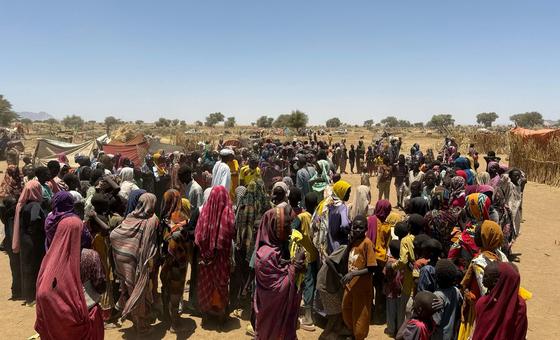
Intensifying ISIL threat highlights need to step up counter-terrorism measures

Alexandre Zouev, Acting Under-Secretary-General at the UN Office of Counter-Terrorism (UNOCT), presented its latest report which highlights the group’s intensifying presence in Africa, the Middle East and beyond. 

He said the threat posed by ISIL, also known by its Arabic acronym, Da’esh, has “increased steadily” since the previous report issued in August, “remaining multipolar and increasingly complex.” 

Instability in West Africa  

ISIL and its affiliates have continued to recruit foreign fighters, enhance their use of new and emerging technologies, and maintain access to funding – including through measures such as unlawful taxation and kidnapping for ransom. 

The terrorists have also continued to expand their presence in parts of Africa. 

“Their efforts and demonstrated capacity to control territory are deepening regional instability and further weakening the capacity of national authorities to address interconnected security, human rights, and development challenges,” he said. 

The situation in West Africa and the Sahel remains especially urgent, where the ISIL affiliate in the Lake Chad Basin region “has further expanded its prominence.” 

Attacks in Iraq and Syria 

Da’esh also remains active in Iraq and Syria “with continued attacks and renewed efforts to destabilise local authorities.” 

Syria is undergoing political transition following the overthrow of the Assad regime in December 2024. “The security situation remains fragile, with Da’esh continuing to exploit governance vacuums and incite sectarian tensions,” he said. 

Mr. Zouev also highlighted the situation in the country’s northeast, where tens of thousands of people with alleged ties to the group – mainly women and children – remain in camps in dire conditions. 

The withdrawal of the Kurdish-led Syrian Democratic Forces from notorious Al Hol last month “has also introduced new operational and humanitarian challenges,” he added. 

Meanwhile, ISIL-Khorasan in Afghanistan “continues to pose one of the most serious threats to the region and beyond.”   

The group was behind the “heinous terrorist attack” in the capital, Kabul, on 19 January which killed seven people and injured several others, including a child. 

Use of AI in recruitment  

Mr. Zouev said progress in countering terrorism financing has led Da’esh and other groups to further exploit digital platforms and new technologies, with expanded use of crypto-currencies, drones and other tools. 

Artificial Intelligence is increasingly used by terrorist groups particularly for the radicalisation and recruitment of people, with youth and children among those deliberately targeted,” he said. 

In the face of the intensifying threat posed by Da’esh, the counter-terrorism chief underlined three central calls made by the UN SecretaryGeneral in the report. 

© UNOCHA/Ali Haj Suleiman

Women and children walk through the Al Hol Camp in Syria, a displacement site housing over 30,000 people.

Areas for action 

He urged countries to step up efforts to repatriate people from the camps and detention facilities in northeast Syria. 

As the situation in parts of Africa – particularly the Sahel, West Africa and the Lake Chad Basin – remains deeply concerning, “Member States must exercise political ownership and forge unified, coherent, and joint responses.”  

Mr. Zouev stressed that lasting progress requires comprehensive approaches by both the government and society that are firmly rooted in the rule of law and in full accordance with international human rights norms, 

Therefore, “nationally owned and inclusive prevention” must remain at the heart of international counter-terrorism efforts. 

“The intensification of the threat posed by Da’esh and its affiliates, despite significant national and international efforts, underscores how imperative it is to sustain global cooperation on counter-terrorism,” he said. 

Technical assistance to countries 

Nathalia Gherman, Executive Director of the Counter-Terrorism Committee Executive Directorate (CTED) – the secretariat for the Council’s own Counter-Terrorism Committee (CTC) – also briefed ambassadors. 

She said the last six months have demonstrated that “Da’esh continues to perpetrate and inspire terrorist attacks globally,” with devastating impacts.   

CTED has conducted assessment visits to Austria, Cameroon, Chad, Hungary, Malta, Norway and Somalia over the past year, 

“We work closely with each Member State that we visit to provide tailored recommendations and identify technical assistance needs,” she explained. 

UN counter-terrorism efforts ‘critical’ 

Ms. Gherman gave the example of CTED’s support for a project to address the use of the internet, social media and video games by Da’esh and Al Shabaab in Somalia and the broader region. 

The initiative brought together 70 representatives from national authorities in Somalia, Djibouti, Ethiopia, Kenya, and Uganda, as well as participants from civil society, academia and the private sector. 

The efforts of the United Nations to address the Da’esh threat are critical,” she said, 

“These efforts require adequate resources and the cooperation of all Member States to achieve our shared goal: a world free from terrorism.” 

Source link

Sudan: Intensifying hostilities bring new displacement, more casualties

Hostilities have been intensifying between the Sudanese Armed Forces (SAF) and two armed groups – the rival Rapid Support Forces (RSF) militia that has been battling the military government for control since April 2023 and the Sudan People’s Liberation Movement-North.

Over the weekend, drone attacks targeted a UN base killing six peacekeepers from the UNIFSA mission, while another six people were killed in a hospital attack in South Kordofan State, according to initial information from the UN human rights office (OHCHR).

Meanwhile, OCHA said artillery shelling was reported on Monday, posing further threats to civilians.

I urge all parties to the conflict and States with influence to ensure an immediate ceasefire and to prevent atrocities,” said UN human rights chief Volker Türk in a statement.

Mr. Türk also cautioned that medical facilities are protected under international humanitarian law.

New displacement

The UN International Organization for Migration (IOM) estimates that more than 1,700 people were displaced between Thursday and Saturday from multiple towns in South Kordofan.

Meanwhile, in North Darfur State, displacement continues to rise from the besieged El Fasher into Tawila, where the UN is delivering emergency aid.

More than 25,000 people in Twila have been registered since late October, after fleeing along insecure routes where they face extreme danger.

Despite severe access and logistical constraints, the World Food Programme (WFP) assisted about half a million people in Tawila in November and has consistently reached some 2 million people every month across the Darfur region.

Attacks against peacekeepers

Providing an update at Tuesday’s noon briefing in New York, UN Deputy Spokesperson Farhan Haq said that the wounded peacekeepers who underwent lifesaving surgery in Kadugli, Sudan, were evacuated to the UN mission headquarters in the disputed Abyei region on Tuesday morning.

Other injured personnel were also evacuated there, and four of them have since been sent to Nairobi, Kenya, for further medical treatment.

The remains of the six fallen soldiers have been transported to Entebbe, Uganda, and arrangements are underway for their repatriation to Bangladesh.

Mr. Haq underscored that “attacks targeting United Nations peacekeepers may constitute war crimes under international law and call for accountability.”

ALSO READ:

London’s Far-Right Rally Sends Shockwaves Through South Asian Communities
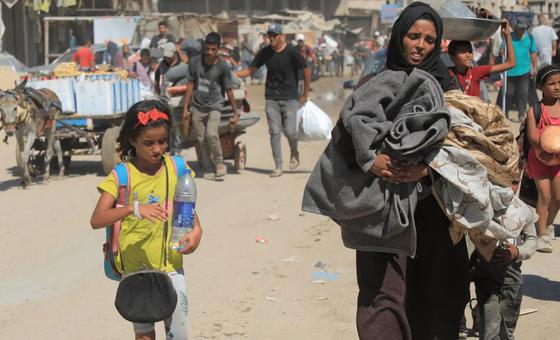
Gazans’ suffering goes on amid intensifying Israeli strikes

In occupied East Jerusalem, meanwhile, Israeli protesters illegally entered a compound of the UN agency for Palestine refugees, UNRWA.

The development comes after the Israeli military coordination unit COGAT said on Saturday that 388 trucks had entered Gaza since last Monday – the first aid to arrive in well over two months of blockade that have caused hunger levels to spike.

Humanitarians have repeatedly warned that at least 500 to 600 trucks need to cross into Gaza every day to provide people with their daily needs – as they did before war erupted on 7 October 2023 after Hamas-led terror attacks on Israel.

Token assistance

“We are on the back of 11 weeks of nothing entering the Gaza Strip, no food, no medicines for 11 weeks, nothing apart from bombs,” said James Elder, a spokesperson for the UN Children’s Fund (UNICEF).

“And so today, a week after life-saving aid was finally allowed into Gaza again, the scale of that aid is painfully inadequate,” he told UN News. “It looks like a token that appears more like cynical optics than any real attempt to tackle the soaring hunger crisis among children and civilians in Gaza.”

Today, Gazans remain at “critical risk of famine”, UN-backed food security experts warned earlier this month. In their latest update, they estimated that one in five people in Gaza – 500,000 – faces starvation.

Another school hit

Reports on Monday indicated meanwhile that Israel’s intensifying military operation in northern Gaza against alleged terrorists and their infrastructure had killed at least 50 people in air strikes.

One attack hit a school in Gaza City sheltering hundreds of people uprooted by more than 19 months of violence. Footage reportedly taken after the incident showed the silhouette of a child stumbling through a classroom set ablaze at Fahmi al-Jarjawi school.

Another air strike hit a home elsewhere in Gaza City killing four people, according to the health authorities.

UN-run shelters are now “overwhelmed with displaced people desperately seeking safety”, the UN agency for Palestinian refugees (UNRWA) said in an update on Monday. It also underscored that the lack of food has added to people’s suffering.

“Many families are sheltering in abandoned, unfinished, or damaged buildings,” the agency explained. “Sanitation conditions are dire; in some cases, hundreds of people are having to share a single toilet. Others, including children and pregnant women, are sleeping in the open.

Farming smashed

Across Gaza, less than five per cent of the Strip’s cropland remains available for cultivation, according to UN Food and Agriculture Organization (FAO) and the United Nations Satellite Centre (UNOSAT).

Using high-definition imagery, the agencies’ findings emphasize just how much food production capacity has shrunk in Gaza because of the war, exacerbating  the risk of famine.

As of April 2025, more than 80 per cent of the Gaza Strip’s total cropland area has been damaged (12,537 hectares out of 15,053) and 77.8 percent is not accessible to farmers, leaving just 688 hectares (4.6 percent) available for cultivation.

The situation is particularly critical in Rafah and in the northern governorates, where nearly all cropland is not accessible.

Settler protest

Following the protest at the UNRWA compound in occupied East Jerusalem on Monday, a spokesperson for the UN agency noted that one member of the Israeli Knesset had joined the settlers inside the gates. Monday is a national holiday in Israel, marking the moment following the Six-Day War in 1967 when the country’s troops occupied East Jerusalem and the West Bank.

The UNRWA facility – located in the Sheikh Jarrah neighbourhood of occupied East Jerusalem – has been targeted in past arson attacks that set light to the perimeter fence.

At the end of January, UNRWA withdrew its staff from the compound in protest at the entry into force of an Israeli law banning the agency’s operations in occupied East Jerusalem.

The location retains its status as a UN facility that is protected under international law. 

Source link