Sudan: Intensifying hostilities bring new displacement, more casualties

Hostilities have been intensifying between the Sudanese Armed Forces (SAF) and two armed groups – the rival Rapid Support Forces (RSF) militia that has been battling the military government for control since April 2023 and the Sudan People’s Liberation Movement-North.

Over the weekend, drone attacks targeted a UN base killing six peacekeepers from the UNIFSA mission, while another six people were killed in a hospital attack in South Kordofan State, according to initial information from the UN human rights office (OHCHR).

Meanwhile, OCHA said artillery shelling was reported on Monday, posing further threats to civilians.

I urge all parties to the conflict and States with influence to ensure an immediate ceasefire and to prevent atrocities,” said UN human rights chief Volker Türk in a statement.

Mr. Türk also cautioned that medical facilities are protected under international humanitarian law.

New displacement

The UN International Organization for Migration (IOM) estimates that more than 1,700 people were displaced between Thursday and Saturday from multiple towns in South Kordofan.

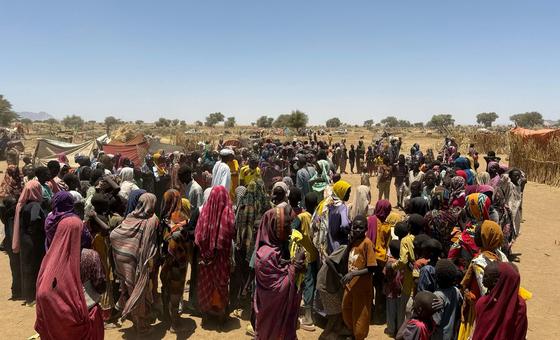
Meanwhile, in North Darfur State, displacement continues to rise from the besieged El Fasher into Tawila, where the UN is delivering emergency aid.

More than 25,000 people in Twila have been registered since late October, after fleeing along insecure routes where they face extreme danger.

Despite severe access and logistical constraints, the World Food Programme (WFP) assisted about half a million people in Tawila in November and has consistently reached some 2 million people every month across the Darfur region.

Attacks against peacekeepers

Providing an update at Tuesday’s noon briefing in New York, UN Deputy Spokesperson Farhan Haq said that the wounded peacekeepers who underwent lifesaving surgery in Kadugli, Sudan, were evacuated to the UN mission headquarters in the disputed Abyei region on Tuesday morning.

Other injured personnel were also evacuated there, and four of them have since been sent to Nairobi, Kenya, for further medical treatment.

The remains of the six fallen soldiers have been transported to Entebbe, Uganda, and arrangements are underway for their repatriation to Bangladesh.

Mr. Haq underscored that “attacks targeting United Nations peacekeepers may constitute war crimes under international law and call for accountability.”

ALSO READ:

London’s Far-Right Rally Sends Shockwaves Through South Asian Communities

First Person: On Ukraine’s frontlines, humanitarians risk all to bring hope

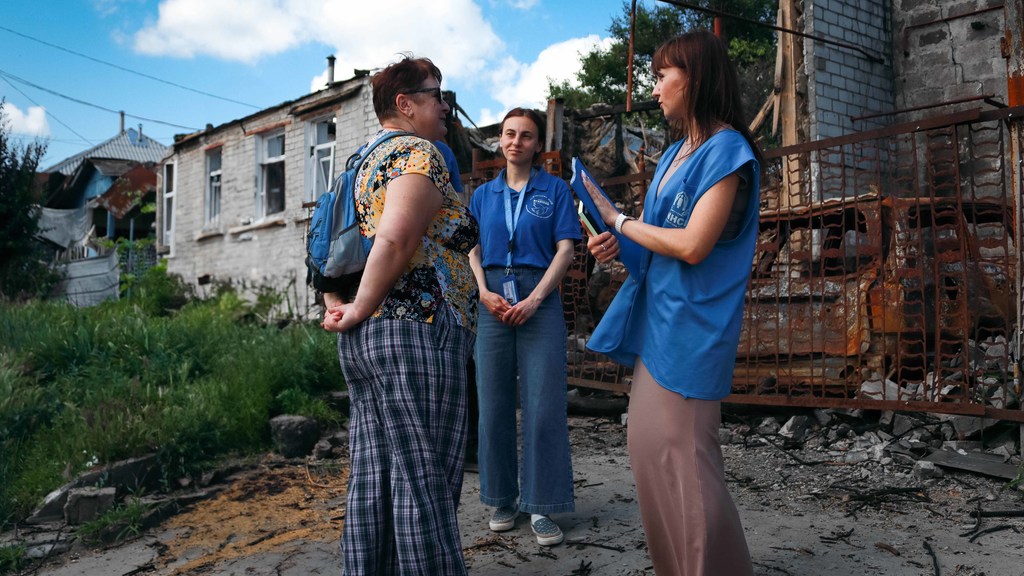
“Sometimes it feels like we’re swimming against a current that never slows down,” says Ms. Tiutiunnyk, a protection specialist working in Ukraine for the UN Refugee Agency (UNHCR). Viktoria herself is a displaced person from Luhansk, forced to flee following the onset of hostilities.

“I was not a part of the humanitarian community”, she recalls, speaking about the early days of the invasion, ahead of World Humanitarian Day.

“I was not with the UNHCR at that time. I was a civil servant, but I think those events that occurred in my life and the life of the whole country were the trigger for me: I switched to the humanitarian sector, and I joined UNHCR.”

With evacuations ongoing in eastern Ukraine, Ms. Tiutiunnyk is now helping support evacuees and newly displaced people in the Dnipro region, as well as those who remain in frontline areas.

Since 1 August last year, more than 192,000 people have left the region, either on their own or with support from authorities and volunteers – and UNHCR is providing them with much-needed assistance. 

Viktoria Tiutiunnyk, a protection associate working in Ukraine for the UN Refugee Agency, UNHCR.

‘I’m where I’m meant to be’

“When I meet those people after an attack or at a site where they are currently staying, it reminds me why I do this work,” says Ms. Tiutiunnyk, who recently returned from a field mission. “When they open up, when they share their stories, what they’ve gone through, it moves me so deeply. And at that moment, I truly feel like I’m where I’m meant to be.”

Many displaced people are under extreme stress; their lives are filled with fear and anxiety. Some fled in a hurry without passports and other essential documents, while others urgently need money to buy food and medicine.

UNHCR’s emergency response includes psychological support, legal aid, and cash assistance. “We also provide support to some of the collective sites where people can stay for a while until they find other places,” explains Ms. Tiutiunnyk.

With the war now in its fourth year and 3.7 million people internally displaced, humanitarian needs continue to escalate. “The war goes on, the attacks continue, the needs keep growing,” she says.

‘This should not be the new normal’

Providing assistance on the frontlines often means working under dangerous conditions, including drone attacks and aerial strikes: as she spoke to UN News, an air-raid siren blared in the background.

“It is stressful for sure. For a lot of people, now it’s their daily life. They are remaining in the frontline areas despite daily shelling and attacks. Why? Because this is their home.”

If I can bring them hope, it fills my life with some meaning

In their work, Ms. Tiutiunnyk and her colleagues speak daily with people who are deeply traumatized and anxious – many of them plead with humanitarian workers not to abandon them.

“I’m the same. I’m also displaced, and if I can bring them that hope, that small assistance, contribute at least to stabilizing their situation, it fills my life with some meaning.

“Some people say they get used to the air-raid alerts and the situation in general. But you cannot get used to this, right? This is not normal. It shouldn’t be the new normal,” she adds.

When asked what keeps her going, Ms. Tiutiunnyk says she draws inspiration from her colleagues – people she often spends more time with than her own family – and from her managers, who, as she puts it, “work around the clock.”

“When I see that they can continue, why can’t I continue? You need to think, are we pursuing a common goal? Yes, we are. So, we’re in the right place.”

Source link

From diamonds to dirt: Sierra Leone youth bring land back to life

But now, parts of the land have been restored. Crops are beginning to flourish and bees are buzzing around once again.

The people responsible for this change are a hodgepodge group – former taxi drivers and miners, people who barely finished secondary school and some with higher education degrees. The unifying factor? Most have youth on their side.

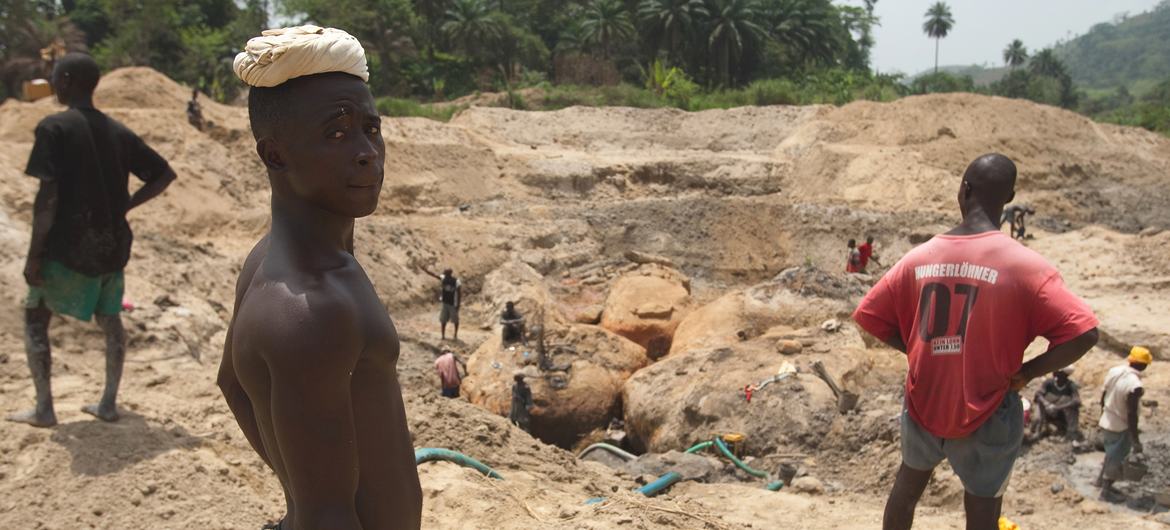
There is life beyond mining [but] we all grew up with the mentality that diamond is the only solution,” said Sahr Fallah, chairman of the Youth Council in Kono.

Over 44 percent of the 1.3 billion people aged 15-24 are employed in agrifood systems. However, this group often does not have the same access to resources as older generations. Moreover, they are sidelined in the conversations which might change this systemic exclusion.

© UNICEF/Olivier Asselin

Young men work on a diamond mining site near Koidu, Sierra Leone. (file)

A lot of the time, what we find is that young people are included in policy processes but it is a little bit tokenistic. They don’t feel like their voice really matters,” said Lauren Phillips, a deputy director at the Food and Agriculture Organization (FAO).

Decent work = economic growth

The High-Level Political Forum on Sustainable Development in New York has been convened this week and next, to discuss progress – or lack thereof – towards the globally agreed Sustainable Development Goals (SDGs), one of which guarantees decent work for all.

Despite this commitment, over half of the global workforce remains in informal employment, according to the Secretary-General’s report on the SDGs released Monday. This means that they do not have adequate social or legal protections.

Decent work must be at the heart of macroeconomic planning, climate and diesel transitions and social recovery strategies,” said Sangheon Lee, director of employment policy at the International Labor Organization (ILO).

Don’t ignore youth

Like other vulnerable groups, young people face unique challenges in the agrifood sector. Specifically, they often lack land rights and will struggle to act collectively to protect their interests.

“If you are not looking at data with a lens of age or gender, you are actually missing part of the story,” Ms. Phillips said.

Among these assets are land titles – which the elderly may be reluctant to pass down because of insufficient social protections. Youth also are less able to access credit so they can invest in themselves and their families.

Betty Seray Sam, one of the young farmers in Kono, said that her family never used to come to her when they were going through a crisis – they knew that she had no money and a child to support.

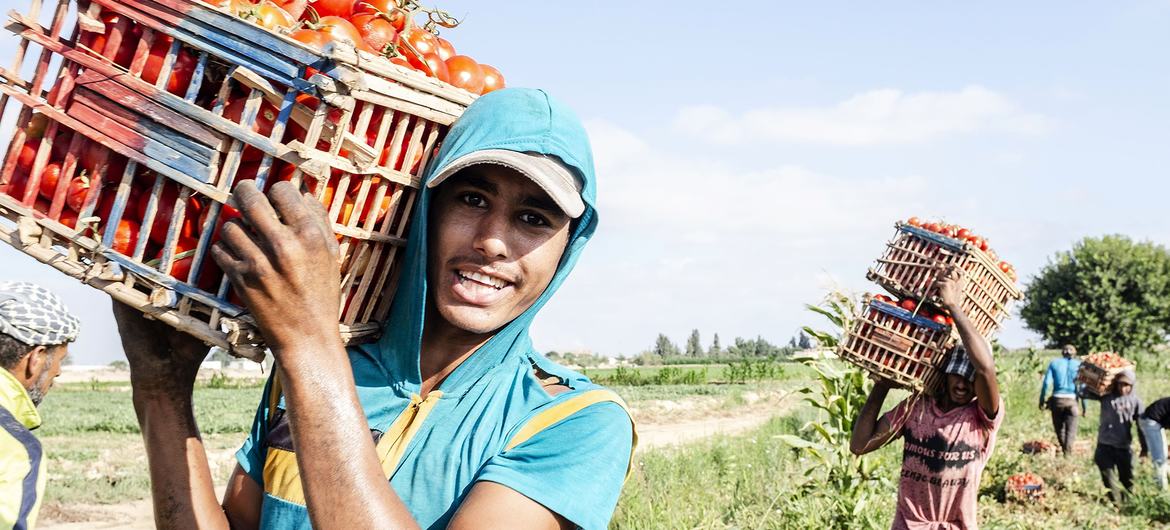
Young farmers load tomatoes onto trucks in Nubaria, Egypt.

But now, through an agricultural job in Kono, she can support her family during times of crisis.

This project has had a rippling effect for the youth in terms of not only improving their livelihoods but also the livelihoods of their families,” said Abdul Munu, president of Mabunduku, a community-based farmer’s organization in Kono.

Bee a farmer

Providing training to young people in agrifood systems is absolutely essential to ensure that they can practice sustainable agriculture.

In Chegutu, Zimbabwe, FAO has helped establish Bee Farmers Schools where young people are taught how to support apiaries through hands-on training activities.

“The idea is that one of the apiaries can be turned into a classroom where youth from different parts of a district can come just like a school,” said Barnabas Mawire, a natural resource specialist at FAO.

This training has helped support local youth beekeepers to move beyond local and small-scale honey production to a fully-fledged business model that has the potential to not just fight poverty but actually create local wealth.

Evelyn Mutuda, the young entrepreneurs representative in Chegutu, aspires to plant Jacaranda trees which she says will improve the quality of the bees’ honey and enable the beekeepers to export beyond local markets.

“We want to maximize all the profits so we can become better and bigger,” Ms. Mutuda said.

From Facebook to TikTok

Being able to form labour associations is one of the key factors of decent work. This sort of collective action is even more important for youth in agrifood who often lack the social capital to enact real policy change.

“Young people are just starting out, making bonds within their group but also with people outside of their group. Those bonds are important…because there is power in numbers,” Ms. Phillips said.

She also noted that young people are forming these bonds across geographic distances, often by using technology. Agrifood influencers on Instagram and TikTok, for example, are increasingly shaping conversations about the sector.

Ms. Phillips also noted that it is important to think of collective action for youth as intergenerational.

“While the report is focused on young people, it’s not ignorant of the fact that young people live in families…There is a lot which talks about the need for solidarity between generations,” Ms. Phillips said.

Youth optimism

The next generation will be the stewards of the food we eat, so integrating them into that system now is essential for future food security and sustainability.

Many youth integrate tradition with innovation, creating sustainability and community resilience,” said Venedio Nala Ardisa, a youth representative at the Asia Indigenous Peoples Pact, at an online side event during the high-level forum.

Angeline Manhanzva, one of the beekeepers in Chegutu, said that the opportunity to become a beekeeper changed her life. One day, she dreams of owning her own bee farm.

“I will be an old person who has so much wealth and is able to buy her own big land to keep my hives and process my own honey.” 

Source link

First Person: Myanmar aid workers brave conflict and harsh conditions to bring aid to earthquake victims

Thein Zaw Win, Communications and Advocacy Analyst in the Yangon Office of the UN sexual and reproductive health agency (UNFPA) saw the devastating consequences of the quake during a week-long visit to the Mandalay region, one of the regions most severely affected by the disaster.

Thein Zaw Win, Communications and Advocacy Analy​st at UNFPA’s Yangon Office, speaks with​ a woman impacted by the recent earthquake in Mandalay, Myanmar.

“I was in Yangon when the earthquake struck. In the aftermath, news reports gradually began indicating that many cities had suffered significant casualties. Buildings, roads, homes, schools, and hospitals were reduced to rubble and people were trapped beneath the debris.

Communication systems were down, so I decided to travel to the affected areas and support the relief efforts.

Women and girls needed lifesaving support, including sexual and reproductive health services and maternal care, dignity kits, hygiene items, and other essential supplies as soon as possible.

Within 72 hours, the UNFPA country office had deployed a Rapid Response Team to deliver essential services to the affected population, working with partners on the ground.

The journey from Yangon to Mandalay usually takes about eight hours, but we struggled to get through, due to damaged roads and collapsed bridges. We had to find alternate routes and, at times, even navigate through the rugged fields beside the main road.

Now that the rainy season has started, the roads are even worse, and travelling has become increasingly difficult. It took us more than 10 hours to reach Mandalay.

A woman affected by earthquake receives relief items including UNFPA’s dignity kits during UN joint distribution in Sagaing, Myanmar.

In some areas of the city, debris blocked the roads. Tower blocks had collapsed and many areas had been reduced to complete rubble. Desperate families sought refuge in temporary shelters, on the streets, or in front of their damaged homes.

Tremors continued for several days. Frequent power outages during the night mean that some affected areas were plunged into darkness, making it unsafe to go anywhere. Reaching those affected and delivering aid under these conditions remains a considerable challenge.

My responsibility is to engage with communities affected by the disaster, and share their stories to a broader audience. It is also vital to raise awareness of the realities and needs on the ground so that we can secure support for emergency assistance. This is my mission.

I met a woman in Mandalay who visited our mobile clinic. She had lived in the city all her life but had never seen such devastation. Everything collapsed in a matter of seconds. She was deeply worried about the damage to healthcare facilities, as well as her ability to access medical care.

© UNOCHA/Myaa Aung Thein Kyaw

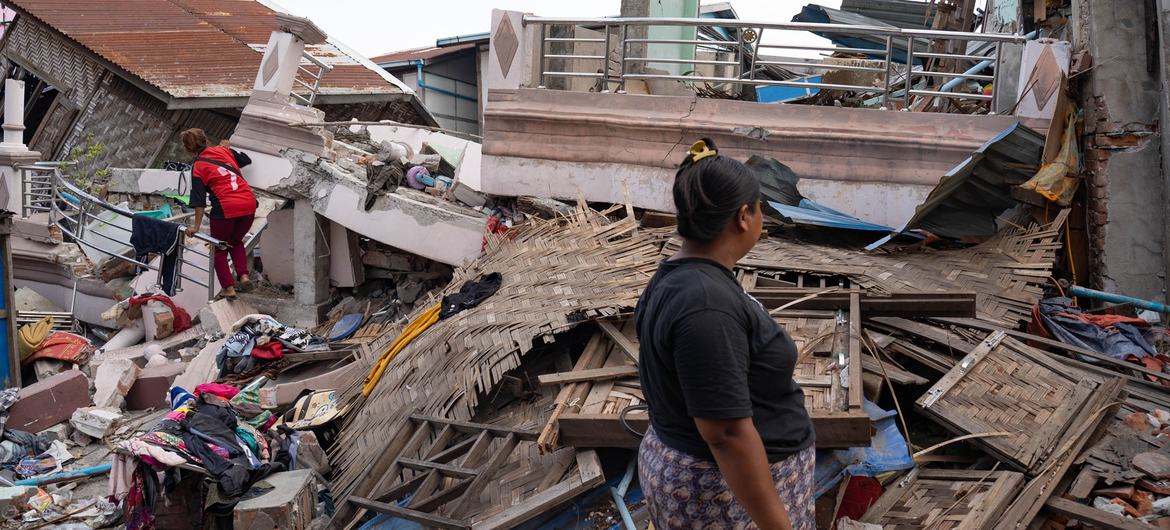
A woman in Mandalay, Myanmar, looks on at the devastation caused by the earthquake.

Amidst this crisis, the UNFPA team has provided services ranging from hygiene supplies, protection from gender-based violence, and mental health support for women and girls. They also support maternal and newborn care services. I saw for myself the unwavering resilience of humanitarian workers, and the way that UN agencies, civil society organizations, and NGOs work together.

Myanmar was already suffering from political instability and now it has been further devastated by this destructive earthquake. It is extremely difficult to deliver aid to communities in Sagaing and Mandalay, where armed conflict is ongoing.

In the present context, with monsoon conditions imminent, people are terrified of what this season may bring.

The country is also experiencing the impact of the decline in global aid funding.

UNFPA, like other UN agencies and humanitarian organizations, is dealing with constraints on resources, and we have issued an appeal for emergency assistance to support populations in critical need.

The suffering of women and children affected by the earthquake is profoundly distressing, and we need all of our strength and resilience to help them.

It is a heartbreaking experience to witness the despair in people’s eyes and to listen to their stories of loss, but we are trying to give them the dignity and hope they rightfully deserve in these difficult times.”