

Thein Zaw Win, Communications and Advocacy Analyst in the Yangon Office of the UN sexual and reproductive health agency (UNFPA) saw the devastating consequences of the quake during a week-long visit to the Mandalay region, one of the regions most severely affected by the disaster.
Thein Zaw Win, Communications and Advocacy Analyst at UNFPA’s Yangon Office, speaks with a woman impacted by the recent earthquake in Mandalay, Myanmar.
“I was in Yangon when the earthquake struck. In the aftermath, news reports gradually began indicating that many cities had suffered significant casualties. Buildings, roads, homes, schools, and hospitals were reduced to rubble and people were trapped beneath the debris.
Communication systems were down, so I decided to travel to the affected areas and support the relief efforts.
Women and girls needed lifesaving support, including sexual and reproductive health services and maternal care, dignity kits, hygiene items, and other essential supplies as soon as possible.
Within 72 hours, the UNFPA country office had deployed a Rapid Response Team to deliver essential services to the affected population, working with partners on the ground.
The journey from Yangon to Mandalay usually takes about eight hours, but we struggled to get through, due to damaged roads and collapsed bridges. We had to find alternate routes and, at times, even navigate through the rugged fields beside the main road.
Now that the rainy season has started, the roads are even worse, and travelling has become increasingly difficult. It took us more than 10 hours to reach Mandalay.


A woman affected by earthquake receives relief items including UNFPA’s dignity kits during UN joint distribution in Sagaing, Myanmar.
In some areas of the city, debris blocked the roads. Tower blocks had collapsed and many areas had been reduced to complete rubble. Desperate families sought refuge in temporary shelters, on the streets, or in front of their damaged homes.
Tremors continued for several days. Frequent power outages during the night mean that some affected areas were plunged into darkness, making it unsafe to go anywhere. Reaching those affected and delivering aid under these conditions remains a considerable challenge.
My responsibility is to engage with communities affected by the disaster, and share their stories to a broader audience. It is also vital to raise awareness of the realities and needs on the ground so that we can secure support for emergency assistance. This is my mission.
I met a woman in Mandalay who visited our mobile clinic. She had lived in the city all her life but had never seen such devastation. Everything collapsed in a matter of seconds. She was deeply worried about the damage to healthcare facilities, as well as her ability to access medical care.
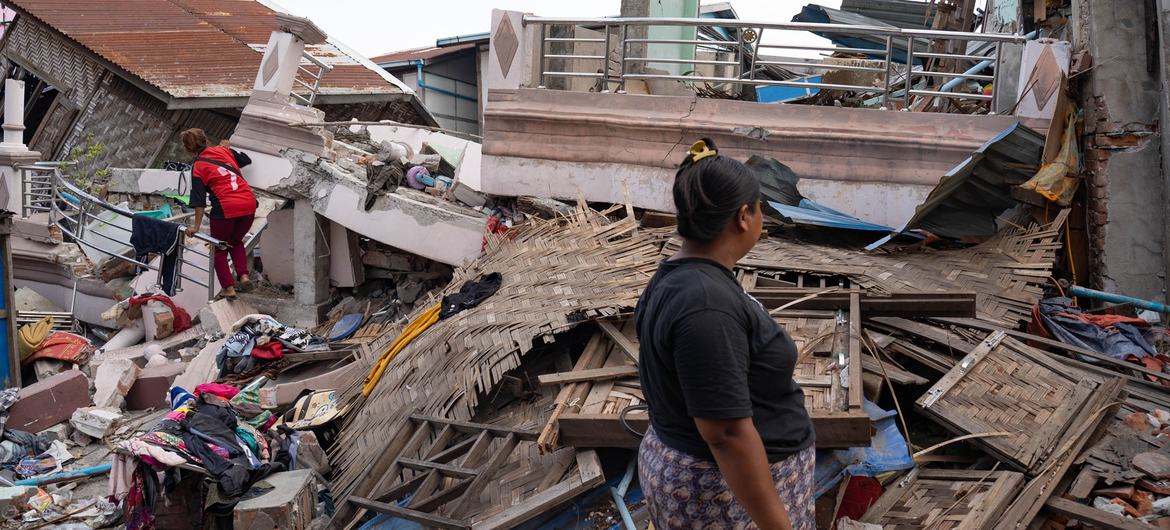
A woman in Mandalay, Myanmar, looks on at the devastation caused by the earthquake.
Amidst this crisis, the UNFPA team has provided services ranging from hygiene supplies, protection from gender-based violence, and mental health support for women and girls. They also support maternal and newborn care services. I saw for myself the unwavering resilience of humanitarian workers, and the way that UN agencies, civil society organizations, and NGOs work together.
Myanmar was already suffering from political instability and now it has been further devastated by this destructive earthquake. It is extremely difficult to deliver aid to communities in Sagaing and Mandalay, where armed conflict is ongoing.
In the present context, with monsoon conditions imminent, people are terrified of what this season may bring.
The country is also experiencing the impact of the decline in global aid funding.
UNFPA, like other UN agencies and humanitarian organizations, is dealing with constraints on resources, and we have issued an appeal for emergency assistance to support populations in critical need.
The suffering of women and children affected by the earthquake is profoundly distressing, and we need all of our strength and resilience to help them.
It is a heartbreaking experience to witness the despair in people’s eyes and to listen to their stories of loss, but we are trying to give them the dignity and hope they rightfully deserve in these difficult times.”