France Joins UK, Canada, Australia and Portugal in Recognising Palestinian Statehood

France joins UK, Canada, Australia and Portugal in recognising Palestinian statehood at UN-backed conference

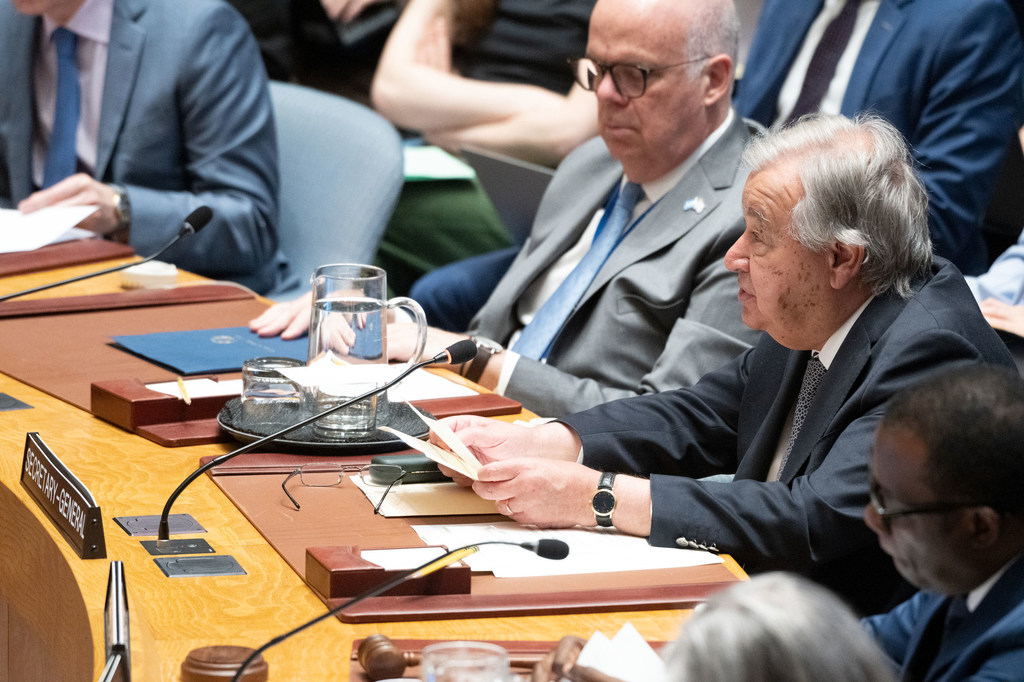
United Nations/New York: UN Secretary-General António Guterres on Monday reiterated that nothing can justify the October 7, 2023 Hamas attacks on Israel, nor the “collective punishment” inflicted on the Palestinian people in their aftermath. Calling for an “immediate” ceasefire in Gaza, he urged the release of all hostages and the opening of safe, unconditional and unhindered humanitarian corridors.

Speaking at the resumed international conference on Palestine, co-chaired with Saudi Arabia, Guterres warned that the viability of a two-state solution is being undermined by “relentless” settlement expansion, the “creeping threat of annexation” and a surge in settler violence in the West Bank.

“The time for peace has come because we are just a few moments away from no longer being able to seize peace,” he told delegates. “Let’s be clear: statehood for the Palestinians is a right, not a reward. Denying it would be a gift to extremists everywhere.”

France Backs Palestinian Statehood

The conference, held after the General Assembly overwhelmingly endorsed the first phase outcome declaration in July, saw fresh diplomatic momentum. The United Kingdom, Canada, Australia and Portugal formally recognised the State of Palestine on Sunday. French President Emmanuel Macron announced that Paris would follow suit, a declaration that drew lengthy applause.

“The recognition of the legitimate rights of the Palestinian people takes nothing away from the rights of the people of Israel, which France has supported from Day One,” Macron said. “This recognition is the only solution that will allow Israel to live in peace.”

Saudi Foreign Minister Faisal bin Farhan Al Saud praised the countries that had recognised Palestine and urged others to “take a similar historic step.” Such recognition, he said, would “support efforts towards the implementation of the two-State solution, achieve permanent and comprehensive peace in the Middle East, and create a new reality of stability and prosperity.”

ALSO READ: London’s Far-Right Rally Sends Shockwaves Through South Asian Communities

UN General Assembly President Annalena Baerbock acknowledged scepticism around the two-state formula, noting that the UN’s earliest resolutions on the issue date back to its founding years. But she stressed that pursuing the alternative would mean conceding to “evil” and risk “the end of this institution.”

“This is not a naïve wish,” Baerbock insisted. “The international community is committed not only to the principle of two states but to identifying tangible, timebound and irreversible steps for its realisation, backed by decisive measures and international guarantees.”

The conference underscored a growing shift among Western powers towards recognising Palestinian statehood, even as conditions on the ground remain volatile. For Guterres and other leaders, the message was clear: without urgent steps, the two-state solution risks slipping out of reach, with grave consequences for peace and security in the Middle East and beyond.

UN calls for decisive steps to end conflict as Gaza and West Bank crises deepen

“Today the world looks on in horror as the situation in the Occupied Palestinian Territory continues to deteriorate to levels not seen in recent history,” said Ramiz Alakbarov, UN Deputy Special Coordinator for the Middle East Peace Process, speaking from Jerusalem.

He began by focusing on Gaza, which is “sinking deeper into disaster, marked by rapidly mounting civilian casualties, mass displacement, and, now, famine”, with no end in sight to the conflict.

Worst fears becoming reality

He said that “unthinkably, Gaza’s population is now facing yet another deadly escalation” following Israel’s announcement of its decision to take over Gaza City, which is ongoing.

“For a population already struggling to survive, Palestinians in Gaza are seeing their worst fears become reality in front of their eyes,” he said.

“Expanded military operations in Gaza City will have catastrophic consequences, including displacing hundreds of thousands.” 

Air strikes intensify

Mr. Alakbarov briefed the Council alongside Joyce Msuya, UN Assistant Secretary-General for Humanitarian Affairs, and two guests: Inger Ashing, Chief Executive Officer at Save the Children International, and Ilana Gritzewsky, an Israeli hostage who survived Hamas captivity in Gaza.

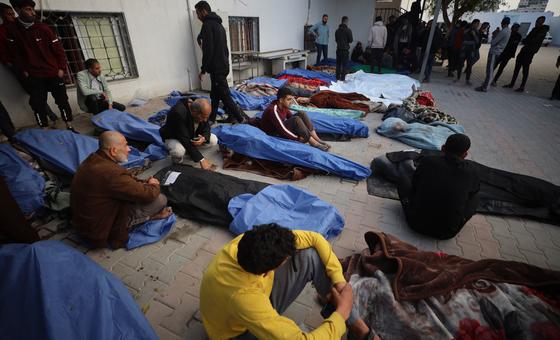
He reported that Israeli military strikes have intensified throughout the Strip, hitting tents housing displaced people, schools, hospitals, and residential buildings.  

Since 23 July, at least 2,553 Palestinians have been killed, according to the health authorities. Of this number, some 271 were reportedly killed attempting to collect aid, including in the vicinity of militarized distribution sites.  

Additionally, over 240 journalists have been killed since the war began on 7 October 2023 following deadly Hamas-led attacks on Israel. 

Although the UN and partners are working tirelessly to assist the people in Gaza, “the security risks are extremely high, and current mitigation measures are woefully insufficient,” he said.

“On my recent visit to Gaza, I was stunned at the scale of the destruction and suffering. I met humanitarian workers risking their lives to deliver aid, while themselves living in intolerable conditions,” he added.

Meeting with survivors and families of hostages

The UN official also visited affected communities in Israel and met survivors of the 7 October terror attacks and family members of some of the hostages. 

“I saw the shattered homes of Nir Oz, where one in four residents was either murdered or abducted on 7 October. I met survivors who carry unbearable loss and trauma,” he said.

Around 50 people, including one woman, are still being held by Hamas and other Palestinian armed groups in Gaza, and 28 are believed to be deceased. 

Videos released by Hamas and Palestinian Jihad depicting emaciated Israeli hostages were deeply disturbing, he said, stressing that ill-treatment and abuse of hostages constitute a blatant violation of international law.

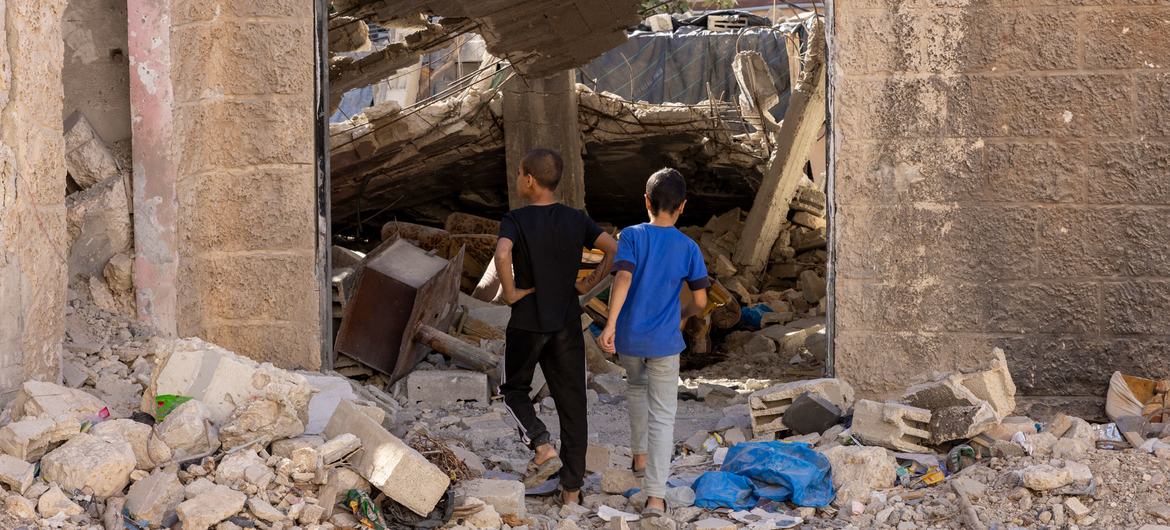
Children in the Jenin refugee camp in the West Bank looking at the destroyed shelters following recent military operations. (file)

West Bank violence

Meanwhile, the situation in the occupied West Bank, including East Jerusalem, “continues to spiral dangerously downward” and “the territory envisioned for a future Palestinian State is shrinking, while a one-State reality of unlawful occupation and perpetual violence is rapidly advancing.”

Israeli security forces have continued operations in northern cities and refugee camps, displacing more than 32,000 people. Furthermore, security forces killed nine Palestinians, four of them children, during the three-month reporting period. 

Attacks by Israeli settlers also have continued, resulting in three Palestinians killed, damage to Palestinian property and displacement.  At the same time, attacks by Palestinians against Israelis have also continued, with no fatalities reported in the last month.

Settlement expansion 

Since the start of the war in Gaza, settler attacks have escalated in frequency and become more violent and deadly.  They have increasingly led to forced displacement, with settlers then moving in and establishing outposts. At the same time, Israel is “fast-tracking settlement expansion, including in the most highly strategic areas.”

Mr. Alakbarov recalled that the Israeli High Planning Committee recently approved a plan for the construction of more than 3,400 housing units in the E1 area.  

“If implemented, the move would effectively sever the connection between the northern and southern West Bank. As such, it would further undermine the possibility of a viable and contiguous Palestinian state,” he warned. 

Israeli authorities also continued to demolish Palestinian-owned structures, he added, and 175 Palestinians, including 70 children, have been displaced.

Regional tensions

Mr. Alakbarov noted that the developments in the Occupied Palestinian Territory are taking place amid a volatile regional context, with more exchanges of fire between Houthi rebels in Yemen and Israel forces occurring this week, along with continued Israeli strikes in Lebanon and an incursion in Syria.

Stressing the need for a ceasefire in Gaza and the release of all hostages, he said “what is needed now is bold action to resolve the conflict, end the occupation and re-establish a political horizon.”

In this regard, he welcomed the High-Level Conference on the Implementation of the Two-State Solution co-chaired by France and Saudi Arabia, held at UN Headquarters in June. 

Uphold the two-State solution

“The message from the international community is clear: the two-State solution remains the only viable path toward a just and lasting resolution of the Israeli-Palestinian conflict,” he said.

He urged the international community to work collectively to advance practical steps, including through engagements during the high-level week of the UN General Assembly in September.

“With Gaza immersed in a situation so horrendous that it defies basic humanity and with the West Bank facing genuine threats to its long-term existence, we can no longer wait,” he said. 

Gaza famine ‘a created catastrophe’

Ms. Msuya’s briefing centered around the recent Integrated Food Security Phase Classification (IPC) analysis confirming that famine is occurring in Gaza governorate – phase 5 conditions – and is expected to spread in the coming weeks.

She drew attention to some of the numbers, saying over half a million people currently face starvation, destitution and death, which could exceed 640,000 by the end of September.  

Approximately one million Gazans are in emergency phase 4 and over 390,000 face phase 3 crisis conditions, she continued.

At least 132,000 children under five are expected to suffer from acute malnutrition between now and the middle of next year, while the number of those who risk dying has tripled to over 43,000. 

Among pregnant and breastfeeding women, the number is predicted to rise from 17,000 to 55,000.

“Let us be clear: This famine is not a product of drought or some form of natural disaster,” she said. “It is a created catastrophe – the result of a conflict that has caused massive civilian death, injury, destruction and forced displacement.”

End this ‘human-made crisis’

Ms. Msuya urged the Council to ensure an immediate and sustained cessation of hostilities to save lives and stop famine from spreading.

She also called for the immediate and unconditional release of all hostages and for civilians and critical infrastructure to be protected.

Furthermore, safe, rapid and unimpeded humanitarian access through all entry points must occur, and aid – including food, medicine, water, fuel and shelter – has to be delivered to all people in need.

Her final request was for the restoration of commercial flows of essential goods at scale, market systems, essential services and local food production.

Ending this human-made crisis demands that we act as if it were our mother, our father, our child, our family trying to survive in Gaza today,” she said. 

A former hostage’s appeal

Ms. Gritzewsky recalled the moment her life was brutally changed on 7 October 2023.

She was grabbed by the hair, punched in the stomach, thrown against a wall, and “touched everywhere,” all while being filmed by the terrorists.  Taken to Gaza, she fainted at the time of her sexual assault.

“Nothing will be the same again,” she said, referring in particular to her broken jaw and pelvis.

Ms. Gritzewsky said she received no medication and did not see a doctor during the 55 days of captivity, even though she had raised concerns about her anaemia and colitis.

She is now fighting for the release of the hostages, particularly her partner, Matan, and made a passionate appeal to the Security Council to act for the release of all those still being held.  

Source link

‘There is no military solution’ to end Israel-Palestine conflict, Security Council hears, as starvation stalks the Gaza Strip

Two top UN officials warned that the Israeli cabinet’s green light this week for a fresh offensive aimed at gaining total military control of Gaza City – home to around one million Palestinians – would only risk igniting “another horrific chapter” of displacement, death and destruction.

Miroslav Jenča, Assistant Secretary-General for Europe, Central Asia and the Americas, told ambassadors that Israeli Prime Minister Benjamin Netanyahu’s proposed plan for “defeating Hamas” and the establishment of an alternative civilian administration that is neither Hamas nor the Palestinian Authority, risked “yet another dangerous escalation” that would destabilise the entire region.

However, according to Israeli media reports, the senior political affairs official continued, the Israeli plan foresees the displacement of all civilians from Gaza City by 7 October, affecting some 800,000 people – many previously displaced.

Reports indicate that forces would then surround the city for three months.  This would reportedly then be followed by an additional two months to seize control of central Gaza’s camps and clear the entire area of Palestinian armed groups.

Calamitous plan

If these plans are implemented, they will likely trigger another calamity in Gaza, reverberating across the region and causing further forced displacement, killings, and destruction – compounding the unbearable suffering of the population,” said Mr. Jenča, calling for a full, immediate, and permanent ceasefire, the unconditional, immediate release of all hostages and compliance with international humanitarian law by Israel.

He said there was no military solution to end the conflict adding that planning for Gaza’s future “as we address the urgency of developments on the ground today,” is critical.

Mr. Jenča called for establishing political and security frameworks to ease the humanitarian crisis, while beginning recovery and reconstruction efforts that address the legitimate concerns of both Israelis and Palestinians – in line with realising a two-State solution.

United Palestine

“Critically these frameworks must facilitate a legitimate Palestinian Government that can reunify Gaza and the West Bank, including East Jerusalem, politically, economically and administratively.”

Furthermore, it must be made up of a united leadership representing all of Palestine. He called on the Palestinian Authority to “advance its stated goal of holding elections” to this end.

‘This is starvation’: Rajasingham

Senior humanitarian affairs official Ramesh Rajasingham told ambassadors that hunger-related deaths were already rising, ahead of any new mass-displacement policy for Gaza City.

“Whatever lifelines remain, are collapsing under the weight of sustained hostilities, forced displacement and insufficient levels of life-saving aid.”

He said with local authorities documenting the deaths of 98 children from severe acute malnutrition – 37 since 1 July – “this is no longer a looming hunger crisis – this is starvation.”

The head of the humanitarian affairs coordination office (OCHA) in Geneva said he was extremely concerned over the “prolonged conflict and further human toll that is likely to unfold following the Government of Israel’s decision to expand military operations in Gaza.”

“This marks a grave escalation in a conflict that has already inflicted unimaginable suffering.”

‘Grim milestone’

“A grim milestone has also been crossed in the humanitarian community,” he lamented, noting that over 500 humanitarian workers have been killed in Gaza since hostilities escalated, including at least 167 women. Smear campaigns against aid operations continue unabated.  “As we approach World Humanitarian Day, we must insist on the protection of all aid workers,” he added.  

States – all those with any influence – must look within our bruised collective conscience and summon the courage to do what is necessary to end this inhumanity and pain, he said.

Civilians must be protected, and hostages must be released unconditionally.  Arbitrarily detained Palestinians must be freed. Israel must agree to and facilitate humanitarian relief operations, both into and within the Gaza Strip, to reach the population in need.

The International Court of Justice’s (ICJ) provisional measures in the case on the application of the Genocide Convention in Gaza remain in place, the top OCHA official added, including the demand that Israel take immediate and effective measures to enable the provision of urgently needed basic services and humanitarian assistance.

In Myanmar, conflict and floods collide as UN warns of deepening crisis

Farhan Haq, UN Deputy Spokesperson, stressed the need for unimpeded relief operations and a peaceful path out of crisis.

The UN remains concerned by ongoing violence in Myanmar, including aerial bombardment hitting civilians and civilian infrastructure,” he said, at the regular press briefing in New York.

Civilians and humanitarian workers must be protected.

His remarks come as monsoon rains and flooding – worsened by Cyclone Wipha – swept through parts of the country, further straining regions already destabilized by conflict and a devastating earthquake in March.

Millions forced to flee

The crisis left more than 3.3 million people internally displaced, with another 182,000 seeking refuge abroad since the military coup in February 2021, according to the latest UN figures. In addition, over 1.2 million – mostly members of the minority Muslim Rohingya community – were forced to flee the country, driven by waves of violence.

The largest exodus took place in August 2017, when nearly one million Rohingya fled brutal violence and attacks by security forces, likened to a “textbook example of ethnic cleansing” by then UN High Commissioner for Human Rights Zeid Ra’ad Al Hussein.

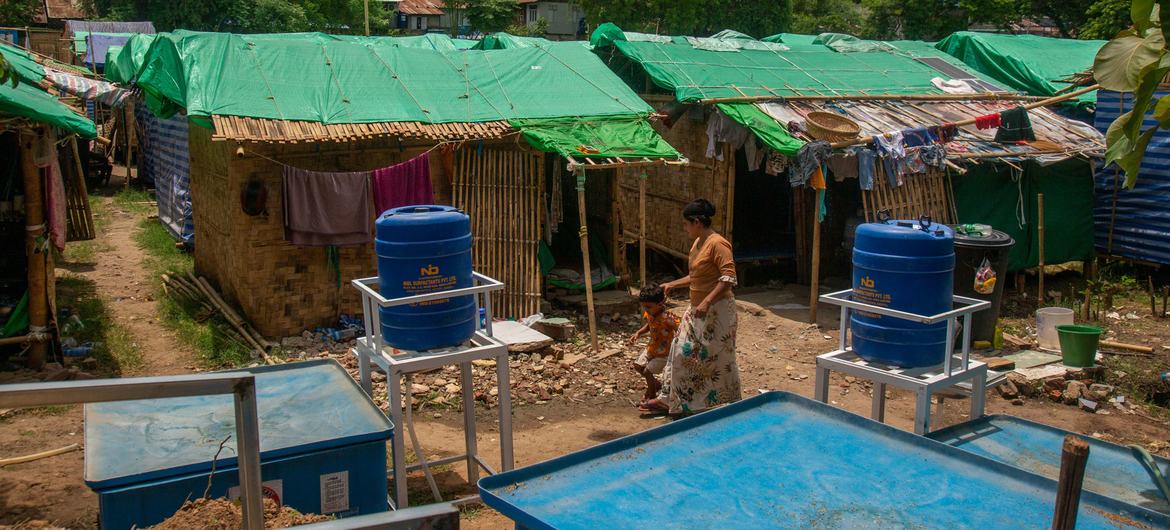
Disasters and fighting has forced millions across Myanmar to flee their homes in search of safety. Many shelter in IDP camps like this one in central Myanmar.

Floods, landslides upend lives

In the flood-affected areas of Bago, Kayin and Mon states, more than 85,000 people have been affected, with homes destroyed, roads cut off and emergency services overstretched.

Relief partners report significant shortages of food, safe drinking water and medical supplies. In Taungoo district (Bago) alone, three flood-related deaths have been confirmed, while six more people reportedly died in a landslide in Shan state.

The pathway out of the deteriorating situation in Myanmar requires an end to the violence 
– UN spokesperson Farhan Haq

The pathway out of the deteriorating situation in Myanmar requires an end to the violence and unimpeded access for relief workers and supplies,” Mr. Haq stressed, noting that health systems are also under acute strain.

Disease outbreaks rising

A humanitarian bulletin from the World Health Organization (WHO)-led Health Cluster warns that floodwaters are driving spikes in acute watery diarrhoea, dengue and malaria.

There are deep concerns over outbreaks of vaccine-preventable diseases like measles, and polio is increasing due to low immunization rates and poor hygiene conditions in overcrowded camps.

WHO has verified 27 attacks on healthcare facilities so far this year, with other monitoring groups reporting over 140 additional incidents.

Meanwhile, severe funding shortages – exacerbated by cuts in United States funding – have forced the suspension of services at 65 health facilities and 38 mobile clinics across Myanmar. Services at a further 28 mobile clinics have been scaled down.

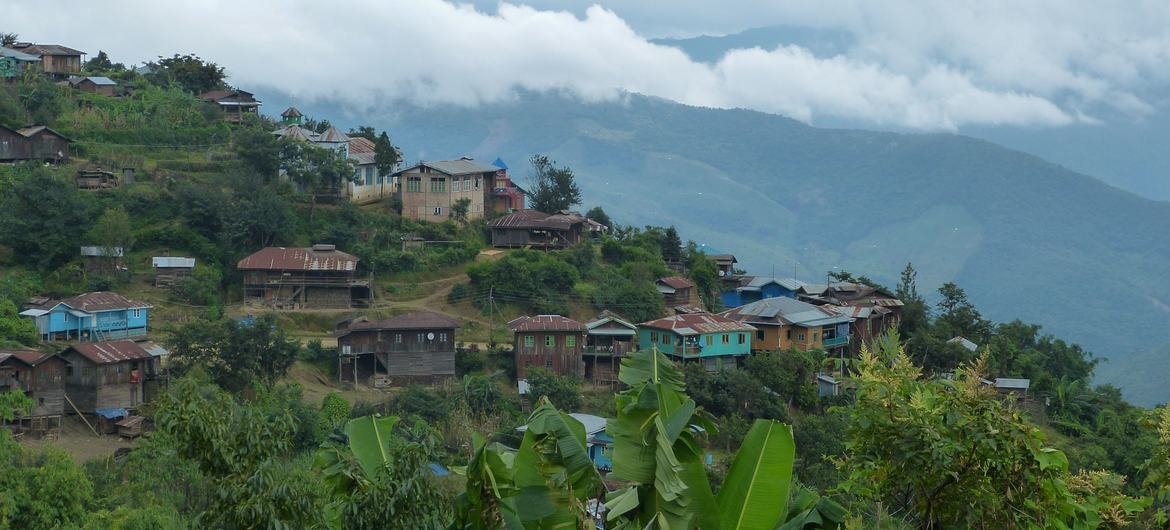
Hakha, the capital of Chin state in Myanmar.

Elections under military cannot be credible

The political context remains grim. Since the February 2021 military coup, which overthrew the elected government and imprisoned top leaders including State Counsellor Aung San Suu Kyi, Myanmar has seen a steady escalation of armed conflict and repression.

The junta’s plans to hold elections have drawn deep concern, including from the UN.

The Secretary-General reiterates his concern over the military’s plan to hold elections amid ongoing conflict and human rights violations, and without conditions that would permit the people of Myanmar to freely and peacefully exercise their political rights,” said Mr. Haq.

He recalled Security Council Resolution 2669, adopted in 2022, which called for the immediate release of all arbitrarily detained prisoners, including President Win Myint and Aung San Suu Kyi; upholding democratic institutions and processes; and pursuing in constructive dialogue and reconciliation in accordance with the will and interests of the people of Myanmar.

Commitment to stay and deliver

Despite the volatility and access constraints, UN agencies remain committed to reaching affected populations.

As of July, nearly 306,000 people had received health services in 59 earthquake-hit townships – just 67 per cent of the target population, reflecting the limited funding and security challenges faced by aid workers.

The United Nations is committed to staying and delivering in Myanmar,” Mr. Haq affirmed, “and to working with all stakeholders, including ASEAN and other regional actors, to attain sustainable peace.

Source link

Guterres: ‘Breaking point’ reached in Israel-Palestine conflict, urgent action needed on two-State solution

Speaking Monday morning at the high-level conference on the peaceful settlement of the question of Palestine and the implementation of the two-State solution, the UN chief painted a stark picture of a conflict that continues to “take lives, destroy futures, and destabilise the region and our world.”

“We know that the Israeli-Palestinian conflict has endured for generations – defying hopes, defying diplomacy, defying countless resolutions, defying international law,” Mr. Guterres said. “But we also know its persistence is not inevitable. It can be resolved. That demands political will and courageous leadership. And it demands truth.”

The truth is: we are at a breaking point. The two-State solution is farther than ever before.

The Secretary-General denounced the 7 October Hamas attacks on Israel and hostage-taking as acts of terror he has “repeatedly condemned.” At the same time, he said “nothing can justify the obliteration of Gaza that has unfolded before the eyes of the world.”

He also spoke out against the starvation of civilians, the killing of tens of thousands, mass displacement, settler violence and the “creeping annexation” of the occupied West Bank – a move he called “illegal”.

Stop undermining two-State solution

Unilateral actions that would forever undermine the two-State solution are unacceptable and they must stop,” he said. “These are not isolated events. They are part of a systemic reality that is dismantling the building blocks of peace in the Middle East.”

The three-day conference is mandated by the General Assembly through resolutions ES-10/24 and 79/81, is co-organized by France and Saudi Arabia. It includes plenary sessions and thematic roundtables on issues such as security arrangements, humanitarian needs, reconstruction, and the economic viability of a future Palestinian state.

A group photograph of senior UN officials and ministers attending the high-level international conference.

Move beyond ‘well-meaning rhetoric’

In his speech, Mr. Guterres urged Member States not to let the event become “another exercise in well-meaning rhetoric.”

“It can and must serve as a decisive turning point – one that catalyses irreversible progress towards ending the occupation and realising our shared aspiration for a viable two-State solution,” he said.

Reiterating the long-standing UN position, the Secretary-General said the two-State solution remains the only viable path to peace – with Israel and Palestine living side-by-side within secure, recognised borders, based on the pre-1967 lines, with Jerusalem as the capital of both States.

It is the sine qua non [Latin for indispensable or absolutely essential] for peace across the wider Middle East,” he concluded.

More to follow…

Jean-Noël Barrot, Minister for Europe and Foreign Affairs of France; Faisal bin Farhan Al Saud, Minister of Foreign Affairs of Saudi Arabia; and Mohammad Mustafa, Prime Minister of the State of Palestine also spoke at the meeting.

The meeting continues with wrap-up sessions of the thematic roundtables. 

A plenary meeting in the General Assembly Hall will take place at 3 PM New York time.

You can follow the live coverage of the conference here.

Food lifeline fading for millions in South Sudan hit by conflict and climate shocks

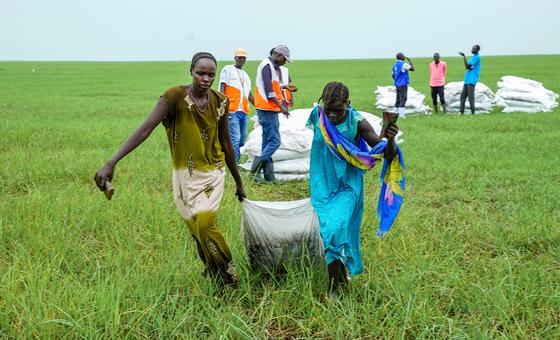
Earlier this month, the UN agency began airdropping emergency food assistance in Upper Nile state after surging conflict forced families from their homes and pushed communities to the brink of famine.

Nationwide, the picture is just as alarming, with half the country’s population – more than 7.7 million people – officially classified as food insecure by UN partner the IPC platform. This includes more than 83,000 face “catastrophic” levels of food insecurity.

“The scale of suffering here does not make headlines but millions of mothers, fathers, and children are spending each day fighting hunger to survive,” said WFP Deputy Executive Director Carl Skau, following a visit to South Sudan last week. 

The worst-hit areas include Upper Nile state, where fighting has displaced thousands and relief access is restricted. Two counties are at risk of tipping into famine: Nasir and Ulang.

South Sudan, the world’s youngest country, gained independence in 2011. This gave way to a brutal and devastating civil war which ended in 2018 thanks to a peace agreement between political rivals which has largely held.

However, recent political tensions and increased violent attacks – especially in Upper Nile state – threaten to unravel the peace agreement and return the nation to conflict.

The humanitarian emergency crisis has been exacerbated by the war in neighbouring Sudan. 

Since April 2023, nearly 1.2 million people have crossed the border into South Sudan, many of them hungry, traumatised, and without support. WFP says that 2.3 million children across the country are now at risk of malnutrition.

Crucial, yet fragile gains

Despite these challenges, the UN agency has delivered emergency food aid to more than two million people this year. In Uror County, Jonglei state, where access has been consistent, all known pockets of catastrophic hunger have been eliminated. Additionally, 10 counties where conflict has eased have seen improved harvests and better food security, as people were able to return to their land.

To reach those in the hardest-hit and most remote areas, WFP has carried out airdrops delivering 430 metric tons of food to 40,000 people in Greater Upper Nile. River convoys have resumed as the most efficient way to transport aid in a country with limited infrastructure. These included a 16 July shipment of 1,380 metric tons of food and relief supplies. WFP’s humanitarian air service also continues flights to seven Upper Nile destinations.

At the same time, a cholera outbreak in Upper Nile has placed additional pressure on the humanitarian response. Since March, WFP’s logistics cluster has airlifted 109 metric tons of cholera-related supplies to affected areas in Upper Nile and Unity states.

However, the UN agency says it can currently support only 2.5 million people – and often with just half-rations. Without an urgent injection of $274 million, deeper cuts to aid will begin as soon as September.

“WFP has the tools and capacity to deliver,” said Mr. Skau. “But without funding – and without peace – our hands are tied.” 

Source link

From crisis to classroom: How the UN supports education in conflict zones

Of the 234 million school-age children affected by conflict globally, 85 million children are completely out of school.  

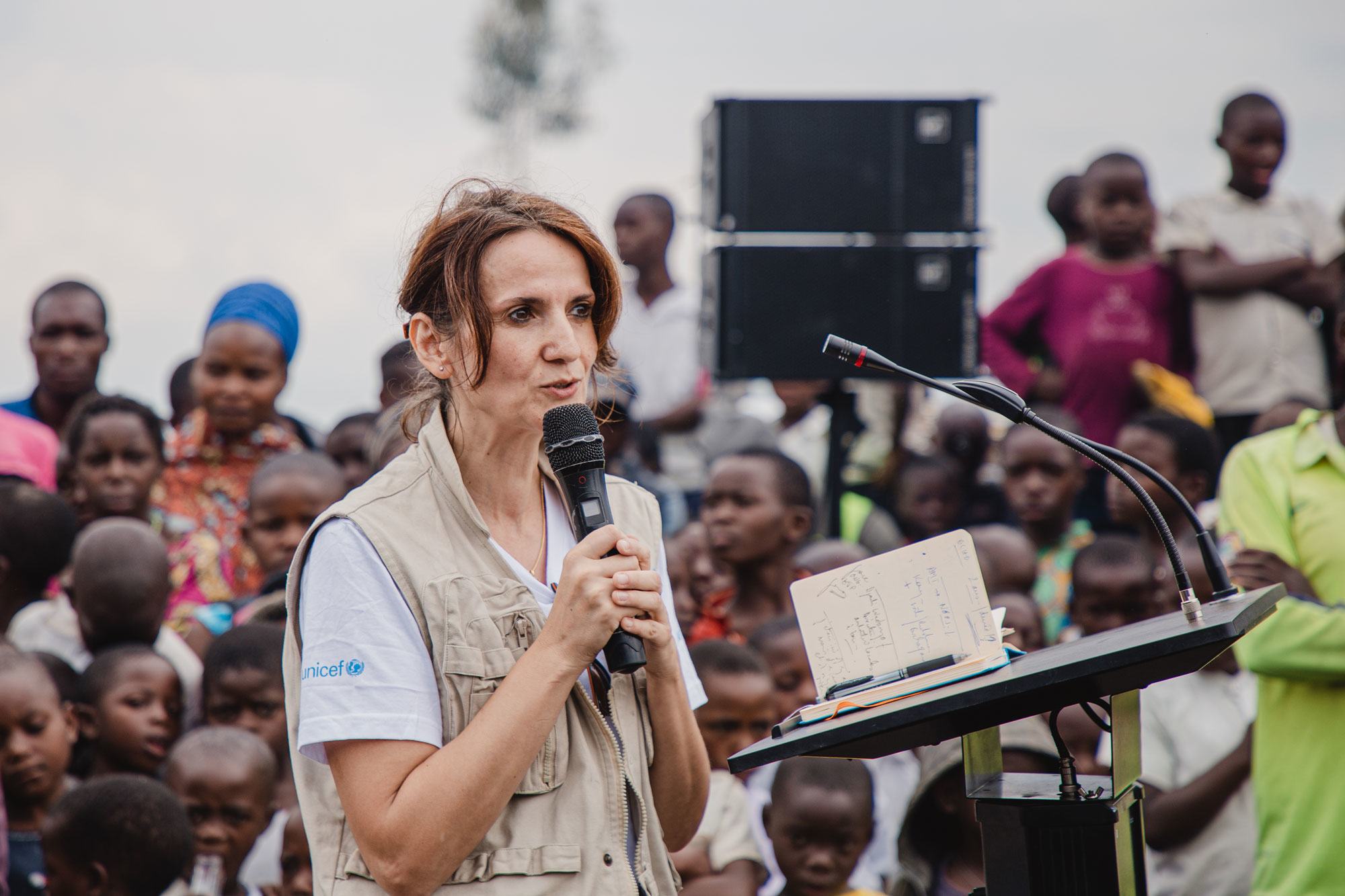
The figures are “unprecedented,” Helena Murseli, who leads the UN Children’s Fund’s (UNICEF) Global Education in Emergencies team, told UN News

© UNICEF/Jospin Benekire

UNICEF’s Helena Murseli.

“These are not isolated incidents. They are part of a global pattern of escalating conflict that affects children’s right to learn,” she said.  

Childhood without education

In the short and long-term, the consequences of missing out on education during violent crises are severe.

“Education is not just lifesaving, it’s also life-sustaining and life-changing,” Ms. Murseli emphasised.

“When schools close, families also lose their anchor. Children miss the structure, the safety, the normalcy that education provides,” she said. “The day-to-day reality becomes about immediate survival, rather than building a future for them.”

Ms. Murseli stressed that the long-term impacts are just as or even more significant. “Education breaks cycles of conflict and poverty. When entire generations miss school, countries lose the human capital needed for recovery and development. We risk creating what we call a ‘lost generation’—children who grow up knowing only crisis, without the skills or hope to rebuild their society.”

Sudan: The world’s largest education crisis

In terms of numbers, Sudan is the world’s largest education emergency. An estimated 19 million children are out of school, and 90 per cent of schools are closed nationwide due to ongoing violent conflict.

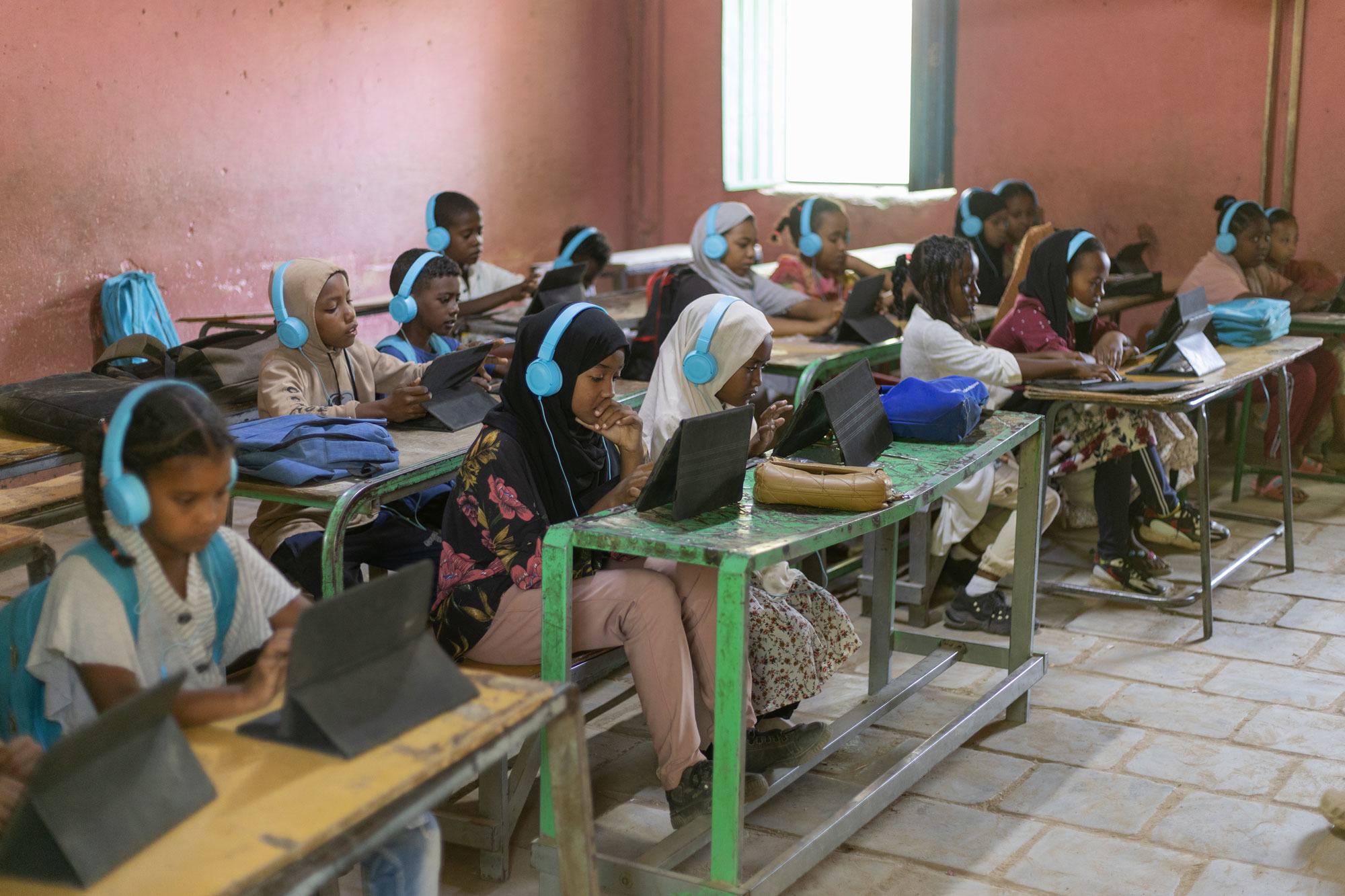
To help address this crisis, Ms. Murseli highlighted that over 2.4 million children have returned to school through more than 850 UNICEF-run Makanna centres – meaning “our space” in Arabic.  

UNICEF has also supported over 250,000 children with holistic education services, providing students with water, sanitation, nutrition and protection so they’re able to successfully continue their studies.  

The also organization utilises solar-powered tablets for education, “perfect for a country with more than 10 hours of daily sunshine,” said Ms. Murseli.

© UNICEF/Ahmed Mohamdeen Elfatih

Children in Kassala, Sudan, study with the help of digital tablets.

Additionally, a $400 million Transitional Educational Plan led by the UN’s education organization (UNESCO) aims to restore access to education and vocational training.

Looking ahead, UNICEF’s education support project in Sudan plans to support relatively stable states with printed materials and remote learning tools. 

Systematic destruction of schools in Gaza

The war in Gaza and the destruction of 95 per cent of educational infrastructure has left over 660,000 children out of school – nearly all of Gaza’s school-aged population.

Many former UN-run schools are now being used as shelters for displaced people.

A report to the UN Human Rights Council found that Israeli forces systematically destroyed education infrastructure in Gaza and described these actions as possible war crimes. 

Learning with what’s available

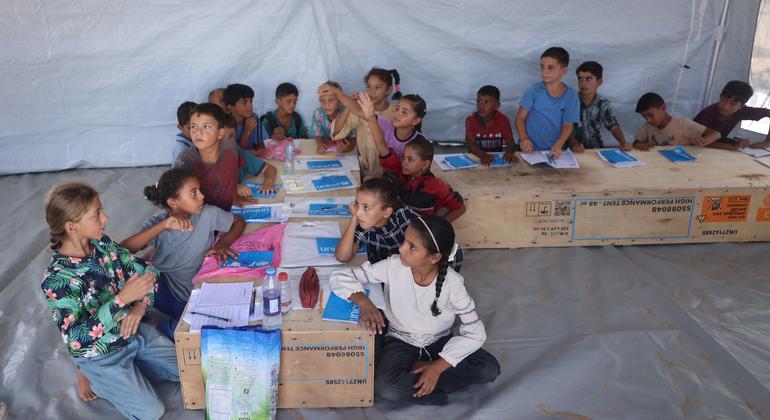
According to Ms. Murseli and the UN Palestinian refugee agency (UNRWA) more than 68,000 children in Gaza have been reached through temporary learning spaces offering education and psychosocial support.

UNICEF is also recycling pallets into school furniture and converting supplied boxes into tables and chairs.  

© UNICEF/Mohammed Nateel

In addition, digital tools to study literacy and numeracy lessons have been provided to nearly 300,000 Palestinian refugee children. 

Ukraine: education under fire

Within Ukraine, 5.3 million children face barriers to education, and around 115,000 are completely out of school due to the ongoing war.

With many schools on the front lines either closed or operating remotely, over 420,000 children attend school fully online, while 1 million use a hybrid model. 

However, ongoing energy shortages have reduced access to online learning to as little as two and a half hours each day, and in-person school is often disrupted by indiscriminate attacks.

In Russian-controlled areas of Ukraine, the UN Human Rights Office said that authorities are enforcing a militarised, patriotic curriculum and banning the Ukrainian language – actions that violate international law, which requires occupying powers to respect children’s national identity and education.

Catch-up classes and safe spaces

UNICEF has established 150 student learning centres in frontline areas and offers twice-weekly catch-up classes in maths and Ukrainian language.  

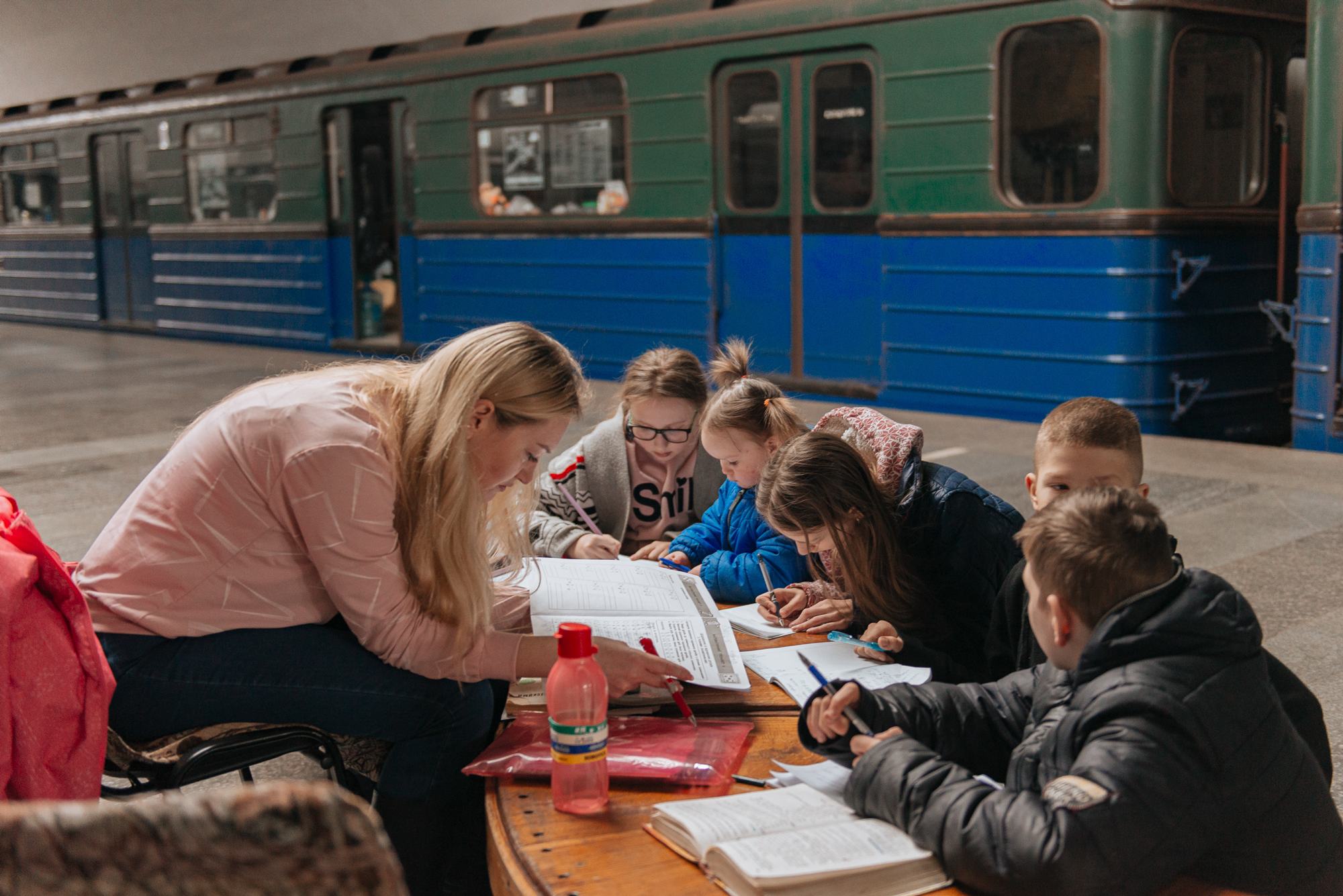
To adapt to the situation on the front lines, Ms. Murseli also highlighted UNICEF’s running of schools in underground metro systems and bomb shelters.

© UNICEF/Kristina Pashkina

Children study in a shelter in Kharkiv metro in Ukraine.

In 2025, the organization aims to help over 500,000 children across the country access formal education and recreational activities.  

To increase safety, UN Ukraine has also launched an initiative to create protected shelters for students and staff during air raids. 

The costs of inaction

As crises deepen and humanitarian funding continues to decline, education programmes have faced dramatic cuts.  

Ms. Murseli underscored that as humanitarian funding could drop up to 45 per cent by the end of this year, “despite being families’ top priority in emergencies, education receives only 3 per cent of humanitarian aid.”

“I think we are at the critical turning point where we need urgent prioritisation of education and not further cuts,” she said.  

Amid rhetoric of a “humanitarian reset” – saving funds by making the humanitarian system more effective – Ms. Murseli emphasised that holistic education programmes that provide students with the humanitarian resources to thrive are the key to withstanding crises and development in the aftermath.

“We’re talking about 234 million children’s future and ultimately, global stability and development. The cost of inaction far exceeds the investment needed to get every crisis-affected child learning,” she concluded.  

Source link

UN urges de-escalation, protection of civilians as conflict roils Syria

On Sunday, violence erupted between Sunni Bedouin tribal fighters and Druze militias in Sweida, two days after a Druze merchant was abducted on the highway to Damascus.

The casualty figures are unclear according to local reports, but the death toll is at least 30, and hundreds have been injured.  

As violent unrest continued Monday, interim government security forces were deployed to restore order, which reportedly led to clashes with local armed militia.

On the same day, Israeli forces struck tanks under the control of Syrian forces in defence of the Druze, whom it considers a loyal minority at home and in the occupied Golan area, according to news reports.

Shortly after forces of the caretaker government in Damascus arrived in Sweida on Tuesday, Syria’s defence chief announced a ceasefire.

Tensions have historically been high between minority groups in the city since Islamist rebels toppled former president Bashar al-Assad’s regime in December and a new caretaker government was installed which is gaining increasing international recognition.

Guterres expresses concern

Spokesperson for the Secretary-General, Stéphane Dujarric, addressed the situation in Syria on behalf of Secretary-General António Guterres at Tuesday’s briefing in New York.

“The Secretary-General is deeply concerned over the continued violence we have seen in the Druze-majority area in Sweida governorate,” Mr. Dujarric said, adding that he is particularly alarmed by reports of arbitrary violence against civilians.

Mr. Guterres condemned “all violence against civilians, especially acts that risk enflaming sectarian tensions,” and urged de-escalation, protection of civilians and a transparent investigation into those responsible for the killings and injuries.

Israel urged to end violations within Syria

“The Secretary-General is also concerned by Israel’s airstrikes on Syria’s territory and calls on Israel to refrain from violations of Syria’s independence, its sovereignty and its territorial integrity,” Mr. Dujarric stressed.  

Mr. Guterres urged support for “a credible, orderly and inclusive political transition in Syria in line with the key principles of Security Council Resolution 2254.” 

Mr. Dujarric also relayed reports from UN humanitarian partners in Sweida, noting that medical services are overstretched and that markets and essential services – including water, electricity and education – have been disrupted.

While UN aid operations have been suspended in impacted areas due to blocked roads, the UN is mobilising to respond when conditions allow. 

Investigators raise alarm

Also on Tuesday, the UN Human Rights Council mandated Syria Commission of Inquiry released a statement expressing concern over the situation in Sweida and stressing the urgent need for de-escalation and the protection of human rights.

The statement cited reports from local residents of killings, abductions, property burnings, looting and a rise in hate speech both online and in person.

In addition to highlighting concern over sectarian violence and Israeli airstrikes, the Commission emphasized the interim government’s responsibility to uphold human rights and ensure safe passage and humanitarian aid access.

The independent human rights investigators said they had begun an investigation into alleged human rights abuses related to the killings in Sweida in recent days.  

Ukraine: UN refugee agency helps repair homes amid ongoing conflict

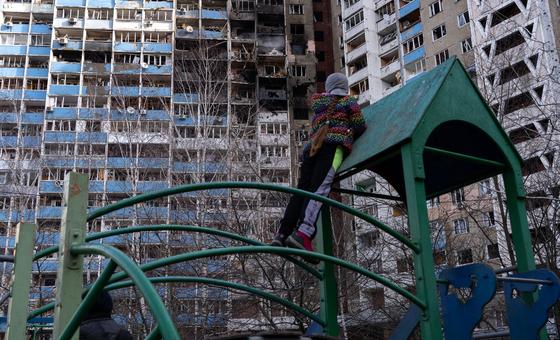
In the fourth year of Russia’s full-scale invasion of Ukraine, housing remains one of the country’s most urgent humanitarian and recovery challenges. The destruction has been widespread and ongoing.

According to the latest Rapid Damage and Needs Assessment, 13 per cent of Ukraine’s housing stock has been damaged since February 2022, impacting an estimated 2.5 million families.

More than buildings 

In coordination with Ukrainian authorities and partners, UNHCR has invested over $114 million in durable housing solutions since July 2022, supporting both durable home repairs and emergency shelter assistance.

“By helping repair houses and apartments, we are enabling people to stay in or return to their homes – places that hold profound meaning, often passed down through generations,” said Karolina Lindholm Billing, UNHCR’s representative in Ukraine.  

“These are not just buildings. These are treasured spaces where couples raised their children, families celebrated milestones, cared for older relatives and built their lives together,” she said.

UNHCR’s support includes a range of solutions: contracting local builders, providing construction materials or offering cash assistance to homeowners. 

Repairs may include roofs, windows, insulation and in some cases, major reconstruction. The agency also helps restore common areas in apartment buildings.

Emergency shelter and long-term needs

UNHCR also provides emergency shelter kits – tarpaulin, wooden boards, nails and other materials – to help protect homes from further weather damage.  

Since 2022, more than 470,000 people have received such kits.

With millions still internally displaced – many from areas under temporary occupation and with little prospect of return – UNHCR supports broader shelter options, including restoring social housing, repairing rural homes and refurbishing collective centres for the most vulnerable. 

Source link

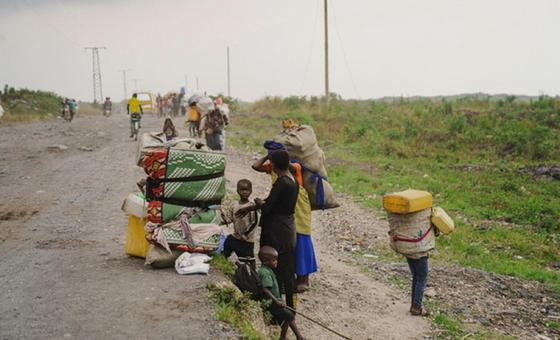
DR Congo: Conflict survivors ‘have been through hell,’ says UN aid chief

Speaking from the Goma region, whose main city was overrun by Rwanda-backed M23 rebels in January, UN Emergency Relief Coordinator Tom Fletcher explained that people had suffered “decades of trauma”.

The last few months have been “particularly horrific for so many”, he added, referring to the lawless fall-out from heavy fighting this year between the rebel fighters and the regular DRC army that has been linked to serious human rights abuses, including potential war crimes.

“Most striking today and yesterday has been the stories of sexual violence, and sitting with women who tell horrific stories which are too horrific for me to tell here and who are trying to find the courage to rebuild their lives,” the UN relief chief said.

We’re there providing that support to them, trying to help them rebuild, but they have been through hell.”

Peace call

All those newly displaced by the M23 rebel advance are in addition to the five million people already living in displacement camps in eastern DRC. Today, more than 20 million people need relief assistance. “They are desperate for this conflict to end,” Mr. Fletcher continued.

A day after NATO Member States agreed to a five per cent increase in funding for their collective defence, investment in the humanitarian work of the UN and its partners is at rock bottom.  

In DRC, a full 70 per cent of UN aid programmes was historically funded by the United States – “amazing generosity over decades” – Mr. Fletcher noted. But today “we’re seeing most of that disappearing”, he insisted, forcing the humanitarian community to make “brutal choices, life-and-death choices” about who receives help.

“For these women – the survivors of sexual violence, for the kids who told me they needed water, for the communities that told me they needed shelter, medicine, these cuts are real right now and people are dying because of the cuts,” the top UN official explained.

Aid teams haven’t stopped

Despite the difficulties linked to the protracted nature of the conflict in DRC and the massive needs, UN aid teams and their partners are “working hard to get access to those communities,” Mr. Fletcher insisted – “trying to get the airport back open, trying to get roads open, trying to unblock checkpoints that are impeding our aid from getting through”.

In an attempt to square the circle of the steadily diminishing amount of aid funding provided globally, Mr. Fletcher recently announced a “hyper-prioritized” plan to save 114 million lives this year. But that is dependent on receiving the necessary funding. “All we’re asking for to do that is one per cent of what the world spent on defence last year,” he continued.

After visiting and connecting with communities impacted time and again by the fighting, the top UN official insisted that they should not be forgotten. “They are the frontlines of the humanitarian effort,” he said.

Communities on front line

“I suppose the glimmer of hope in all of this is, yes, we can work in that more efficient and prioritized way and will do that; but also, the communities here who are – basically – they’ve come through so much and they are determined to support each other.”  

And despite rising antipathy in some countries towards international cooperation including the work and peace-promoting efforts of the United Nations, Mr. Fletcher insisted that reasons for optimism remain.

“I really strongly believe there is a movement out there that will back this work, that will support this work,” he told UN News. “We’ve got to find them. We’ve got to enlist them, and we’ve got to show them that we can deliver for them.

“And, you know, I have not given up on human kindness and human solidarity. I have not given up on the UN Charter for a second. And this work is at the heart of it.” 

Source link

Senior envoy warns Iran-Israel conflict is deepening crisis in Afghanistan

Roza Otunbayeva, the Secretary-General’s Special Representative and head of the UN Assistance Mission in Afghanistan (UNAMA), said the ongoing missile attacks between Iran and Israel are already having a tangible impact.

This conflict is already having an effect in Afghanistan, disrupting trade and increasing the prices of basic goods and fuel, and prompting the return of additional Afghans from Iran,” she said, echoing the Secretary-General’s urgent call for de-escalation.

Anticipating more returnees

More than 600,000 Afghans have returned from neighbouring Pakistan and Iran this year, and she said UN agencies are preparing for potential cross-border movements from Iran considering the “concerning developments” in the region.

Returns from Iran alone in the past few days have been over 10,000 per day,” she said.  

Local communities and the de facto Taliban authorities “have made huge efforts to absorb returnees, but without international assistance, there are limits to safe, orderly and peaceful returns.”

Concerns over engagement

Ms. Otunbayeva updated the Council on the UN’s ongoing engagement with Taliban leaders who returned to power nearly four years ago.

This “Comprehensive Approach” aims to achieve an Afghanistan that is at peace with itself and its neighbours, fully reintegrated into the international community, meets its international obligations, and without going through another cycle of violence.

She stressed that it “does not seek to normalize the status quo but rather ensure that multiple key issues of concern – in particular upholding the country’s international obligations – remain at the core of engagement efforts.”

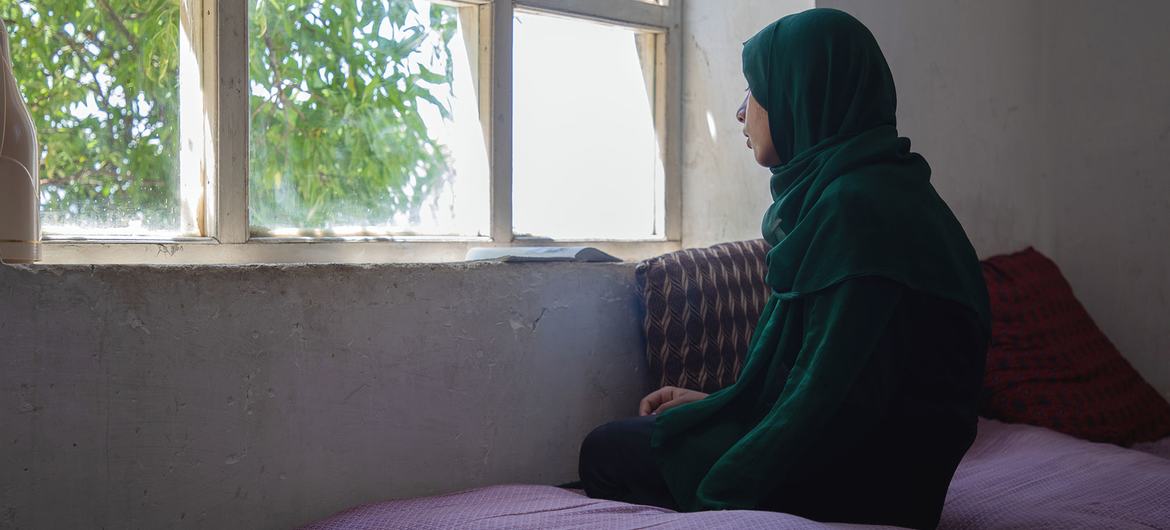
A teenage girl in Afghanistan stays at home as she is no longer allowed to attend school.

Erasure of women and girls’ rights continues

She said the international community “remains extremely concerned that engagement has not improved the unacceptable situation of Afghan women and girls, promoted inclusive governance, or prevented a marked deterioration in human rights.”

Meanwhile, the de facto authorities have conveyed grievances around frozen assets, sanctions, non-recognition, the need for greater development assistance, and an end to aid dependency.

She noted that the UN will convene meetings of two working groups on counter-narcotics and the private sector to be held in Doha, Qatar, in the coming days, calling this “an important development that gives momentum to multilateral engagement and builds confidence in the value of mutual cooperation.”

Relative stability, restrictive policies

Ms. Otunbayeva said Taliban rule has provided relative stability and security in Afghanistan, promoted modest economic growth and foreign investment, initiated dormant infrastructure projects, and deepened diplomatic ties abroad, particularly in the region.

However, authorities “continue to implement highly restrictive and discriminatory policies on the Afghan people,” as embodied in the “law on the propagation of virtue and prevention of vice,” which took effect last August. 

This law “cemented” the Taliban’s systematic, state-sponsored policies that exclude women and girls from participation in public life, including access to education, employment, freedom of movement, and freedom of expression.

Reintegration at risk

Through this law, the de facto authorities are continuing to pursue a path that distances Afghanistan from its international obligations and hinders Afghanistan’s eventual reintegration into the international system,” she said.

“We cannot forget the unacceptable situation of Afghan women and girls, even if their continued marginalisation under increased enforcement of more and more decrees no longer generates headlines.”

The ongoing ban on girls’ education beyond primary school “is the clearest sign of the Taliban’s discrimination against women and continues to set Afghanistan apart from the world,” she said, calling once again for the ban to be lifted and for girls and women to again have the right to education.

One in five going hungry

Joyce Msuya, UN Assistant Secretary-General for Humanitarian Affairs, highlighted how funding cuts are impacting Afghanistan, where half of all people require assistance to survive. 

The population faces “persistent and acute humanitarian needs compounded by decades of conflict, entrenched poverty, an ever-harsher climate, severe restrictions on the rights of women and girls and highly constrained funding environment,” she said.

Today, one in every five Afghans is hungry, 3.5 million children are acutely malnourished and roughly 3.7 million children are out of school, including 2.2 million girls over age 11 who are banned from education. Additionally, the maternal mortality rate is over 2.5 times the global average. 

Health facilities shuttered

She said the aid cuts continue to hamper humanitarian response, and 420 health facilities have been forced to shut their doors, affecting more than three million people.

“Almost 300 nutrition sites have closed, depriving 80,000 acutely malnourished children, pregnant women, and new mothers of essential treatment,” she added.

“Despite challenges, and at great risk, our Afghan female colleagues continue to deliver aid, going where others cannot, listening to communities who would otherwise not be heard, and standing by those who might otherwise be forgotten,” she said.

Hardships increase

Sima Bahous, Executive Director of UN Women, upheld calls for more diplomacy to address the spiralling crisis in the Middle East and Iran.

“The growing regional and global insecurity will only deepen the hardships faced by Afghan women and girls, compounding poverty, displacement, violence and deprivation,” she warned.

Additionally, the ability of the UN and partners to support Afghan women has been drastically undermined by legal and bureaucratic barriers which make it harder than ever to hire women, let alone reach them, at a time when deep cuts to aid budgets “have ever more devastating consequences.”

‘Unshakeable determination’

“Yet, we stay, and we deliver, as we always have,” said Ms. Bahous, highlighting how UN Women continues to navigate through endless restrictions and negotiate with the Taliban.

“And, Afghan women continue to lead the way,” she added.  “They have opened underground schools; organized in silence; built lives in those slivers of space left to them. They have shown unshakable determination, even when the world faltered.” 

Source link

UN reiterates call for urgent de-escalation amid Iran-Israel conflict, worsening Gaza crisis

In a joint call to de-escalate, UN agencies have warned that further conflict risks triggering new displacement in a region already strained by decades of war and instability.

The UN refugee agency (UNHCR) noted military strikes have led people in both Iran and Israel to flee their homes in search of safety from tit-for-tat missile strikes.

“Movements have been reported from Tehran and other parts of Iran, with some choosing to cross into neighbouring countries,” the agency stated. Meanwhile, “shelling has caused people in Israel to seek shelter elsewhere in the country and in some cases abroad.”

This region has already endured more than its share of war, loss, and displacement – we cannot allow another refugee crisis to take root,” said UN High Commissioner for Refugees Filippo Grandi. “The time to de-escalate is right now. Once people are forced to flee, there’s no quick way back – and all too often, the consequences last for generations.”

UNHCR urged countries in the region to respect the right to seek asylum and ensure humanitarian access to those affected, while calling on all parties to protect civilians and civilian infrastructure.

Nuclear risks rise as Iran facilities hit

The conflict escalated sharply following Israeli airstrikes on multiple Iranian nuclear-related sites in the past week, including a centrifuge manufacturing workshop in Esfahan, according to the UN’s International Atomic Energy Agency (IAEA).

“This is the third such facility that has been targeted over the past week,” Director General Rafael Mariano Grossi confirmed, noting that the facility had been under IAEA surveillance as part of the Joint Comprehensive Plan of Action (JCPOA) – the nuclear deal signed with Iran in 2015, which the United States pulled out of in 2017.

“We know this facility well. There was no nuclear material at this site and therefore the attack on it will have no radiological consequences,” he said. However, Mr. Grossi warned that continued strikes on nuclear infrastructure are severely undermining nuclear safety and security.

Though they have not so far led to a radiological release affecting the public, there is a danger this could occur.”

The IAEA has been tracking damage to sites in Esfahan, Arak, Karaj, Natanz and Tehran since the Israeli military campaign against Iran began on 13 June. T

he agency has been providing regular updates to the UN Security Council, which has yet to reach consensus on a response. On Friday, ambassadors debating the escalation heard during an emergency meeting in New York heard UN Secretary-General António Guterres warn that if fighting escalated it could “ignite a fire no one can control.”

Gaza in ruins, Palestinians face starvation

The mounting regional crisis is unfolding against the backdrop of the war in Gaza, where humanitarian conditions continue to deteriorate.

On Saturday, the head of the UN agency for Palestine refugees (UNRWA), Philippe Lazzarini, painted a grim picture of life in the enclave during an address to the Organisation of Islamic Cooperation in Istanbul.

In Gaza, two million people are being starved,” he said bluntly. “The newly created, so-called ‘aid mechanism’ is an abomination that humiliates and degrades desperate people. It is a death-trap, costing more lives than it saves.”

Lazzarini described a territory devastated by nearly two years of conflict, with more than 55,000 reported dead by local authorities in the Strip – the majority of them women and children.

Survivors, he said, “are shadows of their former selves; their lives forever changed by unspeakable trauma and profound loss.”

In the occupied West Bank, displacement and destruction of public infrastructure are altering the demography of Palestinian camps, he added, in what he described as an effort to erase the prospect of a Palestinian State under the UN-backed two-State solution and strip Palestinians of refugee status.

UNRWA in the crosshairs

UNRWA has become an objective of this war,” Mr. Lazzarini warned, citing the deaths of at least 318 of the agency’s staff in Gaza since the 7 October terror attacks on Israel by Hamas and other militants, the expulsion of international staff, and a campaign of disinformation aimed at crippling its funding.

Despite these pressures, UNRWA continues to provide lifesaving services, including over 15,000 health consultations per day, waste management and shelter support.

UNRWA’s financial situation is now “dire,” the agency chief said. “Without additional funding, I will soon have to take unprecedented decisions affecting our operations across the region.”

He appealed to Member States to act urgently: “The sudden loss or reduction of UNRWA’s services will only deepen suffering and despair across the occupied Palestinian territory. It might spark unrest in the neighbouring countries. This is something that the region cannot afford, especially now.”

UN Peacebuilding Commission ‘more needed than ever’ amid rising conflict

They shared their experiences at an event this week at UN Headquarters to mark 20 years of the Peacebuilding Commission (PBC).

The intergovernmental advisory body supports countries emerging from conflict in areas such as governance, justice, reconciliation, institution-building and sustainable development.

Pain and promise

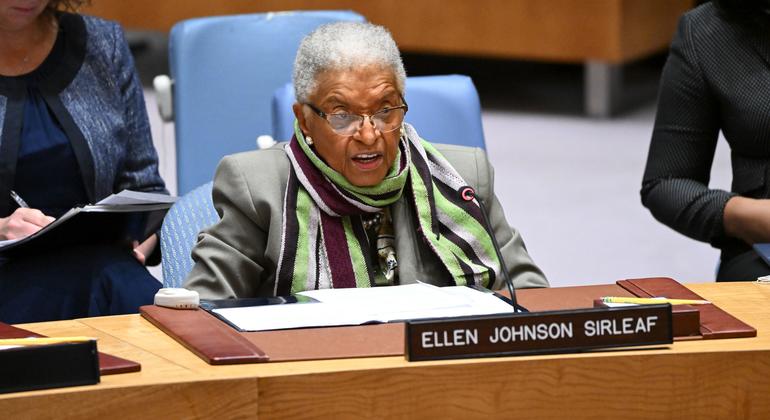
Liberia’s story is one of pain, but also of promise,” Ms. Johnson-Sirleaf said in a video message.

“A nation once brought to its knees by protracted conflict now stands as a testimony to what is possible when national will is matched by international solidarity.”

In August 2003, the Liberian Government, two rebel groups and several political parties signed a peace accord in Accra, Ghana, after 14 years of civil war.

Building a new Liberia

“Knowing that Liberia could not return to what it was, we had to construct a new nation based on new governance structures of inclusion, transparency, justice and hope,” said the former President and Nobel Peace Prize laureate.

Critical institutions such as the Central Bank, the judiciary, the anti-corruption commission, and even civil society organizations, had to be restructured or built from the ground up. And women played a central role in peace efforts by leading advocacy, mediation and community rebuilding.

“Importantly, also, Liberia’s path to peace could not be walked alone,” she said.

Ms. Johnson-Sirleaf pointed to the essential role played by the international community through the UN and its peacekeeping Mission UNMIL, regional bloc ECOWAS, the African Union, the European Union, and other entities.

‘A work in progress’

She also expressed gratitude to multilateral and bilateral partners – including the PBC – whose technical, financial and moral support laid the foundations for the peace enjoyed today.

“Liberia’s peace remains a work in progress,” she said. “We still face challenges -economic fragility, governance bottlenecks and the aspirations of a youthful population seeking opportunity. But we have also come a long way.”

The PBC has backed peacebuilding efforts in more than 30 countries and regions, for example supporting democratic transition in The Gambia and collaborating with Timor Leste to advance stability.

Its “intervention and decisiveness at a critical juncture is not only manifestly historic but serves as a cardinal reference point for preventive diplomacy and international solidarity,” said Gambia’s Foreign Minister Mamadou Tangara.

Conflicts on the rise

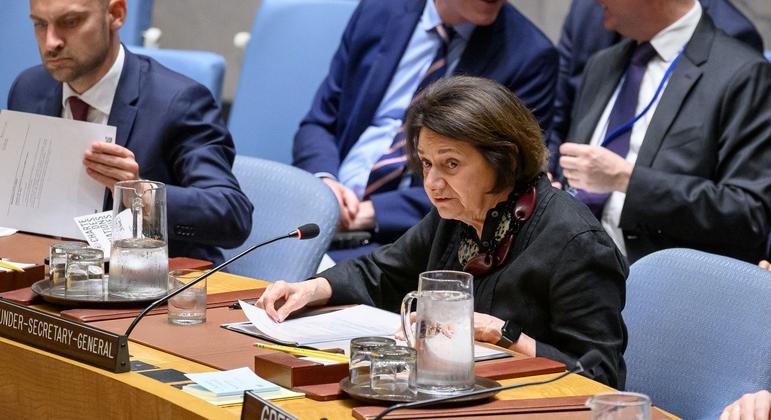
Rosemary DiCarlo, UN Under-Secretary-General for Political and Peacebuilding Affairs, remarked that the event was being held at a time when conflicts are becoming more numerous, more protracted and more complex, and as negotiated settlements are becoming even harder to achieve.

Against this backdrop, the role of the Peacebuilding Commission remains critical and more needed than ever,” she said.

She highlighted the Pact for the Future, adopted by UN Member States last September, which recognizes the central role of civil society, women and youth, and the value of UN partnerships with regional organizations and international financial institutions.

“Crucially, the Pact decided on the strengthening of the Peacebuilding Commission,” she said.  “Our task is to translate this ambition into practical progress.”

Still relevant today

Ms. DiCarlo said the PBC “should be equipped, strengthened and empowered to assist interested Member States to develop and implement national strategies for prevention and peace building.”

It should also have more systematic and robust links to other UN bodies and processes, such as the Security Council, and engage more deeply with regional organizations, international financial institutions and other key partners.

“The Commission is no longer a new institution, but its relevance and potential are undiminished at a time of increasing need. We must equip it to invest to deliver fully on its mandate.” 

Source link

Development is ‘the first line of defense against conflict,’ Guterres tells Security Council

Ambassadors met to debate how poverty, inequality, and underdevelopment are fuelling conflict and instability, at a time when hostilities are increasing and demand for humanitarian aid is rising as resources dwindle.  

Every dollar spent on prevention could save up to $103 in conflict-related costs, according to the International Monetary Fund (IMF). 

Sustainable development critical

Conflicts are proliferating and lasting longer, said Mr. Guterres. At the same time the global economy is slowing and trade tensions are rising, as aid budgets are being slashed while military spending soars. 

He warned that if current trends continue, two thirds of the world’s poor will live in conflict-affected or fragile countries by the end of this decade. 

“The message is clear,” he said.  “The farther a country is from sustainable and inclusive development, the closer it is to instability, and even conflict.”

Secretary-General António Guterres briefs the Security Council meeting on Poverty, Underdevelopment, and Conflict.

Give peace a (fighting) chance

The Secretary-General highlighted how the UN has worked to advance the three pillars of peace, development and human rights.  

These efforts began with its establishment 80 years ago and continue today, “guided by the simple principle that prevention is the best cure for instability and conflict, and there is no better preventive measure than investing in development,” he said.

“Development gives peace a fighting chance. It’s the first line of defence against conflict. But right now, we’re losing ground,” he said, noting that “the engine of development is sputtering.”

World falling short

Currently, two-thirds of the targets under the Sustainable Development Goals (SDGs) are lagging 10 years after adoption. 

“The world is falling short by over $4 trillion annually in the resources developing countries need to deliver on these promises by 2030,” he added.

Furthermore, “developing countries are being battered and bruised by limited fiscal space, crushing debt burdens and skyrocketing prices.”

Fix the ‘engine’

The Secretary-General pointed to the fourth Conference on Financing for Development, which begins next week in Spain, as an important moment “to fix and strengthen this essential engine.”

He called for renewed commitments towards securing public and private finance for the areas of greatest need, providing urgent relief for debt-laden countries, and reforming the outdated global financial architecture.

The Council debate “could not be more prescient,” said Kanni Wignaraja, the UN Development Programme’s (UNDP) Assistant Secretary-General and Regional Director for Asia and the Pacific.

Break the cycle

Global human development has stalled just as violent conflicts have surged to levels not seen in eight decades, she said, before presenting three priorities for investment to help break the cycle, including protecting household economies.

“In fragile settings, where peace and security have been shattered, development that goes directly to the local level becomes the first line of peoples’ defence and survival. And their hope for recovery,” she said.

“From these local economies – where livelihoods are restored, water and electricity can flow again, women’s businesses in particular reopen, farmers can trade food, and there is basic finance to allow markets to stay afloat – from this, comes the resources to build back broken capabilities and resilience.”

Address systemic imbalances

The Chairperson of the African Union (AU) Commission, Mahmoud Youssouf Ali, recalled how the continent loses billions of dollars annually to conflict, which could be channelled into schools, hospitals, infrastructure and innovation.

He said the international community must also acknowledge that poverty and underdevelopment “are not confined within national borders” but are global challenges that require global response.

“If we are to uphold international peace and security, we must address the systemic imbalances – economic, political, and institutional – that continue to fuel deprivation, exclusion, and instability across regions,” he said.

In this regard, the AU called for enhanced support to African-led peace operations, particularly those deployed in regions where poverty and underdevelopment are deeply entrenched. 

Critical juncture requires collective action

The debate was convened by Guyana, which holds the rotating Council presidency this month.

The country’s Foreign Minister, Hugh Todd, remarked that with the world “at a critical juncture where the interlinkages between peace, security and development have never been more pronounced,” collective and decisive action is required.

He cautioned against “prioritizing only political solutions in conflicts where poverty and underdevelopment feature prominently,” as creating conditions for socio-economic stability and well-being are also critical for peace.

Mr. Todd urged countries to address issues such as lack of access to education, unemployment, exclusion, and greater participation of women and youth.

“Currently, the global youth population is the highest in history, with most young people concentrated in developing countries,” he said.

“For us to harness their full potential, they must be given adequate economic opportunities and be involved in decision making on peace and security.” 

Source link

Civilian deaths in conflict are surging, warns UN human rights office

At least 48,384 individuals – mostly civilians – were killed in 2024, based on casualties recorded by OHCHR.

“Behind every statistic is a story. Behind every data point, a person,” said UN rights chief Volker Türk.

This alarming rise in civilian deaths exposes major failures to protect some of the most vulnerable in both peacetime and conflict situations, “painting a picture of a global human rights landscape in need of urgent action,” he said.

Human rights defenders

Just over 500 of those killed in 2024 were human rights defenders, with the number of journalists killed also rising by 10 per cent, comparing 2023 to 2024.

The level of targeting of human rights defenders and journalists remained alarmingly high: at least one human rights defender, journalist, or trade unionist was killed or forcibly disappeared every 14 days.

Detentions of rights defenders was most widespread in northern Africa, central, southern and western Asia. Killings were most prevalent in Latin America and the Caribbean.

Alarming rise in deaths of women and children

Violence against children and women in armed conflicts has been devastating over the past two years.

Between 2023 and 2024, approximately four times more children and women were killed in armed conflicts than during 2021–2022.

Women reported experiencing gender-based discrimination at more than twice the rate of men, and the poorest households were hardest hit, perpetuating cycles of poverty and inequality.

Discrimination does not exist in isolation,” said Mr Türk, as OHCHR’s findings revealed widespread and compounding discrimination, with nearly one in three persons with disabilities reporting having experienced discrimination, compared to fewer than one in five without disabilities.

Source link

Security Council meets in emergency session over Iran-Israel conflict, amid strikes and counterstrikes

The Council cleared its original schedule to address the rapidly evolving crisis, also hearing from the head of the UN-backed international nuclear watchdog, who warned of the grave risks to regional stability and nuclear safety.

Overnight from Thursday into Friday, Israeli military strikes targeted nuclear facilities across Iran, including the Natanz enrichment site. Media reports indicate that Hossein Salami, the head of the Islamic Revolutionary Guard Corps (IRGC), as well as several prominent nuclear scientists, were among those killed.

The strikes also caused significant damage, including reportedly dozens of civilian casualties. Airspace in the region has been largely closed and security forces are on high alert.

Additional Israeli strikes were reported late Friday local time as well as ballistic missile launches by Iran which have reportedly struck parts of Israel, including Tel Aviv.

Avoid conflagration at all costs: DiCarlo

Rosemary DiCarlo, UN Under-Secretary-General for political affairs told ambassadors that the repercussions of the attacks were already reverberating.

“I reaffirm the Secretary-General’s condemnation of any military escalation in the Middle East,” she said, urging both Israel and Iran to exercise maximum restraint and “avoid at all costs a descent into deeper and wider regional conflict”.

She also noted that the military escalation came just as “some significant diplomatic developments” were unfolding, including the planned resumption of United States-Iranian talks in Oman at the weekend. Latest reports indicate that Iran will no longer attend.

Ms. DiCarlo urged parties to stay the diplomatic course.

A peaceful resolution through negotiations remains the best means to ensure the peaceful nature of Iran’s nuclear programme,” she said.

“We must at all costs avoid a growing conflagration which would have enormous global consequences.”

Nuclear watchdog head urges protection of atomic sites

Also briefing the Council, Rafael Grossi, Director General of the International Atomic Energy Agency (IAEA), said his agency was in constant contact with the Iranian Nuclear Regulatory Authority to assess the status of affected facilities and determine broader impacts on nuclear safety and security.

Rafael Grossi (on screen), IAEA Director General briefs the Security Council.

He stressed that nuclear sites must never be targeted – under any circumstances.

Such attacks have serious implications for nuclear security, nuclear safety and safeguards, as well as regional and international peace and security,” Mr. Grossi said.

He stands ready to travel to the region at the earliest opportunity, he added, to assess the situation and support safety, security and non-proliferation efforts in Iran.

“It is clear that the only sustainable path forward for Iran, for Israel, the entire region and the international community is one grounded in dialogue and diplomacy to ensure peace, stability and cooperation.”

Mr. Grossi concluded by offering the IAEA as a neutral platform where “facts prevail over rhetoric” and where technical engagement replace escalation.

“I reaffirm my personal and the agency’s readiness to facilitate dialogue and support efforts that promote transparency, security and the peaceful resolution of nuclear issues in Iran.”

Broadcast of the Security Council meeting.

More to follow on this developing story…

Number of aid workers killed in Gaza conflict, highest in UN history: Guterres

Ahead of a memorial service at Headquarters in New York, Secretary-General António Guterres told journalists that the men and women being honoured “were not just names on a list” but “extraordinary individuals – each one a story of courage, compassion, and service.”

“They were driven by the pursuit of peace. By the urgency to ease human suffering. And by the conviction that every person, everywhere, deserves dignity and protection,” he said, speaking in front of the Security Council chamber.

He acknowledged that the past year has been especially devastating for UN humanitarian workers. 

“More than one in every 50 UNRWA staff in Gaza has been killed in this atrocious conflict. This is the highest staff death toll in United Nations history,” he said.

Some were killed delivering life-saving aid; others alongside their families; others while shielding the vulnerable.”

‘No room for impunity’

The Secretary-General said the sacrifice of all 168 fallen colleagues is a tragedy but also a reminder of the responsibility carried by every staff member every day.

It is important for the world to see this, he added, “because as we mourn those lost, we must also recognize the living.”

Mr. Guterres saluted staff members still serving in crisis zones across the globe for their courage and resilience.

“And to the world, I say: We will not grow numb to suffering. We will not accept the killing of UN personnel,” he stressed.

“We will not accept the killing of humanitarians, journalists, medical workers, or civilians as the new normal anywhere and under any circumstances. There must be no room for impunity.”

Remembering lives lost

Since 2011, the UN has held an annual service at Headquarters to honour personnel who have lost their lives in the line of duty during the previous year.

Those who paid the ultimate price in 2024 worked with UNRWA, the UN Secretariat, the UN refugee agency UNHCR, the UN Office for Project Services (UNOPS), and the World Food Programme (WFP).

They came from 31 countries and were teachers, engineers, doctors, administrators, humanitarians, peacekeepers, and more. Above all, they were sons and daughters, husbands and wives, fathers and mothers, and brothers and sisters.

Shortly after the press briefing, the Secretary-General joined some of their relatives, UN staff members and senior officials for the memorial service in the Trusteeship Council. Many others across the world followed the event online.

‘They were the best of us’

The Secretary-General noted that working for the UN “is far more than just a job” – it’s a calling. 

“All our fallen colleagues answered the call to serve humanity,” he said. “They did so in their own ways – without fanfare – and with determination.  They represented humanity in action.” 

He remarked that “at a time when some may question international cooperation or the very notion of multilateralism, we would all do well to remember these lives taken far too soon.”

“Let us take inspiration from how they lived,” he said. “And let us vow that the memory and mission of our fallen colleagues will endure. They were the best of us. Let them live on through our work.”

Legacy lives on

The president of the UN Staff Union in New York, Narda Cupidore, echoed this message.  She said they embodied the mission of the whole UN “and they paid the ultimate price.” 

“Let this honouring be more than a moment of silence,” she said. “Let it be a call for action. A call to protect those who serve. A call to ensure that anyone who serves under the blue flag does so with the full protection, support and respect.”

Ms. Cupidore said the legacy of the fallen colleagues “lives on in our work, in our advocacy and in our unshakeable belief that the world is worth striving for.” 

Source link

Ukraine’s frontline families struggle to cultivate mined fields amid conflict

According to the UN, many frontline Ukrainian families are at risk of missing critical planting and harvesting windows.

“Agriculture is a fabric of rural society. It’s not just a way to make a living – it’s a way of being. And vulnerable rural families are holding on. They need support not just to survive, but to thrive and rebuild,” said Rein Paulsen, Director of Emergencies and Resilience at the UN Food and Agriculture Organization (FAO) during a recent visit to Ukraine.

Rural households across Ukraine – many headed by an elderly relative or woman – depend on agriculture for survival, often tending a single cow or a small flock of chickens.

But these families are among the most vulnerable and least supported, especially those living near the frontlines.

Hardship growing

As the war provoked by Russia’s invasion of Ukraine enters its fourth year, these households face growing challenges cultivating their land due to anti-personnel mines, land contamination, labour shortages, lack of inputs, shelling and frequent electricity cuts.

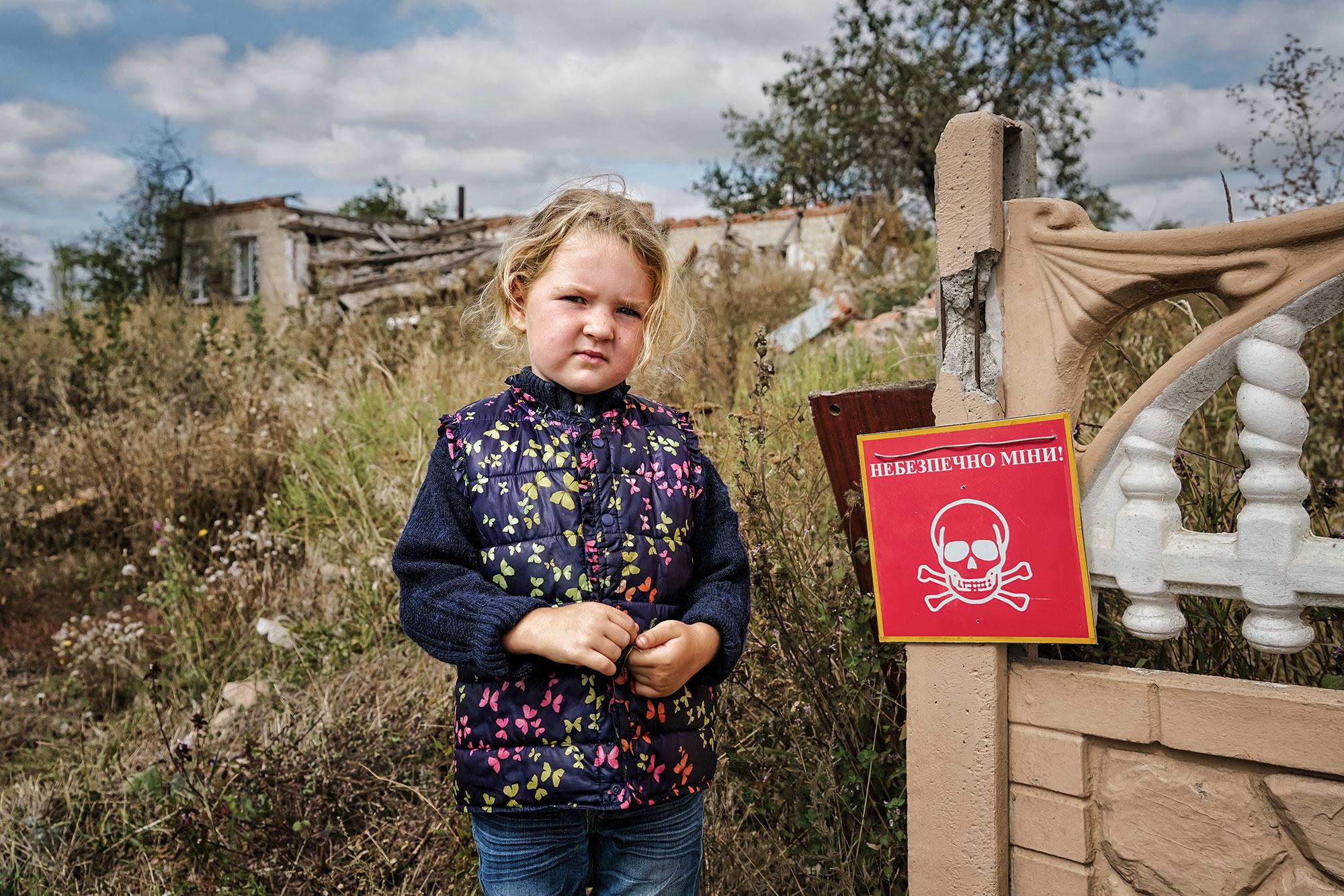
Veronika, 4, stands near a sign that reads “Danger of Mines”. Chistovodivka, Kharkiv region, Ukraine (file, May 2025)

According to the Fourth Rapid Damage and Needs Assessment, Ukraine’s agriculture sector has suffered $83.9 billion in damages and losses since the war began, with an additional $1.6 billion in the irrigation sector. A significant portion of this burden falls on rural households.

Call for support

On Monday, the FAO warned that without urgent and sustained support, thousands of rural households may be unable to plant or harvest on time, jeopardising national food security and rural livelihoods. 

Since the start of the war, FAO has supported more than 250,000 rural families with vegetable seeds, animal feed, day-old chicks, cash and vouchers. Over 15,000 farmers have also received crop seeds, temporary storage, and financial assistance.

In addition, the FAO and partners have worked to survey mined areas, restore access to farmland, and support national systems for monitoring and recovery.

But this assistance is not enough, especially as funding shortfalls limit the full implementation of the FAO’s Emergency and Early Recovery Response Plan for 2025–2026 in Ukraine.

The organization is calling for urgent support to help rural households safely access their land and secure essential resources such as seeds, fertiliser, storage and reliable energy.

This requires more than emergency funds alone – a sustained and coordinated response is needed to meet long-term needs.

Without increased support, these families’ ability to plant, harvest and recover remains under serious threat.

Source link

Sudan conflict triggers regional health crisis, warns WHO

“The ongoing conflict and displacement, in addition to fragile health infrastructure and limited access to affected populations, pose a risk of mass disease transmission,” the UN health agency said in a report issued Tuesday, urging immediate support to sustain surveillance, bolster outbreak response and preserve lifesaving health services.

Since civil war erupted in April 2023, 14.5 million people have been displaced – 10.5 million internally and four million to neighbouring countries such as Egypt, South Sudan, Chad, Ethiopia, Libya and the Central African Republic – making this the world’s largest displacement crisis.

Inside Sudan, conflict has devastated infrastructure and triggered the breakdown of essential services and infrastructure, fuelling the spread of cholera, measles and other communicable diseases.

At Tuesday’s press briefing in New York, UN Spokesperson Stéphane Dujarric reported that with fighting and shelling intensify across the country “the cholera outbreak in Khartoum state is worsening at an alarming rate,” with cases rising by 80 per cent over the past two weeks.

Mr. Dujarric called for “increased, flexible and timely funding to scale-up the humanitarian response, as well as unimpeded access via all necessary routes, so that aid workers can reach people in need wherever they may be.”

Disease and displacement

The impact extends well beyond Sudan’s borders. As of 7 May, Egypt has received 1.5 million Sudanese refugees during the two years of fighting. 

The country has expanded healthcare coverage, but Sudanese face higher costs under the Universal Health Insurance system. WHO Egypt is working with national authorities to strengthen health services and reach the most vulnerable.

However, as Sudanese refugees arrive at overcrowded refugee camps across the region, the situation is far grimmer.

Chad. Rapid Influx of Sudanese refugees leaves thousands in desperate need

In Chad, where over 726,000 have arrived in four crisis-affected eastern provinces already overwhelmed with other refugees, health needs are urgent.

Refugees face outbreaks of malaria, measles, hepatitis E and severe acute malnutrition. There have been 657,135 cases of malaria alone and 314 deaths across the country this year.

South Sudan has received over 1.5 million people, including 352,000 Sudanese. But conflict and attacks on health facilities in the host country have severely hindered response efforts and exacerbated disease.

Hunger and cholera are especially concerning, with 7.7 million people facing severe food insecurity, and more than 54,800 cholera cases and 1,000 deaths since late September.

Ongoing WHO support

Despite the growing funding crisis and severe operational challenges, WHO and its partners continue providing support.

These include support for 136 nutrition stabilisation centres, delivery of medical supplies and consultations, cholera treatment sites, and efforts to rebuild damaged health infrastructure.

The agency has called for sustained support to prevent the worsening of what is already one of the gravest humanitarian and public health emergencies in the world today.

Thousands flee homes in Mozambique as conflict and disasters fuel worsening crisis

The latest displacement brings the total number of people uprooted by violence, cyclones and social unrest in Mozambique to nearly 1.3 million, according to the UN refugee agency, UNHCR.

The situation is particularly dire in Cabo Delgado province, where attacks by non-state armed groups continue to drive displacement, destroy infrastructure and disrupt recovery efforts.

Thousands have lost their homes, many for the second or third time and are seeking safety in already overstretched communities,” Xavier Creach, UNHCR Representative in Mozambique told journalists at a regular news briefing in Geneva on Friday.

A ‘triple crisis’

Mr. Creach warned that the southeast African country is grappling with a “triple crisis” – armed conflict and displacement, recurring extreme weather events, and months of post-electoral unrest.

At the same time, extreme weather events – most recently Cyclone Jude in March – have devastated communities already hosting large numbers of displaced families. Food prices have surged by up to 20 per cent in some areas, compounding the strain on households and deepening the economic fragility in one of the world’s poorest countries.

The risks facing displaced people, particularly women and children, are severe. Protection concerns, including gender-based violence, family separation and limited access to documentation, are rising sharply.

According to UNHCR estimates, nearly 5.2 million people across the country require some form of humanitarian assistance.

Dwindling funds

In the challenging environment, UNHCR’s response is constrained by lack of funding with less than one-third of the $42.7 million funding appeal for the year met so far.

The agency warned that unless urgent support is mobilized, vital programmes will be at risk.

The broader UN humanitarian appeal, addressing other critical sectors such as nutrition and food security, health, water and sanitation, and education also faces severe shortages, having received only about 15 per cent of the required $352 million.

A perfect storm is gathering. If we turn away now, the country will face a much larger humanitarian emergency,” Mr. Creach said.

“The crisis is unfolding now. We have a choice. We can act to prevent, support and protect – or we can sit on our hands.

Source link