
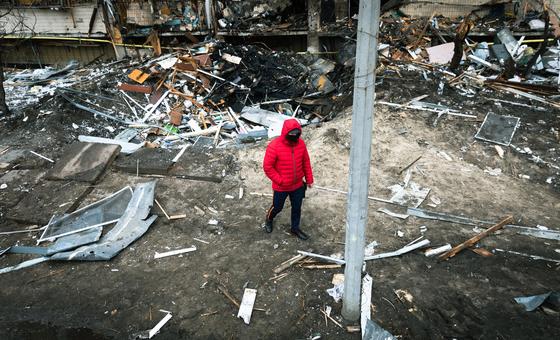
Ukraine Records Highest Toll From Cluster Munitions for Third Year Running

The latest Cluster Munitions Monitor reports that over 1,200 people have been killed or injured in Ukraine since Russia’s full-scale invasion in February 2022. The actual toll is likely far higher, but it may take years to establish, said Loren Persi, team lead for the report.

Drawing parallels with conflicts in Syria and Yemen, where casualty figures emerged only years later, Persi told journalists in Geneva that a similar pattern could unfold in Ukraine.

Lao legacy

Equally, in Lao People’s Democratic Republic, which Mr. Persi described as the most contaminated country by cluster munitions, “it took decades” before surveys confirmed estimates that many thousands of people had been killed or injured by strikes from cluster munitions, which are generally understood to be a container from which submunitions are scattered.

The civil society publication, backed by UN disarmament research agency UNIDIR, notes Israeli allegations that cluster munitions were used in a ballistic missile attack by Iran in June 2025, and of reported but unverified use of the weapons in Gaza and southern Lebanon.

The report’s other findings note that the de facto forces in Myanmar have used “domestically produced”, air-delivered cluster bombs since around 2022, amid the ongoing civil war.

“Schools have been among the targets in rebel-held areas,” said the Monitor research specialist Michael Hart, highlighting their use in Chin state, Rakhine state, the Saigon region and Kachin state, among others.

Mistaken for toys

Submunitions – or bomblets, as they are also known – cause casualties and damage through blast impact, their incendiary effect and fragmentation. According to UNIDIR, a single attack can involve thousands of individual explosive units which are usually spread over hundreds of square metres.

“These munitions can be air-delivered or surface-launched, and can be used against armour, materiel and personnel,” UNIDIR explained, although it is “very clear…that civilians continue to bear the brunt” of suffering from the cluster emission remnants, Mr. Persi insisted.

As in previous years, children accounted for a high proportion (42 per cent) of casualties from the weapons in 2024, “which they often find interesting, think are toys or come across in play or on the way to school or when working in fields”, Mr. Persi continued.

Funding cuts impact

Funding cuts for humanitarian work have had a negative impact on countries impacted by the explosive weapons.

These include Afghanistan, Iraq and Lebanon, which had “made good progress” in clearing contaminated land, but who now “really struggle with funding…to get the clearance done, hence they slow down”, said Katrin Atkins, senior researcher at Cluster Munitions Monitor.

“Whole programmes” supported by USAID in the past including one in Lau have been discontinued, Mr. Persi noted.

“For decades, [the programme] was essential in providing both first aid in remote areas where there are cluster mine victims, which was clearly there to address the legacy of the bombings of the 60s and 70s,” he explained. “But also, the entire rehabilitation programme, including prosthetics… that was cut and as far as we know, not reestablished in any way.”

In the last 15 years since the Convention on Cluster Munitions, just 10 countries have used the weapons and “all of those are States not party to the international accord”, the Cluster Munition Monitor states.

A total of 18 countries have now ceased production of cluster munitions. All former producers are now States Parties to the Convention, aside from Argentina.

The report notes that 17 countries still produce cluster munitions or reserve the right to do so and none is a State Party to the Convention. They are: Brazil, China, Egypt, Greece, India, Iran, Israel, Myanmar, North Korea, Pakistan, Poland, Romania, Russia, Singapore, South Korea, Türkiye and the United States.
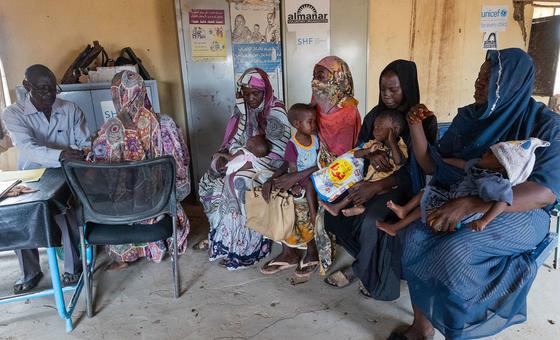
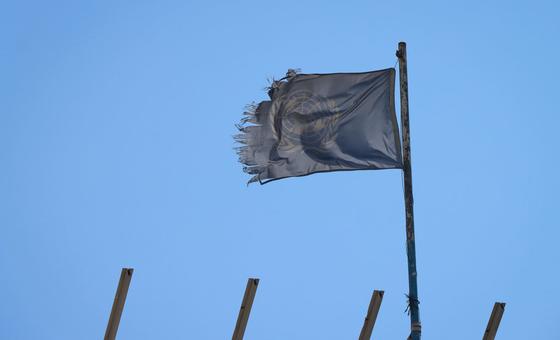
‘A war of atrocities’ – UN human rights investigators warn Sudanese civilians are paying the highest price

“They burned everything,” said one witness of a shelling attack in the Zamzam displacement camp in war-torn Darfur. “They claimed they only wanted to fight soldiers, but they punished the whole community.”

The war crimes and human rights violations perpetrated by all parties to the conflict between the military government and Rapid Support Forces (RSF) militia are documented in the latest report to the UN Human Rights Council, published by the UN’s investigative body probing violations in Sudan, known as the Independent International Fact-Finding Mission (FFM). 

The report, ‘A War of Atrocities” found that both the Sudanese army (SAF) and the RSF have directed large-scale attacks against civilians and vital infrastructure including medical centres, constituting serious violations of international law.

Systematic human rights abuses

Our findings leave no room for doubt: civilians are paying the highest price in this war,” said Mohamed Chande Othman, chair of the FFM.

According to the report, civilians are being targeted by both sides for their real or perceived affiliation with the opposing side. Executions, torture, and rape have become a daily horror for many communities in the war-torn country.

The RSF intentionally directed attacks against non-Arab communities in the besieged Darfuri city of El Fasher and the surrounding region, increasing the toll on what the UN refugee agency, UNHCR, calls the world’s fastest-growing displacement crisis.

Around 12.1 million people have fallen victim to forced displacement as of July. More civilians were killed or fled after the SAF targeted the state of Gezira.

Violence against women

Many civilians interviewed for the report said that they had suffered sexual assault. One witness said that she, along with other women and underaged girls, was subjected to rape in an abandoned building.

Victims – especially women and children, who bear the greatest burden – deserve justice and reparations,” said Joy Ngozi Ezeilo, one of the independent investigators.

For women and girls in Sudan, receiving psychological or medical support is nearly impossible both because of the fear of retaliation from reporting violence and because of regular RSF and SAF attacks on hospitals.

Risk for humanitarian workers

Over 84 Sudanese humanitarian workers were killed, and more were arbitrarily detained between the start of war in April 2023 and April this year after intentional attacks and kidnappings.

The FFM is also conducting an ongoing investigation on a drone attack against a joint World Food Programme and UNICEF convoy in June. Five humanitarian workers died in the attack while several others were injured.

Meanwhile, humanitarian aid continues to be delayed or obstructed.

A ‘roadmap for justice’

Our report not only exposes atrocities, it also lays out a roadmap for justice,” said FFM expert Mona Rishmawi.

The warring parties, mediators, and civil society can all play a role in ending the conflict, as outlined in the report.

Civil society initiatives, such as the Sudanese youth-led initiative “emergency rooms”, are some of the ways in which local communities can begin to repair the fabric of basic human rights law across Sudan.

The report also calls on the international community to enforce an arms embargo, back the International Criminal Court (ICC), and stop cooperating with any combatants or civilians suspected of war crimes, among other recommendations.

The international community has the tools to act. Failure to do so would not only betray the Sudanese people – it would betray the very foundations of international law,” said Mr. Othman.

Source link

Number of aid workers killed in Gaza conflict, highest in UN history: Guterres

Ahead of a memorial service at Headquarters in New York, Secretary-General António Guterres told journalists that the men and women being honoured “were not just names on a list” but “extraordinary individuals – each one a story of courage, compassion, and service.”

“They were driven by the pursuit of peace. By the urgency to ease human suffering. And by the conviction that every person, everywhere, deserves dignity and protection,” he said, speaking in front of the Security Council chamber.

He acknowledged that the past year has been especially devastating for UN humanitarian workers. 

“More than one in every 50 UNRWA staff in Gaza has been killed in this atrocious conflict. This is the highest staff death toll in United Nations history,” he said.

Some were killed delivering life-saving aid; others alongside their families; others while shielding the vulnerable.”

‘No room for impunity’

The Secretary-General said the sacrifice of all 168 fallen colleagues is a tragedy but also a reminder of the responsibility carried by every staff member every day.

It is important for the world to see this, he added, “because as we mourn those lost, we must also recognize the living.”

Mr. Guterres saluted staff members still serving in crisis zones across the globe for their courage and resilience.

“And to the world, I say: We will not grow numb to suffering. We will not accept the killing of UN personnel,” he stressed.

“We will not accept the killing of humanitarians, journalists, medical workers, or civilians as the new normal anywhere and under any circumstances. There must be no room for impunity.”

Remembering lives lost

Since 2011, the UN has held an annual service at Headquarters to honour personnel who have lost their lives in the line of duty during the previous year.

Those who paid the ultimate price in 2024 worked with UNRWA, the UN Secretariat, the UN refugee agency UNHCR, the UN Office for Project Services (UNOPS), and the World Food Programme (WFP).

They came from 31 countries and were teachers, engineers, doctors, administrators, humanitarians, peacekeepers, and more. Above all, they were sons and daughters, husbands and wives, fathers and mothers, and brothers and sisters.

Shortly after the press briefing, the Secretary-General joined some of their relatives, UN staff members and senior officials for the memorial service in the Trusteeship Council. Many others across the world followed the event online.

‘They were the best of us’

The Secretary-General noted that working for the UN “is far more than just a job” – it’s a calling. 

“All our fallen colleagues answered the call to serve humanity,” he said. “They did so in their own ways – without fanfare – and with determination.  They represented humanity in action.” 

He remarked that “at a time when some may question international cooperation or the very notion of multilateralism, we would all do well to remember these lives taken far too soon.”

“Let us take inspiration from how they lived,” he said. “And let us vow that the memory and mission of our fallen colleagues will endure. They were the best of us. Let them live on through our work.”

Legacy lives on

The president of the UN Staff Union in New York, Narda Cupidore, echoed this message.  She said they embodied the mission of the whole UN “and they paid the ultimate price.” 

“Let this honouring be more than a moment of silence,” she said. “Let it be a call for action. A call to protect those who serve. A call to ensure that anyone who serves under the blue flag does so with the full protection, support and respect.”

Ms. Cupidore said the legacy of the fallen colleagues “lives on in our work, in our advocacy and in our unshakeable belief that the world is worth striving for.” 

Source link