Ukraine Records Highest Toll From Cluster Munitions for Third Year Running

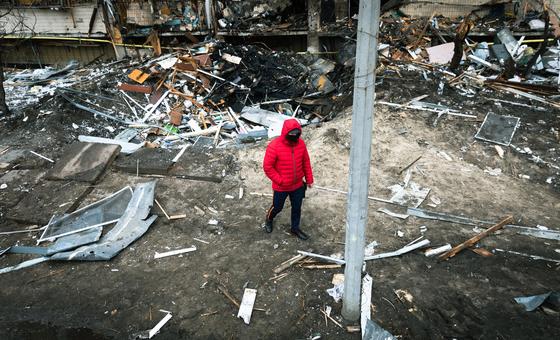
The latest Cluster Munitions Monitor reports that over 1,200 people have been killed or injured in Ukraine since Russia’s full-scale invasion in February 2022. The actual toll is likely far higher, but it may take years to establish, said Loren Persi, team lead for the report.

Drawing parallels with conflicts in Syria and Yemen, where casualty figures emerged only years later, Persi told journalists in Geneva that a similar pattern could unfold in Ukraine.

Lao legacy

Equally, in Lao People’s Democratic Republic, which Mr. Persi described as the most contaminated country by cluster munitions, “it took decades” before surveys confirmed estimates that many thousands of people had been killed or injured by strikes from cluster munitions, which are generally understood to be a container from which submunitions are scattered.

The civil society publication, backed by UN disarmament research agency UNIDIR, notes Israeli allegations that cluster munitions were used in a ballistic missile attack by Iran in June 2025, and of reported but unverified use of the weapons in Gaza and southern Lebanon.

The report’s other findings note that the de facto forces in Myanmar have used “domestically produced”, air-delivered cluster bombs since around 2022, amid the ongoing civil war.

“Schools have been among the targets in rebel-held areas,” said the Monitor research specialist Michael Hart, highlighting their use in Chin state, Rakhine state, the Saigon region and Kachin state, among others.

Mistaken for toys

Submunitions – or bomblets, as they are also known – cause casualties and damage through blast impact, their incendiary effect and fragmentation. According to UNIDIR, a single attack can involve thousands of individual explosive units which are usually spread over hundreds of square metres.

“These munitions can be air-delivered or surface-launched, and can be used against armour, materiel and personnel,” UNIDIR explained, although it is “very clear…that civilians continue to bear the brunt” of suffering from the cluster emission remnants, Mr. Persi insisted.

As in previous years, children accounted for a high proportion (42 per cent) of casualties from the weapons in 2024, “which they often find interesting, think are toys or come across in play or on the way to school or when working in fields”, Mr. Persi continued.

Funding cuts impact

Funding cuts for humanitarian work have had a negative impact on countries impacted by the explosive weapons.

These include Afghanistan, Iraq and Lebanon, which had “made good progress” in clearing contaminated land, but who now “really struggle with funding…to get the clearance done, hence they slow down”, said Katrin Atkins, senior researcher at Cluster Munitions Monitor.

“Whole programmes” supported by USAID in the past including one in Lau have been discontinued, Mr. Persi noted.

“For decades, [the programme] was essential in providing both first aid in remote areas where there are cluster mine victims, which was clearly there to address the legacy of the bombings of the 60s and 70s,” he explained. “But also, the entire rehabilitation programme, including prosthetics… that was cut and as far as we know, not reestablished in any way.”

In the last 15 years since the Convention on Cluster Munitions, just 10 countries have used the weapons and “all of those are States not party to the international accord”, the Cluster Munition Monitor states.

A total of 18 countries have now ceased production of cluster munitions. All former producers are now States Parties to the Convention, aside from Argentina.

The report notes that 17 countries still produce cluster munitions or reserve the right to do so and none is a State Party to the Convention. They are: Brazil, China, Egypt, Greece, India, Iran, Israel, Myanmar, North Korea, Pakistan, Poland, Romania, Russia, Singapore, South Korea, Türkiye and the United States.

Nepal crisis: Army deployed as death toll rises amid political turmoil

The unrest began Monday as a self-styled “Gen Z protest” against corruption, nepotism and restrictions on social media. It quickly escalated after security forces opened fire on the crowds.

By Tuesday, protesters had stormed and torched parliament, the Supreme Court and multiple government offices, including Singha Durbar – the central administrative complex. Homes of political leaders were attacked, police stations overrun, and Tribhuvan International Airport briefly closed.

In addition, media outlets and schools were set on fire, while the Ministry of Health and Population was also destroyed, including the National Health Emergency Operation Centre.

UN chief urges dialogue

UN Secretary-General António Guterres said he was “deeply saddened by the loss of life” and urged restraint, dialogue, and a thorough investigation into the violence.

“I call on the authorities to comply with human rights law,” he posted on social media late on Tuesday (New York time).

“Protests must take place in a peaceful manner, respecting life and property.”

Volatile security situation

According to media reports, the updated toll includes both protesters and police, as well as people killed in fires during the demonstrations. Many remain unaccounted for, with hospitals reporting critically injured patients.

The turmoil also triggered jailbreaks in several locations, with some inmates still at large.

Some accounts suggest demonstrations may have been infiltrated by outside actors, further complicating the volatile security environment.

Efforts to restore order

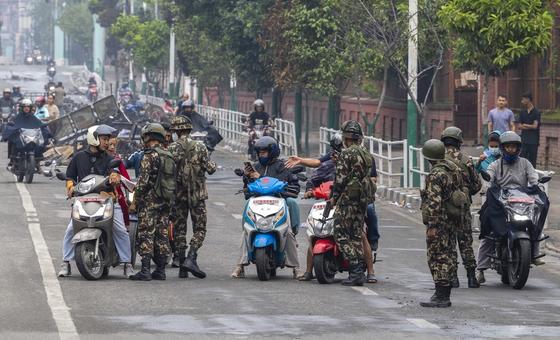
The army assumed control of nationwide security late Tuesday local time, deploying troops across the Kathmandu Valley and imposing movement restrictions to stabilise the situation.

Checkpoints were established, and people have been urged to stay home except for essential travel.

Media also reported the army recovering some of the weapons looted from police personnel, while youth groups helped apprehend escaped prisoners and return firearms. Some inmates voluntarily surrendered.

Tribhuvan International Airport has since reopened, and some police stations are back in operation.

Country at a crossroads

Even amid the chaos, some youth groups were seen clearing debris from their neighbourhoods.

Behind the immediate turmoil, talks are reportedly underway on the possible formation of an interim government to steer the country through the crisis. Discussions also include the dissolution of parliament, investigations into illegally acquired assets, and reform of key institutions.

Source link

Finding strength amid sleepless nights: Ukraine’s hidden mental health toll

Speaking from the capital Kyiv which was rocked by some of the deadliest attacks of the war last week – and following a visit to the frontline region of Sumy – UN Women’s Representative in Ukraine Sabine Freizer Gunes described to UN News’s Nathalie Minard both the emotional exhaustion and the resilience she had witnessed.

The interview has been edited for clarity.

UN News: The situation for civilians in cities is drastic, with shelling and air raid sirens sounding for days and nights at a time. Could you describe your personal experience of living in a war zone?

Sabine Freizer Gunes, UN Women Representative in Ukraine: Living in a war zone like Ukraine is, on one hand, quite challenging, because as a UN official, we’re not allowed to bring our families here. So, one difficulty is living far away from one’s family.

Usually, in terms of the war situation and the attacks, they tend to happen at night. One of the clear challenges is being able to get through your week, when you’re woken up numerous times during the night. Sometimes there are attacks on Kyiv several days in a row. Sometimes it’s quiet for a week or 10 days.

Not knowing when you’re going to go to sleep, if you’re going to be able to sleep a full night, or if you’re going to have to wake up three or four times, if you’re going to have to go down to the shelter, if you’re going to have to check the news – I would say that mentally, that’s the most difficult thing. It’s not so much fear, it’s not knowing what your night is going to look like.

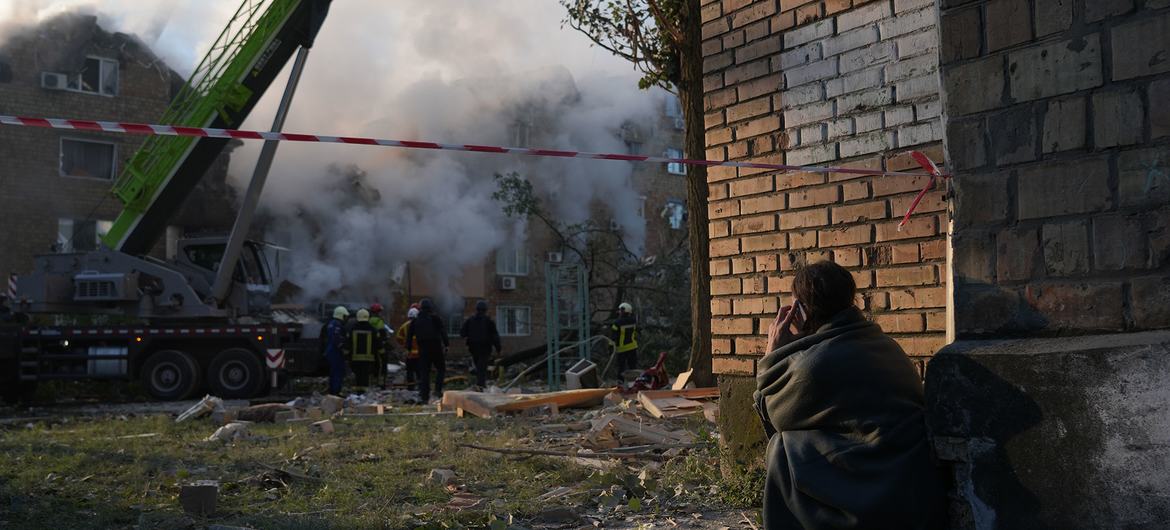
© UNICEF/Oleksii Filippov

A resident near the ruins of a residential building in Kyiv, watching as emergency crews search for survivors following a missile strike in the early hours of the morning on 28 August.

UN News: You were recently in Sumy, very close to the eastern frontline. Many people have left the East for safer locations, but others have chosen to stay. How is the UN and UN Women and partners helping them?

Sabine Freizer Gunes: It is quite extraordinary that many Ukrainians are staying in their frontline communities. And some of these places have been under attack since 2014. What we do see is that people are continuing to live their lives.

I just came back from Sumy, which is 20 kilometers away from the Russian border, and the city is still completely vibrant. Businesses continue, cafes, restaurants, and shops are still open. People are still walking down the street.

This is the situation in Ukraine: from one moment to the next, tragedy can strike.

Life seems quite normal during many hours of the day, but then there’s always something kind of hidden beyond that. For example, with some of our colleagues, their husbands may be fighting on the frontline, their fathers or their brothers may have disappeared.

There’s always that element which isn’t visible but is behind the reality of the people that are working.

UN Women works very closely through local women’s rights organizations. When we have an attack, we ask them what kind of assistance we can provide.

Very often, those are going to be kits that are specifically assembled to meet the needs of women, particularly elderly women. It’s elderly women who are generally the last ones to leave their homes.

They insist on staying in their house, in their small yards, because they believe that’s a much better outcome than going to live in a collective centre.

What we try to do then is to provide them with some basic items so that they can stay in their homes.

One thing that I saw yesterday in Sumy, I saw that women’s rights organizations were doing very different kinds of activities. They’re doing cultural activities, activities to support young people, they’re providing legal advice or psychosocial advice. They are helping women get new skills to start their own businesses.

On one hand, there’s an humanitarian crisis and we need to provide life-saving support, but on the other, in the same town, we’re also discussing recovery and development.

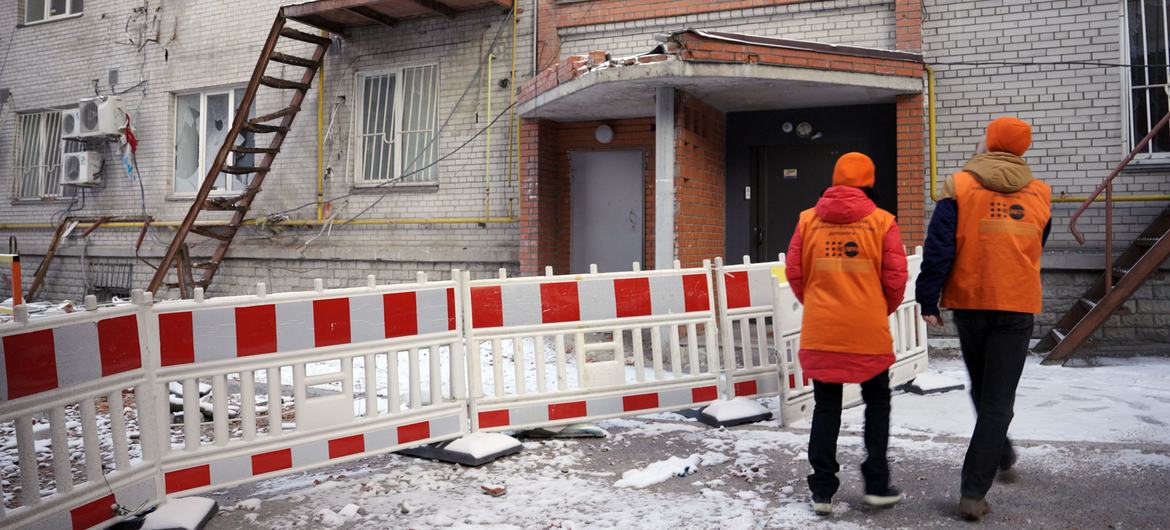
UNFPA’s mobile psychosocial support teams travel across Ukraine, including to the front lines, offering immediate emergency interventions as well as access to longer-term assistance.

UN News: Can you share the story of a woman that particularly moved you?

Sabine Freizer Gunes: One thing that really moved me recently was talking to six women who each represented a different NGO.

We were talking about our cooperation, and we asked them, “how have we helped you over the past several months?” And they said that one thing that they really benefited from was a retreat that we organized. I thought they were going to say that they benefited from material things that we gave them.

Instead, they said what they benefited from was a retreat, which was organized in western Ukraine, which is generally more peaceful. And we gave them five days to be in a quiet space where they could get to know each other, share experiences, and where they could sleep. One of them said, “this is the first time in three years that I got a decent night’s sleep”.

That was very powerful to hear, that giving space, a sense of normalcy to our partners can be incredibly powerful.

Listen to the full interview:

UN News: It’s three and a half years since Russia’s full-scale invasion of Ukraine. What are the most common impacts on women’s mental health you’ve encountered?

Sabine Freizer Gunes: Pretty much everybody who lives in Ukraine and who’s been living in Ukraine for the past three and a half years has some mental health issue. There is a clear effect of the war on everyone’s mental health. Regardless of who we’re working with at UN Women, we always include a mental health component.

In the war-torn Ukrainian town of Snihurivka, a groundbreaking initiative is training women as tractor drivers – a role traditionally dominated by men.

For example, we are currently training women to be bus drivers, to take over positions which used to be held by men, but now with the men at the front, women are needed to take up these jobs.

UN News: Do you see a rise in gender-based violence (GBV)? What are the specific mental health challenges faced by women survivors of conflict-related sexual violence; and how do you address them?

Sabine Freizer Gunes: Conflict-related sexual violence is a real challenge in Ukraine. But very often in conflict situations, conflict-related sexual violence (CRSV) is something that’s hidden under the rug.

Here in Ukraine, the Government itself has spoken about conflict-related sexual violence and really encouraged those who are survivors to speak openly about it and to seek remedies and reparations.

In Ukraine, the Office of the High Commissioner on Human Rights has documented 484 cases.

But it is expected that’s just the tip of the iceberg, that there’s a lot of cases that are not known because they’re occurring today in occupied territories, in territories occupied by the Russian Federation, but also people do not feel ready yet to speak about it.

For CRSV in Ukraine, what’s interesting is that there are also many cases against men. So out of those 484 cases, 350 cases are men, and 119 cases are women.

That is because a vast majority of those cases are cases that occur in detention. Survivors of conflict-related sexual violence need extensive psychological support.

UN News: What urgent gaps exist in providing support to women in Ukraine today? How are funding cuts affecting your activities?

Sabine Freizer Gunes: Funding cuts are having a massive effect on the ability to provide support and services to Ukrainian women and girls. What we find to be the most disturbing is the effect of the cuts on Ukrainian women’s rights organizations.

UN women carried out a study back in March, about a month after the US declared its cuts. We did a survey of 100 different women’s rights organizations.

Seventy-three per cent reported already significant disruptions to their operations due to the cuts. Thirty-two per cent expected that they may have to suspend their operations in the next 6 months. Sixty-seven per cent were already forced to lay off staff. And 50 per cent expected that there would be further layoffs.

Most worryingly, 60 per cent of the women’s rights organizations have been forced to reduce or to suspend their gender-based violence services.

This is directly affecting women and girls’ lives. You imagine if you were a woman who was living an abusive relationship, you know that there is a shelter down the road, and suddenly you say, okay, this is too much. You go to the shelter, you knock on the door, and nobody answers anymore because there’s no more funding to keep that shelter open.


Source link

World Humanitarian Day 2025: Aid workers mull record toll of their own

Speaking to UN News from the wartorn enclave to mark World Humanitarian Day, Olga Cherevko from the UN aid coordination office, OCHA, said that exhausted aid workers continue to show up for work “day in and day out”.

Approaching two years since the start of the war in Gaza, Ms. Cherevko emphasized the commitment of her Palestinian colleagues, “the doctors, the nurses, aid workers who many of them have, lost everything and several times over”.

Red lines crossed

In comments in support of aid workers everywhere, UN Secretary-General António Guterres pointed out that humanitarian teams “are the last lifeline for over 300 million people” impacted by conflict or disaster.

Despite their lifesaving role, funding cuts are having a serious and negative impact on the world’s most vulnerable people, Mr. Guterres warned, while those who provide aid are increasingly under attack as “red lines are crossed with impunity”.

This is despite the fact that such attacks are prohibited under international law, the UN chief continued, noting that although governments have pledged action to protect them, “what is missing is political will – and moral courage…Humanitarians must be respected and protected. They can never be targeted.”

Powerless to help

From her base in Deir Al-Balah in central Gaza, Ms. Cherevko reflected on the nature of humanitarian work today and the frustration that aid teams often face when their lifesaving missions are delayed, preventing them from delivering assistance at scale.

“I think as a humanitarian, I feel powerless sometimes in Gaza because I know what it is that we can do as humanitarians when we’re unable to do so, both here in Gaza and in any other humanitarian crisis,” she explained.

“The fact that we continue to face massive impediments for delivering aid at scale, when our missions are delayed, when our missions lasted 12, 14, 18 hours; the routes that we’re given are dangerous, impassible or inaccessible.”

Surge in killings

Latest data indicates a 31 per cent surge in aid worker deaths compared to 2023, driven by the relentless conflict in Gaza.

The Strip saw 181 humanitarian workers killed in 2024, with 60 more fatalities in Sudan. More widely, violence against aid workers increased in 21 countries in 2024 compared to the previous year, with State actors the most common perpetrators.

Worryingly, there is no sign that the trend is slowing this year, with 265 aid workers killed as of 14 August this year, according to provisional data from the Aid Worker Security Database.

Amid early reports that Hamas has agreed to a 60-day ceasefire in Gaza and ongoing uncertainty about the Israeli plan to pursue a complete military takeover of the enclave, OCHA’s Ms. Cherevko highlighted the need for a permanent end to the conflict.

Aid teams are exhausted and “everyone’s still showing up (to work), but courage alone and commitment alone isn’t going to feed people, isn’t going to save people”, she insisted. “What we need is, again, a permanent ceasefire. We need political solutions to this conflict and a resolution to this crisis.”

UN warns of escalating human toll in Ukraine amid relentless aerial attacks, mounting aid shortfall

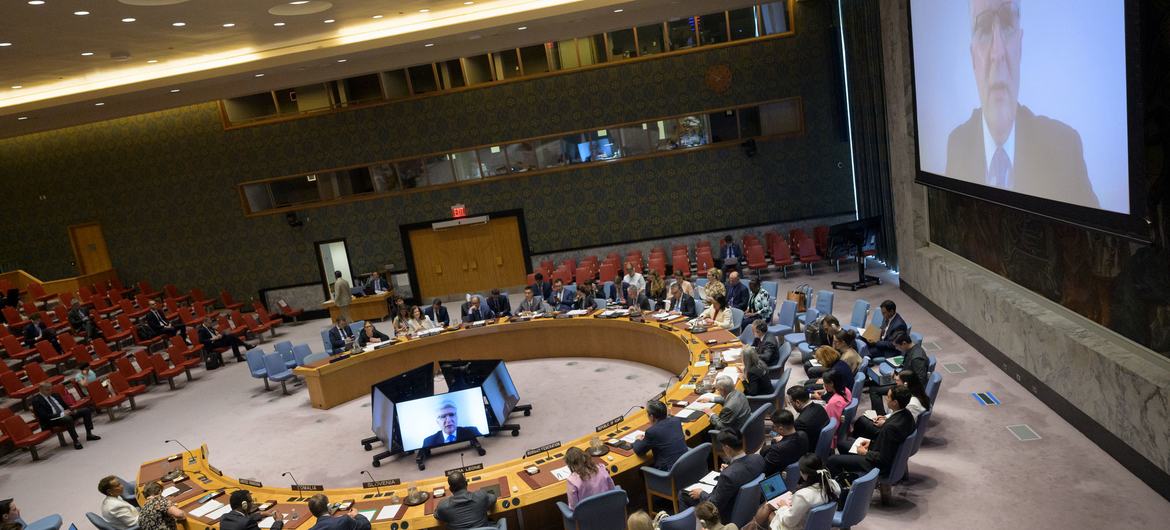
“Nowhere is safe in Ukraine,” said Miroslav Jenča, Assistant Secretary-General for Europe at the UN Department of Political Affairs (UNDPPA).

Citing figures from the UN human rights office, OHCHR, he said civilian casualties reached a three-year high in June, with 6,754 civilians killed or injured in the first half of 2025 alone.

Russian forces launched over 5,000 long-range munitions against Ukraine so far in July, including a record-breaking 728 drones in a single day. Major cities such as Kyiv and Odesa have been hit by swarms of missiles and drones.

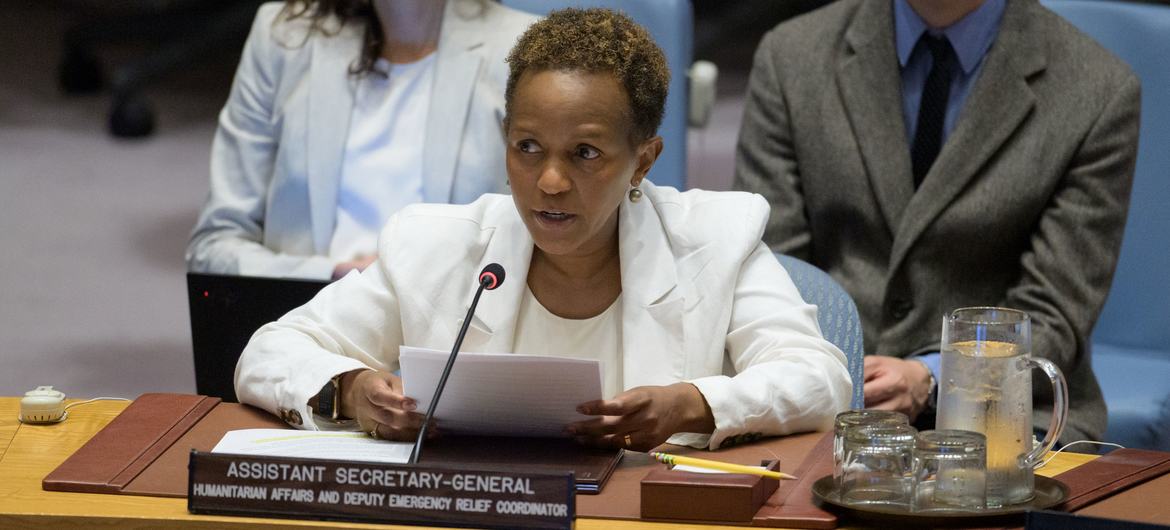
Assistant Secretary-General for Humanitarian Affairs Joyce Msuya echoed those words, saying “there is no safe place left in Ukraine” as the use of explosive weapons in populated areas has left cities reeling.

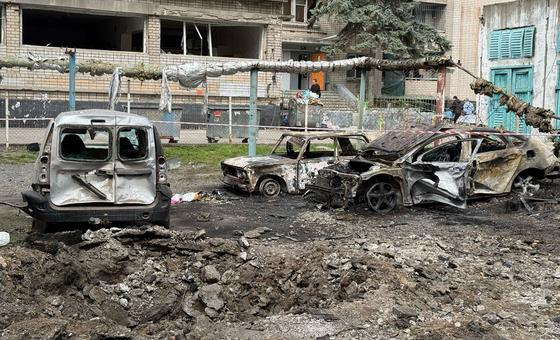
A rehabilitation centre for persons with disabilities in Kharkiv, maternity wards, schools, and energy infrastructure have all come under fire in recent weeks.

Joyce Msuya, UN Deputy Emergency Relief Coordinator, briefs the Security Council meeting on maintenance of peace and security of Ukraine.

Spiralling humanitarian situation

The humanitarian impact is worsening sharply, she continued.

“Nearly 13 million people need assistance, but limited funding means we can reach only a fraction of them,” Ms. Msuya warned. As of now, only 34 per cent of the $2.6 billion required for this year’s humanitarian response has been received.

Ukraine’s displacement crisis also continues to grow. Over 3.7 million people remain displaced within the country, while nearly six million are refugees abroad. More than 26,000 people have newly registered at transit centres since April alone.

Strikes in Russia

The senior UN officials also expressed concern over reported civilian casualties from Ukrainian drone strikes inside Russia, including in Belgorod, Kursk and Moscow.

While the UN could not independently verify these incidents, Mr. Jenča reiterated: “International law clearly prohibits attacks against civilians and civilian infrastructure. We strongly condemn all such attacks – wherever they occur.”

Concerns over nuclear safety

Attacks near Ukraine’s nuclear facilities have further alarmed the UN.

Earlier this month, drone strikes hit Enerhodar, where Zaporizhzhia Nuclear Power Plant staff live, and drones have been detected near other operating plants.

“Any nuclear incident must be avoided at all costs,” Mr. Jenča said.

ASG Miroslav Jenča (on screen) briefs the Security Council meeting on the maintenance of peace and security of Ukraine.

Political momentum needed

While some diplomatic movement continues – including recent prisoner exchanges and talks in Istanbul – UN officials called for intensified political will toward a ceasefire.

“The heartbreaking and rising human toll of the past nearly three-and-a-half years of war underscores the urgency of a complete, immediate and unconditional ceasefire,” Mr. Jenča said, “as the first step towards a just and lasting peace.”

Source link

Pakistan reels under monsoon deluge as death toll climbs

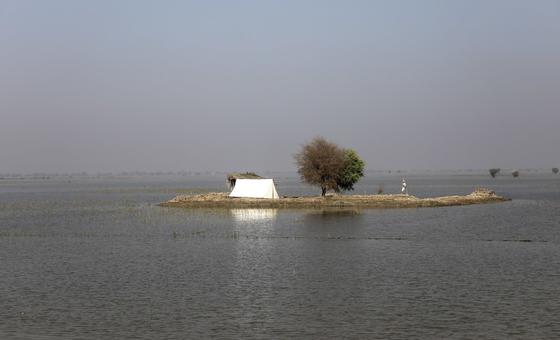
Punjab, Pakistan’s most populous province, reported at least 63 casualties and 290 injuries in the past 24 hours, pushing the nationwide toll since the seasonal rains began on 26 June to over 120 fatalities, according to the National Disaster Management Authority.

The unfolding crisis – rising rivers, forecasts of further downpours, fragile rural homes collapsing and transport links severed – has revived stark memories of the catastrophic 2022 floods that submerged a third of the country and affected more than 33 million people.

More intense rainfall is forecast over parts of central and northern Pakistan in the next 72 hours. Weather forecasters have warned of “exceptional high” flood levels of up to 450,000 cusecs at some locations along the Jhelum River. One cusec equals one cubic foot of water – equivalent to 28.4 litres or 7.5 gallons – per second.

There are also fears of glacier lake outburst floods in the Khyber Pakhtunkhwa and Gilgit Baltistan regions.

Wider UN contingency – major stock gaps

Managed by the Office for the Coordination of Humanitarian Affairs (OCHA), the UN presence in Pakistan released an inter‑agency monsoon contingency plan earlier this month.

The plan lays out response triggers, sector roles and arrangements for floods, storms and landslides – under the leadership of the Government.

However, pre-positioned aid supplies remain far below projected need, with key sectors such as protection, nutrition, and shelter and non-food items, facing severe gaps.

These shortfalls underscore the urgency of pre‑positioning relief items and securing rapid financing if the rains intensify.

Building resilience

Amid the emergency, the UN World Food Programme (WFP) and the Government of Pakistan this week launched a climate-risk project in Khyber Pakhtunkhwa’s Buner and Shangla districts.

The initiative will establish early warning systems, train communities in safe evacuation and strengthen local capacity for disaster response.

Recurring climate shocks are a driver of hunger and malnutrition, threatening lives, livelihoods and entire food systems,” said WFP Country Director Coco Ushiyama.

“This project represents a multi-layered investment in early warning systems and action.”

Flashbacks of 2022 devastation

The escalating disaster once again reveals Pakistan’s vulnerability to climate shocks.

In 2022, unprecedented monsoon floods killed more than 1,700 people, displaced millions and devastated water systems, leaving millions more in desperate need. The disaster also inflicted immense economic damage estimated at nearly $40 billion, and reversed years of development efforts.

Experts warn that erratic monsoon patterns, amplified by climate change, are hitting the country – and others across the southern Asian – harder each year.

Source link

UN chief ‘deeply saddened’ by devastating Texas floods as toll climbs past 80

In a statement issued on Monday by his spokesperson, António Guterres said he was “deeply saddened by the tragic loss of life, notably of a large number of children,” during what should have been a time of celebration.

Friday, 4 July, marked Independence Day in the United States – a time when families and communities traditionally gather for outdoor celebrations.

The Secretary-General extended his “heartfelt condolences to the families of the victims” and expressed solidarity with all those affected, including the people of Texas and the government of the United States.

According to media reports, the floods – triggered by heavy rainfall over the July Fourth weekend – caused massive damage in parts of central Texas, particularly along the Guadalupe River. The deluge struck Camp Mystic, killing at least 27 campers and counselors.

Catherine Russell, Executive Director of the UN Children’s Fund (UNICEF), said in a post on social media that “all of us at UNICEF are heartbroken at the reports coming out of Central Texas.”

Our hearts and thoughts are with those mourning loved ones and those still waiting for news of the missing, including children,” she said.

Search and recovery efforts continue as the region braces for more rain, according to media reports.

Source link

UN rights mission condemns civilian toll in deadly missile strikes on Ukraine

At least 24 people were reported killed and over 300 injured – including 32 children – when ballistic missiles struck Ukraine’s Dnipro and Odesa regions on Monday and Tuesday, the UN Human Rights Monitoring Mission in Ukraine (HRMMU) said on Wednesday.

The attacks destroyed homes, schools, hospitals, and other civilian infrastructure, and left hundreds wounded.

“The attacks struck during the day when civilians were at work, on trains, or at school,” said Danielle Bell, head of HRMMU.

“The timing alone made the high number of civilian casualties entirely foreseeable.”

On 23 June, two ballistic missiles launched by Russian forces hit Lyceum No. 1, a middle school in Bilhorod-Dnistrovskyi, Odesa region. Although the school year had ended, staff and students were present for administrative work. The strike killed three educators and injured 14 others, including two boys.

The school, which served over 700 students, sustained critical damage.

No military objective

HRMMU, which visited the attacks sites, reported no evidence of military presence at the school, and people confirmed that no military presence had been stationed there.

“The school in Bilhorod-Dnistrovskyi was not a military objective,” Ms. Bell said.

“Yet it was hit by two ballistic missiles, killing educators and injuring children.”

The following day, 24 June, missiles struck an industrial area of Dnipro city at around 11 AM local time. The blast shattered windows in nearby schools, hospitals and residential buildings.

HRMMU confirmed that two dormitories were hit, injuring numerous residents. A nearby passenger train was also impacted – windows blown out by the shockwave – injuring more than 20 travellers, according to a UN monitor onboard.

A troubling trend

These strikes followed a series of other attacks in June that have resulted in significant civilian harm, including in Kyiv city on 17 and 23 June, according to the human rights mission.

Civilian casualties in the first five months of 2025 were nearly 50 percent higher than during the same period last year, with increases typically seen during the summer months.

“Ballistic missiles, when used in densely populated areas, cause predictable and widespread harm to civilians, as demonstrated by these recent attacks,” Ms. Bell said.

“The rising civilian casualties reflect the severity of that risk.”

Source link

Gaza: UN warns of ‘weaponised hunger’ and growing death toll amid food chaos

Speaking to journalists in Deir al Balah on Saturday, Jonathan Whittall, who heads the UN humanitarian coordination office (OCHA) in Gaza and the West Bank, said: “The attempt to survive is being met with a death sentence.”

Since Israel eased its total blockade last month, more than 400 people are reported to have died trying to reach food distribution points.

We see a chilling pattern of Israeli forces opening fire on crowds gathering to get food,” Mr. Whittall said, noting many of these sites are in militarised zones. Others have been killed along access routes or while protecting aid convoys.

“It shouldn’t be this way,” he said. “There shouldn’t be a death toll associated with accessing the essentials for life.”

Empty warehouses, overwhelmed hospitals

Conditions across Gaza continue to deteriorate. Water wells have run dry or are located in dangerous areas, sanitation systems have collapsed, and disease is spreading rapidly.

“Our warehouses stand empty,” Mr. Whittall said. “Displaced families flee with nothing – and we have nothing to give them.”

Partially functioning hospitals are overwhelmed by near-daily mass casualty events. Some have been directly hit, while others are choked by fuel shortages and forced evacuation orders.

UNICEF reports more than 110 children are being treated for malnutrition every day. Mr. Whittall said humanitarian agencies are capable of reaching every family in the shattered enclave but are being systematically blocked. “We have a plan…but we are prevented from doing so at every turn.”

Death sentence

He described the situation as “weaponised hunger”, “forced displacement”, and “a death sentence for people just trying to survive”.

“This is carnage,” Mr. Whittall said. “It appears to be the erasure of Palestinian life from Gaza.”

He urged the international community to act: “We need a lasting ceasefire, accountability, and real pressure to stop this. This is the bare minimum.”

UN warns of mounting humanitarian toll as Israel-Iran hostilities continue

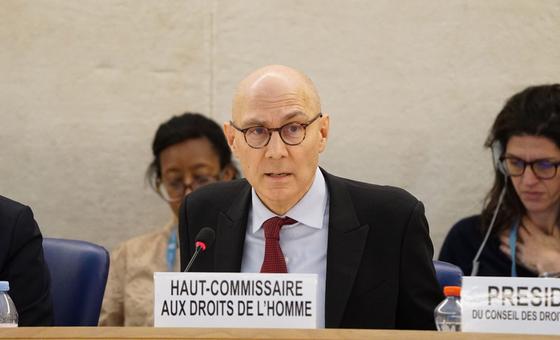
UN High Commissioner for Human Rights Volker Türk on Thursday called for “maximum restraint” and reiterated that both Israel and Iran are bound by international humanitarian law.

“The widescale, continuing attacks by Israel across Iran, and the missile and drone strikes launched in response by Iran, are inflicting severe human rights and humanitarian impacts on civilians, and risk setting the whole region ablaze,” he said in a statement.

The only way out of this spiralling illogic of escalation is maximum restraint, full respect for international law, and return in good faith to the negotiating table,” he stressed.

Appalling collateral damage

The UN rights chief also expressed deep concern over the impact on civilians.

It is appalling to see how civilians are treated as collateral damage in the conduct of hostilities,” he said, adding that threats and inflammatory rhetoric by senior officials on both sides suggest a “worrying intention” to inflict harm on civilians.

The airstrikes, missile and drone attacks – launched by both Israel and Iran since 13 June – have caused heavy damage to civilian infrastructure and claimed hundreds of lives.  

According to Iranian authorities, at least 224 people have been killed, while human rights groups report significantly higher figures. In Israel, officials report 24 deaths and more than 840 injuries so far.

Widespread panic

Warnings from both governments have also prompted widespread panic among civilians.

Israel’s call for civilians to evacuate on Tuesday triggered panic across Tehran, resulting in heavy traffic jams on highways. Movement has reportedly been hampered across the country by fuel shortages, leading to hours-long queues at petrol stations.

Concern for refugees

The Office of the UN High Commissioner for Refugees (UNHCR) expressed grave concern over the deteriorating humanitarian situation, adding that it is monitoring reports that people are on the move within Iran and that some are leaving for neighbouring countries.

UNHCR Spokesperson Babar Baloch cautioned that the situation remained fluid and hard to verify.

Iran has long hosted the largest Afghan refugee population in the world. Now, its own people are experiencing devastation and fear,” Mr. Baloch added.

He also emphasised the principle of non-refoulement, calling on neighbouring countries to grant protection to anyone fleeing violence, and not turn them back.

UNHCR Spokesperson Baloch on the crisis.

Iran hosts an estimated 3.5 million refugees and those in refugee-like situations, including some 750,000 registered Afghans and over 2.6 million undocumented individuals.

Regional worries

There is already regional fallout, with missile launches from Yemen towards Israel and the Occupied Palestinian Territory and heightened tensions reportedly involving armed groups in Iraq, according to OCHA.

This escalation takes place as the region already grapples with mounting humanitarian needs, sharply reduced funding, and constrained operational space for humanitarian action,” the Office said in a flash update issued on Wednesday.

“De-escalation is vital to preventing further suffering of civilians and population displacements,” OCHA underscored.

Source link

UN condemns deadly Russian strikes on Ukrainian capital as civilian toll mounts

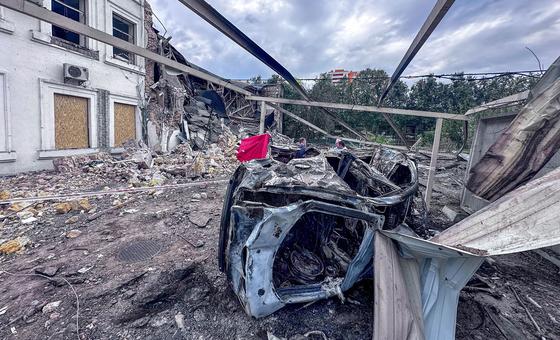
According to the UN Human Rights Monitoring Mission in Ukraine (HRMMU), more than 30 locations across seven districts of Kyiv were struck in what it described as “the deadliest attack” on the Ukrainian capital in nearly a year.

Last night’s attack exemplifies the grave threat posed by the tactic of deploying missiles and large numbers of drones simultaneously into populated areas,” said Danielle Bell, Head of HRMMU.

Humanitarian Coordinator for Ukraine, Matthias Schmale, also strongly condemned the attacks, which extended to Odesa, Zaporizhzhia and other areas.

“The people of Ukraine should not have to take cover in shelters night after night,” he said. “Each day, the war takes a devastating toll on civilians.”

In the southern port city of Odesa, strikes reportedly injured several civilians and damaged a kindergarten and a centre for children with special needs – places where children should feel safe. In Zaporizhzhia, residential buildings were hit.

First responders and humanitarian agencies are already on the ground, providing emergency care and supplies while assessing further needs.

Human toll rising

The barrage included 440 long-range drones and 32 missiles launched by Russian forces, HRMMU noted in a news release citing information from Ukrainian authorities, of which 175 drones and 14 missiles targeted Kyiv.

It marked the fourth time this month that more than 400 munitions were fired in a single night – far surpassing the 544 total launched during the entire month of June 2024.

Even before this latest attack, the human toll of such tactics had been rising sharply. HRMMU had already verified at least 29 civilian deaths and 126 injuries from long-range weapons in June alone.

The overall civilian casualty count in the first five months of 2025 is nearly 50 per cent higher than in the same period last year.

Mr. Schmale reiterated that attacks on civilians and civilian infrastructure are prohibited under international humanitarian law.

Civilians, including children, must never be a target,” he said. “We must not normalize the war.”

Refugee crisis deepens

Meanwhile, the broader humanitarian crisis continues to deepen. The intense conflict, now in its third year since Russia’s full-scale invasion, has driven more than 6.3 million Ukrainians to seek refuge across Europe.

Most are women, children, and older persons, many of whom rely on temporary protection directives extended by host countries like the European Union (EU) and Moldova, according to a report released on Tuesday by Office of the UN High Commissioner for Refugees (UNHCR).

Noting the volatile situation in Ukraine, the agency urged the respective governments to maintain legal status for refugees until conditions allow for safe, dignified, and sustainable returns.

Source link

Climate change takes increasingly extreme toll on African countries

Extreme weather and climate change impacts are hitting every single aspect of socio-economic development in Africa and exacerbating hunger, insecurity and displacement,” the UN World Meteorological Organization (WMO) said on Monday.

WMO said that average surface temperature across Africa in 2024 was approximately 0.86°C above the 1991–2020 average.

North Africa recorded the highest temperature – 1.28°C above the 1991-2020 average; it is the fastest-warming sub-region of Africa.

Marine heat spike

Sea surface temperatures were also the highest on record. “Particularly large increases in sea surface temperatures have been observed in the Atlantic Ocean and Mediterranean Sea,” WMO said.
Data shows that almost the entire ocean area around Africa was affected by marine heatwaves of strong, severe or extreme intensity last year and especially the tropical Atlantic.

Head of WMO, Celeste Saulo, warned that climate change is an urgent and escalating problem across the African continent “with some countries grappling with exceptional flooding caused by excessive rainfall and others enduring persistent droughts and water scarcity”.

El Niño influence

Highlighting Africa’s particular vulnerability to our warming planet – caused mainly by rich nations burning fossil fuels – the UN agency said that floods, heatwaves and droughts forced 700,000 people out of their homes across the continent last year.

WMO also noted that the El Niño phenomenon was active from 2023 into early 2024 and “played major roles in rainfall patterns” across Africa.

In northern Nigeria alone, 230 people died in floods last September that swept across the capital of Borno state, Maiduguri, displacing 600,000, severely damaging hospitals and contaminating water in displacement camps.

Regionally, rising waters caused by torrential rains ravaged West Africa and impacted a staggering four million people. 

Conversely, Malawi, Zambia and Zimbabwe suffered the worst drought in at least two decades, with cereal harvests in Zambia and Zimbabwe 43 per cent and 50 per cent below the five-year average, respectively.

Heat shock

Heatwaves are also a growing threat to health and development and Africa, WMO said, noting that the past decade has also been the warmest on record. Depending on the dataset, 2024 was the warmest or second-warmest year.

Blistering temperatures already impact children’s education, with schools closing in March 2024 in South Sudan as temperatures reached 45°C. Worldwide, at least 242 million pupils missed school because of extreme weather in 2024, many of them in sub-Saharan Africa, according to the UN Children’s Fund, UNICEF.

Beyond education, rising temperatures across the continent are making Africa more water-scarce and food-insecure, with North African countries the hardest-hit.

South Sudan focus

Erratic weather patterns across Africa are also hindering farming, driving food insecurity and displacing people who have already had to flee war already, WMO explained.

Last October, for example, flooding affected 300,000 people in South Sudan – a hefty figure for a nation of 13 million, scarred by years of civil strife and where infrastructure is poor.

The disaster wiped out cattle, adding up to between 30 and 34 million farm animals – roughly two per inhabitant – and stagnant water fuelled diseases. Families who had been self-sufficient had to seek help once again.

“When someone slides back into being fed, it affects their dignity,” said Meshack Malo, South Sudan Country Representative for the UN Food and Agriculture Organization (FAO).

At the forefront of climate change, the troubled East African country is already dealing with a crippling economic crisis, mass displacement made worse by the war in neighbouring Sudan, as well as escalating tensions at home and pervasive violence.

Fighting in Sudan has derailed the South Sudanese economy, which relies on oil exports for 90 per cent of its national revenue, reports indicate.

Destructive cycle

When South Sudan is not hit by floods, it is plagued by drought.

“This cyclic change between floods and drought, makes the country affected almost a good part of the year,” said Mr. Malo.  

Flooding has worsened and become more intense and frequent in recent years.

“That means that any short rain then can easily trigger the flooding, because water and the soil remain quite saturated,” Mr. Malo added. “So that intensity and frequency makes this situation worse.”

With road access disrupted for aid trucks, UN agencies such as the World Food Programme (WFP) must airlift food assistance – a costly, impractical solution, as humanitarian funding dwindles.

Pushing back  

In the South Sudanese town of Kapoeta, the FAO has helped to reduce the number of dry months from six to two, by harvesting and storing water to protect crops at risk from climate change.  

“The impact of drought is no longer felt as much,” FAO’s Mr. Malo said, speaking to UN News from the capital, Juba.

Worth its salt

In countries that lack water resources for crop irrigation, climate resilience and adaptation are critical, Dr. Ernest Afiesimama of the WMO Regional Office for Africa in Addis Ababa, told journalists.

And while desalination – the process of removing salt from seawater – may be a solution for some, for many African nations it is not viable.

Rather than turning to desalination as a panacea, investing in adaptation measures including early warning systems for action and preparedness is urgently needed, environmental scientists say.  “Considering the challenges in sub-Saharan Africa, [desalination] presents a complex economic, environmental and social challenge, and there is a question about its long-term sustainability and equity,” said Dr. Dawit Solomon, Contributor at Accelerating Impacts of CGIAR Climate Research for Africa (AICCRA).  

“Africa is facing a high climate change bill. Imagine the continent which is struggling economically and then facing this additional risk multiplier,” Dr. Salomon added.

Source link