World News in Brief: Syria ceasefire welcomed, ‘Olympic truce’, Ukraine’s freezing children

“We welcome efforts to bring stability to the region and now hope for a complete end to hostilities and a sustainable resolution,” said Chair of the independent UN Human Rights Council-mandated investigative team, Paulo Pinheiro, stressing the need to address acute humanitarian needs, including food, water and electricity.

Recognition of rights

He also welcomed a recent presidential decree recognising the cultural and citizenship rights of Syria’s Kurdish population.

The independent investigators called for strict adherence to international humanitarian law, warning of alarming reports of killings, abuse and desecration of bodies.  

“We are investigating alleged violations and abuses and will report on them in due course,” said Commissioner Monia Ammar.

Cold winter conditions, combined with limited access to basic services, risk proving catastrophic for displaced families, particularly children, the Commission warned. It voiced grave concern over the situation of detained children in prisons and camps, including Al-Hol – where thousands of family member of alleged former ISIL fighters are being held.

While noting some resumption of aid deliveries, Commissioner Fionnuala Ní Aoláin said assistance “must be augmented” and urged authorities to enable the safe and dignified return of women and children, while calling on States to urgently repatriate their child nationals.

UN urges ‘true mutual ceasefires’ for 2026 Winter Olympics

The UN General Assembly has called on warring parties in conflicts worldwide to agree to “true mutual ceasefires” during the 2026 Olympic Winter Games, reviving the ancient principle of the Olympic Truce.

Taking note of a Solemn Appeal for the 80th session, read out by Germany’s Annalena Baerbock, who presides over the body, Member States were urged to use the Games as a window for peace. 

Humanity’s ‘common ground’

“The Olympic Truce proves that, even in times of division, humanity can still find common ground through sport,” she said.

The appeal recalls the Greek tradition of the ekecheiria, or Olympic Truce, which the Assembly has endorsed ahead of each Summer and Winter Games.

The upcoming Milano-Cortina Games will begin shortly, with the truce traditionally observed from seven days before the opening ceremony, until seven days after the Paralympics conclude.

“The Games will bring together athletes from all parts of the world,” Ms. Baerbock said, “as a means to promote peace, mutual understanding and goodwill among nations.”

The International Olympic Committee will fly the UN flag at Olympic venues as a symbol of peace.

UNICEF steps up winter response to protect children and families amid Ukraine’s harsh cold

Ukraine is once again facing a bitterly cold winter, with temperatures regularly dropping to around minus 20 degrees Celsius, or minus 4 Fahrenheit.  

The severe weather, combined with the widespread destruction of housing, energy, and heating infrastructure, continues to make the winter months particularly harsh, especially for children.

Among them is three-year-old Dasha, who has spent the past nine days in a flat without heating. Each night, her mother, Iryna, fills two five-litre plastic bottles with hot water and tucks them into Dasha’s cot.  

The challenges are compounded by rising poverty: among households with children, the rate has increased from 43 percent in 2021 to 65 percent in 2023.

Well over 3 million displaced

Today, around 3.3 million people, including more than half a million children, remain displaced within Ukraine.

Last year, the UN children agency’s (UNICEF) winter response reached 2.3 million people, including 380,000 children.  

In 2026, UNICEF appealed for $65 million to meet the needs of at least one million vulnerable people including 170,000 children.

Drawing on lessons from past winter campaigns, UNICEF’s response this year will focus on providing cost-effective cash support to families and schools, and strengthening district heating systems to ensure long-term, sustainable warmth. 

Source link

Cold and dark: UN rights chief condemns Russian strikes on Ukraine’s power grid

Volker Türk said he was outraged by renewed overnight attacks that knocked out power and heating in major cities – including Kyiv and Odesa – as temperatures plunged well below zero and civilians bear the brunt of what he described as unlawful assaults on civilian infrastructure.

He said the Russian strikes “can only be described as cruel. They must stop. Targeting civilians and civilian infrastructure is a clear breach of the rules of warfare.

According to Ukrainian authorities, the latest long-range attacks triggered emergency power and heating outages across several regions.

In Kyiv alone, the city’s mayor reported that 5,635 multi-storey residential buildings were left without heating on Tuesday morning, nearly 80 per cent of which had only recently had heating restored after similar strikes earlier this month.

Since October last year, Russian armed forces have renewed systematic large-scale attacks against Ukraine’s energy infrastructure, with strikes recorded in at least 20 regions of the country.

Mr. Türk called on Russian authorities to immediately halt the attacks, warning that continued strikes on essential civilian infrastructure risk compounding human suffering.

Humanitarian consequences

“This means that hundreds of thousands of families are now without heating and several areas, including a significant part of Kyiv, are also without water,” Mr. Türk said, warning that the impact falls most heavily on children, older people and persons with disabilities.

The humanitarian toll was underscored by Matthias Schmale, the UN Humanitarian Coordinator for Ukraine, who said that over the past 48 hours tens of thousands of civilians once again woke to freezing homes and severe disruptions to basic services.

Parents cannot prepare hot meals for their children, and many older people have been left isolated in cold homes yet again,” he said. “The hideous strikes on energy that have such a huge negative impact on the lives of the civilian population violate international humanitarian law and should end immediately.”

Nuclear safety risks

The attacks have also raised fresh concerns over nuclear safety. The International Atomic Energy Agency (IAEA) said several electrical substations vital for nuclear safety were affected.

Chernobyl Nuclear Power Plant temporarily lost all off-site power, while power lines to other nuclear facilities were also impacted. “The IAEA is actively following developments in order to assess impact on nuclear safety,” Director General Rafael Grossi said.

Chernobyl was the site of the world’s worst nuclear accident in April 1986, when a reactor explosion released massive amounts of radioactive material across Ukraine, Europe and beyond.

Although the plant has long ceased power generation, it requires a stable electricity supply to maintain cooling systems, radiation monitoring and the safe management of nuclear waste, making uninterrupted power critical to preventing new safety risks.

Source link

Finding strength amid sleepless nights: Ukraine’s hidden mental health toll

Speaking from the capital Kyiv which was rocked by some of the deadliest attacks of the war last week – and following a visit to the frontline region of Sumy – UN Women’s Representative in Ukraine Sabine Freizer Gunes described to UN News’s Nathalie Minard both the emotional exhaustion and the resilience she had witnessed.

The interview has been edited for clarity.

UN News: The situation for civilians in cities is drastic, with shelling and air raid sirens sounding for days and nights at a time. Could you describe your personal experience of living in a war zone?

Sabine Freizer Gunes, UN Women Representative in Ukraine: Living in a war zone like Ukraine is, on one hand, quite challenging, because as a UN official, we’re not allowed to bring our families here. So, one difficulty is living far away from one’s family.

Usually, in terms of the war situation and the attacks, they tend to happen at night. One of the clear challenges is being able to get through your week, when you’re woken up numerous times during the night. Sometimes there are attacks on Kyiv several days in a row. Sometimes it’s quiet for a week or 10 days.

Not knowing when you’re going to go to sleep, if you’re going to be able to sleep a full night, or if you’re going to have to wake up three or four times, if you’re going to have to go down to the shelter, if you’re going to have to check the news – I would say that mentally, that’s the most difficult thing. It’s not so much fear, it’s not knowing what your night is going to look like.

© UNICEF/Oleksii Filippov

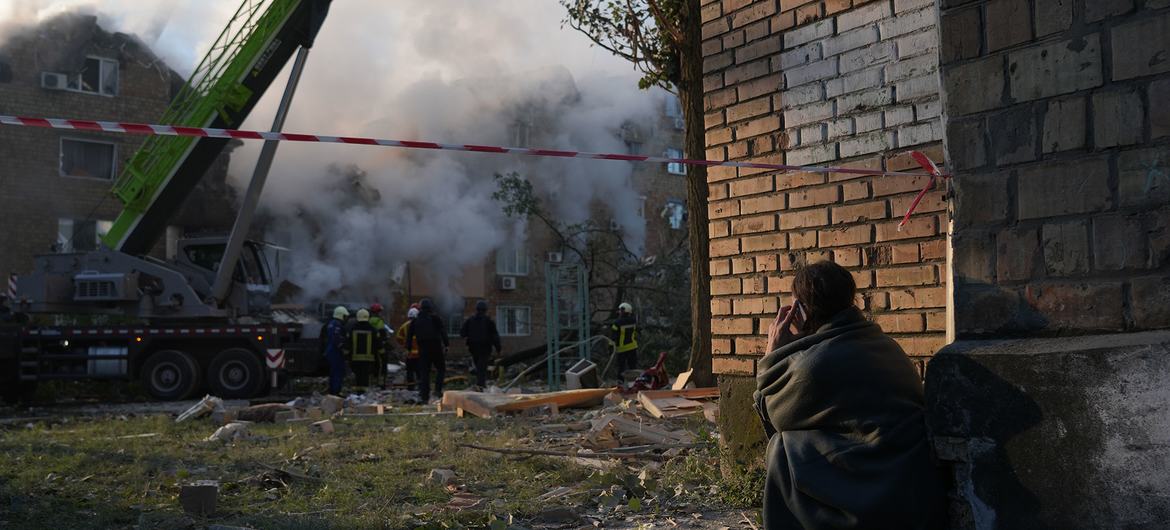
A resident near the ruins of a residential building in Kyiv, watching as emergency crews search for survivors following a missile strike in the early hours of the morning on 28 August.

UN News: You were recently in Sumy, very close to the eastern frontline. Many people have left the East for safer locations, but others have chosen to stay. How is the UN and UN Women and partners helping them?

Sabine Freizer Gunes: It is quite extraordinary that many Ukrainians are staying in their frontline communities. And some of these places have been under attack since 2014. What we do see is that people are continuing to live their lives.

I just came back from Sumy, which is 20 kilometers away from the Russian border, and the city is still completely vibrant. Businesses continue, cafes, restaurants, and shops are still open. People are still walking down the street.

This is the situation in Ukraine: from one moment to the next, tragedy can strike.

Life seems quite normal during many hours of the day, but then there’s always something kind of hidden beyond that. For example, with some of our colleagues, their husbands may be fighting on the frontline, their fathers or their brothers may have disappeared.

There’s always that element which isn’t visible but is behind the reality of the people that are working.

UN Women works very closely through local women’s rights organizations. When we have an attack, we ask them what kind of assistance we can provide.

Very often, those are going to be kits that are specifically assembled to meet the needs of women, particularly elderly women. It’s elderly women who are generally the last ones to leave their homes.

They insist on staying in their house, in their small yards, because they believe that’s a much better outcome than going to live in a collective centre.

What we try to do then is to provide them with some basic items so that they can stay in their homes.

One thing that I saw yesterday in Sumy, I saw that women’s rights organizations were doing very different kinds of activities. They’re doing cultural activities, activities to support young people, they’re providing legal advice or psychosocial advice. They are helping women get new skills to start their own businesses.

On one hand, there’s an humanitarian crisis and we need to provide life-saving support, but on the other, in the same town, we’re also discussing recovery and development.
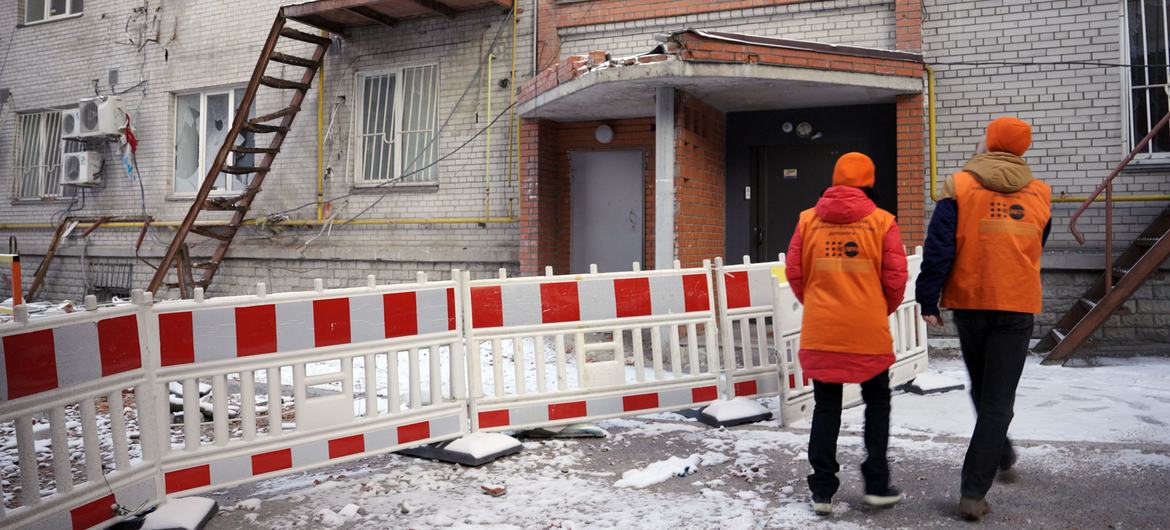
UNFPA’s mobile psychosocial support teams travel across Ukraine, including to the front lines, offering immediate emergency interventions as well as access to longer-term assistance.

UN News: Can you share the story of a woman that particularly moved you?

Sabine Freizer Gunes: One thing that really moved me recently was talking to six women who each represented a different NGO.

We were talking about our cooperation, and we asked them, “how have we helped you over the past several months?” And they said that one thing that they really benefited from was a retreat that we organized. I thought they were going to say that they benefited from material things that we gave them.

Instead, they said what they benefited from was a retreat, which was organized in western Ukraine, which is generally more peaceful. And we gave them five days to be in a quiet space where they could get to know each other, share experiences, and where they could sleep. One of them said, “this is the first time in three years that I got a decent night’s sleep”.

That was very powerful to hear, that giving space, a sense of normalcy to our partners can be incredibly powerful.

Listen to the full interview:

UN News: It’s three and a half years since Russia’s full-scale invasion of Ukraine. What are the most common impacts on women’s mental health you’ve encountered?

Sabine Freizer Gunes: Pretty much everybody who lives in Ukraine and who’s been living in Ukraine for the past three and a half years has some mental health issue. There is a clear effect of the war on everyone’s mental health. Regardless of who we’re working with at UN Women, we always include a mental health component.
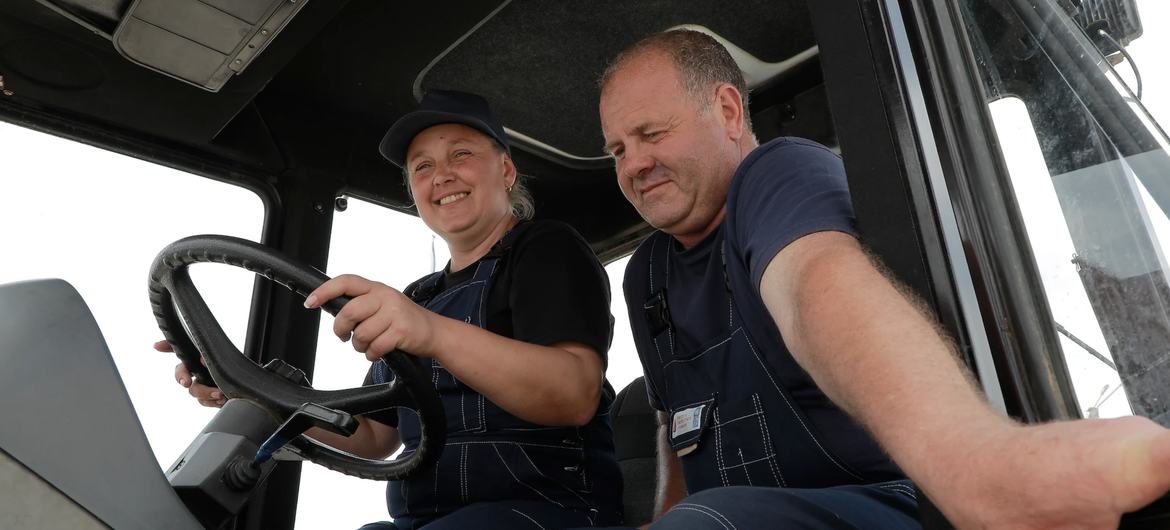
In the war-torn Ukrainian town of Snihurivka, a groundbreaking initiative is training women as tractor drivers – a role traditionally dominated by men.

For example, we are currently training women to be bus drivers, to take over positions which used to be held by men, but now with the men at the front, women are needed to take up these jobs.

UN News: Do you see a rise in gender-based violence (GBV)? What are the specific mental health challenges faced by women survivors of conflict-related sexual violence; and how do you address them?

Sabine Freizer Gunes: Conflict-related sexual violence is a real challenge in Ukraine. But very often in conflict situations, conflict-related sexual violence (CRSV) is something that’s hidden under the rug.

Here in Ukraine, the Government itself has spoken about conflict-related sexual violence and really encouraged those who are survivors to speak openly about it and to seek remedies and reparations.

In Ukraine, the Office of the High Commissioner on Human Rights has documented 484 cases.

But it is expected that’s just the tip of the iceberg, that there’s a lot of cases that are not known because they’re occurring today in occupied territories, in territories occupied by the Russian Federation, but also people do not feel ready yet to speak about it.

For CRSV in Ukraine, what’s interesting is that there are also many cases against men. So out of those 484 cases, 350 cases are men, and 119 cases are women.

That is because a vast majority of those cases are cases that occur in detention. Survivors of conflict-related sexual violence need extensive psychological support.

UN News: What urgent gaps exist in providing support to women in Ukraine today? How are funding cuts affecting your activities?

Sabine Freizer Gunes: Funding cuts are having a massive effect on the ability to provide support and services to Ukrainian women and girls. What we find to be the most disturbing is the effect of the cuts on Ukrainian women’s rights organizations.

UN women carried out a study back in March, about a month after the US declared its cuts. We did a survey of 100 different women’s rights organizations.

Seventy-three per cent reported already significant disruptions to their operations due to the cuts. Thirty-two per cent expected that they may have to suspend their operations in the next 6 months. Sixty-seven per cent were already forced to lay off staff. And 50 per cent expected that there would be further layoffs.

Most worryingly, 60 per cent of the women’s rights organizations have been forced to reduce or to suspend their gender-based violence services.

This is directly affecting women and girls’ lives. You imagine if you were a woman who was living an abusive relationship, you know that there is a shelter down the road, and suddenly you say, okay, this is too much. You go to the shelter, you knock on the door, and nobody answers anymore because there’s no more funding to keep that shelter open.

Source link

First Person: On Ukraine’s frontlines, humanitarians risk all to bring hope

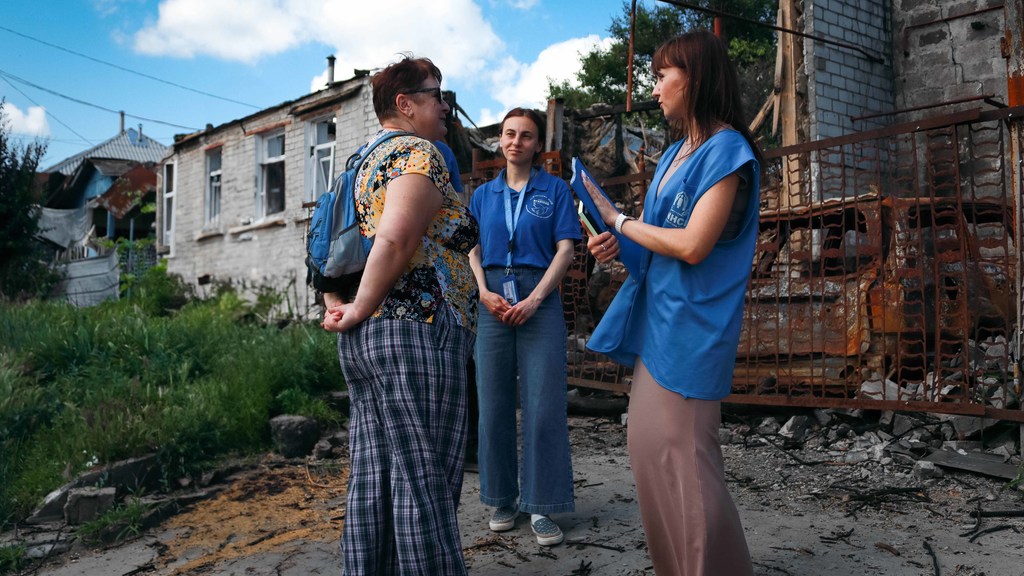
“Sometimes it feels like we’re swimming against a current that never slows down,” says Ms. Tiutiunnyk, a protection specialist working in Ukraine for the UN Refugee Agency (UNHCR). Viktoria herself is a displaced person from Luhansk, forced to flee following the onset of hostilities.

“I was not a part of the humanitarian community”, she recalls, speaking about the early days of the invasion, ahead of World Humanitarian Day.

“I was not with the UNHCR at that time. I was a civil servant, but I think those events that occurred in my life and the life of the whole country were the trigger for me: I switched to the humanitarian sector, and I joined UNHCR.”

With evacuations ongoing in eastern Ukraine, Ms. Tiutiunnyk is now helping support evacuees and newly displaced people in the Dnipro region, as well as those who remain in frontline areas.

Since 1 August last year, more than 192,000 people have left the region, either on their own or with support from authorities and volunteers – and UNHCR is providing them with much-needed assistance. 

Viktoria Tiutiunnyk, a protection associate working in Ukraine for the UN Refugee Agency, UNHCR.

‘I’m where I’m meant to be’

“When I meet those people after an attack or at a site where they are currently staying, it reminds me why I do this work,” says Ms. Tiutiunnyk, who recently returned from a field mission. “When they open up, when they share their stories, what they’ve gone through, it moves me so deeply. And at that moment, I truly feel like I’m where I’m meant to be.”

Many displaced people are under extreme stress; their lives are filled with fear and anxiety. Some fled in a hurry without passports and other essential documents, while others urgently need money to buy food and medicine.

UNHCR’s emergency response includes psychological support, legal aid, and cash assistance. “We also provide support to some of the collective sites where people can stay for a while until they find other places,” explains Ms. Tiutiunnyk.

With the war now in its fourth year and 3.7 million people internally displaced, humanitarian needs continue to escalate. “The war goes on, the attacks continue, the needs keep growing,” she says.

‘This should not be the new normal’

Providing assistance on the frontlines often means working under dangerous conditions, including drone attacks and aerial strikes: as she spoke to UN News, an air-raid siren blared in the background.

“It is stressful for sure. For a lot of people, now it’s their daily life. They are remaining in the frontline areas despite daily shelling and attacks. Why? Because this is their home.”

If I can bring them hope, it fills my life with some meaning

In their work, Ms. Tiutiunnyk and her colleagues speak daily with people who are deeply traumatized and anxious – many of them plead with humanitarian workers not to abandon them.

“I’m the same. I’m also displaced, and if I can bring them that hope, that small assistance, contribute at least to stabilizing their situation, it fills my life with some meaning.

“Some people say they get used to the air-raid alerts and the situation in general. But you cannot get used to this, right? This is not normal. It shouldn’t be the new normal,” she adds.

When asked what keeps her going, Ms. Tiutiunnyk says she draws inspiration from her colleagues – people she often spends more time with than her own family – and from her managers, who, as she puts it, “work around the clock.”

“When I see that they can continue, why can’t I continue? You need to think, are we pursuing a common goal? Yes, we are. So, we’re in the right place.”

Source link

Ukraine’s frontline families struggle to cultivate mined fields amid conflict

According to the UN, many frontline Ukrainian families are at risk of missing critical planting and harvesting windows.

“Agriculture is a fabric of rural society. It’s not just a way to make a living – it’s a way of being. And vulnerable rural families are holding on. They need support not just to survive, but to thrive and rebuild,” said Rein Paulsen, Director of Emergencies and Resilience at the UN Food and Agriculture Organization (FAO) during a recent visit to Ukraine.

Rural households across Ukraine – many headed by an elderly relative or woman – depend on agriculture for survival, often tending a single cow or a small flock of chickens.

But these families are among the most vulnerable and least supported, especially those living near the frontlines.

Hardship growing

As the war provoked by Russia’s invasion of Ukraine enters its fourth year, these households face growing challenges cultivating their land due to anti-personnel mines, land contamination, labour shortages, lack of inputs, shelling and frequent electricity cuts.

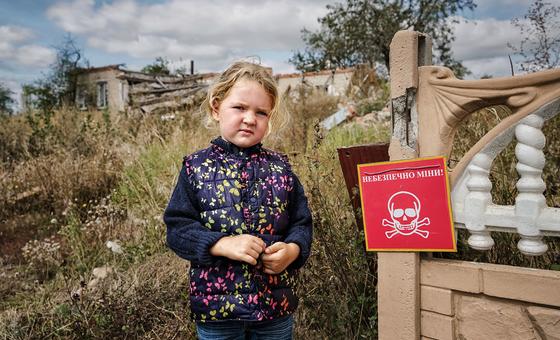
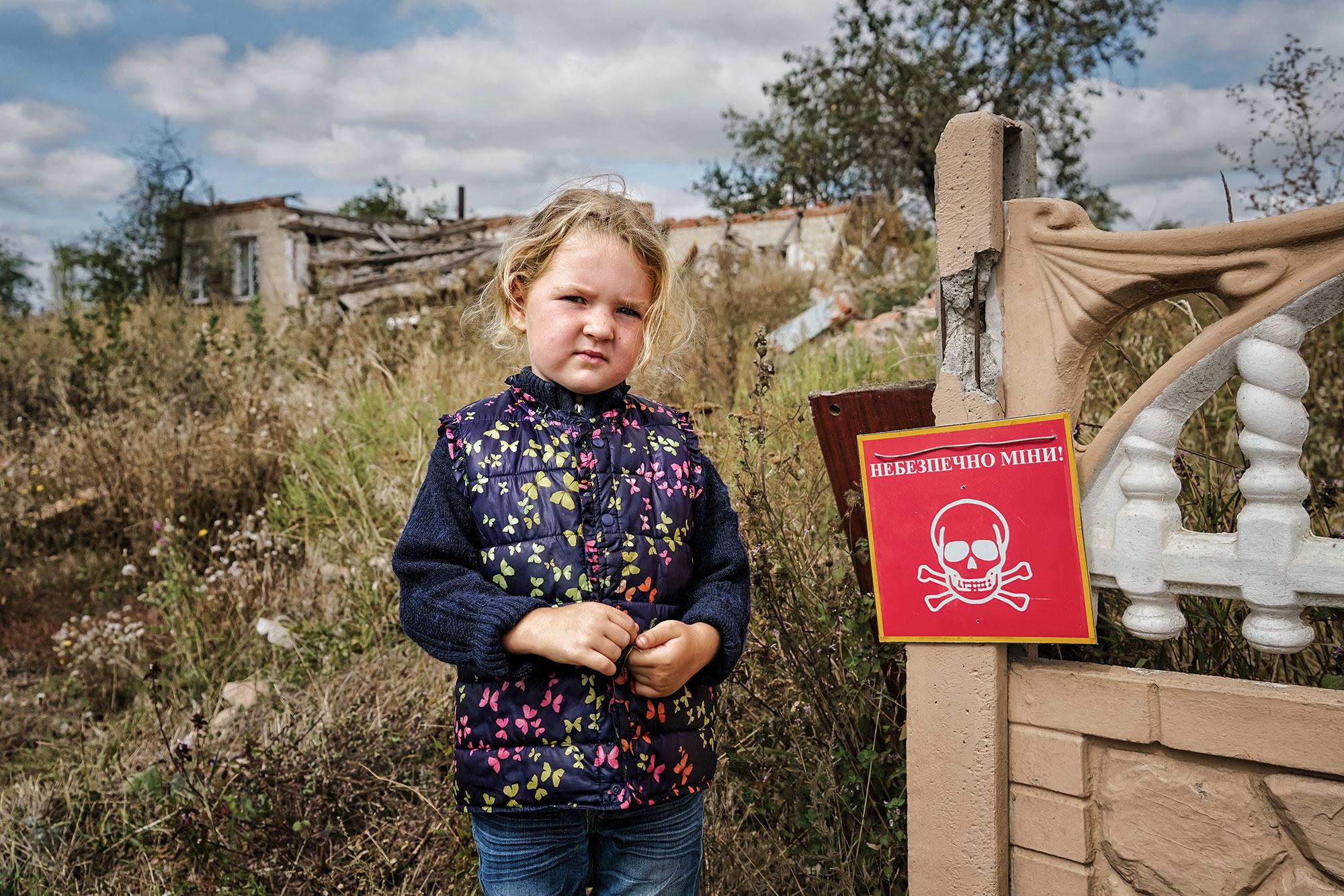
Veronika, 4, stands near a sign that reads “Danger of Mines”. Chistovodivka, Kharkiv region, Ukraine (file, May 2025)

According to the Fourth Rapid Damage and Needs Assessment, Ukraine’s agriculture sector has suffered $83.9 billion in damages and losses since the war began, with an additional $1.6 billion in the irrigation sector. A significant portion of this burden falls on rural households.

Call for support

On Monday, the FAO warned that without urgent and sustained support, thousands of rural households may be unable to plant or harvest on time, jeopardising national food security and rural livelihoods. 

Since the start of the war, FAO has supported more than 250,000 rural families with vegetable seeds, animal feed, day-old chicks, cash and vouchers. Over 15,000 farmers have also received crop seeds, temporary storage, and financial assistance.

In addition, the FAO and partners have worked to survey mined areas, restore access to farmland, and support national systems for monitoring and recovery.

But this assistance is not enough, especially as funding shortfalls limit the full implementation of the FAO’s Emergency and Early Recovery Response Plan for 2025–2026 in Ukraine.

The organization is calling for urgent support to help rural households safely access their land and secure essential resources such as seeds, fertiliser, storage and reliable energy.

This requires more than emergency funds alone – a sustained and coordinated response is needed to meet long-term needs.

Without increased support, these families’ ability to plant, harvest and recover remains under serious threat.

Source link