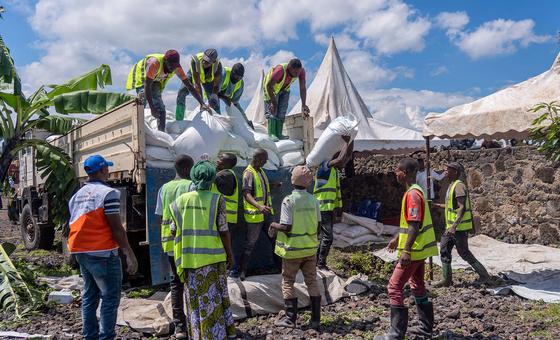
Gaza: Looming offensive and restrictions on humanitarians

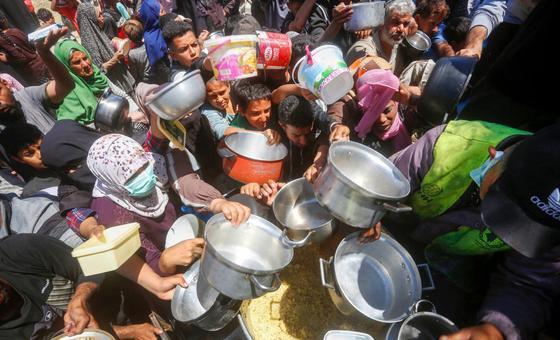
In the past 24 hours in Gaza, there have been more reports of casualties in shootings along aid convoy routes, where desperate crowds of civilians often wait to take supplies from the back of trucks.

Meanwhile, hostilities between Israeli forces and Palestinian armed groups are also escalating. In the past 24 hours, air strikes and shelling have occurred across five neighbourhoods in Gaza City, with reports of tanks and ground troops advancing.  

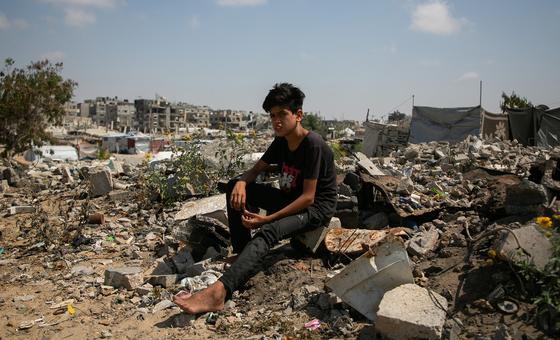
UN and partner officials in Gaza warned on Monday that the Israeli offensive would result in further mass displacement and “have a horrific impact on people already exhausted, malnourished, bereaved, displaced, and deprived of the basics needed for survival.”

Additionally, starvation persists in the enclave as supplies remain insufficient and inaccessible.  

Restrictions on international NGOs

OCHA also reported that the new requirements for international non-governmental organizations (NGOs) are preventing many humanitarian partners from bringing supplies into Gaza.  

To secure registration and bring in materials, international NGOs must share sensitive personal information about Palestinian employees, often contrary to their countries’ domestic legislation, which affects their ability to protect civilians.

Upcoming humanitarian work  

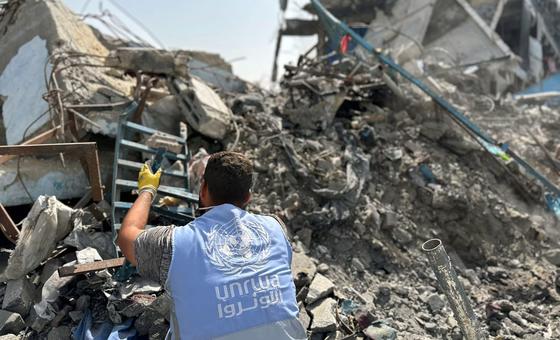
The UN and its NGO partners stressed that their teams will remain in Gaza City to provide life-saving support, reminding parties of their obligation to protect civilians, including humanitarian workers, and safeguard humanitarian infrastructure.

“Every day and every night, aid workers in Gaza courageously put themselves in harm’s way to keep others alive. At the same time, they also struggle to feed themselves and feed their own families,” said Spokesperson for the Secretary-General, Stéphane Dujarric, reporting on the situation in the context of World Humanitarian Day at Tuesday’s daily press briefing in New York.

“The world cannot look away while attacks on aid workers and on the very people they try to help have become routine.”

The humanitarian community welcomes the Israeli announcement that tents and shelter equipment will be allowed into Gaza, aiming to utilise this lifting of the ban to bring in tents, shelter materials and other items into the Gaza Strip. However, the UN and partners said it is deeply troubling that this lifting is in connection with a looming offensive.

They called for a significant scale-up of private sector operations and a full facilitation of deliveries from local and international humanitarian organizations, with supplies allowed to enter through all crossings. 

First Person: On Ukraine’s frontlines, humanitarians risk all to bring hope

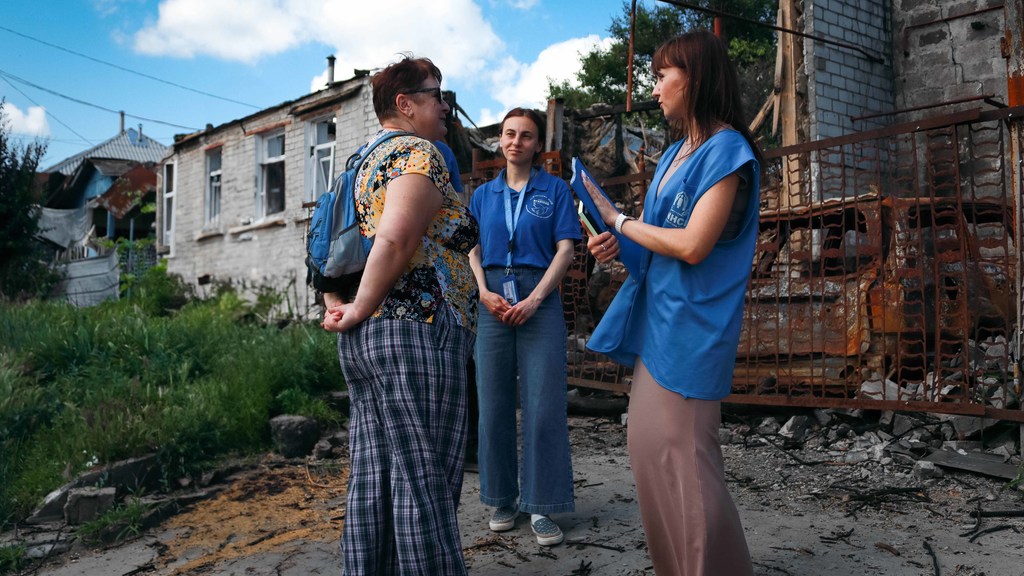
“Sometimes it feels like we’re swimming against a current that never slows down,” says Ms. Tiutiunnyk, a protection specialist working in Ukraine for the UN Refugee Agency (UNHCR). Viktoria herself is a displaced person from Luhansk, forced to flee following the onset of hostilities.

“I was not a part of the humanitarian community”, she recalls, speaking about the early days of the invasion, ahead of World Humanitarian Day.

“I was not with the UNHCR at that time. I was a civil servant, but I think those events that occurred in my life and the life of the whole country were the trigger for me: I switched to the humanitarian sector, and I joined UNHCR.”

With evacuations ongoing in eastern Ukraine, Ms. Tiutiunnyk is now helping support evacuees and newly displaced people in the Dnipro region, as well as those who remain in frontline areas.

Since 1 August last year, more than 192,000 people have left the region, either on their own or with support from authorities and volunteers – and UNHCR is providing them with much-needed assistance. 

Viktoria Tiutiunnyk, a protection associate working in Ukraine for the UN Refugee Agency, UNHCR.

‘I’m where I’m meant to be’

“When I meet those people after an attack or at a site where they are currently staying, it reminds me why I do this work,” says Ms. Tiutiunnyk, who recently returned from a field mission. “When they open up, when they share their stories, what they’ve gone through, it moves me so deeply. And at that moment, I truly feel like I’m where I’m meant to be.”

Many displaced people are under extreme stress; their lives are filled with fear and anxiety. Some fled in a hurry without passports and other essential documents, while others urgently need money to buy food and medicine.

UNHCR’s emergency response includes psychological support, legal aid, and cash assistance. “We also provide support to some of the collective sites where people can stay for a while until they find other places,” explains Ms. Tiutiunnyk.

With the war now in its fourth year and 3.7 million people internally displaced, humanitarian needs continue to escalate. “The war goes on, the attacks continue, the needs keep growing,” she says.

‘This should not be the new normal’

Providing assistance on the frontlines often means working under dangerous conditions, including drone attacks and aerial strikes: as she spoke to UN News, an air-raid siren blared in the background.

“It is stressful for sure. For a lot of people, now it’s their daily life. They are remaining in the frontline areas despite daily shelling and attacks. Why? Because this is their home.”

If I can bring them hope, it fills my life with some meaning

In their work, Ms. Tiutiunnyk and her colleagues speak daily with people who are deeply traumatized and anxious – many of them plead with humanitarian workers not to abandon them.

“I’m the same. I’m also displaced, and if I can bring them that hope, that small assistance, contribute at least to stabilizing their situation, it fills my life with some meaning.

“Some people say they get used to the air-raid alerts and the situation in general. But you cannot get used to this, right? This is not normal. It shouldn’t be the new normal,” she adds.

When asked what keeps her going, Ms. Tiutiunnyk says she draws inspiration from her colleagues – people she often spends more time with than her own family – and from her managers, who, as she puts it, “work around the clock.”

“When I see that they can continue, why can’t I continue? You need to think, are we pursuing a common goal? Yes, we are. So, we’re in the right place.”

Source link

Gaza Strip: Humanitarians warn of worsening famine conditions, attacks on civilians

Of the 154 malnutrition-related deaths since October 2023 (including 89 children) reported by Gazan health authorities, the World Health Organization (WHO) said 63 occurred in July alone.

These deaths follow a steep drop in food consumption: 81 per cent of households reported poor food consumption in July (up from 33 per cent in April), and 24 per cent experienced severe hunger (up from 4 per cent), crossing the famine threshold, according to the humanitarian update issued by the UN Office for the Coordination of Humanitarian Affairs (OCHA) on Wednesday.

Acute malnutrition rates also surpassed famine thresholds in Khan Younis, Deir al Balah and Gaza City.

Given these recent figures, IPC food security experts warned that the worst-case famine scenario is unfolding. However, they added that while the third famine threshold of starvation-related deaths is rising, collecting data remains a challenge. 

UN agencies caution that time is running out for a full-scale humanitarian response. 22 per cent of the analyzed population is facing “catastrophic” level of food insecurity, and a further 54 per cent is at “emergency” level. 

At the same time, less than 15 per cent of essential nutrition services remain functional.

Attacks on civilians

Of the over 60,000 Palestinians reported killed since October 2023, nearly 9,000 died after hostilities reignited in March, and 640 between 23 and 30 July.

Civilian casualties while seeking food are also rising, with 1,239 killed and over 8,152 injured since 27 May.

OCHA further noted that displacement figures since 18 March have surpassed 767,800, though no new evacuation orders were issued by Israeli authorities since 20 July. The 20 July order affecting a humanitarian hub in Deir al Balah has since been rescinded.

Amid ongoing displacement, overcrowding in shelters, lack of privacy and worsening hunger has elevated the risk of gender-based violence (GBV) for women and girls.  

The conditions are especially dire in southern Gaza, where there are no longer any safe shelters for GBV survivors.

Humanitarian measures

Between 23 and 29 July, only 47 per cent of 92 coordinated aid movements were fully facilitated by Israeli authorities. About 16 per cent were denied, 26 per cent impeded after initial approval and 11 per cent withdrawn by organizers.

The Israeli military announced a daily 10-hour pause in military activity, beginning 27 July, in Al Mawasi, Deir al Balah and Gaza City “to increase the scale of humanitarian aid entering Gaza.”

They also announced measures including airdrops of flour, sugar and canned food; the reconnection of the power line from Israel to the southern Gaza desalination plant; the removal of customs barriers on food, medicine, and fuel from Egypt; and the designation of secure routes for UN humanitarian convoys.

However, humanitarian partners warned that airdrops could endanger civilians, lead to unequal distribution and fall short of needs.

Working with limited funding

In addition, lack of sufficient funding is also hampering response efforts.

As of 30 July, only about 21 per cent of the $4 billion requested for the 2025 urgent humanitarian appeal for the region has been secured, leaving critical gaps. 

Source link

Humanitarians report more deaths, displacement and desperation in Gaza

“Every day brings more preventable deaths, displacement and desperation,” the agency said in a humanitarian update.

On Friday, Israeli authorities issued another displacement order, this time for parts of North Gaza.

OCHA said it continues to receive deeply troubling reports of malnourished children and adults being admitted to hospitals with insufficient resources available to treat them.

Fuel crisis deepens

The energy crisis in Gaza is also deepening, despite the resumption of limited fuel imports as the quantities that are entering – while critical for continuity – “remain at lower levels than what we were previously able to extract from dwindling internal reserves, which have now been fully depleted”.

The situation has forced solid waste collection to be paused in recent days, and additional wells have had to shut down, particularly in Deir Al-Balah.

“While specific health services, including dialysis, have reduced or shut down, others could go on for a few more days before they too will have to go dark,” OCHA warned.

“With every day that passes, people have less clean water and healthcare and more sewage flooding ground floors.”

Since the limited entry of fuel entry supplies resumed on 9 July, the UN has managed to send just over 600,000 litres of diesel to Kerem Shalom. On Thursday,

it was able to send 35,000 litres of much-needed benzene for the first time.

OCHA said these volumes are limited because Israel has allowed only 14 trucks over the past week. 

The agency stressed that to maintain lifesaving operations, hundreds of thousands of litres of fuel are needed every day. The limited fuel currently entering is primarily allocated to health, water and communications services as well as to power vehicles.

Humanitarian movements curtailed

Humanitarian movements inside Gaza also continue to be restricted.

On Thursday, seven out of 13 attempts to coordinate the movement of aid workers and supplies with the Israeli authorities were facilitated.

Teams were able to retrieve some fuel, collect some water, relocate generators, provide supplies related to hygiene and sanitation and transfer much-needed medical supplies.

The six remaining attempts were either outright denied or approved initially, but then faced obstacles on the ground.

End international media ban

Meanwhile, the head of the UN Palestine refugee agency UNRWA called on Friday for the ban on international media entering Gaza to be lifted.

“650 days of atrocities against civilians with no international media allowed in,” Philippe Lazzarini wrote in social media post, adding that over 200 Palestinian journalists have been killed during this time.

“Media ban fuels dis-information campaigns questioning first-hand data and accounts from eyewitnesses and international humanitarian organizations,” he said.

Source link

Gaza: Families deprived of the means for survival, humanitarians warn

“As humanitarian assistance and basic services dwindle, people in Gaza have been increasingly deprived of the means for their survival,” UN Spokesperson Stéphane Dujarric told reporters at the UN Headquarters in New York.

It has been 17 weeks since any fuel has entered Gaza, according to Mr. Dujarric – a critical shortage that forced the Al-Shifa Medical Complex to suspend its kidney dialysis services and restrict its intensive care unit services to just a few hours per day.

Other hospitals, including Al-Aqsa in Deir al-Balah, have also come under attack, with the World Health Organization (WHO) reporting a strike on a tent sheltering displaced civilians in its courtyard.

Over the past 48 hours, five school buildings sheltering displaced families  were also hit, reportedly causing deaths and injuries, while a new evacuation order issued on Sudan displaced 1,500 families from northern Gaza.  

Living in terror

Olga Cherevko, an official at the UN Office for the Coordination of Humanitarian Affairs (OCHA), described conditions for families in Gaza as “living in terror.”

“The only thing that is on their minds right now is a ceasefire and peace at last,” she said.  

Ms. Cherevko called for Israel to open all border crossings and allow a steady and sufficient flow humanitarian aid.

“The thing that needs to happen for us…to address the emergency on the ground, is to reopen additional crossings, to allow supplies to enter through multiple corridors and remove the constraints that are in place for us to deliver supplies to people in need,” she said.  

She warned that unless conditions change quickly, essential services will continue to shut down — and the broader humanitarian response could stall entirely.

“If the situation doesn’t change very, very urgently, more such services will continue shutting down,” Ms. Cherevko said.

“And if the situation doesn’t change going forward, the entire humanitarian operation could grind to a halt.” 

Source link

UN relief chief calls for solidarity, with humanitarians ‘literally under attack’

Tom Fletcher was speaking at the annual stock-take of his sector known as the ECOSOC Humanitarian Affairs Segment, which brings together UN Member States and organizations, humanitarian and development partners, as well as the private sector and affected communities.

He said this year’s theme – renew global solidarity for humanity – “could not be more urgent.”

“We need you right now,” he said. “We’re in a moment of conflict, of transactional politics, of selfishness, of division, of polarization. And global solidarity – the lifeblood of what we do – is in retreat.”

Moreover, “at this moment, when the needs are at their highest, the funding is also in retreat.”

Crises, climate and cutbacks

Mr. Fletcher reminded participants of “some uncomfortable truths,” noting that the Middle East currently “teeters on the edge of a wider war.”  

At the same time, people in Gaza are starving as food aid rots at border crossings, girls in Afghanistan are banned from school, women in war-torn Sudan are experiencing horrific violence, and gangs are terrifying families in Haiti.

This is happening amid the climate crisis “which will drive more humanitarian needs in the coming years than any other factor that we discuss today,” he said.

“Meanwhile, our teams, our humanitarian staff, the bravest of us, are not hesitating to go towards the sound of gunfire, the sound of danger to drive those convoys through those checkpoints and they are being killed in record numbers, while those responsible for killing them roam free.”

‘Life and death decisions’

Just six months ago, Mr. Fletcher launched a $44 billion appeal to reach 190 million people worldwide this year.  

In the wake of the deepest cuts ever to humanitarian operations globally, the plan was this week “hyper-prioritized” to focus on the most critical areas, with $29 billion in funding to support 114 million.

He acknowledged that “we’re left with the cruelest of equations when we make those life and death decisions, literally, about who to save.” 

Humanitarians “will save as many lives as we can with the resources that you give us,” and they are asking world leaders to give only one per cent of what they spent on defense last year.

“This isn’t just a call for money, of course. It is a call for global responsibility, for a shared commitment to end the suffering,” he said.

New humanitarian pact

“We also make this call that all of us find a moment to come off our talking points and to find the individual moment of courage and creativity to support this effort.”

Mr. Fletcher said the humanitarian movement will continue and is being re-designed from the ground up

“We’ll find new allies, we’ll find new sources of funding, we’ll find new ideas, we won’t just patch up the old model. We will also forge a new one. A bold humanitarian pact with the people we serve,” he said.

Women at the forefront

The pact will be “more local, more lean, more green,” and will include people on the frontlines of crisis who “know better than anyone what they need.”

Furthermore, the UN’s highest-level humanitarian coordination forum – the Inter-Agency Standing Committee (IASC) – has voiced unequivocal commitment that women and girls will lead this humanitarian reset and will back women humanitarian leaders in this work.

 “These leaders, the real leaders of our movement, don’t work for the UN or international NGOs. They are not part of the logos, and egos, and silos of our systems,” he said.

“They have something much more powerful – they are rooted in their communities with the trust of their communities and an unshakeable belief that even in these darkest moments we can choose to help each other. They are there for us and we must be there for them.”

Boosting effectiveness

The Economic and Social Council (ECOSOC) is one of the six main UN organs.

Since 1998, it has held the Humanitarian Affairs Segment to strengthen the coordination and effectiveness of UN humanitarian efforts.

Previous meetings have focused on issues such as addressing food security and recovery from the COVID-19 pandemic. 

Source link

Humanitarians must be able to deliver aid in Gaza, UN agencies insist

The humanitarian network is currently at a standstill because the internet shut down earlier this week after the last fibre cable route serving central and southern areas was cut during heavy fighting.

As the outage continues, partners are unable to communicate or coordinate response activities, and people in need remain isolated and without the information they need to access life-saving support and emergency services,” UN aid coordination office OCHA said in an update.

Connectivity a life or death issue

Restoring connectivity is urgent. OCHA said the Israeli military recently posted a warning on social media where areas marked in red on a map are considered dangerous combat zones, calling on people to stay away from them.

Although these areas apparently cover most of the Gaza Strip’s territory, most people have no way to access the announcement.

Meanwhile, partners working on telecommunications continue efforts to coordinate urgent repairs of the fibre optic cable routes in Gaza, including those that were previously damaged. 

However, since April, Israeli authorities have denied more than 20 requests to carry out this work.  

“It is critical that repair of the lines is enabled immediately,” OCHA said.

Humanitarian missions denied

The agency further reported that the Israeli authorities continue to deny many humanitarian movements aimed at providing support to Gaza’s population, which numbers over two million.

On Thursday, they rejected eight out of 18 UN attempts to coordinate such movements, including efforts to retrieve wheat flour and fuel supplies. 

Four other missions were unable to be accomplished, either because of impediments or because they had to be cancelled for security or logistical reasons. 

The remaining six missions, which included the movement of staff, were successful.

‘Recipe for chaos’

Conditions continue to deteriorate in Gaza after 20 months of war followed by a total blockade of aid and commercial goods which began on 2 March.

People are crammed in shelters, or living in tents, and lack basic essentials.  For example, the accumulation of solid waste is severely impacting health and environmental conditions, the UN Palestine refugee agency UNRWA said on Friday.

Israel temporarily lifted the ban in mid-May, and the UN was able to bring in small amounts of key aid items such as flour and medicines – though far from enough to prevent starvation from impacting the population.

Since late May, the UN and partners have been sidelined as a new aid distribution model began operations.

The Gaza Humanitarian Foundation, which is backed by Israel and the United States, uses private military contractors, according to media reports.  More than 200 people have been killed, and thousands more injured by gunfire near its hubs.

The mechanism is “a recipe for chaos,” UNRWA tweeted on Friday, echoing the words of its chief Philippe Lazzarini.

It is weaponising aid and resulting in fear, discrimination, and growing desperation,” the agency said.

“It is time to lift the siege and let the UN, including UNRWA, do the work. Aid must be delivered safely and at scale.”

‘Hunger must never be met by bullets’

The UN Humanitarian Affairs Coordinator Tom Fletcher underscored the need to act now in a statement issued late on Thursday.

“Hunger must never be met with bullets,” he said. “Humanitarians must be allowed to do their work. Lifesaving aid must reach people in need, in line with humanitarian principles.” 

Mr. Fletcher said attacks against civilians in Gaza “are unacceptable”, which includes the killing and injury of hungry people seeking food and those delivering aid.

He said UN humanitarian convoys have been intercepted by armed Palestinian gangs, endangering staff and drivers.

“Civilians in desperate need of the food we’re able to bring in, have not been spared; some have been shot by Israeli forces, and others crushed by trucks or stabbed while trying to retrieve food,” he added.

UN Relief Chief Tom Fletcher talks to a child at an UNRWA shelter during a visit to Gaza in February.

Let humanitarians work

He also mentioned incidents “concentrated around militarized distribution centres, where starving people tell us that Israeli forces opened fire on them.” 

Hospitals report that they have received 245 fatalities and over 2,150 injuries from these areas over the past two weeks,” he said.

Furthermore, the Gaza Humanitarian Foundation said on Thursday that Palestinians involved in their distribution were killed, injured, and captured by Hamas.

“Without immediate and massively scaled-up access to the basic means of survival, we risk a descent into famine, further chaos, and the loss of more lives,” the UN relief chief warned.

“We stand ready, as we have repeatedly emphasized, to deliver life-saving aid at scale,” he said.  “Let us do our work.”

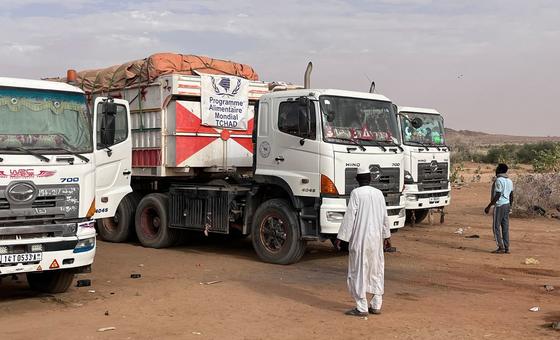
Five humanitarians killed in ‘horrendous’ attack on aid convoy in Sudan

The World Food Programme (WFP) and the United Nations Children’s Fund (UNICEF) condemned the attack on the joint humanitarian convoy and reminded the international community that under humanitarian law, aid must be able to move securely.  

“Aid convoys must be protected and parties have the obligation to allow and facilitate rapid and unimpeded passage of humanitarian relief for civilians in need,” the two agencies said in a joint press release.

UN Spokesperson Stéphane Dujarric reiterated this sentiment, saying that the United Nations condemns this “horrendous attack in the strongest possible terms.”  

‘Devastating’ attack  

According to WFP and UNICEF, the aid convoy had travelled over 1,800 kilometres from Port Sudan, which has itself endured ongoing drone strikes.  

The 15 trucks were carrying vital nutritional supplies to North Darfur, a region in which hundreds of thousands of internally displaced people are at high risk of malnutrition and starvation. 

The agencies noted that all parties on the ground had been notified about the convoy and its movements. 

“They were 80 kilometres from El Fasher, parked on the side of the road, waiting for clearance, and they were attacked,” said Mr. Dujarric. 

This would have been the first convoy to reach El Fasher in over a year. In April, the city and the nearby Zamzam displacement camp were attacked, displacing hundreds of thousands, many of whom had already been displaced.  

The attack on the convoy comes amidst a two-year conflict which has ravaged Sudan, displacing over nine million people. Famine has been declared in multiple places, including in El Fasher, and many more regions remain at risk.   

Broader attacks on aid 

The attack on the convoy comes amidst other attacks on humanitarian operations and civilians and civilian infrastructure in Sudan.  

Last week, the WFP premises in El Fasher were bombed and damaged and an international hospital in Al Obeid also experienced a deadly drone strike. 

Civilian infrastructure around the country continues to be targeted, including electricity infrastructure in Khartoum. The damage of this infrastructure in the capital has worsened an already spreading cholera outbreak in the city.   

WFP and UNICEF reiterated that attacks on humanitarian activities and personnel are unacceptable and must stop immediately.  

“Attacks on humanitarian staff, aid, operations as well as civilians and civilian infrastructure in Sudan have continued for far too long with impunity,” they said.  

Source link