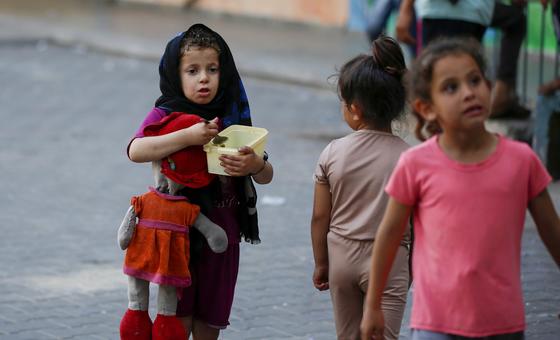
Between fear and survival: Women and girls flee violence in northern Syria

Now eight months pregnant and sheltering in a makeshift camp, the mother of three said her biggest fear isn’t the biting cold – it’s what will happen if she goes into labour. 

“I worry about my health, but I worry more about where to go if something happens,” said Fatima. “Displacement is not just losing your home. It’s losing your privacy, your safety and access to healthcare, especially as a woman.” 

Every step we took felt like it could be our last

She is one of tens of thousands of women and girls affected by the uptick in violence and insecurity around Aleppo in the past few weeks, which has forced large numbers to flee, disrupted essential services and shut down hospitals. 

“We fled under bombardment, with nothing but our fear,” Farida, 39, told the United Nations Population Fund (UNFPA), which is the UN’s sexual and reproductive health agency. 

“Every step we took felt like it could be our last.”

A UNFPA-supported health worker delivers essential healthcare at a clinic in Al-Hassakeh, for women and girls forced to flee Aleppo in Northern Syria.

Unbearable cold 

In Aleppo, some 58,000 are still displaced following recent clashes between the transitional Government’s security forces and the mostly-Kurdish Syrian Democratic Forces (SDF), with insecurity spreading to surrounding areas. 

To make matters worse, winter conditions have only deepened the suffering: thousands are now enduring freezing temperatures, sheltering in makeshift camps, former schools and unfinished buildings across the country. 

Ruhan, a mother of three from Aleppo, fled with only what she could carry. 

 “The cold is unbearable. My biggest fear is keeping my children warm and safe,” she told UNFPA aid workers, who provided her with reproductive health services, counselling and a dignity kit. 

Delivering aid 

More than 890,000 people had been newly displaced as of December 2025 in Syria, adding to almost seven million already displaced inside the country. 

Fourteen years of conflict, climate shocks, and economic decline have left Syria’s recovery fragile and uneven, with immense humanitarian needs and severely damaged healthcare systems.

In response, UNFPA and its partners have sent mobile health teams to reach displaced communities with life-saving sexual and reproductive healthcare, dignity kits with essential hygiene items, and psychosocial counselling. 

Around 400,000 pregnant women in Syria are struggling to access essential maternity services – a situation worsened by deep funding cuts which began last year that have further restricted access.

Women and girls displaced by violence receive reproductive health support and dignity kits in a neighbourhood in Aleppo, Syria.

Source link

Afghanistan quake: ‘Communities are struggling with basic survival’

Briefing correspondents in New York via video link, Shannon O’Hara spoke from Jalalabad on the conditions in Afghanistan just days after the magnitude 6 earthquake and its devastating aftershocks.

“We saw families whose lives had been shattered just within a few minutes,” the head of strategy for OCHA in Afghanistan said.

Left with nothing

“The earthquake had destroyed their homes, their farms and their livelihoods, leaving them with absolutely nothing.”

OCHA has managed to reach 49 damaged villages in the Nangarhar, Kunar and nearby affected provinces in eastern Afghanistan.

As humanitarian workers struggle to reach more regions, current reports show that nearly 40,000 people have been impacted by the earthquake, while over 5,000 homes have been destroyed.

Aid workers face challenges

“Even before the earthquake, these villages were difficult to reach,” said Ms. O’Hara. “Now, with the earthquake, it takes extraordinary effort to get there.”

A narrow, one-way road on the mountainside which was “blocked by large rocks from landslides and many vehicles trying to get up and down the valley” is the only way to get to affected areas from Jalalabad, said Ms. O’Hara.

A 100-kilometre drive took Ms. O’Hara and her team more than six and a half hours. To reach victims, first response teams have to drive – and often travel for hours on foot.

‘The heaviest burden’

Emergency responders are prioritising aid to women, children, and locals with disabilities.

“In Afghanistan, in recent years, women and girls have been pushed to the very margins of society and survival,” said Ms. O’Hara. “We know from previous earthquakes and other crises that women and girls always bear the heaviest burden.”

A estimate from UN reproductive health agency, UNFPA, shows that 11,600 pregnant women have been affected by the destruction – in a country that already has one of the highest maternal mortality rates in region.

OCHA is working to ensure that “that women are represented in health teams and more women aid workers are supporting distributions, along with nutrition, psychosocial and other counseling services,” said Ms. O’Hara.

Alarming potential for disease outbreak

The natural catastrophe has resulted in families living without clean water and sanitation in tents or “under open skies, exposed to rain and cold,” said Ms. O’Hara.

“With cholera endemic in the region and initial assessments indicating that 92 per cent of these communities are practicing open defecation, the potential for a cholera outbreak is alarming,” she continued.

While UN agencies are distributing meals and sanitation kits, efforts need to be scaled up.

“The affected communities are struggling with basic survival,” she stressed.

Urgent action needed

So far, 43,000 victims have received ready-to-eat meals and UN agencies are also providing tents, blankets and sanitation kits to assist families. But humanitarian efforts risk being disrupted if heavy rain floods IDP sites or if potential aftershocks bring more landslides. Snow from the approaching winter season is also expected to block vital roads.

“If we don’t act now, these communities may not survive the coming winter,” said Ms. O’Hara. “Additional funding is urgently needed.”

OCHA has already released $10 million for life-saving supplies and an emergency response plan is currently being finalized.

“Without immediate support the weeks ahead risk compounding this tragedy with preventable disease outbreaks, further displacement and additional loss of life.”

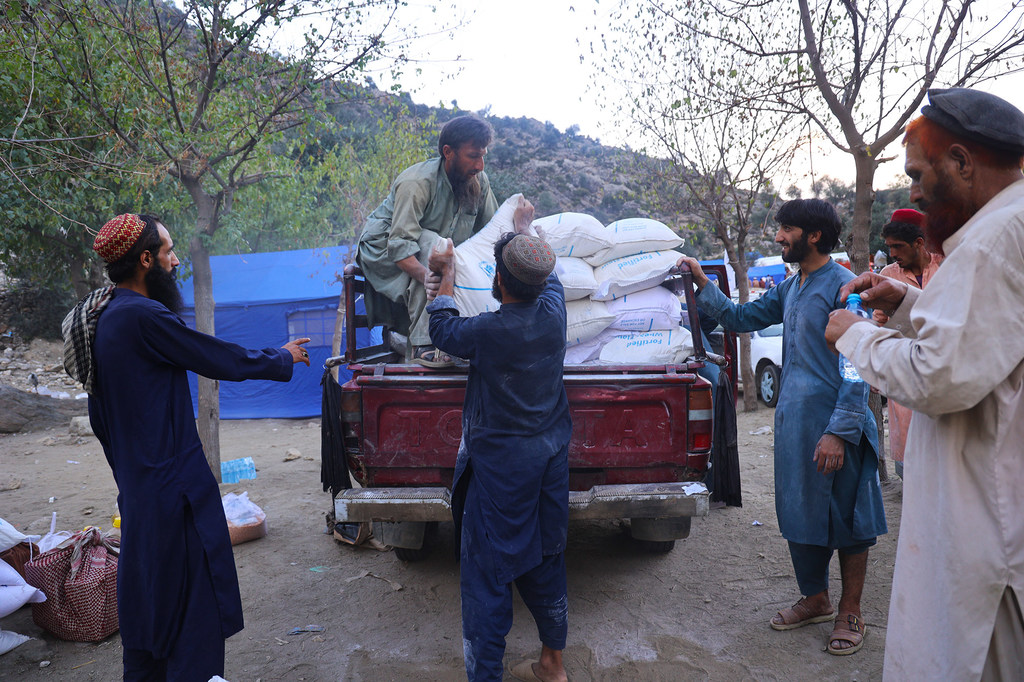
UNOCHA/Ahmad Khalid Khaliqi

Food aid is delivered to people affected by the earthquake in eastern Afghanistan.

Fresh supplies land in Kabul

A new consignment of more than 35 metric tonnes of life-saving medical supplies landed in Kabul on Monday, to enhance the World Health Organization’s (WHO) emergency response.

WHO has now prepositioned and delivered nearly 80 metric tonnes of emergency health supplies to the country since the disaster.

The newly arrived cargo, mobilised through WHO’s logistics hub in Dubai, includes trauma and emergency surgery kits, primary health care kits, noncommunicable disease kits and essential medicines.

These supplies will be dispatched to health facilities and mobile health teams in the hardest-hit areas, following the ongoing needs assessments.

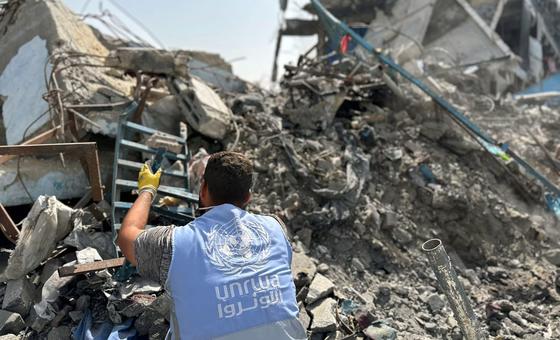
Gaza: Families deprived of the means for survival, humanitarians warn

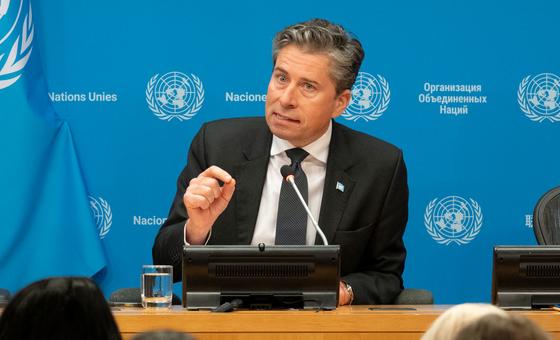
“As humanitarian assistance and basic services dwindle, people in Gaza have been increasingly deprived of the means for their survival,” UN Spokesperson Stéphane Dujarric told reporters at the UN Headquarters in New York.

It has been 17 weeks since any fuel has entered Gaza, according to Mr. Dujarric – a critical shortage that forced the Al-Shifa Medical Complex to suspend its kidney dialysis services and restrict its intensive care unit services to just a few hours per day.

Other hospitals, including Al-Aqsa in Deir al-Balah, have also come under attack, with the World Health Organization (WHO) reporting a strike on a tent sheltering displaced civilians in its courtyard.

Over the past 48 hours, five school buildings sheltering displaced families  were also hit, reportedly causing deaths and injuries, while a new evacuation order issued on Sudan displaced 1,500 families from northern Gaza.  

Living in terror

Olga Cherevko, an official at the UN Office for the Coordination of Humanitarian Affairs (OCHA), described conditions for families in Gaza as “living in terror.”

“The only thing that is on their minds right now is a ceasefire and peace at last,” she said.  

Ms. Cherevko called for Israel to open all border crossings and allow a steady and sufficient flow humanitarian aid.

“The thing that needs to happen for us…to address the emergency on the ground, is to reopen additional crossings, to allow supplies to enter through multiple corridors and remove the constraints that are in place for us to deliver supplies to people in need,” she said.  

She warned that unless conditions change quickly, essential services will continue to shut down — and the broader humanitarian response could stall entirely.

“If the situation doesn’t change very, very urgently, more such services will continue shutting down,” Ms. Cherevko said.

“And if the situation doesn’t change going forward, the entire humanitarian operation could grind to a halt.” 

Source link

Brutal cuts mean brutal choices warns UN relief chief, launching ‘survival appeal’

“We have been forced into a triage of human survival,” said Mr. Fletcher. “The math is cruel, and the consequences are heartbreaking. Too many people will not get the support they need, but we will save as many lives as we can with the resources we are given.”

New priorities

The appeal aims to reprioritise individual country plans in pursuit of two main goals: first, to reach people and places facing the most urgent humanitarian needs, and second, to prioritise life-saving support based on existing planning for the 2025 humanitarian response.  

This is intended to ensure that limited resources are directed where they can do the most good, as quickly as possible.

Rather than limiting lifesaving aid to a predetermined matrix, humanitarian partners are focused on addressing the most urgent needs in ways that respect the dignity of affected people, allowing them to choose what they need most, OCHA said.

The appeal prioritises but does not replace the Global Humanitarian Overview 2025 (GHO), launched last December, which covers 180 million vulnerable people across 70 countries. The GHO calls for $44 billion, but at the halfway point of the year, less than 13 per cent of that amount has been received.

A call for global solidarity

“Brutal funding cuts leave us with brutal choices,” said Fletcher. “All we ask is one per cent of what you chose to spend last year on war. But this isn’t just an appeal for money – it’s a call for global responsibility, for human solidarity, for a commitment to end the suffering.” 

Source link

In Gaza, daily food intake has fallen well below ‘survival’ level

Latest data simulations from the Food and Agriculture Organization (FAO) point to the average Gazan eating just 1,400 calories per day – “or 67 per cent of what a human body needs to survive” (2,300 calories) as of May.

Between October 2023 and the end of December 2024, average intake was 1,510 calories per day, or 72 per cent of the minimum recommended amount.

“The findings reveal systemic and escalating violations of both international human rights law and international humanitarian law, particularly concerning the right to adequate food, the prohibition of starvation as a method of warfare, and the protection of civilians in armed conflict,” FAO insisted.

Even based on its most optimistic food availability scenario, the UN agency estimated that energy intake was just 1,470 calories per person per day on 11 May, during the complete aid blockade imposed by Israel, beginning 2 March.

This has critical implications for hunger and undernutrition, especially for families without cash and/or able-bodied men, as well as children, pregnant and lactating women, person with disabilities and the elderly,” FAO explained.

The agency noted that its analysis is in line with dire warnings of acute hunger across Gaza issued by UN-backed food security experts last month, based on the lack of available wheat flour, pulses, rice, dairy products, and vegetable oil.

Without an improvement in the amount of aid being allowed into Gaza for distribution by established agencies, FAO warned that the already dire humanitarian situation could deteriorate even further.

This is despite repeated calls to Israel from the United Nations including from the Secretary-General to allow more aid in at scale, in line with “binding orders” issued by the International Court of Justice to fully cooperate with the UN and ensure that aid reaches the people of Gaza without delay.

Unknown numbers of dead

Gaza’s population today is approximately 2.1 million, down from 2.23 million in October 2023 before the war began following Hamas-led terror attacks in Israel.

Citing the Palestinian authorities, FAO said that as of 30 April, 52,400 Palestinians had been reported killed, while another 11,000 were feared missing, presumably under the rubble.

While more than 60,000 children have been born in the Gaza Strip during the conflict, “an unknown number of Palestinians have died of natural causes or indirectly from the conflict, due to hunger, untreated diseases or injuries since October 2023”, FAO said.

The UN agency also referred to a June 2024 article by the authoritative medical journal The Lancet suggesting that up to 186,000 people would likely die from indirect causes because of the conflict, at a “conservative” rate of four indirect deaths for every direct death.

According to FAO’s simulation, 2,297 tonnes – equivalent to 120 trucks – per day are required to deliver food baskets providing 2,100 calories per person per day to the entire population of the Gaza Strip. On Wednesday, UN teams requested access for 130 truckloads of aid via Kerem Shalom, but only 50 carrying flour were approved to enter from Israel.

Source link