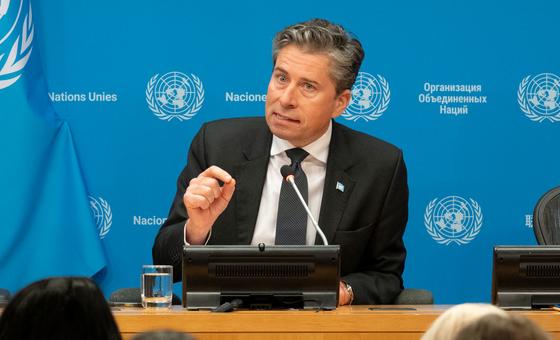
Speaking from Gaza City OCHA spokesperson Olga Cherevko told journalists in Geneva that a friend of hers “saw people burning a few days ago from the explosions – and there was no water to save them.”
Since all entry points into the war-torn enclave were “sealed by the Israeli authorities for the entry of cargo” in March, the “worst-case scenario” was triggered, Ms. Cherevko said: supplies are depleting while the conflict rages on.
“Food stocks have now mainly run out, water access has become impossible,” she told journalists in Geneva.
As the veteran aid worker spoke, she noted that a “very violent fight” for access to water was taking place downstairs from her, with people throwing rocks and firing shots at a water truck which was pulling away.
No childhood
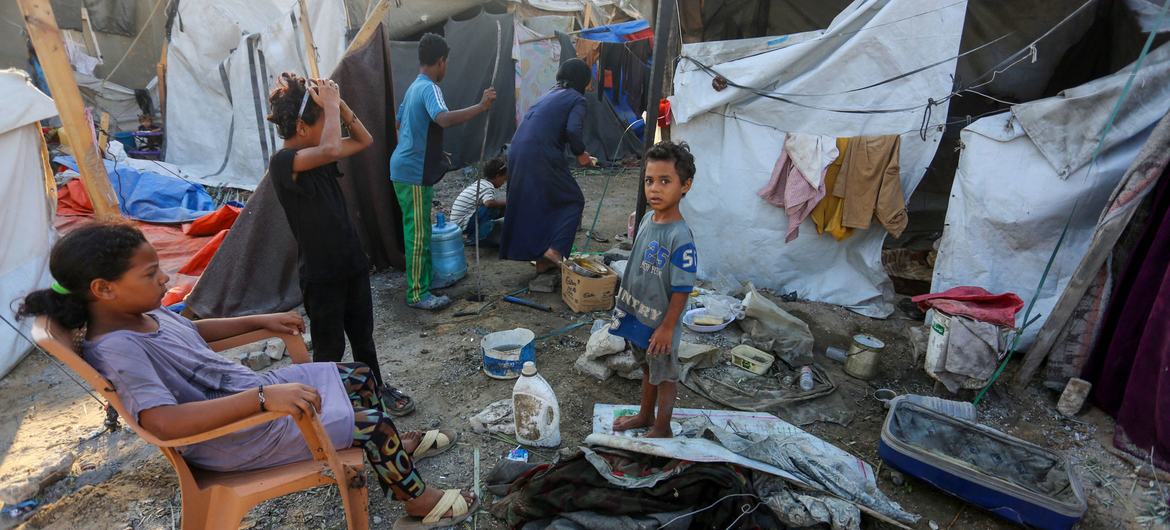
The OCHA spokesperson said that every day she was seeing children “who have been deprived of their childhood for many months,” and elderly people “rummaging through piles of trash” in search of food and combustible material for cooking, in the absence of fuel.
During a visit on Thursday to Patient Friends Hospital, a paediatric hospital in Gaza City which had been attacked several times during the war, she heard reports of rising malnutrition rates.
“Hospitals report running out of blood units, as mass casualties continue to arrive,” Ms. Cherevko stressed, while precious fuel is being rationed.
Malnutrition cases among children in Gaza are increasing due to a lack of food.
Running on empty
“Gaza is inching closer to running on empty,” she added.
Ms. Cherevko said that UN humanitarians are “in constant contact” with the Israeli authorities and are advocating for border crossings to reopen. “We have mechanisms that mitigate diversion [and] ensure that aid reaches the people it’s intended to reach,” she said.
“We are ready to resume delivery at scale as soon as the crossings reopen, Ms. Cherevko insisted. “We stand by our pledge to remain principled and continue relieving people’s suffering, wherever they may be.”
In an appeal to the Israeli authorities on Thursday, the UN’s top humanitarian official and OCHA chief Tom Fletcher said, “Lift this brutal blockade. Let humanitarians save lives”.
Mr. Fletcher reaffirmed the urgent need for the release of hostages taken by Hamas on 7 October 2023, who “should never have been taken from their families” and stressed that “aid, and the civilian lives it saves, should never be a bargaining chip”.
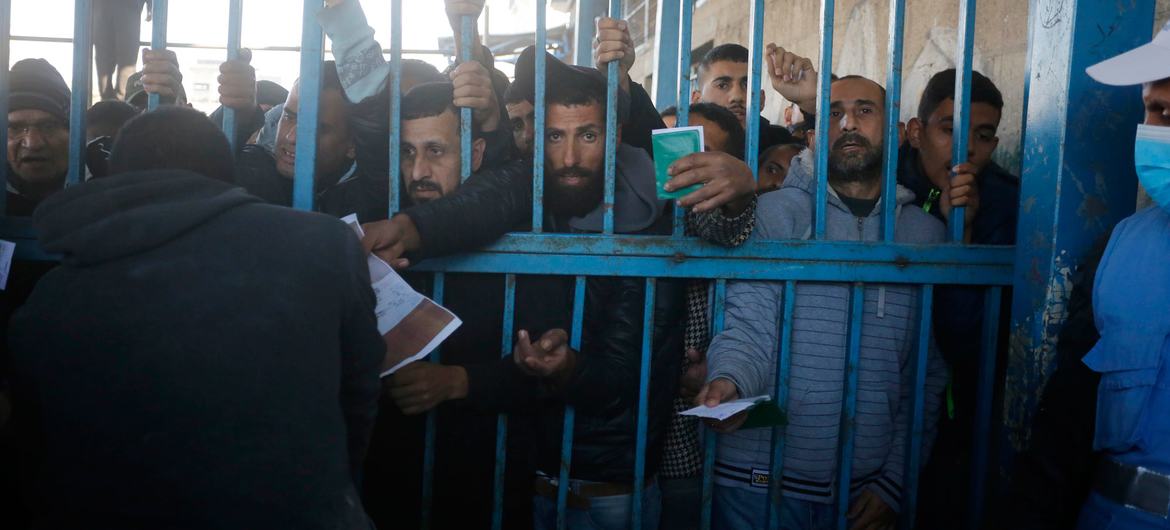
Gazans queue for food in January 2025 when it was more widely available in the enclave.
Generational horror
Ms. Cherevko said that over the past one and a half months, 420,000 people have been “once again forced to flee, many of them with only the clothes on their backs, shot at along the way, arriving in overcrowded shelters, as tents and other facilities where people seek safety, are being bombed”.
“I worry that five, 10, 20 years from now, we will look at our children and grandchildren in shame and we will not be able to explain to them why we could not stop this horror,” she concluded.
“How much more blood must be spilled before enough becomes enough?”