Hunger and a heatwave plague the Gaza Strip

Recently, Israel has denied fewer humanitarian movements but approved missions “still take hours to complete and teams have been compelled to wait on roads that are often dangerous, congested or impassable,” the UN aid coordination office OCHA said in its latest update.

Between 6 and 12 August, humanitarians made 81 attempts to coordinate planned movements with the Israeli authorities, including to transfer fuel and personnel.

Challenges to aid delivery

Of this number, 35 were facilitated, 29 were initially approved but then impeded on the ground, 12 were denied and five had to be withdrawn by the organizers.

However, 14 of the missions that had faced obstructions eventually went ahead.

Nearly three years have passed since hostilities erupted in Gaza following the Hamas-led attacks on Israel which left roughly 1,200 people dead.  

Some 250 others – both Israelis and foreigners – were taken hostage.  It is believed that 50 people are still being held in Gaza, including some who have been declared dead. 

Desperate times, desperate measures

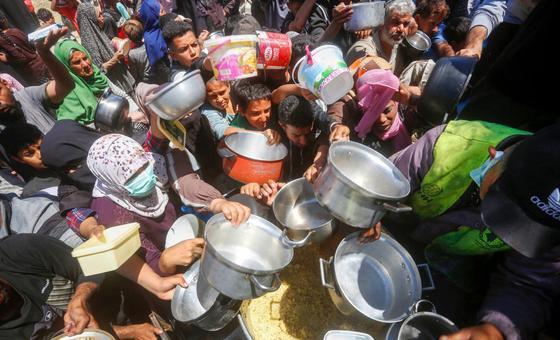
Starvation in the enclave is now at its highest level since the conflict began, according to the World Food Programme (WFP). 

The update cites the Gaza health authorities who have documented 235 malnutrition-related deaths, including 106 children, as of 13 August.

Despite hunger spreading, aid convoys are limited each day and dangers persist as the trucks travel through the war-ravaged enclave.

“Additionally, desperate crowds often offload food supplies from trucks to feed their families – while looting also prevents aid from reaching its intended destinations,” OCHA said.

Last month, WFP collected 1,012 trucks transporting nearly 13,000 metric tonnes of food from the Kerem Shalom and Zikim border crossings with Israel.  Only 10 arrived at warehouses and the rest were offloaded on the way.

Food aid risks spoiling

Although WFP and partners have enough food either in the region or headed there to feed all 2.1 million people in Gaza for at least three months, “the risk of spoilage and infestation of the stranded food supplies has significantly increased, and some of them are nearing their expiry dates.” 

Humanitarians continue to push for more aid and commercial goods to be allowed into Gaza. Although more food is entering, the quality and quantity remain insufficient to meet the immense needs.

As of 10 August, 81 community kitchens were preparing 324,000 individual meals daily – a “noticeable increase” over the 259,000 daily meals prepared two weeks ago but far below the more than one million daily meals distributed in April.

The heat is on

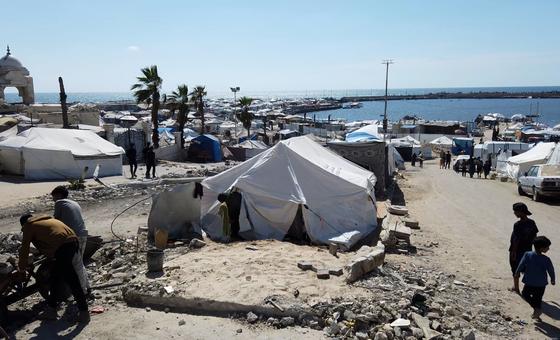
Meanwhile, a heatwave is making conditions much worse as Gaza is currently experiencing temperatures that surpass 40°C or 104°F.

UN Palestine refugee agency UNRWA warned that dehydration is increasing because of the very limited water available.

As part of its ongoing efforts to help the people of Gaza, UNRWA has provided emergency water, sanitation and hygiene services to about 1.7 million people since the start of the war. 

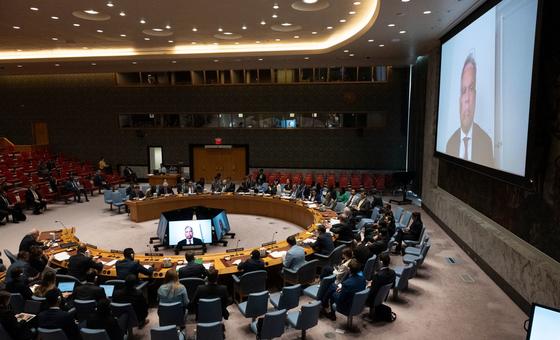
‘There is no military solution’ to end Israel-Palestine conflict, Security Council hears, as starvation stalks the Gaza Strip

Two top UN officials warned that the Israeli cabinet’s green light this week for a fresh offensive aimed at gaining total military control of Gaza City – home to around one million Palestinians – would only risk igniting “another horrific chapter” of displacement, death and destruction.

Miroslav Jenča, Assistant Secretary-General for Europe, Central Asia and the Americas, told ambassadors that Israeli Prime Minister Benjamin Netanyahu’s proposed plan for “defeating Hamas” and the establishment of an alternative civilian administration that is neither Hamas nor the Palestinian Authority, risked “yet another dangerous escalation” that would destabilise the entire region.

However, according to Israeli media reports, the senior political affairs official continued, the Israeli plan foresees the displacement of all civilians from Gaza City by 7 October, affecting some 800,000 people – many previously displaced.

Reports indicate that forces would then surround the city for three months.  This would reportedly then be followed by an additional two months to seize control of central Gaza’s camps and clear the entire area of Palestinian armed groups.

Calamitous plan

If these plans are implemented, they will likely trigger another calamity in Gaza, reverberating across the region and causing further forced displacement, killings, and destruction – compounding the unbearable suffering of the population,” said Mr. Jenča, calling for a full, immediate, and permanent ceasefire, the unconditional, immediate release of all hostages and compliance with international humanitarian law by Israel.

He said there was no military solution to end the conflict adding that planning for Gaza’s future “as we address the urgency of developments on the ground today,” is critical.

Mr. Jenča called for establishing political and security frameworks to ease the humanitarian crisis, while beginning recovery and reconstruction efforts that address the legitimate concerns of both Israelis and Palestinians – in line with realising a two-State solution.

United Palestine

“Critically these frameworks must facilitate a legitimate Palestinian Government that can reunify Gaza and the West Bank, including East Jerusalem, politically, economically and administratively.”

Furthermore, it must be made up of a united leadership representing all of Palestine. He called on the Palestinian Authority to “advance its stated goal of holding elections” to this end.

‘This is starvation’: Rajasingham

Senior humanitarian affairs official Ramesh Rajasingham told ambassadors that hunger-related deaths were already rising, ahead of any new mass-displacement policy for Gaza City.

“Whatever lifelines remain, are collapsing under the weight of sustained hostilities, forced displacement and insufficient levels of life-saving aid.”

He said with local authorities documenting the deaths of 98 children from severe acute malnutrition – 37 since 1 July – “this is no longer a looming hunger crisis – this is starvation.”

The head of the humanitarian affairs coordination office (OCHA) in Geneva said he was extremely concerned over the “prolonged conflict and further human toll that is likely to unfold following the Government of Israel’s decision to expand military operations in Gaza.”

“This marks a grave escalation in a conflict that has already inflicted unimaginable suffering.”

‘Grim milestone’

“A grim milestone has also been crossed in the humanitarian community,” he lamented, noting that over 500 humanitarian workers have been killed in Gaza since hostilities escalated, including at least 167 women. Smear campaigns against aid operations continue unabated.  “As we approach World Humanitarian Day, we must insist on the protection of all aid workers,” he added.  

States – all those with any influence – must look within our bruised collective conscience and summon the courage to do what is necessary to end this inhumanity and pain, he said.

Civilians must be protected, and hostages must be released unconditionally.  Arbitrarily detained Palestinians must be freed. Israel must agree to and facilitate humanitarian relief operations, both into and within the Gaza Strip, to reach the population in need.

The International Court of Justice’s (ICJ) provisional measures in the case on the application of the Genocide Convention in Gaza remain in place, the top OCHA official added, including the demand that Israel take immediate and effective measures to enable the provision of urgently needed basic services and humanitarian assistance.

SECURITY COUNCIL LIVE: Ambassadors meet in emergency session, amid starvation in the Gaza Strip

The UN Security Council is meeting in New York following the Israeli cabinet’s decision to again expand its military operation inside the Gaza Strip and take full control of the key population centre of Gaza City. UN chief António Guterres described it as a “dangerous escalation” for the two million civilians trapped in the enclave as well as the remaining Israeli hostages still held captive. Follow our Meetings Coverage Section’s live reporting of the crisis meeting and UN News app users can follow here.

Source link

Gaza Strip: Humanitarians warn of worsening famine conditions, attacks on civilians

Of the 154 malnutrition-related deaths since October 2023 (including 89 children) reported by Gazan health authorities, the World Health Organization (WHO) said 63 occurred in July alone.

These deaths follow a steep drop in food consumption: 81 per cent of households reported poor food consumption in July (up from 33 per cent in April), and 24 per cent experienced severe hunger (up from 4 per cent), crossing the famine threshold, according to the humanitarian update issued by the UN Office for the Coordination of Humanitarian Affairs (OCHA) on Wednesday.

Acute malnutrition rates also surpassed famine thresholds in Khan Younis, Deir al Balah and Gaza City.

Given these recent figures, IPC food security experts warned that the worst-case famine scenario is unfolding. However, they added that while the third famine threshold of starvation-related deaths is rising, collecting data remains a challenge. 

UN agencies caution that time is running out for a full-scale humanitarian response. 22 per cent of the analyzed population is facing “catastrophic” level of food insecurity, and a further 54 per cent is at “emergency” level. 

At the same time, less than 15 per cent of essential nutrition services remain functional.

Attacks on civilians

Of the over 60,000 Palestinians reported killed since October 2023, nearly 9,000 died after hostilities reignited in March, and 640 between 23 and 30 July.

Civilian casualties while seeking food are also rising, with 1,239 killed and over 8,152 injured since 27 May.

OCHA further noted that displacement figures since 18 March have surpassed 767,800, though no new evacuation orders were issued by Israeli authorities since 20 July. The 20 July order affecting a humanitarian hub in Deir al Balah has since been rescinded.

Amid ongoing displacement, overcrowding in shelters, lack of privacy and worsening hunger has elevated the risk of gender-based violence (GBV) for women and girls.  

The conditions are especially dire in southern Gaza, where there are no longer any safe shelters for GBV survivors.

Humanitarian measures

Between 23 and 29 July, only 47 per cent of 92 coordinated aid movements were fully facilitated by Israeli authorities. About 16 per cent were denied, 26 per cent impeded after initial approval and 11 per cent withdrawn by organizers.

The Israeli military announced a daily 10-hour pause in military activity, beginning 27 July, in Al Mawasi, Deir al Balah and Gaza City “to increase the scale of humanitarian aid entering Gaza.”

They also announced measures including airdrops of flour, sugar and canned food; the reconnection of the power line from Israel to the southern Gaza desalination plant; the removal of customs barriers on food, medicine, and fuel from Egypt; and the designation of secure routes for UN humanitarian convoys.

However, humanitarian partners warned that airdrops could endanger civilians, lead to unequal distribution and fall short of needs.

Working with limited funding

In addition, lack of sufficient funding is also hampering response efforts.

As of 30 July, only about 21 per cent of the $4 billion requested for the 2025 urgent humanitarian appeal for the region has been secured, leaving critical gaps. 

Source link

Gaza: UN urges Israel to allow fuel into Strip

“Amid ongoing Israeli military operations, scores of people have reportedly been killed and injured, including while waiting for food,” the UN Office for the Coordination of Humanitarian Affairs (OCHA) said.

“Over the weekend, there were numerous reports of attacks hitting homes, as well as schools hosting displaced people,” it added.

Catastrophic hunger

OCHA noted that amid the “heavy constraints” on bringing in supplies and carrying out humanitarian operations across Gaza, people are going hungry.

“The World Food Programme (WFP) reports that one in five people faces catastrophic hunger, and more than 90,000 women and children urgently require treatment for malnutrition,” it said.

WFP has about 130,000 metric tons of food positioned in the region, ready to serve people in Gaza if improved access is granted.

Call for access

OCHA reiterated calls on Israel to facilitate the access and entry of essential supplies into Gaza, through the available crossing points and corridors, to address people’s desperate needs. Fuel, in particular, is urgently needed.

The UN and its partners call on the Israeli authorities, with utmost urgency, to allow the entry of fuel into Gaza. This is critically needed for life-saving operations – including hospitals, water and sanitation equipment, telecommunications, moving cargo from crossings, and operating community kitchens,” it said.

Displacement continues

Mass displacement continues in the war-torn enclave.

On Sunday, the Israeli military issued new evacuation orders for parts of Jabalya and Gaza City, impacting around 150,000 people. Those forced to flee join thousands already crowded into shelters lacking water, sanitation, and medical care. Shelter materials such as tents and timber have not entered Gaza in 17 weeks.

Most of the territory remains under displacement orders, OCHA said, and Israel, as the occupying power, has a legal obligation to protect civilians.

Search for the missing

Meanwhile, in war-torn Gaza, thousands of families remain trapped in a spiral of anxiety and despair as they search for their missing loved ones.

Among them is Anwar Hawas, a young woman in her twenties, searching desperately for Hadi, her 17-year-old autistic brother who has been missing for weeks.

“Every day I go out in the morning and return in the evening, hoping to find him,” she told UN News.

The Palestinian Central Bureau of Statistics reports that more than 11,000 individuals are missing in Gaza since the war started on 7 October 2023, the majority among them women and children. 

Source link