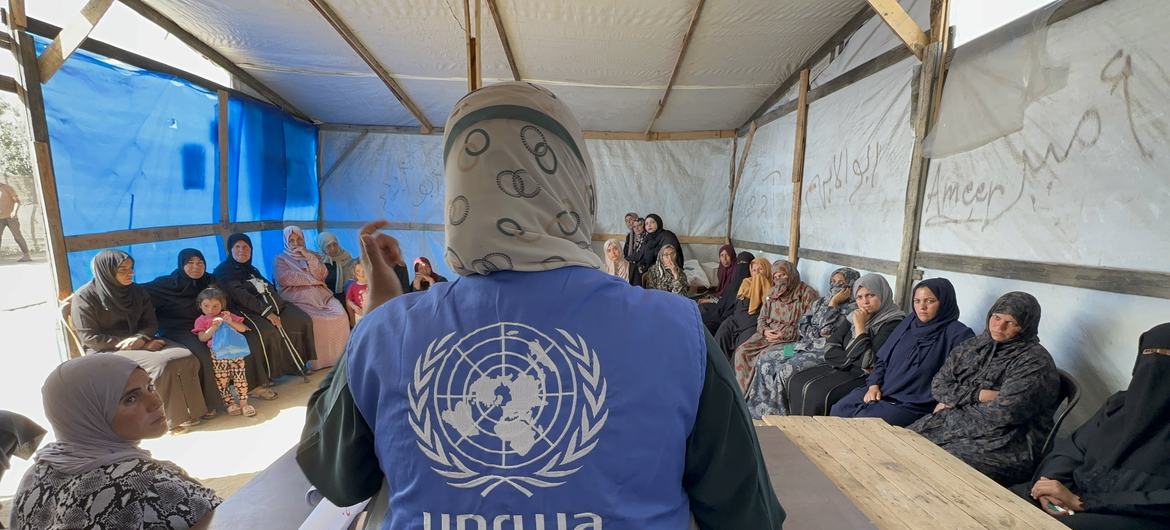
Recently, Israel has denied fewer humanitarian movements but approved missions “still take hours to complete and teams have been compelled to wait on roads that are often dangerous, congested or impassable,” the UN aid coordination office OCHA said in its latest update.
Between 6 and 12 August, humanitarians made 81 attempts to coordinate planned movements with the Israeli authorities, including to transfer fuel and personnel.
Challenges to aid delivery
Of this number, 35 were facilitated, 29 were initially approved but then impeded on the ground, 12 were denied and five had to be withdrawn by the organizers.
However, 14 of the missions that had faced obstructions eventually went ahead.
Nearly three years have passed since hostilities erupted in Gaza following the Hamas-led attacks on Israel which left roughly 1,200 people dead.
Some 250 others – both Israelis and foreigners – were taken hostage. It is believed that 50 people are still being held in Gaza, including some who have been declared dead.
Desperate times, desperate measures
Starvation in the enclave is now at its highest level since the conflict began, according to the World Food Programme (WFP).
The update cites the Gaza health authorities who have documented 235 malnutrition-related deaths, including 106 children, as of 13 August.
Despite hunger spreading, aid convoys are limited each day and dangers persist as the trucks travel through the war-ravaged enclave.
“Additionally, desperate crowds often offload food supplies from trucks to feed their families – while looting also prevents aid from reaching its intended destinations,” OCHA said.
Last month, WFP collected 1,012 trucks transporting nearly 13,000 metric tonnes of food from the Kerem Shalom and Zikim border crossings with Israel. Only 10 arrived at warehouses and the rest were offloaded on the way.
Food aid risks spoiling
Although WFP and partners have enough food either in the region or headed there to feed all 2.1 million people in Gaza for at least three months, “the risk of spoilage and infestation of the stranded food supplies has significantly increased, and some of them are nearing their expiry dates.”
Humanitarians continue to push for more aid and commercial goods to be allowed into Gaza. Although more food is entering, the quality and quantity remain insufficient to meet the immense needs.
As of 10 August, 81 community kitchens were preparing 324,000 individual meals daily – a “noticeable increase” over the 259,000 daily meals prepared two weeks ago but far below the more than one million daily meals distributed in April.
The heat is on
Meanwhile, a heatwave is making conditions much worse as Gaza is currently experiencing temperatures that surpass 40°C or 104°F.
UN Palestine refugee agency UNRWA warned that dehydration is increasing because of the very limited water available.
As part of its ongoing efforts to help the people of Gaza, UNRWA has provided emergency water, sanitation and hygiene services to about 1.7 million people since the start of the war.