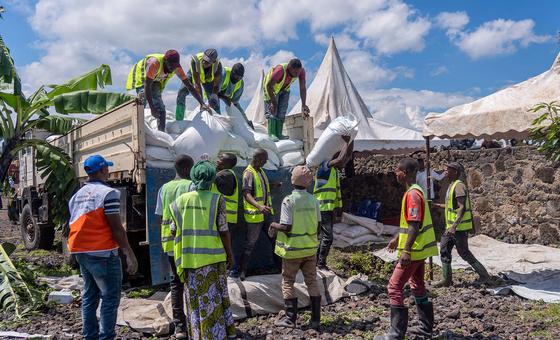
Amid Sudan’s humanitarian crisis, Chad shows ‘act of solidarity’


That’s according to UN human rights chief Volker Türk, who had discussions with over 40 leaders of Sudanese civil society in Northern State’s capital, Dongola, this week.

“But these representatives have also found the solution,” Mr. Türk said in a video on X. “There needs to be an all-out effort, both within Sudan and by the international community to help them, to facilitate their work.”

The conflict in Sudan which erupted in 2023 between the Sudanese Armed Forces (SAF) and the armed group Rapid Support Forces (RSF) has uprooted some 9.3 million people and has brought about one of the world’s largest hunger crises.

Mr. Türk began his visit on Wednesday and is meeting with Sudanese authorities, civil society, humanitarian partners and people displaced by the conflict in Darfur and Kordofan. He will be holding two press conferences at the end of his visit on 18 January.

Chad shows ‘act of solidarity’ 

Since April 2023, more than 900,000 Sudanese refugees have arrived in eastern Chad, with new arrivals every day, the UN refugee agency (UNHCR) said on Friday.

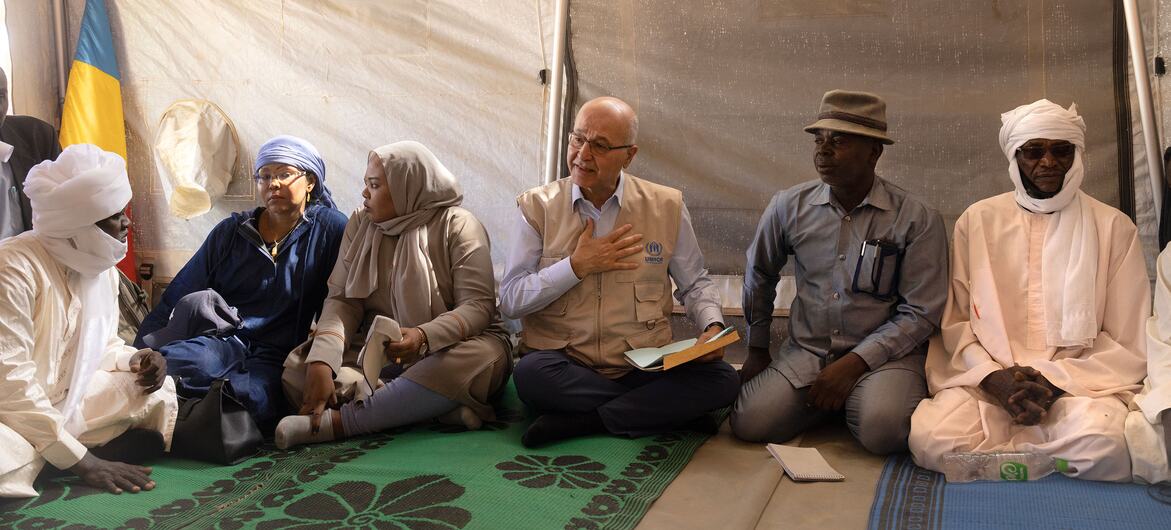
The newly-appointed UN High Commissioner for Refugees Barham Salih visited Chad this week for the first time in this capacity, where he met with Sudanese refugee families and local authorities.

Many of the refugees he met had been displaced multiple times since the conflict began. They described years of violent attacks and human rights abuses.

“What is unfolding in Sudan is a humanitarian calamity of overwhelming scale. Chad’s generous welcome of refugees is a powerful act of solidarity,” Mr. Salih said.

From displacement to solutions 

Mr. Salih also acknowledged the host communities that have welcomed refugees despite economic hardship and environmental pressure.

He reiterated UNHCR’s readiness to work with the Government and others to facilitate economic opportunity and provide services for both refugees and the host communities.

The UN Refugees chief, Barham Salih (centre), speaks with Sudanese refugees at a women’s centre in Farchana, Chad.

“Visiting Chad and Kenya this last week, both countries clearly demonstrate how, with sustained international support, inclusive policies can move us from responding to displacement emergencies towards providing solutions,” Mr. Salih emphasised.

“When refugees are protected and included, they can rebuild their lives and contribute to the societies that host them. This is what I am seeing here, and this is the direction in which we must travel.”


Nepal appoints first woman prime minister, as UN expresses solidarity amid crisis

Rewrite as per earlier instructions: Nepal’s former Chief Justice Sushila Karki was appointed as Nepal’s first woman Prime Minister by President Ram Chandra Poudel who administered the oath of office on Saturday, in a ceremony attended by youth representatives, officials and foreign diplomats.

According to media reports, she has been tasked with organizing fresh elections within six months. She previously served as the only woman chief justice, leading the Supreme Court from 2016 to 2017.

“At this pivotal moment, the United Nations stands alongside the people of Nepal in their aspirations for peace, justice, transparency, accountability and progress,” said Hanna Singer Hamdy, UN Resident Coordinator in Nepal, in a statement. She also recognised the contributions of the President, the Chief of Army Staff and ‘GenZ’ youth leaders, noting that their efforts “helped make this transition possible.”

The UN remains committed to working with the Government to support stability, human rights and sustainable development, the statement added. An inspiration for girls and women Children’s Fund UNICEF congratulated Ms. Karki, saying her appointment “is an inspiration for girls and women,” and highlighted the importance of placing children’s rights at the centre of Nepal’s recovery.

Similarly, the UN Development Programme (UNDP), gender equality agency UN Women, and reproductive health agency, UNFPA, expressed support for her leadership, emphasising inclusive governance, gender equality, and the protection of women and youth. Nepal army soldiers at the Supreme Court after the complex was set on fire by protesters.

Grave challenges

The appointment comes amid grave challenges. The unrest began Monday as a self-styled “Gen Z protest” against corruption, nepotism and social media restrictions. Security forces opened fire on crowds, resulting in multiple deaths and injuries. Protesters stormed and torched key institutions, including the parliament, Supreme Court, federal and provincial government offices, and political party offices, while also targeting media outlets, schools, businesses and homes.

Jailbreaks occurred in several locations, and reports suggest some demonstrations may have been infiltrated by outside actors and groups, further complicating security. In response, the army assumed control of nationwide security late Tuesday, deploying troops across the Kathmandu Valley and imposing movement restrictions to stabilise the situation.

Children’s Fund UNICEF congratulated Ms. Karki, saying her appointment “is an inspiration for girls and women,” and highlighted the importance of placing children’s rights at the centre of Nepal’s recovery.

UN urges renewed solidarity eight years after forced exodus of Rohingya

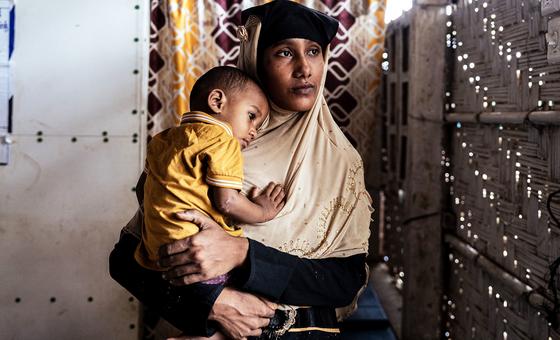
More than 700,000 of them fled to neighbouring Bangladesh after armed attacks by a militant group against Myanmar security forces sparked a brutal military crackdown that began on 25 August 2017.

They joined thousands of others who had escaped earlier waves of violence and discrimination now living in refugee camps just across the border in the Cox’s Bazar district.

Violence and funding cuts

In a statement to mark the anniversary, UN Spokesman Stéphane Dujarric noted that the Rohingya people both in and outside Myanmar are facing a further deterioration of their already dire circumstances.

“In Rakhine State, Rohingya and other civilians are caught in the crossfire between the Myanmar military and the Arakan Army and subjected to forced recruitment, human rights violations and other abuse,” he said.

The ongoing violence has forced more Rohingya to flee, including to Bangladesh which is already hosting more than one million refugees from Myanmar. 

A military coup forced Myanmar’s democratically elected Government from power in 2021, fuelling armed insurgencies throughout Myanmar following a brutal military crackdown on protests.

Mr. Dujarric said reports of pushbacks, removals and deportations across the region raise serious concerns over potential violations of the principle of non-refoulement and shrinking asylum space.

This is happening amid funding cuts which are severely curtailing education, food assistance, healthcare, livelihood opportunities and protection services.

Protect all civilians

The Spokesman said UN Secretary-General António Guterres has repeated his call for the protection of all civilians in accordance with applicable obligations under international law. 

The Secretary-General also recalled his visit to Cox’s Bazar, Bangladesh, where he witnessed the resilience of Rohingya communities.

He stressed the urgent need for strengthened international solidarity and increased support, in parallel to efforts toward a comprehensive political solution that meaningfully includes the Rohingya and addresses their displacement and the root causes of the protracted crisis.

Hopes for upcoming conference

“The Secretary-General is hopeful that the 30 September High–level Conference on Rohingya and other minorities in New York, as mandated by the United Nations General Assembly, will draw renewed international attention to the urgency of finding durable solutions,” said Mr. Dujarric.

He added that the Special Envoy of the Secretary-General on Myanmar continues to engage all stakeholders towards ending the brutal civil conflict and supporting a viable Myanmar-led political process.

This should also lead to the voluntary, safe, dignified, and sustainable return of the Rohingya to Myanmar. 

Source link

‘Global solidarity benefits us all’: Spain makes the case for development funding

For decades, helping the least developed countries to develop has been seen as beneficial for the international community as a whole, as well as a duty of the countries with more resources.

However, this philosophy is being challenged by some wealthy nations, which have decided to reduce or even end funding for projects and initiatives designed to support the poorer countries of the Global South in their attempts to improve the living standards and wellbeing of their citizens.

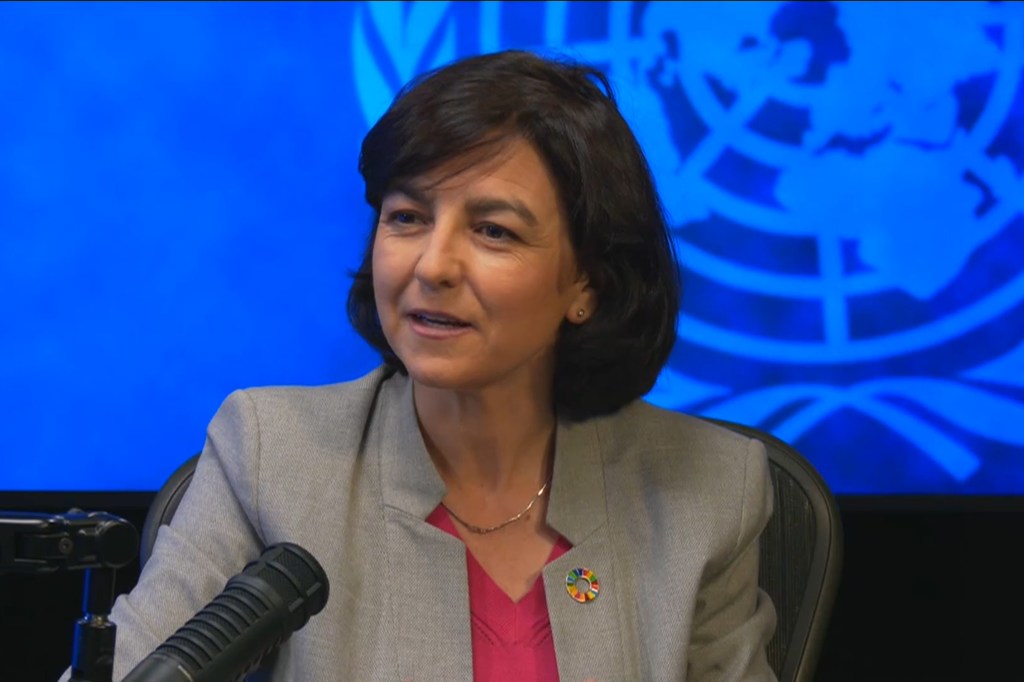
Ahead of the fourth International Conference on Financing for Development, which takes place in Seville, Spain, between 30 June and 3 July, Ms. Granados told Antonio Gonzalez from UN News that, despite the uncertainty, many rich countries, including Spain, still believe in the need for development financing and solidarity between nations.

This interview has been edited for clarity and length

UN News: Is development financing as we know it over?

Spain’s Secretary of State for International Cooperation, Eva Granados.

Eva Granados: Development cooperation and global solidarity are not only beneficial for everyone, but also a political and moral duty.

It is true that, in the last year, there has been a reduction in official development aid, but this is not the case for all countries. Spain, for example, has increased its contribution to official development aid by 12 percent.

The philosophy behind development financing is certainly being challenged in some quarters, but this is the same kind of denialism that questions the need for policies calling for equality between men and women, or the reality of the climate crisis. There are many people making a lot of noise, but there are far more of us who believe in global solidarity. We have to explain, and explain well, why this solidarity and this international cooperation matter.

I believe that all the peoples of the world have a duty to each other, and we need to counter these narratives; climate change is clearly affecting us all and solidarity between genders is beneficial to the whole of society.

In 2015, at a conference in Addis Ababa [which laid the groundwork for a landmark international agreement on financing], we talked about debt issues, international taxation, trade and research. It’s the job of those of us who are committed to development cooperation and financing for development to make this agenda evolve.

UN News: Why is it in the interests of richer countries like Spain to spend money on international development?

Eva Granados: In the case of Spain, international cooperation and global solidarity are part of our social contract. Cooperation and peaceful relations between the peoples of the world are included in our constitution, and setting aside a 0.7 percent contribution of our gross national income to international cooperation is inscribed in law.

And this benefits our country. For example, during the COVID-19 pandemic, it was clear that, whilst the challenges were national, the solutions were global. Another example is climate change. The Mediterranean is heavily impacted, both on the European and African side. We have to cooperate and work in a coordinated manner, to form partnerships and to create global policies.

UN News: There is a €4 trillion annual gap in the funding needed for development and what is currently raised. Can this gap be bridged?

Eva Granados: The financing gap is large, but relatively speaking, €4 trillion is still only one percent of the financial transactions that take place annually. I think we have quite a few scenarios where it can be achieved.

If all donor countries contributed 0.7 percent of Gross National Income, we would barely meet 10 percent of the financing needs for development. This means that we have to do everything we can to attract investment, and work with the private sector.

We also have to help create global tax systems that distribute wealth and end the situation whereby two out of five citizens worldwide live in countries that spend more on debt servicing than on education or health services. It is unacceptable that the richest and wealthiest on the planet are contributing so little to international development. Super-rich people and large multinationals have to do more.

UN News: What results do you want to see coming out of this conference?

Eva Granados: These are uncertain times, but Seville is a ray of light for global solidarity. The countries represented at the conference are signalling that they believe in multilateralism.

The objective is to obtain more and better resources for sustainable development. We need to combine ambition with action. Just as in Addis Ababa, where we were able to reach agreement on a large number of issues, Seville is the time to put concrete issues on the table and bring together the political will of world leaders to reach agreements.

Seville is also a good time for us to set that viewpoint from the perspective of women. It is important that, in all the chapters of the document we are discussing, the needs of women are at the forefront.

And it is important that the final document includes a follow-up mechanism, so that countries can be held  accountable on an annual basis for the commitments we reach, and a commitment from all Member States to contribute to official development aid. 

Source link

From Syria, UN refugee chief calls for greater solidarity with displaced people

The UN High Commissioner for Refugees, Filippo Grandi, sounded the alarm on Friday, World Refugee Day, in a message from Syria.

He said the abject failure to end conflicts – including in Sudan, Ukraine, the Democratic Republic of the Congo and Gaza – continues to create immense suffering. 

Difficulty seeking shelter

“Yet the innocent people who run for their lives as the bullets fly and the missiles rain down are unjustly stigmatised, making it harder to escape danger and to find somewhere to recover and rebuild,” he said.

Their situation is further compounded by brutal cuts to humanitarian aid, affecting millions who desperately need assistance. 

At this critical juncture, it is vital that we reaffirm our solidarity with refugees – not just with words but with urgent action,” he said.

He added that inspiring examples already exists, from countries that continue to welcome and host refugees, to local communities that “open their homes, workplaces and hearts” to them, as well as “the countless individual acts of kindness and compassion that reveal our common humanity.”

Share the responsibility

Mr. Grandi said the international community can and must support these countries and communities by sharing the responsibility for protecting refugees, calling in particular for action by wealthier States, development banks, businesses and others.

The High Commissioner spent the Day in Syria, where some 600,000 people have returned from neighbouring countries after 14 years of war. Overall, more than two million Syrians have gone back to their homes and communities since the fall of the Assad regime last December.

“In a region that has suffered so much violence – and suffers even now – we are nonetheless presented with an opportunity to help Syrians achieve stability and prosperity. We must not let it pass by,” he said.

Mr. Grandi met Syrian families who spent more than a decade as refugees, whose deep joy at being among familiar faces and surroundings serve as reminder of refugees’ yearning for home. 

“Now more than ever, we must stand with refugees to keep alive their hopes of a better future,” he said. 

Source link

UN relief chief calls for solidarity, with humanitarians ‘literally under attack’

Tom Fletcher was speaking at the annual stock-take of his sector known as the ECOSOC Humanitarian Affairs Segment, which brings together UN Member States and organizations, humanitarian and development partners, as well as the private sector and affected communities.

He said this year’s theme – renew global solidarity for humanity – “could not be more urgent.”

“We need you right now,” he said. “We’re in a moment of conflict, of transactional politics, of selfishness, of division, of polarization. And global solidarity – the lifeblood of what we do – is in retreat.”

Moreover, “at this moment, when the needs are at their highest, the funding is also in retreat.”

Crises, climate and cutbacks

Mr. Fletcher reminded participants of “some uncomfortable truths,” noting that the Middle East currently “teeters on the edge of a wider war.”  

At the same time, people in Gaza are starving as food aid rots at border crossings, girls in Afghanistan are banned from school, women in war-torn Sudan are experiencing horrific violence, and gangs are terrifying families in Haiti.

This is happening amid the climate crisis “which will drive more humanitarian needs in the coming years than any other factor that we discuss today,” he said.

“Meanwhile, our teams, our humanitarian staff, the bravest of us, are not hesitating to go towards the sound of gunfire, the sound of danger to drive those convoys through those checkpoints and they are being killed in record numbers, while those responsible for killing them roam free.”

‘Life and death decisions’

Just six months ago, Mr. Fletcher launched a $44 billion appeal to reach 190 million people worldwide this year.  

In the wake of the deepest cuts ever to humanitarian operations globally, the plan was this week “hyper-prioritized” to focus on the most critical areas, with $29 billion in funding to support 114 million.

He acknowledged that “we’re left with the cruelest of equations when we make those life and death decisions, literally, about who to save.” 

Humanitarians “will save as many lives as we can with the resources that you give us,” and they are asking world leaders to give only one per cent of what they spent on defense last year.

“This isn’t just a call for money, of course. It is a call for global responsibility, for a shared commitment to end the suffering,” he said.

New humanitarian pact

“We also make this call that all of us find a moment to come off our talking points and to find the individual moment of courage and creativity to support this effort.”

Mr. Fletcher said the humanitarian movement will continue and is being re-designed from the ground up

“We’ll find new allies, we’ll find new sources of funding, we’ll find new ideas, we won’t just patch up the old model. We will also forge a new one. A bold humanitarian pact with the people we serve,” he said.

Women at the forefront

The pact will be “more local, more lean, more green,” and will include people on the frontlines of crisis who “know better than anyone what they need.”

Furthermore, the UN’s highest-level humanitarian coordination forum – the Inter-Agency Standing Committee (IASC) – has voiced unequivocal commitment that women and girls will lead this humanitarian reset and will back women humanitarian leaders in this work.

 “These leaders, the real leaders of our movement, don’t work for the UN or international NGOs. They are not part of the logos, and egos, and silos of our systems,” he said.

“They have something much more powerful – they are rooted in their communities with the trust of their communities and an unshakeable belief that even in these darkest moments we can choose to help each other. They are there for us and we must be there for them.”

Boosting effectiveness

The Economic and Social Council (ECOSOC) is one of the six main UN organs.

Since 1998, it has held the Humanitarian Affairs Segment to strengthen the coordination and effectiveness of UN humanitarian efforts.

Previous meetings have focused on issues such as addressing food security and recovery from the COVID-19 pandemic. 

Source link