Dalai Lama Extends Greetings To Sushila Karki On Becoming Nepal’s Interim Prime Minister

Tibetan spiritual leader, the Dalai Lama, on Saturday congratulated Sushila Karki on her appointment as the interim Prime Minister of Nepal, hailing her elevation as historic.

Karki, 73, who earlier served as Nepal’s first woman Chief Justice, was sworn in as the country’s first woman Prime Minister late Friday, taking charge after a week of political turbulence.

In a message released by his office, the Dalai Lama said the people of Tibet and Nepal shared long-standing ties of friendship. He recalled Kathmandu’s role in hosting Tibetan refugees after the 1959 uprising and lauded their contribution to Nepal’s economy despite being a small community.

“I wish you every success in fulfilling the hopes and aspirations of the people of Nepal in these challenging times. With my prayers and good wishes,” the Dalai Lama’s statement said, while noting Nepal’s progress in improving the lives of its poor and marginalized sections.

Karki’s appointment came after the resignation of K P Sharma Oli, whose government was toppled earlier this week amid massive Gen-Z-led protests against corruption and nepotism. Activists on the streets had rallied behind Karki, rejecting other non-political names that were floated for the post.

The unrest had also disrupted the Kailash Mansarovar Yatra for several Indian pilgrims stranded in Tibet via Nepal. With border points reopening on Thursday, their passage has now resumed, officials confirmed.

Nepal appoints first woman prime minister, as UN expresses solidarity amid crisis

Rewrite as per earlier instructions: Nepal’s former Chief Justice Sushila Karki was appointed as Nepal’s first woman Prime Minister by President Ram Chandra Poudel who administered the oath of office on Saturday, in a ceremony attended by youth representatives, officials and foreign diplomats.

According to media reports, she has been tasked with organizing fresh elections within six months. She previously served as the only woman chief justice, leading the Supreme Court from 2016 to 2017.

“At this pivotal moment, the United Nations stands alongside the people of Nepal in their aspirations for peace, justice, transparency, accountability and progress,” said Hanna Singer Hamdy, UN Resident Coordinator in Nepal, in a statement. She also recognised the contributions of the President, the Chief of Army Staff and ‘GenZ’ youth leaders, noting that their efforts “helped make this transition possible.”

The UN remains committed to working with the Government to support stability, human rights and sustainable development, the statement added. An inspiration for girls and women Children’s Fund UNICEF congratulated Ms. Karki, saying her appointment “is an inspiration for girls and women,” and highlighted the importance of placing children’s rights at the centre of Nepal’s recovery.

Similarly, the UN Development Programme (UNDP), gender equality agency UN Women, and reproductive health agency, UNFPA, expressed support for her leadership, emphasising inclusive governance, gender equality, and the protection of women and youth. Nepal army soldiers at the Supreme Court after the complex was set on fire by protesters.

Grave challenges

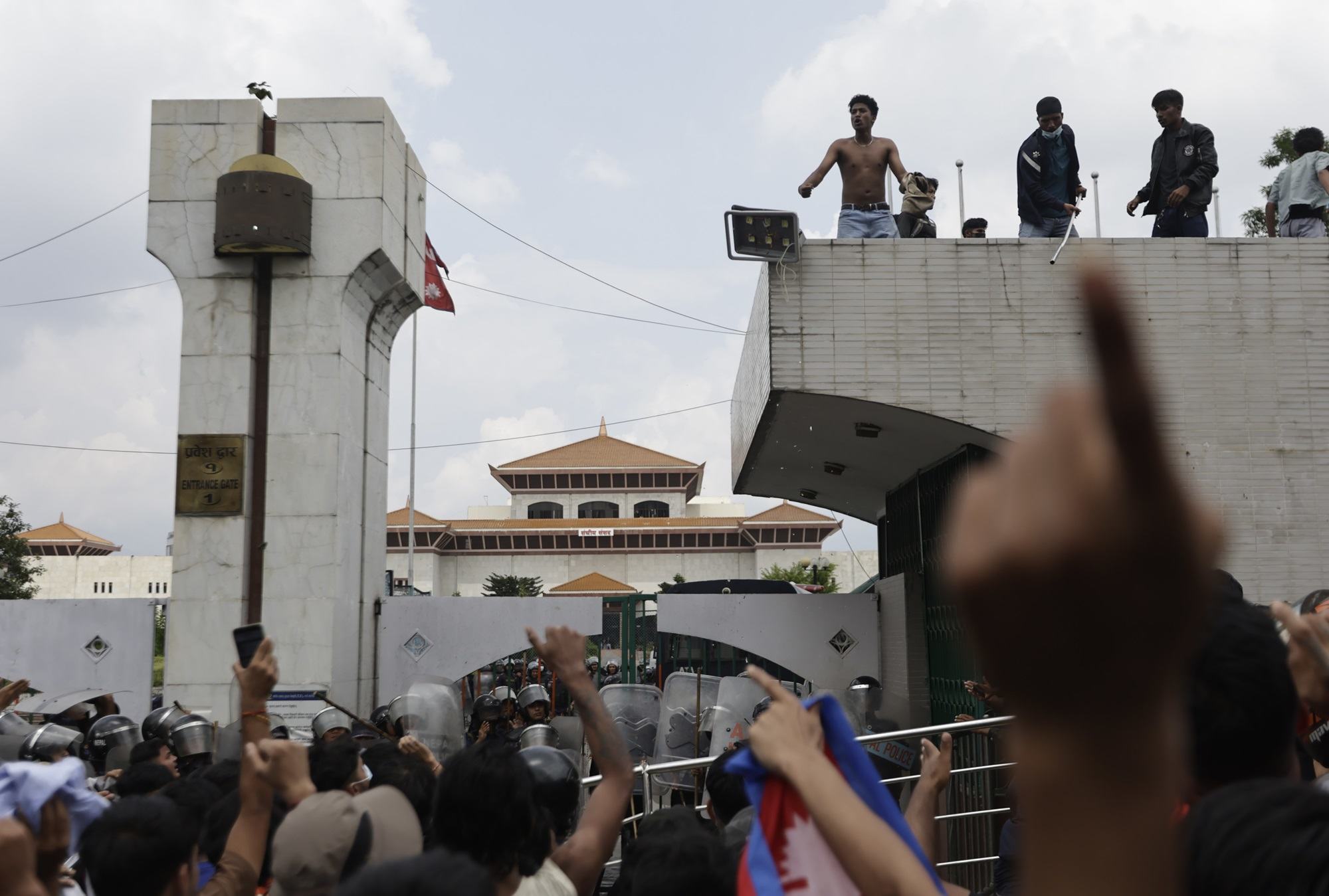
The appointment comes amid grave challenges. The unrest began Monday as a self-styled “Gen Z protest” against corruption, nepotism and social media restrictions. Security forces opened fire on crowds, resulting in multiple deaths and injuries. Protesters stormed and torched key institutions, including the parliament, Supreme Court, federal and provincial government offices, and political party offices, while also targeting media outlets, schools, businesses and homes.

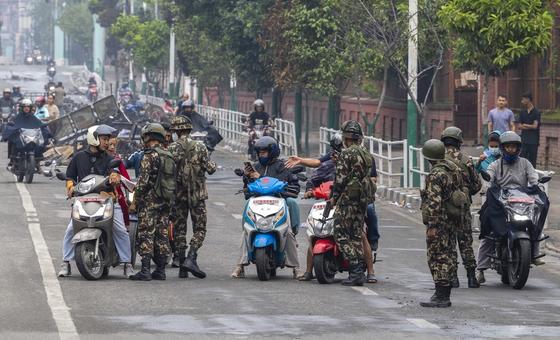
Jailbreaks occurred in several locations, and reports suggest some demonstrations may have been infiltrated by outside actors and groups, further complicating security. In response, the army assumed control of nationwide security late Tuesday, deploying troops across the Kathmandu Valley and imposing movement restrictions to stabilise the situation.

Children’s Fund UNICEF congratulated Ms. Karki, saying her appointment “is an inspiration for girls and women,” and highlighted the importance of placing children’s rights at the centre of Nepal’s recovery.

Nepal crisis: Army deployed as death toll rises amid political turmoil

The unrest began Monday as a self-styled “Gen Z protest” against corruption, nepotism and restrictions on social media. It quickly escalated after security forces opened fire on the crowds.

By Tuesday, protesters had stormed and torched parliament, the Supreme Court and multiple government offices, including Singha Durbar – the central administrative complex. Homes of political leaders were attacked, police stations overrun, and Tribhuvan International Airport briefly closed.

In addition, media outlets and schools were set on fire, while the Ministry of Health and Population was also destroyed, including the National Health Emergency Operation Centre.

UN chief urges dialogue

UN Secretary-General António Guterres said he was “deeply saddened by the loss of life” and urged restraint, dialogue, and a thorough investigation into the violence.

“I call on the authorities to comply with human rights law,” he posted on social media late on Tuesday (New York time).

“Protests must take place in a peaceful manner, respecting life and property.”

Volatile security situation

According to media reports, the updated toll includes both protesters and police, as well as people killed in fires during the demonstrations. Many remain unaccounted for, with hospitals reporting critically injured patients.

The turmoil also triggered jailbreaks in several locations, with some inmates still at large.

Some accounts suggest demonstrations may have been infiltrated by outside actors, further complicating the volatile security environment.

Efforts to restore order

The army assumed control of nationwide security late Tuesday local time, deploying troops across the Kathmandu Valley and imposing movement restrictions to stabilise the situation.

Checkpoints were established, and people have been urged to stay home except for essential travel.

Media also reported the army recovering some of the weapons looted from police personnel, while youth groups helped apprehend escaped prisoners and return firearms. Some inmates voluntarily surrendered.

Tribhuvan International Airport has since reopened, and some police stations are back in operation.

Country at a crossroads

Even amid the chaos, some youth groups were seen clearing debris from their neighbourhoods.

Behind the immediate turmoil, talks are reportedly underway on the possible formation of an interim government to steer the country through the crisis. Discussions also include the dissolution of parliament, investigations into illegally acquired assets, and reform of key institutions.

Source link

Nepal PM resigns after deadly crackdown on youth protests; UN urges calm

The unrest, which began Monday as a self-styled “Gen Z protest” against rampant corruption, nepotism and curbs on social media, quickly escalated after security forces responded with force.

Most of the dead and wounded were young demonstrators shot by police. Many remain hospitalised in a critical condition.

By Tuesday, demonstrations had spread across the country, with Government buildings, political party offices, and even the Parliament in Kathmandu set ablaze.

Some political leaders’ homes were attacked, police stations overrun, and the international airport has been closed.

The Prime Minister was reportedly evacuated by helicopter from his official residence and his resignation was announced shortly afterward.

Several ministers at both the federal and provincial level – as well as members of parliament – have also stepped down in protest at the handling of the demonstrations, deepening the political fallout.

Violence is not the answer

Expressing deep concern over the deaths and rapid deterioration, UN human rights chief Volker Türk warned that “violence is not the answer” and called on authorities and demonstrators alike to de-escalate the spiralling crisis.

In a statement from Geneva, Mr. Türk said he was “appalled by the escalating violence” and the “unnecessary and disproportionate use of force” against largely young demonstrators.

Dialogue is the best and only way to address the concerns of the Nepalese people. It is important that the voices of young people are heard,” he stressed, urging both security forces to show restraint and protesters to refrain from destructive acts.

While condemning the crackdown, he also voiced concern about violence by some demonstrators.

“I am disturbed by reports of public buildings, businesses and private residences being attacked and, in some instances, set ablaze. Equally, I am concerned by reports of physical attacks on senior government officials.”

UN chief echoes call for restraint

The Secretary-General’s Spokesperson said at Tuesday’s daily briefing for journalists in New York that the UN chief is “closely following the situation.”

Stéphane Dujarric said António Guterres was “very saddened by the loss of life” and reiterated his call for restraint to prevent further escalation.

The authorities must comply with international human rights law, and protests must take place in a peaceful manner that respects life and property,” Mr. Dujarric said, noting the dramatic images emerging from Nepal.

Call for prompt investigations

The UN Country Team in Nepal echoed those calls, extending condolences to the families of the dead and urging authorities to ensure that law enforcement responses remain “proportionate and in line with international human rights standards.”

Freedom of expression, access to information and peaceful assembly are fundamental rights protected under Nepali and international law,” the UN team said.

“All allegations of excessive use of force should be investigated promptly in an independent, transparent and impartial manner,” it added.

Some protesters climb atop the gates of Nepal’s Parliament in Kathmandu on Monday, in youth-led demonstrations against corruption.

Youth-led mobilisation

The protests mark the latest and most intense in a series of youth-led mobilizations in Nepal in recent years. Students and young professionals have repeatedly taken to the streets to demand accountability from the political class.

Monday’s demonstrations saw thousands marching in the capital, Kathmandu, and other cities carrying placards calling for an end to graft and nepotism.

But protests turned violent as security forces moved to disperse crowds, leaving at least 19 dead and hundreds injured, according to media reports.

The deaths fuelled widespread anger and communities of the diaspora staged solidarity rallies abroad.

By Tuesday afternoon, demonstrators had stormed Parliament, the Supreme Court and Singh Durbar, the central administrative complex in Kathmandu, setting fire to parts of it.

Reports indicate that protesters also targeted the residences of the president, former prime ministers and ministers, and that some prison inmates escaped after police abandoned their posts.

UN ready with support

High Commissioner Türk appealed to all sides to avoid further escalation, recalling Nepal’s history of emerging from conflict to forge peaceful democratic institutions.

The world has admired Nepal’s emergence from conflict to become a peaceful democracy,” he said.

“Together with the United Nations system, my Office stands ready to support dialogue and trust-building measures that can help de-escalate tensions and restore confidence.”

The UN Country Team in Nepal reinforced that message, emphasising that “the voices of young Nepalis have been heard loud and clear” and warning that lasting stability will depend on concrete steps to address the root causes of their grievances.


Source link

UN ready to assist Nepal following deadly protests over social media ban

Police used tear gas and opened fire on protesters attempting to storm the parliament complex in the capital, Kathmandu, according to media reports. 

Curfews have been imposed in parts of the city and in Rupandehi, with restrictions on movement effective in Pokhara.

‘So unlike Nepal’

UN Resident Coordinator Hanaa Fikry Ahmed Singer described the situation as “so unlike Nepal” and feared that casualty numbers will rise. 

“Lots of my staff here are crying,” she told UN News in an interview.  “They haven’t seen violence in their lifetime.”

The protests came just days after the Nepalese Government blocked more than 20 social media platforms such as WhatsApp, X and Facebook, as well as websites such as YouTube, for failing to register with the authorities.

The Government wanted them to align to the internal laws as well because they have been concerned about misinformation, hate speech and social harmony, and to ensure oversight and monitoring,” she said.

“However, the decision was widely criticised as being too broad and has been perceived by many, particularly young people who are very global, like all parts of the world now, they consider this as a restriction on freedom of expression and access to digital spaces.”

Concern for civilians

Ms. Ahmed Singer voiced deep concern for the safety of civilians and underscored the urgent need to ensure unrestricted medical access to the injured. 

“The immediate priority now is the protection of civilians, particularly young people who are at the forefront of the protests,” she said.

Social media came back online shortly before the interview.  The senior humanitarian official said she posted a message on X calling upon all parties to exercise maximum restraint, adhere to basic principles on use of force and firearms, and ensure that people can safely and peacefully exercise their democratic rights.

“The most important now is unrestricted access to medical care as well for those that are injured, if needed,” she said.

Supportive role

Meanwhile, UN agencies in the country – such as the World Health Organization (WHO), the UN Children’s Fund (UNICEF), and the UN human rights office, OHCHR – are monitoring developments closely.

They are preparing health and other forms support if needed and stand ready to facilitate dialogue. 

“Our role really is to remind everybody to ensure the protection of civilians, safeguard fundamental freedoms, and support Nepal in its commitment to international human rights norms and standards,” she said. 

Source link

Rubella eliminated as a public health problem in Nepal: WHO

Rubella – which is commonly known as German measles – is a highly contagious viral infection, and particularly serious for pregnant women as it can lead to miscarriage, stillbirth or a range of debilitating birth defects. Safe and cost-effective vaccines have made it highly preventable.

Nepal’s success reflects the unwavering commitment of its leadership, persistent efforts of the healthcare workers and volunteers, and unstinting support of engaged and informed communities, for a healthy start for babies and a future free of rubella disease,” said Catharina Boehme, Officer-In-Charge of WHO in Southeast Asia.

National immunisation push

Nepal introduced rubella vaccines via a 2012 immunisation programme, beginning with a nationwide campaign targeting children aged nine months to 15 years, with a second dose added to the routine schedule in 2016.

Despite major public health emergencies such as the COVID-19 pandemic and devastating earthquakes in 2015 and 2023, Nepal achieved over 95 per cent coverage of at least one dose of rubella vaccine by the start of 2024.

This Monday, WHO’s Regional Verification Commission for Measles and Rubella elimination made the official announcement: “This public health achievement is the result of close collaboration between the Government, dedicated health workers, partners and communities,” said Dr Rajesh Sambhajirao Pandav, WHO Representative to Nepal.  

Innovative approach

Strategies such as promoting “immunisation month”, outreach to unvaccinated c

hildren, and efforts to have districts declared fully immunised gave fresh momentum to elimination efforts.

In addition, to further rubella surveillance, Nepal recently introduced a robust laboratory testing algorithm, the first country in WHO’s Southeast Asia Region to do so. 

Source link

Himalayas shivering as mercury falls below zero

The ongoing severe cold wave is hitting the Himalayan region unseen before with many of Indian and Nepal towns gripping under shivers on Sunday.

In Nepal, extreme cold weather is sweeiping the region due to disturbance in weather though the minimum temperature of Kathmandu was recorded at 6.3 Degree Celsius on Sunday.

According to Meteorological Forecasting Division, the extremely cold weather could be due to covered skies during the daytime as night times anyway see unprecedented fall in temperature.

The neighbouring major city Shimla in India witnessed a biting 1.3 degrees Celsius despite the season registering long sunny conditions. Shimla is expected to see many more coldest nights, expect the meteorological experts.

“The night temperature remained sub-zero in most of the towns in the state,” said a local weather official.

Nearby towns of Kalpa and Manali have registered minus 5 degree Celsius while it was 0.8 degree in Dalhousie, 0.7 degree in Chamba, 5.2 degrees in Dharamsala and 1.5 degrees Celsius in Palampur.

Met officials said the entire hill areas of Kinnaur, Lahaul and Spiti, Kullu and Chamba districts will undergo extreme cold weather this time of the season while some points may even go up to minus 15 degree Celsius.

As of now, Keylong town in Lahaul-Spiti district recorded the lowest at minus 12.6 degree Celsius.

The forecast for the region in Nepal, according to the Forecast Outlook for the Winter Season (December 2017 – February 2018), precipitation and temperatures over South Asia will be below normal. Precipitation is likely during winter season over some areas of northeastern part of India and Nepal.

Demonetization a Gamechanger, Says Law Minister

Demonetization has resulted in sharp decline in terror funding, hawala trade, supari killings and human trafficking of young girls as sex slaves, mainly from Nepal and the North East, said Union Law and IT Minister Ravi Shankar Prasad on Thursday speaking at a seminar.

Addressing the seminar, jointly organized by the Press Club of India, Indian Women Press Corps and the Supreme Court Lawyers’ Conference, he said that a new India, much stronger will emerge, transcending the barriers of caste, creed and religion with the November 8 decision of scrapping old Rs.500 and Rs.1000 notes.

Indicating that the government would not hesitate to take steps to widen the tax base, he said that development was not possible without enlarging the tax kitty as there was “only about Rs.5 lakh crore in the kitty of Finance Minister for development” before the demonetisation move, which he said would grow rapidly now.

“Every government comes and goes. Our government is transformative government and tools of technology are actively aiding the good governance. There are 110 crore Aadhar cards and 104 crore mobile connections today. Digital governance means faster delivery and even poor and illiterate people in rural areas are showing a new confidence in embracing the digital technology which has given a new vision of hope,” the Law and IT Minister said.

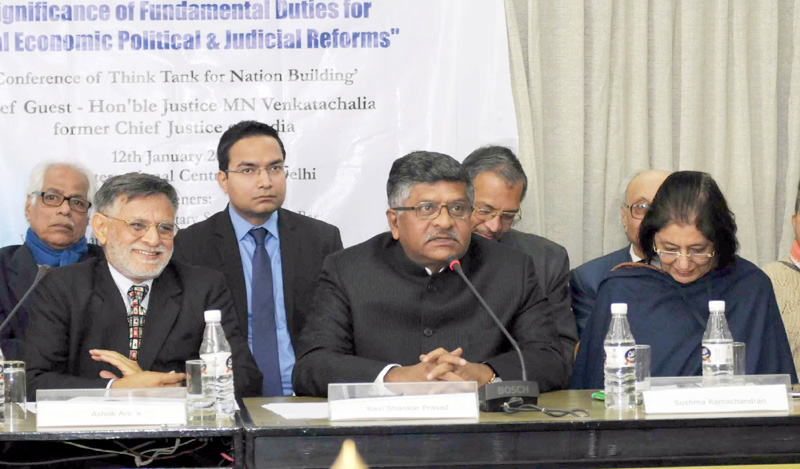
The Union Minister for Electronics & Information Technology and Law & Justice Ravi Shankar Prasad addressing the seminar jointly, organised by the PCI, IWPC and the Supreme Court Lawyers Conference, in New Delhi on January 12, 2017. (PIB Photo)

He also cited examples of Imran Khan, a mathematics teacher from a school in Alwar, Rajasthan whose mobile apps had benefitted 40 lakh children and a woman Satama Devi, a beedi worker from Telangana who had learnt how to use Skype to talk to her grandson in Dubai. “People like these are change agents. They believe in this new fast emerging India,” he noted.

The minister said that Aadhar enabled bank payments through smart phone would prove to be a “game changer” and a tool of empowerment. He said that out of 125 crore people only 3.7 crore pay taxes and 99 lakh file Income Tax returns but have no taxable income, two crore people show annual income of Rs. 6 lakh and only 24 lakh have an annual income of Rs. 10 lakh and above. The Law and IT Minister said that a panel, led by Justice Sri Krishna, had been set up to give a report within three months on making India a hub of arbitration.

Former Chief Justice of India M. N. Venkatachaliah who presided over the seminar on “Fundamental Duties and Economic and Judicial Reforms” stressed upon social evolution and education of young minds who can build a better India.