
Nepal crisis: Army deployed as death toll rises amid political turmoil

The unrest began Monday as a self-styled “Gen Z protest” against corruption, nepotism and restrictions on social media. It quickly escalated after security forces opened fire on the crowds.

By Tuesday, protesters had stormed and torched parliament, the Supreme Court and multiple government offices, including Singha Durbar – the central administrative complex. Homes of political leaders were attacked, police stations overrun, and Tribhuvan International Airport briefly closed.

In addition, media outlets and schools were set on fire, while the Ministry of Health and Population was also destroyed, including the National Health Emergency Operation Centre.

UN chief urges dialogue

UN Secretary-General António Guterres said he was “deeply saddened by the loss of life” and urged restraint, dialogue, and a thorough investigation into the violence.

“I call on the authorities to comply with human rights law,” he posted on social media late on Tuesday (New York time).

“Protests must take place in a peaceful manner, respecting life and property.”

Volatile security situation

According to media reports, the updated toll includes both protesters and police, as well as people killed in fires during the demonstrations. Many remain unaccounted for, with hospitals reporting critically injured patients.

The turmoil also triggered jailbreaks in several locations, with some inmates still at large.

Some accounts suggest demonstrations may have been infiltrated by outside actors, further complicating the volatile security environment.

Efforts to restore order

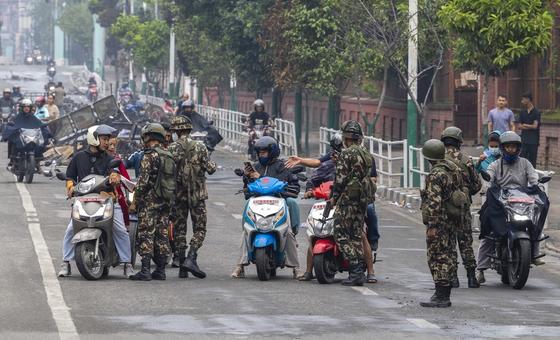
The army assumed control of nationwide security late Tuesday local time, deploying troops across the Kathmandu Valley and imposing movement restrictions to stabilise the situation.

Checkpoints were established, and people have been urged to stay home except for essential travel.

Media also reported the army recovering some of the weapons looted from police personnel, while youth groups helped apprehend escaped prisoners and return firearms. Some inmates voluntarily surrendered.

Tribhuvan International Airport has since reopened, and some police stations are back in operation.

Country at a crossroads

Even amid the chaos, some youth groups were seen clearing debris from their neighbourhoods.

Behind the immediate turmoil, talks are reportedly underway on the possible formation of an interim government to steer the country through the crisis. Discussions also include the dissolution of parliament, investigations into illegally acquired assets, and reform of key institutions.

Source link

World News in Brief: Russia-Ukraine talks, Sudan exodus worsens, Colombia displacement rises

Delegations met in Istanbul for the first direct negotiations in three years, including on a potential ceasefire and large-scale prisoner exchange.

The UN acknowledged the important role of Türkiye and the United States in facilitating the talks, said Stephanie Tremblay, a spokesperson for the global body in New York.

“We hope this process will lead to a full, immediate and unconditional ceasefire in Ukraine, which would serve as a critical step towards creating the conditions for a just, comprehensive and sustainable peace in Ukraine, in line with the UN Charter, international law and relevant UN resolutions,” she said.

Russia launched its full-scale invasion of Ukraine in February 2022 and the talks marked the first time the parties have met since the early months of the war.

Sudan exodus: Worst situation in decades, UN refugee agency warns

Tens of thousands of refugees fleeing escalating violence in Sudan continue to escape to Chad at speeds not seen since the start of the conflict two years ago, the UN refugee agency, UNHCR, said on Friday.

Many others remain trapped by heavy fighting between government and paramilitary forces.

UNHCR spokesperson Eujin Byun told UN News that 20,000 Sudanese refugees are arriving each week in eastern Chad and more than 70 per cent are victims of serious human rights violations during their journey, including assault, extortion and sexual violence.

She said the head of UNHCR’s office there has characterized this as “the worst situation he has encountered in his entire decades of career as humanitarian.”

One in two refugees who spoke to the UN agency said that they had relatives “trapped in Sudan” because they have no transport and were afraid of arbitrary arrest or forced recruitment.

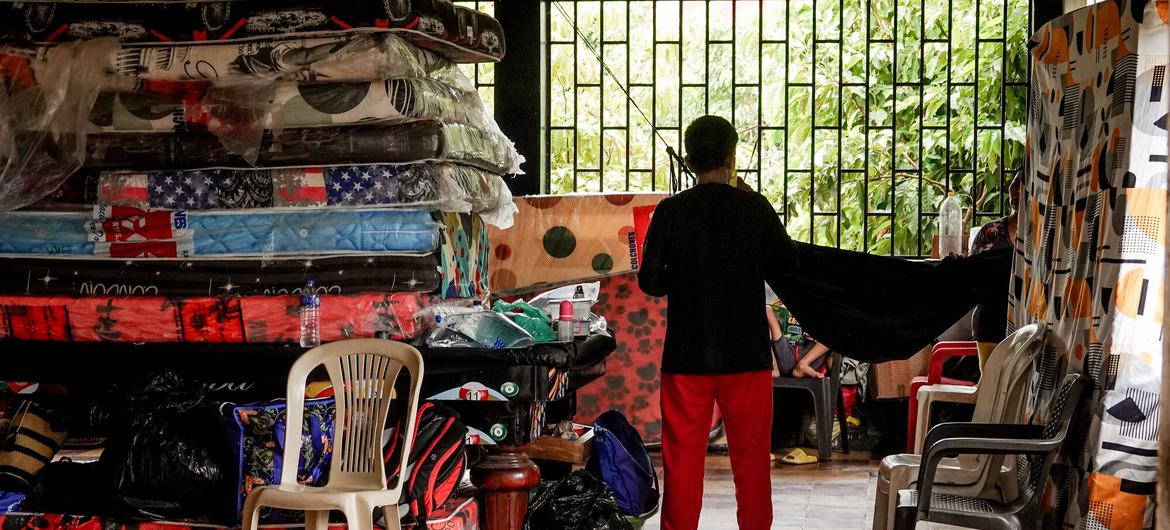
A displaced family at a temporary shelter in Catatumbo, Colombia.

Over 66,000 Colombians displaced since January 

More than 66,000 people in Colombia have been newly displaced since mid-January due to fighting between two non-State armed groups, the UN Office for the Coordination of Humanitarian Affairs (OCHA) said on Friday.

This represents a 28 per cent increase compared to the number of Colombians displaced in the entirety of last year.  

Moreover, at the end of 2024, 7.3 million people remained displaced within the country due to violence or conflict – the third largest number outside of Sudan and Syria.

In February, the UN’s Central Emergency Response Fund (CERF) allocated $3.8 million to support new displacements in Colombia. UN aid agencies have been working to distribute this aid, especially in Catatumbo which has been hardest hit by the violence.  

However, the UN estimates that humanitarians will need $342 million to fully meet the growing needs. So far, they have received only 14 per cent of this money.  

The recent deadly violence in Colombia’s Catatumbo region has highlighted the ongoing challenges in consolidating peace, eight years after the signing of the 2016 Final Peace Agreement, t

Source link