
UN envoy highlights ‘window to advance peace’ in Colombia

“At a time of tensions both globally and regionally, it is in everyone’s interest to secure lasting peace and security in Colombia,” said Miroslav Jenča, delivering his quarterly briefing. 

He said the coming year “undoubtedly provides a window to advance peace as a strategic national objective, and for Colombia and its partners to engage constructively through dialogue to address shared challenges,” particularly in the border area with Venezuela “where cooperation on all sides is essential.” 

Switch in focus 

Mr. Jenča also heads the UN Verification Mission in Colombia, and he reported on re-organization outlined in Council resolution 2798 (2025), adopted last October. 

The resolution extended the Mission’s mandate for a year and changed its focus to monitoring three provisions of the 2016 peace agreement signed by the Government and FARC-EP rebels:  

  • Comprehensive rural reform 
  • Reintegration of former combatants 
  • Security of both ex-fighters and communities in conflict-affected regions  

Previously mandated verification on transitional justice, ethnic-related issues and ceasefire monitoring was discontinued. 

Challenges in conflict areas 

Mr. Jenča has spent the past three months meeting key counterparts across Colombia who underscored that the three pillars are important for achieving peace. 

During visits to several parts of the country, he was “struck not only by the immense challenges facing communities in conflict-affected regions, but also by their resilience and determination to achieve a better future.” 

In some of the most remote areas, daily life is a struggle “due to the actions of different illegal armed actors and to the limited presence of the state, public services and development opportunities.”  

Limited opportunities  

He noted that re-integration of former combatants is essential to the success of peace agreements and ensuring their transition to civilian life is crucial to avoid a return to violence. 

“Nevertheless, nine years after the FARC-EP laid down arms under the Peace Agreement, the path has proven challenging for the over 11,000 former combatants who remain active in the government’s reintegration programme,” he said. 

 These men and women often live in remote areas with limited infrastructure, access to markets, and threats to their security.  

“For the authorities, it has also entailed major efforts, both financial and programmatic, to facilitate their transition into civilian life,” he added, noting that while substantial progress has been made but more is needed. 

‘Fertile ground’ for armed groups 

Access to land has progressed in Colombia but still needs to be fully resolved, Mr. Jenča said.  Meanwhile, security remains fragile. 

Some 487 former combatants have been killed since laying down their arms. He urged the authorities to step up investigations and prioritize security guarantees for those who signed the peace deal. 

Although violence is far lower now than at the height of the conflict, “the presence of armed groups in areas still affected by conflict continues to inflict suffering on entire communities.” 

This violence is being fuelled by a mix of factors and limited State presence “provides fertile ground for the armed groups to exert control, and for illicit economies to prevail.”  

Rise in child recruitment 

As a result, civilian populations have faced threats, killings of social leaders, forced displacement and confinement, and an alarming increase in child recruitment and use by armed groups.  

The situation in border areas is particularly complex, he said. The UN Mission’s team in Cúcuta, a city on the border with Venezuela, supports response to continuing clashes between rival armed groups. 

Thousands of civilians have been have forced to flee their homes in the Catatumbo region, which he described as “a hub of coca cultivation and cross-border armed activities and criminality.”  

‘Holistic vision’ for peace 

Mr. Jenča insisted that the Peace Agreement can significantly contribute to addressing many of these problems. 

“It offers a much-needed holistic vision, by providing for the strengthening of the State’s capacity to dismantle criminal structures, to promote alternatives to coca cultivation and concrete development measures through its comprehensive rural reform,” he said.  

Source link

UN envoy urges Colombia to ‘stay the course’ as peace faces new strains

Briefing the Security Council for the last time as head of the UN Verification Mission, Special Representative Carlos Ruiz Massieu said the peace agreement provided a roadmap for addressing the root causes of conflict.

The Final Peace Agreement of 2016 set out the path to be followed: a holistic and comprehensive roadmap for addressing deep-rooted structural issues that have driven violence in Colombia for decades,” he told ambassadors.

He cited progress in land reform, rural development, the reintegration of more than 13,000 former combatants, the start of a “complex journey” for truth and reconciliation and opening of political space.

Today, Colombia is a very different country from that it was in the years prior to the signing of the peace agreement,” he added, noting, however, that gaps and challenges remain.

SRSG Ruiz Massieu briefs the Security Council.

Violence persists

Chief among these is the limited presence of civilian and military state institutions in various regions of the country where existing peace dividends remain inadequate and violence persists, including against social leaders and ex-combatants.

At least 472 former fighters have been killed since 2016, four in recent weeks alone, Mr. Ruiz Massieu said, urging measures to strengthen their protection and ensure accountability.

It is also essential to achieve effective complementarity between peacebuilding policies, security strategies and efforts to combat illicit economies,” he added.

Painful moments revived

Mr. Ruiz Massieu highlighted progress on opening political space, noting “a widespread rejection of political violence”, but warning that the attempted assassination of presidential candidate Miguel Uribe in June revived painful memories and underscored the need to remove violence from electoral competition.

To address persistent insecurity, he urged full implementation of security guarantees alongside rural development programmes and strategies to combat illicit economies.

“Expanded and sustained state presence remains essential,” he said, stressing the need for coordinated investments in conflict-prone regions.

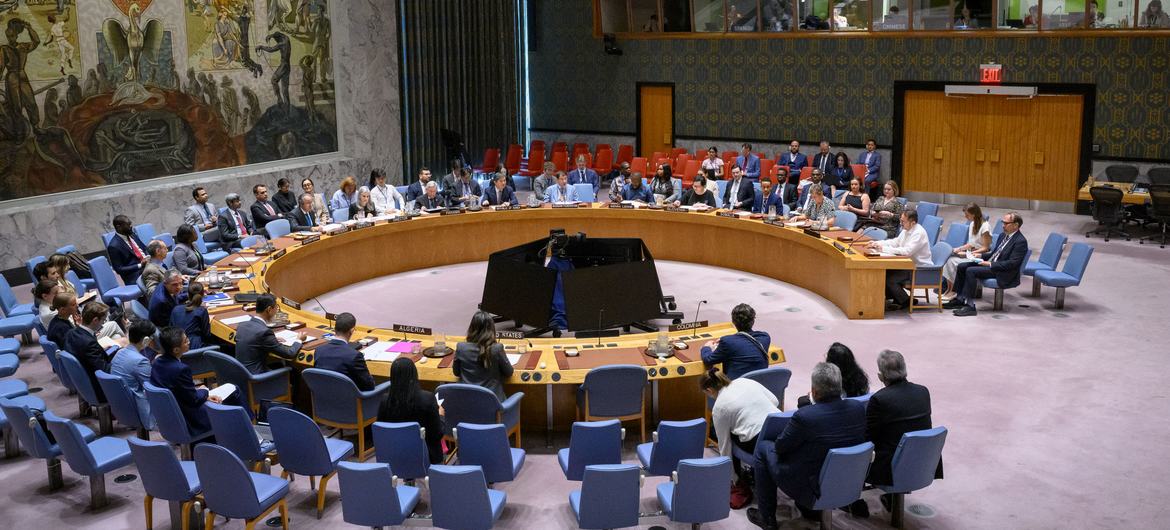
A wide view of the Security Council meeting on the UN Verification Mission in Colombia (UNVMC).

Upcoming elections

The briefing also comes as Colombia enters a sensitive period leading to elections next year.

Mr. Ruiz Massieu appealed to all actors to uphold commitments for a peaceful campaign and to advance the comprehensive vision of the 2016 accord, which includes provisions for women as well as Afro-Colombian and Indigenous communities.

In their pursuit of peace, Colombians have a deeply rooted history of resilience and persistence,” he said. “Sometimes their efforts have not yielded the expected results, but other times, thanks to patience and perseverance, they have achieved significant progress.

Path to peace is never easy

The path to peace is never easy, nor is it free of obstacles. But, staying the course is always worthwhile,” he concluded. “The 2016 peace agreement is a striking example of this.”

Mr. Ruiz Massieu, who has led the mission for more than six years, will soon assume duties as the Special Representative of the UN Secretary-General for Haiti.

He thanked the Council for its “consistent and crucial” support, adding that the UN mission’s role in fostering trust “will remain as important as ever in the period ahead”.
Source link

World News in Brief: Russia-Ukraine talks, Sudan exodus worsens, Colombia displacement rises

Delegations met in Istanbul for the first direct negotiations in three years, including on a potential ceasefire and large-scale prisoner exchange.

The UN acknowledged the important role of Türkiye and the United States in facilitating the talks, said Stephanie Tremblay, a spokesperson for the global body in New York.

“We hope this process will lead to a full, immediate and unconditional ceasefire in Ukraine, which would serve as a critical step towards creating the conditions for a just, comprehensive and sustainable peace in Ukraine, in line with the UN Charter, international law and relevant UN resolutions,” she said.

Russia launched its full-scale invasion of Ukraine in February 2022 and the talks marked the first time the parties have met since the early months of the war.

Sudan exodus: Worst situation in decades, UN refugee agency warns

Tens of thousands of refugees fleeing escalating violence in Sudan continue to escape to Chad at speeds not seen since the start of the conflict two years ago, the UN refugee agency, UNHCR, said on Friday.

Many others remain trapped by heavy fighting between government and paramilitary forces.

UNHCR spokesperson Eujin Byun told UN News that 20,000 Sudanese refugees are arriving each week in eastern Chad and more than 70 per cent are victims of serious human rights violations during their journey, including assault, extortion and sexual violence.

She said the head of UNHCR’s office there has characterized this as “the worst situation he has encountered in his entire decades of career as humanitarian.”

One in two refugees who spoke to the UN agency said that they had relatives “trapped in Sudan” because they have no transport and were afraid of arbitrary arrest or forced recruitment.

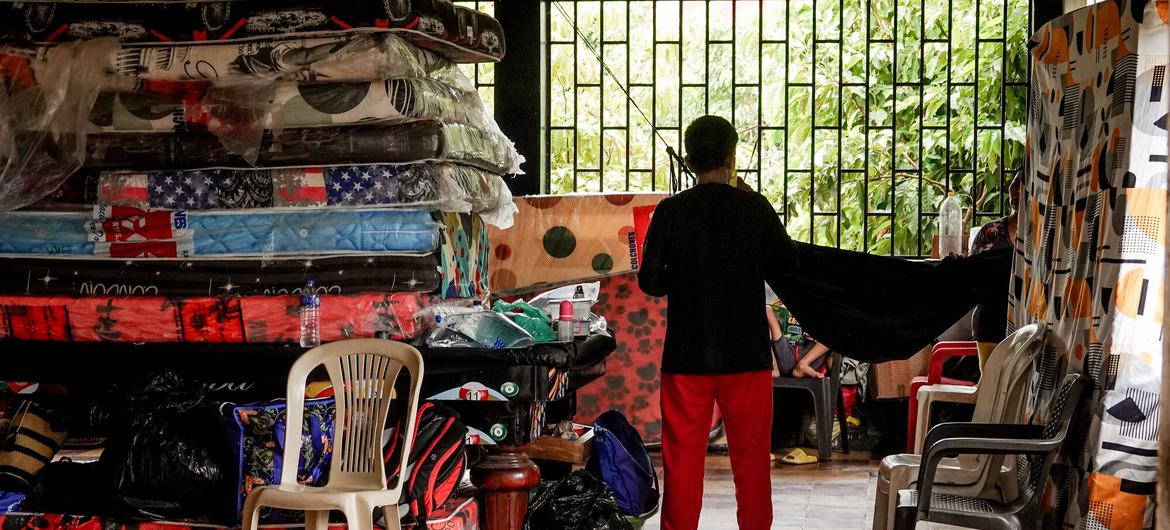
A displaced family at a temporary shelter in Catatumbo, Colombia.

Over 66,000 Colombians displaced since January 

More than 66,000 people in Colombia have been newly displaced since mid-January due to fighting between two non-State armed groups, the UN Office for the Coordination of Humanitarian Affairs (OCHA) said on Friday.

This represents a 28 per cent increase compared to the number of Colombians displaced in the entirety of last year.  

Moreover, at the end of 2024, 7.3 million people remained displaced within the country due to violence or conflict – the third largest number outside of Sudan and Syria.

In February, the UN’s Central Emergency Response Fund (CERF) allocated $3.8 million to support new displacements in Colombia. UN aid agencies have been working to distribute this aid, especially in Catatumbo which has been hardest hit by the violence.  

However, the UN estimates that humanitarians will need $342 million to fully meet the growing needs. So far, they have received only 14 per cent of this money.  

The recent deadly violence in Colombia’s Catatumbo region has highlighted the ongoing challenges in consolidating peace, eight years after the signing of the 2016 Final Peace Agreement, t

Source link