M23 rebels: UN sees progress in talks but warns violence persists

Qatar is facilitating discussions between the Congolese government and the M23 armed group, which controls large areas of North Kivu and South Kivu provinces.

The latest developments follow months of intense fighting that has displaced civilians and destabilised the region.

However, the UN warns that despite diplomatic momentum, the security situation on the ground remains volatile.

M23, also known as the March 23 Movement, controls large areas of North Kivu and South Kivu provinces. In January 2025, after a rapid offensive, the group seized Goma, the capital of North Kivu. 

Weeks later, it captured Bukavu, the capital of South Kivu. Since then, the rebels have set up parallel administrations in areas under their control. The UN says the group is supported by the Rwandan armed forces, an allegation Kigali has repeatedly denied.

© MONUSCO/Sylvain Liechti

Uvira, a major city in South Kivu on the shores of Lake Tanganyika, Democratic Republic of the Congo. (file)

Framework agreement

On 2 February, the Congolese authorities and M23 signed a document setting out the terms of reference for a ceasefire monitoring and verification mechanism under the Doha Framework Agreement, signed in November 2025. The Doha talks are being mediated by Qatar.

Separate discussions have also taken place between the DRC and Rwanda, with mediation by the United States. 

In December, Presidents Félix Tshisekedi of the DRC and Paul Kagame of Rwanda signed the Washington Agreements, raising hopes of an end to the fighting. However, the UN says the security situation at the start of this year remains volatile and continues to deteriorate.

Immediate ceasefire call

Against this backdrop, the UN peacekeeping mission in the DRC, known as MONUSCO, has renewed its call for an immediate cessation of hostilities. 

It recalled that a UN Security Council resolution adopted last year authorises the Mission to support the implementation of a permanent ceasefire, including through technical and logistical assistance to a regional verification mechanism.

“MONUSCO stands ready to support a credible ceasefire monitoring and verification mechanism within the limits of its mandate as defined by the Security Council and in full respect of the sovereignty of the Democratic Republic of Congo,” said Vivian van de Perre, the Deputy Special Representative of the Secretary-General and Acting Head of MONUSCO.

“The Mission will continue to engage constructively with relevant stakeholders within the established ceasefire architecture and to communicate transparently on the scope and modalities of its support,” she added.

‘Positive signal’ from Doha

Speaking to UN News, MONUSCO spokesperson Ndeye Khady Lo described the progress in Doha as “a positive signal” that helps make “the ceasefire architecture more concrete and operational”.

She said an initial team of UN peacekeepers would be deployed to the town of Uvira, in South Kivu, to support the monitoring mechanism. 

MONUSCO stressed, however, that this would not mark a permanent return to the province, which the Mission left in June 2024, but a limited and strictly defined role linked to the ceasefire process.

Source link

Gaza reconstruction talks must not distract from massive needs, say UN aid agencies

Briefing journalists, Juliette Touma, Director of Communications at UNOPS, the United Nations Office for Project Services highlighted that although the 3 October ceasefire agreement had brought some respite to families, “people continue to be killed, day in, day out”.

“It’s absolutely critical to unlock the congestion…at crossing points and to reopen critical lifelines like the Jordan corridor,” said Touma.

She said that Gaza’s highly vulnerable people simply “cannot wait” for a reconstruction plan to take shape – one of the stated aims of the US-led Board of Peace. “They need supplies at the same time, it’s not just the services,” she stressed.

UNRWA commitment

Echoing those concerns, the UN agency for Palestinians, UNRWA, underscored its key and longstanding role in the Occupied Palestinian Territories, including Gaza. This mission was entrusted to UNRWA by UN Member States at the global body’s General Assembly in December 1949.

“We are the largest United Nations agency operating in the Gaza Strip,” said Jonathan Fowler, UNRWA Senior Communications Manager. “We must be able to continue doing our work; that’s crystal clear.”

Board of Peace

While it has yet to be made clear exactly how the UN will support Board of Peace launched by President Trump at Davos on Thursday, last November’s Security Council resolution 2803 that welcomed its creation highlighted the importance of working with “cooperating organizations” including the United Nations.

“We are very strongly committed to do whatever we can to ensure the full implementation of Security Council Resolution 2803,” said Alessandra Vellucci, Director, UN Information Service, Geneva. “There is a role for the UN there about the UN leading on humanitarian aid delivery, which we have been doing for such a long time and we will continue to do the best of our capacities.”

Since Sunday, humanitarian partners providing emergency shelter assistance have reached over 13,000 households in Gaza, distributing hundreds of tents and thousands of tarpaulins, aid coordination office, OCHA, said in its latest update.

Gaza distribution obstacles remain

The UN office noted that “capacity and funding constraints” have limited support to only around 40 per cent of the existing 970 displacement sites across the Strip.

Healthcare needs remain enormous across Gaza, too, where providers such as UNRWA try to help around 15,000 patients a day, despite numerous challenges.

“We had 22 clinics operating across the Gaza Strip before the start of the war, we’re now down to half a dozen,” said Mr. Fowler. “And we have mobile health teams that operate, but in incredibly complicated circumstances.”

A number of UNRWA facilities are located behind the so-called Yellow Line – a series of concrete blocks installed by the Israeli authorities which separates Gazans from the Israel Defense Forces – envisaged in the three-step Gaza peace plan.

“That makes it incredibly difficult to do our work and so many of our locations have been heavily damaged or indeed completely destroyed,” Mr. Fowler continued. “On top of that, we remain banned by the Israeli authorities from bringing in any of our own supplies.”

UNRWA premises ‘stormed’

Turning to the destruction of UNRWA’s headquarters in East Jerusalem on Tuesday, Mr. Fowler described how visiting diplomats had been caught up in the dramatic events when Israeli forces “stormed and demolished” buildings in the compound and fired tear gas. “This is a United Nations compound, so this is an attack on the United Nations,” he told journalists.

Highlighting concerns that the UNRWA-supported Kalandia Training Centre could be shut down “within days”, Mr. Fowler explained that it principally helped lower-income families to earn the skills they needed to earn a living: “If the centre were to be forcibly closed – and we do fear that this could happen within days – there is no educational alternative for these students.”

The UN agency remains deeply worried about developments in the occupied West Bank, one year since the Israeli forces launched operation Iron Wall. “This led to the mass displacement of people from three camps in the north of the West Bank,” Mr. Fletcher explained, in reference to Jenin, Nur Shams and Tulkarem refugee settlements.

“The camps are progressively being demolished by the Israeli military. So therefore, changing the facts on the ground, changing the topography and the demography of these large communities,” Mr. Fowler insisted.

At-risk mountain vipers and iguanas, in rare company at key wildlife talks

Ethiopian mountain vipers, Galapagos iguanas and Brazil’s Pernambuco tree – prized by violin bow-makers – and are just three of the more than 30 species that could be listed for special protection under the Convention on International Trade in Endangered Species of Wild Fauna and Flora (CITES).

“Because the trade in wild animals and plants crosses borders between countries, the effort to regulate it requires international cooperation to safeguard certain species from over-exploitation,” CITES said in a statement.

Today, the Convention covers the trade of more than 40,000 species of wild animals and plants. States parties to CITES can add more species by submitting proposals which are considered at meetings held every three years. 

“The proposals to be discussed highlight how scientists continue to address conservation and sustainable use across species that are not only biologically unique, but also culturally, economically and ecologically significant,” said Thea Carroll, CITES Secretariat Science Unit Chief, speaking in Geneva.

The final proposals slated for discussion in the Uzbek city of Samarkand include a range of perennially endangered wildlife such as elephants and rhinos, along with what must surely be the latest CITES pin-up candidate, the Golden-bellied mangabey monkey. 

Additional protection requests alongside these natural born charmers include arguably less obvious candidates, including the giant Galli wasp – all 32 centimetres of it – moths, frogs, sea cucumber, abalone and other commercially exploited aquatic species.

It’s been 50 years since the CITES convention entered into force, although it was originally conceived a decade earlier at a meeting of the International Union for Conservation of Nature. 

The Convention is just one of several international accords aimed at protecting the planet’s biodiversity. It specifically addresses regulation of the international wildlife trade that’s estimated to be worth billions of dollars and to include hundreds of millions of plant and animal specimens.

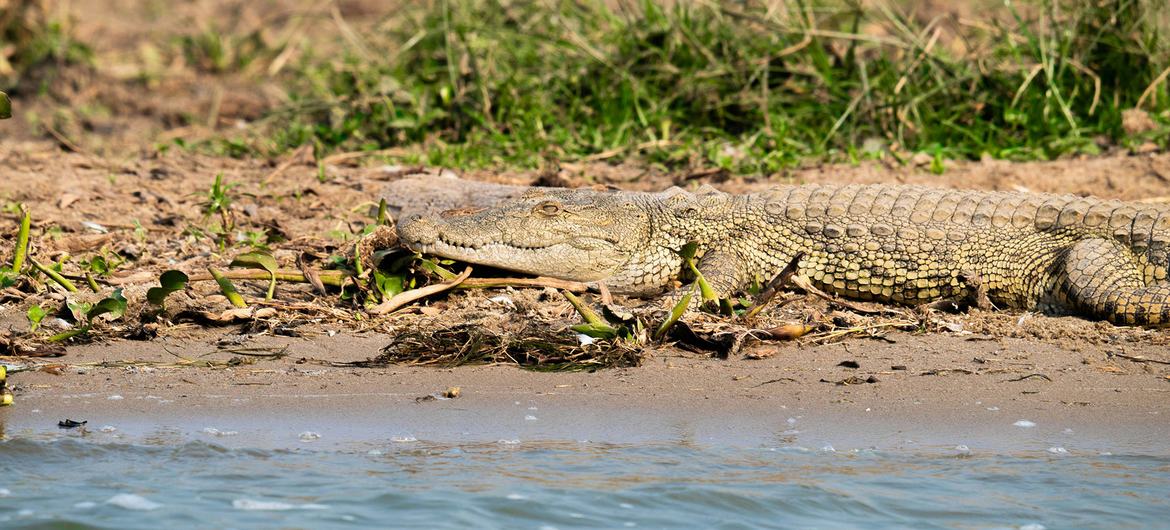
A young Nile crocodile rests on the riverbank by the Kazinga channel in Uganda.

Success stories

The Convention has been behind conservation success stories including the South American vicuña – a small camel – and the Nile crocodile. 

Their survival was assured when CITES supported national efforts to turn their wool and skins respectively into valuable and sustainably managed commodities that benefit local communities.

Overexploitation for international trade presents a major threat to wildlife but other risk factors include disease, pollution, a loss of habitat or the fragmentation of habitats.

Who protects the protectors

The fundamental biodiversity protection role played by CITES has not shielded it from a dire funding crisis for multilateral work everywhere, warned the organization’s Secretary-General, Ivonne Higuero.

“We’re all struggling,” she told journalists in Geneva. “All the entities of the UN are struggling right now with budgetary issues. There’s a falling of contributions from the Member States, from our Parties, and this is becoming very difficult for us to be able to operate.”

Ms. Higuero added: “We have not been receiving the expected contributions from the parties that have that is assessed according to the UN scale and of course we have arrears and payments. So this is one of the things that we will also be discussing.”

Explainer: What is CITES?

  • CITES is a UN-backed treaty that regulates the global trade of wildlife to ensure the sustainability of species and their prevention from extinction. CITES is short for the Convention on International Trade in Endangered Species of Wild Fauna and Flora.
  • The international agreement brings together 185 States Parties and is one of the world’s most powerful conservation tools. It marks its 50th anniversary this year at its 20th meeting (COP20) in Samarkand, Uzbekistan, beginning 24 November.

Key CITES facts:

  • Scope: The treaty provides protection for more than 40,000 species of animals and plants.
  • Goal: To make wildlife trade legal, sustainable and traceable.
  • How it works: Species are listed in “Appendices” I and II, based on the level of threat they face.
  • Meetings: Parties meet every three years to vote on new rules and listings in the Appendices. Appendix I includes species threatened with extinction and commercial trade is generally prohibited; Appendix II covers species not yet endangered but which risk becoming so without regulation.
  • Success story: Conservation works – the Guadalupe fur seal, once reduced to just 200 animals, today numbers more than 34,000.
  • Global reach: CITES works in conjunction with other UN bodies and treaties to advance biodiversity goals, sustainable livelihoods and implementation of the Kunming‑Montreal Global Biodiversity Framework. Find out more here:
‘The world is watching’: Guterres and Lula urge unity as COP30 talks near deadline

Amid reports of deadlocks on fossil fuels, climate finance and other key issues, both leaders urged negotiators to act decisively on phasing out fossil fuels and boosting adaptation finance, insisting that fairness and ambition must guide the final hours of COP30.

Guterres: 1.5°C is the ‘non-negotiable red line’

Speaking to reporters on Thursday, Mr. Guterres urged countries to “follow the science and put people before profit,” calling for tripling adaptation finance and credible emissions cuts. “Ministers and negotiators must show leadership, boldness and good faith,” he said, stressing that 1.5°C remains “the only non-negotiable red line.”

He warned that an agreement must balance concerns over adaptation resources with the need to curb soaring emissions. For millions, he said, adaptation means “the difference between replanting or going hungry, between remaining on ancestral land or losing it forever.”

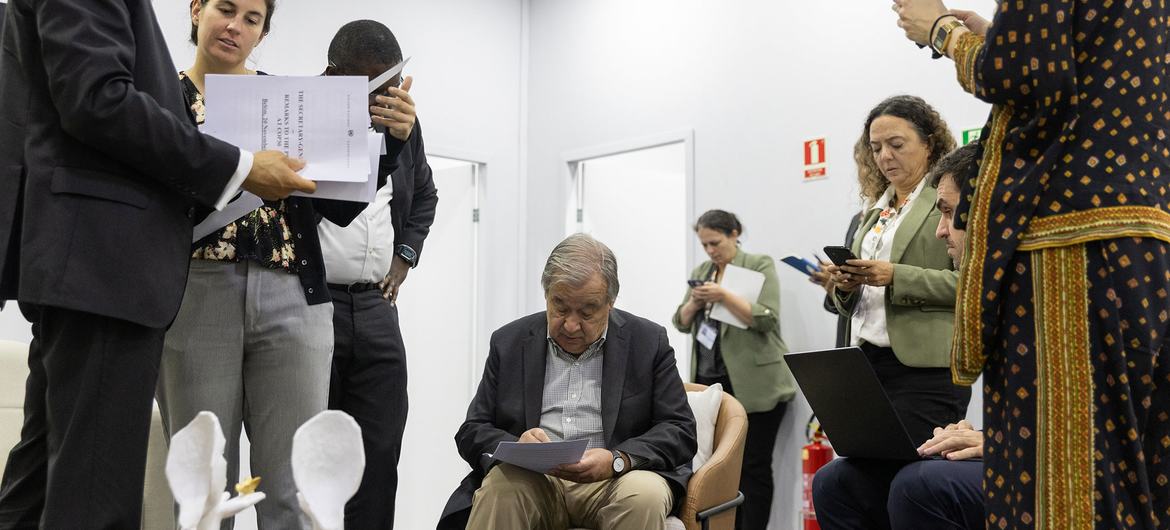
The UN Secretary-General António Guterres (centre) reviews documents with his colleagues at the UN Climate Conference in Brazil.

On fossil fuels, the UN chief called for a “just, orderly and equitable” transition, as agreed at COP28. “There can be no solution if there is not, at the same time, a just transition from fossil fuels to renewable energy,” he said, urging an end to “market distortions that favour fossil fuels” and disinformation “designed to sabotage the transition.”

A few hours after the Secretary-General’s press briefing, a fire broke out in a pavilion at the COP30 venue in Belém, forcing evacuations and briefly disrupting tense negotiations. Brazilian and UN security teams assisted in clearing the area. The blaze was quickly brought under control, and no injuries were reported. The cause of the fire was not immediately known. More here.

Lula: ‘We must start thinking about how to live without fossil fuels’

At a press conference Wednesday night, President Lula said any roadmap for the energy transition “must be taken seriously.” Brazil introduced the idea of a roadmap, he explained, “because we need to show society that we are serious. We do not want to impose anything on anyone, nor set deadlines. Each country must decide what it can do within its own timeframe and capacities.”

He added: “If fossil fuels generate [a majority of greenhouse] emissions, we must start thinking about how to live without them – and how to build that path. And I say this very comfortably, as the leader of a country that has oil, that extracts five million barrels a day.”

President Lula highlighted Brazil’s use of ethanol and biodiesel and called for oil companies, mining firms and the “super-rich” to contribute their share. He urged multilateral banks to stop charging “exorbitant interest rates” to African nations and the poorest countries in Latin America, converting part of those debts into investments.

The President praised public engagement at COP30, noting the 15 November ‘Peoples March’ was “exceptionally beautiful and orderly,” and celebrated record participation of 3,500 Indigenous people and “full participation” of women.

UN News is reporting from Belém, bringing you front-row coverage of everything unfolding at COP30.

Plastic pollution talks adjourn, but countries want to stay engaged: UNEP chief

“This has been a hard-fought 10 days against the backdrop of geopolitical complexities, economic challenges and multilateral strains,” said Inger Andersen, Executive Director of the UN Environment Programme (UNEP). “However, one thing remains clear: despite these complexities, all countries clearly want to remain at the table.”   

Speaking to media at the end of Intergovernmental Negotiating Committee (INC) talks at the UN in the Swiss city, Ms. Andersen emphasized how Member States had expressed a clear wish to continue engaging in the process, recognising their significant differences regarding plastic pollution.

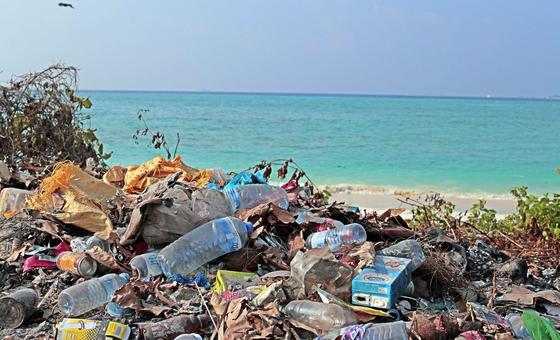
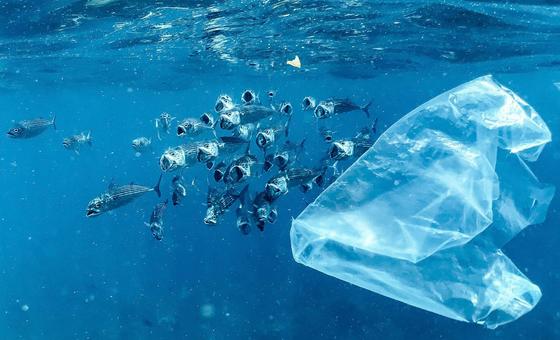
“While we did not land the treaty text we hoped for, we at UNEP will continue the work against plastic pollution – pollution that is in our groundwater, in our soil, in our rivers, in our oceans and yes, in our bodies,” she said.

World view

“People are demanding a treaty,” the UN agency head continued, before underscoring the hard work that lies ahead to maintain the momentum needed to ink a binding international accord.

Delegates from 183 nations attested to the convening power and importance of the proposed agreement, with some Pacific island representatives – complete with dazzling fresh blooms in their hair – rubbing shoulders with other participants, drained by the final all-night negotiating session.

The resumed fifth session of talks – referred to as INC-5.2, after previous talks in Busan known as INC-5.1 – gathered more than 2,600 participants at the UN Palais des Nations. In addition to the approximately 1,400 country delegates, there were close to 1,000 observers representing at least 400 organizations.

NGO voices heard

The session also involved the active participation of civil society – including Indigenous Peoples, waste pickers, artists, young people and scientists. They raised their voices through protests, art installations, press briefings and events in and around the Palace of Nations.

The goal of the negotiations was to agree on a text for the legally binding instrument to end plastic pollution “and highlight unresolved issues requiring further preparatory work ahead of a diplomatic conference”, UNEP said.

In addition to meetings together in UN Geneva’s vast assembly hall, four contact groups were created to tackle key issues including plastic design, chemicals of concern, production caps, finance and compliance instruments.

Despite “intensive engagement”, Members of the Intergovernmental Negotiating Committee was unable to reach consensus on the proposed texts, UNEP explained.

Chair’s action call

“Failing to reach the goal we set for ourselves may bring sadness, even frustration. Yet it should not lead to discouragement. On the contrary, it should spur us to regain our energy, renew our commitments, and unite our aspirations,” said INC Chair, Luis Vayas Valdivieso.

“It has not happened yet in Geneva, but I have no doubt that the day will come when the international community will unite its will and join hands to protect our environment and safeguard the health of our people.” 

The INC process began in March 2022 when the UN Environment Assembly passed resolution 5.2 to develop an international legally binding instrument on plastic pollution, including in the marine environment.   

“As this session concludes, we leave with an understanding of the challenges ahead and a renewed and shared commitment to address them,” said Jyoti Mathur-Filipp, Executive Secretary of the INC Secretariat. “Progress must now be our obligation.”  

Source link

The final straw? Plastic pollution talks get underway in Geneva

Unless an international accord is inked, plastic waste is projected to triple by 2060, causing significant damage – including to our health – according to the UN Environment Programme (UNEP).

The UNEP-led talks follow a decision in 2022 by Member States to meet and develop an international legally binding instrument to end the plastic pollution crisis, including in the marine environment, within two years.

The scale of the problem is massive, with straws, cups and stirrers, carrier bags and cosmetics containing microbeads just a few of the single-use products ending up in our oceans and landfill sites.

Supporters of a deal have compared it to the Paris Climate Accord in terms of its significance. They have also pointed to the pressure allegedly being brought to bear against a deal by petrostates, whose crude oil and natural gas provide the building blocks of plastics.

“We will not recycle our way out of the plastic pollution crisis: we need a systemic transformation to achieve the transition to a circular economy,” UNEP Executive Director Inger Andersen has insisted.

Circular argument

The aim of the deal is for it to encompass the full life cycle of plastics, from design to production and disposal “to promote plastic circularity and prevent leakage of plastics in the environment”, according to the text being used to guide the talks of the Intergovernmental Negotiating Committee (INC) gathering in the Swiss city.

At 22 pages, the INC document contains 32 draft articles which will be discussed line by line. The text is designed to shape the future instrument and will serve as a starting point for negotiations.

10-day stint

For 10 days from 5-14 August, delegations from 179 countries are due to pore over the INC text as they meet at UN Geneva, alongside more than 1,900 other participants from 618 observer organizations including scientists, environmentalists and industry representatives.

A key aim of the meeting is to share tried and tested ways of reducing plastic use such as non-plastic substitutes and other safer alternatives.

Ahead of the talks in Geneva, the respected medical journal The Lancet published a warning that the materials used in plastics cause extensive disease “at every stage of the plastics life cycle and at every stage of human life”.

According to more than two dozen health experts cited in the journal, infants and young children are particularly vulnerable. “Plastics are a grave, growing, and under-recognized danger to human and planetary health” and are responsible for health-related economic losses exceeding $1·5 trillion annually”, it noted.

To follow the plastic pollution talks live on UN Web TV, click here: https://webtv.un.org/en/asset/k16/k16cqrvu2w 

Leading the talks in Geneva is Jyoti Mathur-Filipp, Executive Secretary of the Intergovernmental Negotiating Committee (or the INC) on Plastic Pollution, and Head of the INC Secretariat.

“In 2024 alone, humanity was projected to consume over 500 million tonnes of plastic. Of this, 399 million tonnes will become waste,” she said.

Latest forecasts indicate that plastic leakage into the environment will grow 50 per cent by 2040. “The cost of damages from plastic pollution could rise as high as a cumulative $281 trillion between 2016 and 2040,” she maintained. 

The road to an international accord:

Five negotiation sessions towards a plastics treaty have taken place so far:

  • The first was in Uruguay in November 2022.
  • Two more followed in 2023 – in France and Kenya.
  • In April 2024, the Intergovernmental Negotiating Committee (INC) convened in Canada.
  • Most recently, discussions took place in Busan, Republic of Korea, at the end of last year. These talks were adjourned after delegations agreed to resume discussions in Geneva, under the leadership of the Chair of the Committee, Ambassador Luis Vayas Valdivieso of Ecuador.

Source link

UN chief reports progress in Cyprus talks, urges swift implementation of trust measures

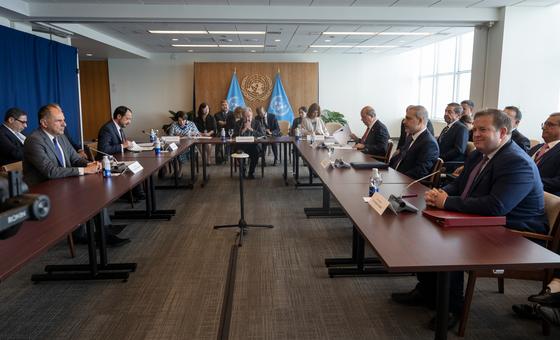
Mr. Guterres was speaking to reporters after hosting Greek Cypriot leader Nikos Christodoulides and Turkish Cypriot leader Ersin Tatar at the UN Headquarters in New York.

Today’s discussions were constructive. Both leaders reviewed the progress on the six initiatives they agreed to in March to build trust,” he said.

Out of these six initiatives, four have been achieved: the creation of a technical committee on youth, initiatives on the environment and climate change, restoration of cemeteries, and an agreement on demining that will be closed once the final technical details are established.

“And discussions will continue on the remaining two,” the UN chief added, referring to the opening of four crossing points on the divided island and solar energy in the buffer zone.

New initiatives

In addition, the leaders reached a common understanding on new initiatives, including a consultative body for civil society engagement, exchanging cultural artifacts, improving air quality monitoring, and addressing microplastic pollution.

It is critical to implement these initiatives – all of them – as soon as possible for the benefit of all Cypriots,” Mr. Guterres said.

The Secretary-General also confirmed that he will meet both leaders again during the UN General Assembly’s high‑level week in September. Another informal meeting in the same format is planned later this year.

A long road ahead

There’s a long road ahead. And it is important to think about what the future can mean – for all Cypriots,” he said.

But these steps clearly demonstrate a commitment to continuing a dialogue on the way forward and working on initiatives that benefit all Cypriots,” he added.

Secretary-General Guterres speaks to the media at the UN Headquarters, in New York.

Supporting dialogue

The United Nations has been playing a central role in efforts towards a comprehensive and mutually acceptable settlement to the Cyprus issue, supporting dialogue between Greek Cypriot and Turkish Cypriot leaders.

While sufficient common ground has not been found to allow for the resumption of formal negotiations, engagement towards that end continues – including informal meetings convened by the Secretary-General and other top UN officials.

Meanwhile, the UN Peacekeeping Force in Cyprus (UNFICYP), deployed since 1964, remains on the ground, helping to maintain stability across the island.

Source link

World News in Brief: Russia-Ukraine talks, Sudan exodus worsens, Colombia displacement rises

Delegations met in Istanbul for the first direct negotiations in three years, including on a potential ceasefire and large-scale prisoner exchange.

The UN acknowledged the important role of Türkiye and the United States in facilitating the talks, said Stephanie Tremblay, a spokesperson for the global body in New York.

“We hope this process will lead to a full, immediate and unconditional ceasefire in Ukraine, which would serve as a critical step towards creating the conditions for a just, comprehensive and sustainable peace in Ukraine, in line with the UN Charter, international law and relevant UN resolutions,” she said.

Russia launched its full-scale invasion of Ukraine in February 2022 and the talks marked the first time the parties have met since the early months of the war.

Sudan exodus: Worst situation in decades, UN refugee agency warns

Tens of thousands of refugees fleeing escalating violence in Sudan continue to escape to Chad at speeds not seen since the start of the conflict two years ago, the UN refugee agency, UNHCR, said on Friday.

Many others remain trapped by heavy fighting between government and paramilitary forces.

UNHCR spokesperson Eujin Byun told UN News that 20,000 Sudanese refugees are arriving each week in eastern Chad and more than 70 per cent are victims of serious human rights violations during their journey, including assault, extortion and sexual violence.

She said the head of UNHCR’s office there has characterized this as “the worst situation he has encountered in his entire decades of career as humanitarian.”

One in two refugees who spoke to the UN agency said that they had relatives “trapped in Sudan” because they have no transport and were afraid of arbitrary arrest or forced recruitment.

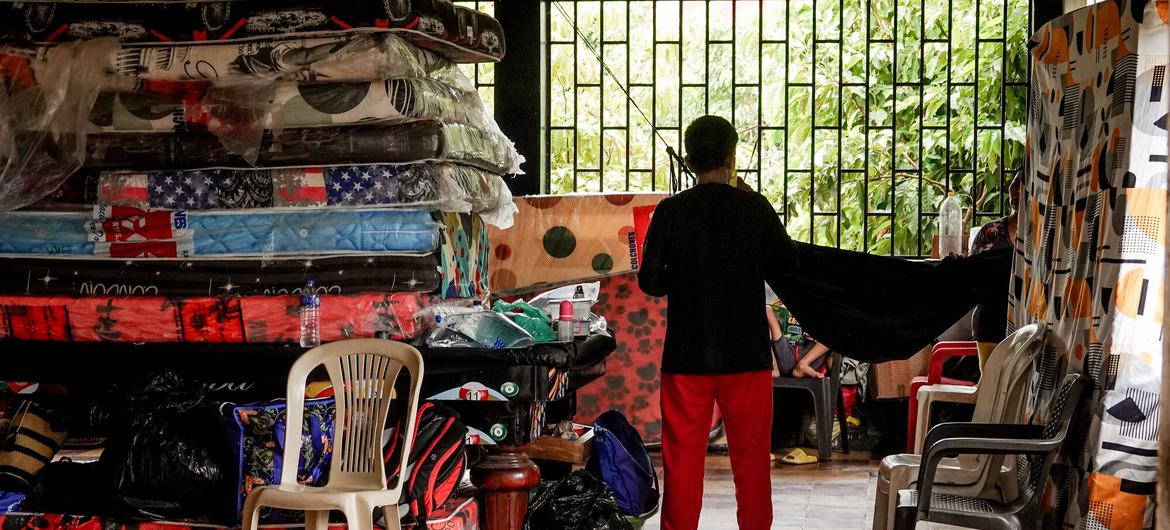
A displaced family at a temporary shelter in Catatumbo, Colombia.

Over 66,000 Colombians displaced since January 

More than 66,000 people in Colombia have been newly displaced since mid-January due to fighting between two non-State armed groups, the UN Office for the Coordination of Humanitarian Affairs (OCHA) said on Friday.

This represents a 28 per cent increase compared to the number of Colombians displaced in the entirety of last year.  

Moreover, at the end of 2024, 7.3 million people remained displaced within the country due to violence or conflict – the third largest number outside of Sudan and Syria.

In February, the UN’s Central Emergency Response Fund (CERF) allocated $3.8 million to support new displacements in Colombia. UN aid agencies have been working to distribute this aid, especially in Catatumbo which has been hardest hit by the violence.  

However, the UN estimates that humanitarians will need $342 million to fully meet the growing needs. So far, they have received only 14 per cent of this money.  

The recent deadly violence in Colombia’s Catatumbo region has highlighted the ongoing challenges in consolidating peace, eight years after the signing of the 2016 Final Peace Agreement, t

Source link

South Korea Engages U.S. Over Tariff Concerns

The South Korean government is actively engaging with the U.S. to address trade uncertainties stemming from new tariff measures, Trade Minister Cheong In-kyo said Thursday.

During a meeting with top industry think tanks—including Samsung, Hyundai, POSCO, and LG—Cheong emphasized the importance of coordinated efforts to navigate U.S. protectionist policies under President Trump.

The U.S. is reportedly considering tariffs on steel, aluminum, and automobiles, raising concerns among its trading partners.

“We are maintaining direct communication channels with the U.S. to mitigate risks and help domestic industries adjust to these evolving trade policies,” Cheong said, calling for stronger industry-government collaboration.

Deputy Trade Minister Park Jong-won is currently in Washington, holding discussions with U.S. officials on the potential impact of Trump’s trade agenda on South Korean industries.

Meanwhile, consumer sentiment in South Korea surged to its highest level in nearly four years, driven by expectations of political stability following recent turmoil. The Bank of Korea’s consumer sentiment index rose to 95.2 in February, marking the largest gain since June 2021.

Bangladesh Coast Guard Visits India

The Indian Coast Guard welcomed a four member delegation led by Director General, Bangladesh Coast Guard Rear Admiral Aurangzeb Chowdhury who are on a three day visit to India.
In addition to meeting senior officials in the Ministry of Defence, the delegation will also be discussing issues of mutual cooperation in the field of maritime law enforcement, maritime Search & Rescue and marine pollution response with an Indian Coast Guard delegation headed by Director General Indian Coast Guard Shri Rajendra Singh.
The Bangladesh Coast Guard delegation will also travel to Mumbai and Kolkata for visiting ICG facilities and conducting discussions on operational issues with Coast Guard Commander (Western Seaboard) and Commander Coast Guard Region (North East), respectively.