Spain and Brazil push global action to tax the super-rich and curb inequality

Presented during the UN’s 4th International Conference on Financing for Development, taking place this week in Sevilla, the proposal highlights a growing problem: the richest individuals often contribute less to public finances than ordinary taxpayers, thanks to lower effective tax rates and legal loopholes.

“Our countries need more and more public revenues to meet their needs. Inequality is a problem everywhere, and the richest pay less than the middle class – even less than lower-income taxpayers,” said Spain’s Secretary of State for Finance Jesús Gascón, during a press conference at the conference venue, where temperatures have soared to record highs in recent days.

The two governments are calling on others to join a drive for a fairer, more progressive global tax system. They point to a stark reality: the wealthiest one per cent of the global population owns more than 95 per cent of humanity combined.

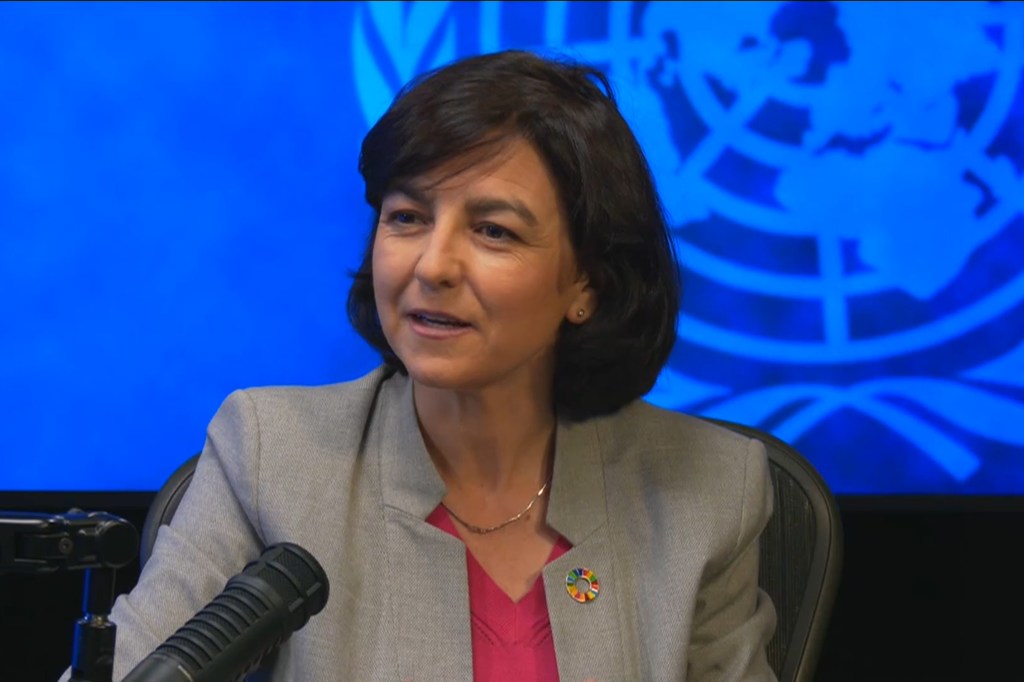
The Spanish Secretary of State for Finance Jesús Gascón (on screen) addresses a meeting at the Financing for Development conference in Sevilla, Spain.

Sharing knowledge, closing gaps

In today’s interconnected world, access to reliable data is essential. The initiative prioritises information sharing – between governments and tax authorities – to help expose gaps in tax systems, close loopholes, and combat evasion and avoidance.

Improving data quality and building national capacities for data analysis will help tax administrations identify where and how wealth is concentrated, how much is currently being paid, and what needs to change.

Though some progress has already been made, the countries say much more must be done and many more countries should come on board.

There’s a real need to know who the beneficial owners are behind companies and legal structures used to conceal wealth,” said Mr. Gascón. The initiative also proposes technical cooperation, training in data analytics, and peer review mechanisms to strengthen national tax systems.

A global wealth registry?

Spain and Brazil are even considering steps toward a global wealth registry – acknowledging that this would take time, political will, and major national efforts.

But the aim is clear: more transparency, more accountability, and fairer contributions from the richest.

We cannot tolerate the intensity of inequality, which has been increasing in recent years,” said Brazil’s Minister-Counsellor to the UN, José Gilberto Scandiucci denying that this was some kind of far-leftist agenda.

This is a moderate initiative to confront a very radical reality.”

The proposal forms part of the Seville Platform for Action, which is turbocharging voluntary actions to help reach the Sustainable Development Goals (SDGs) – currently way off track for the 2030 deadline.

G20 highlights ‘high worth’ factor

It also follows the 2024 agreement by the G20 industrialised nations who met in Rio, Brazil, last year – the first international accord to commit to a joint tax agenda for high-net-worth individuals.

A three-month work plan is now being drawn up, with regular meetings planned to track progress. The goal: bring more countries, international organisations and civil society on board to push forward tax reforms targeting the ultra-rich.

“If we want to effectively tax the super-rich, fight inequality and make our tax systems fairer and more progressive, we need political will – and we need to act within our means,” Mr. Gascón added.

Source link

‘Global solidarity benefits us all’: Spain makes the case for development funding

For decades, helping the least developed countries to develop has been seen as beneficial for the international community as a whole, as well as a duty of the countries with more resources.

However, this philosophy is being challenged by some wealthy nations, which have decided to reduce or even end funding for projects and initiatives designed to support the poorer countries of the Global South in their attempts to improve the living standards and wellbeing of their citizens.

Ahead of the fourth International Conference on Financing for Development, which takes place in Seville, Spain, between 30 June and 3 July, Ms. Granados told Antonio Gonzalez from UN News that, despite the uncertainty, many rich countries, including Spain, still believe in the need for development financing and solidarity between nations.

This interview has been edited for clarity and length

UN News: Is development financing as we know it over?

Spain’s Secretary of State for International Cooperation, Eva Granados.

Eva Granados: Development cooperation and global solidarity are not only beneficial for everyone, but also a political and moral duty.

It is true that, in the last year, there has been a reduction in official development aid, but this is not the case for all countries. Spain, for example, has increased its contribution to official development aid by 12 percent.

The philosophy behind development financing is certainly being challenged in some quarters, but this is the same kind of denialism that questions the need for policies calling for equality between men and women, or the reality of the climate crisis. There are many people making a lot of noise, but there are far more of us who believe in global solidarity. We have to explain, and explain well, why this solidarity and this international cooperation matter.

I believe that all the peoples of the world have a duty to each other, and we need to counter these narratives; climate change is clearly affecting us all and solidarity between genders is beneficial to the whole of society.

In 2015, at a conference in Addis Ababa [which laid the groundwork for a landmark international agreement on financing], we talked about debt issues, international taxation, trade and research. It’s the job of those of us who are committed to development cooperation and financing for development to make this agenda evolve.

UN News: Why is it in the interests of richer countries like Spain to spend money on international development?

Eva Granados: In the case of Spain, international cooperation and global solidarity are part of our social contract. Cooperation and peaceful relations between the peoples of the world are included in our constitution, and setting aside a 0.7 percent contribution of our gross national income to international cooperation is inscribed in law.

And this benefits our country. For example, during the COVID-19 pandemic, it was clear that, whilst the challenges were national, the solutions were global. Another example is climate change. The Mediterranean is heavily impacted, both on the European and African side. We have to cooperate and work in a coordinated manner, to form partnerships and to create global policies.

UN News: There is a €4 trillion annual gap in the funding needed for development and what is currently raised. Can this gap be bridged?

Eva Granados: The financing gap is large, but relatively speaking, €4 trillion is still only one percent of the financial transactions that take place annually. I think we have quite a few scenarios where it can be achieved.

If all donor countries contributed 0.7 percent of Gross National Income, we would barely meet 10 percent of the financing needs for development. This means that we have to do everything we can to attract investment, and work with the private sector.

We also have to help create global tax systems that distribute wealth and end the situation whereby two out of five citizens worldwide live in countries that spend more on debt servicing than on education or health services. It is unacceptable that the richest and wealthiest on the planet are contributing so little to international development. Super-rich people and large multinationals have to do more.

UN News: What results do you want to see coming out of this conference?

Eva Granados: These are uncertain times, but Seville is a ray of light for global solidarity. The countries represented at the conference are signalling that they believe in multilateralism.

The objective is to obtain more and better resources for sustainable development. We need to combine ambition with action. Just as in Addis Ababa, where we were able to reach agreement on a large number of issues, Seville is the time to put concrete issues on the table and bring together the political will of world leaders to reach agreements.

Seville is also a good time for us to set that viewpoint from the perspective of women. It is important that, in all the chapters of the document we are discussing, the needs of women are at the forefront.

And it is important that the final document includes a follow-up mechanism, so that countries can be held  accountable on an annual basis for the commitments we reach, and a commitment from all Member States to contribute to official development aid. 

Source link

Michael Pratt, one of FBI’s Ten Most Wanted Fugitives Captured in Spain

Michael James Pratt, one of the FBI’s ten most wanted fugitives was arrested last week by Spanish authorities, said the agency. Pratt has been a fugitive since 2019 and was named to the FBI’s Ten Most Wanted Fugitives List earlier this year.

Pratt is charged in a 19-count indictment with sex trafficking, production of child pornography, sex trafficking of a minor, and conspiracy to launder monetary instruments in connection with the operation of the GirlsDoPorn adult website.

Pratt was arrested by Spanish National Police on December 21, 2022, in Madrid, Spain, pursuant to an Interpol Red Notice. A Red Notice is a request to law enforcement worldwide to locate and provisionally arrest a person pending extradition, surrender, or similar legal action. Pratt is being held in Spain pending extradition.

“The capture of Michael Pratt is an example of how the FBI will pursue justice beyond U.S. borders—you can run but you can’t hide,” said Special Agent in Charge (SAC) Stacey Moy of the FBI San Diego Field Office. “Thank you to our determined FBI San Diego Human Trafficking Task Force and to our federal and international partners for their commitment to making sure that Michael Pratt is brought to justice.”

SAC Moy would like to thank the Spanish National Police, the U.S. Marshals Service, the U.S. Department of Homeland Security, and the U.S. Immigration and Customs Enforcement for their coordination in the arrest of Michael Pratt, and the public for their assistance in this investigation.

Pratt was the 529th person to be placed on the FBI’s Ten Most Wanted Fugitives list, which was established in 1950. Additional information concerning Pratt and the FBI’s Ten Most Wanted Fugitives can be found by visiting the FBI’s website at fbi.gov/topten.

The public is reminded that a complaint is not evidence of guilt and all defendants in a criminal case are presumed innocent until proven guilty in a court of law.

Any additional victims of the alleged crime are encouraged to call the FBI National Threat Operations Center at 1-800-CALL-FBI (1-800-225-5324).

Spanish teenager Carlos Alcaraz clinches US Open 2022 title against Casper Ruud

New York, Sep 12 (IANS) Spanish teenager Carlos Alcaraz displayed explosive power and demonstrated impressive touch around the net as he overcame a fighting Norwegian Casper Ruud 6-4, 2-6, 7-6(1), 6-3 to clinch his maiden Grand Slam trophy — the US Open crown — and secure the world No. 1 ranking on Monday (IST).

The 19-year-old Alcaraz won 76 per cent of net points (34/45) to outlast his opponent inside the Arthur Ashe Stadium after a nearly three hours and 20 minute slugfest. This was Alcaraz’s 51st tour-level victory of the season

Drained of energy, Alcaraz dropped to the floor following the victory and then climbed up the stands to embrace his coach and former player Juan Carlos Ferrero.

“It is something I have dreamt of since I was a kid. To be No. 1 in the world, to be champion of a Grand Slam, is something I have worked really, really hard (for),” Alcaraz was quoted as saying by ATP.

“It is tough to talk right now, I have lots of emotions. This is something I have tried to achieve. All the hard work I have done with my team and my family. I am just 19-years-old, all the tough decisions have been with my parents and my team as well. It is something that is really special for me,” he added.

Carlos Alcaraz

It has been an energy sapping US Open for Alcaraz, who endured three consecutive five-set matches to reach his first Grand Slam final. He spent 20 hours and 19 minutes on court across six games on way to the title showdown with Ruud.

“There is no time to be tired in the final rounds of a Grand Slam… You have to be ready and give everything you have inside. It is something I work really hard for,” Alcaraz said.

Alcaraz has become the youngest Grand Slam winner since Spanish stalwart Rafael Nadal, 19, lifted the French Open trophy in 2005, while he is the youngest US Open winner since American legend Pete Sampras, 19, in 1990.

Alcaraz arrived in New York as the world No. 4 but leaves the Flushing Meadows at the top-ranked player, becoming the youngest to rise to tennis’ pinnacle in the history of the ATP Rankings (since 1973).

The Spaniard has also equalled the biggest jump to No. 1, while he is the fourth Spaniard to climb to the top, joining coach Ferrero, Carlos Moya and Nadal.

Alcaraz spent a total of 23 hours and 39 minutes on court on way to the crown, passing Kevin Anderson at Wimbledon in 2018 for most time played at a single Grand Slam tournament on record (since 1999).

Ruud, who had lost to Nadal in the French Open final in June, was bidding to become the 28th player and first Norwegian to jump to No. 1

Casper Ruud

“Things have been going so well. Today was a special evening,” Ruud said. “Both Carlos (Alcaraz) and I knew what we were playing for and what was at stake. We will be No. 2 and No. 1 in the world, I think it is fitting. I am disappointed of course that I am not No. 1, but No. 2 is not bad either. I am happy with that number and I will continue to chase for my first Grand Slam title and No. 1 ranking,” added Ruud.

Youngest World No. 1s In ATP Rankings|:

Carlos Alcaraz 19 years, four months 12 Sep. 2022

Lleyton Hewitt 20 years, nine months 19 Nov. 2001

Marat Safin 20 years,10 months 20 Nov. 2000

John McEnroe 21 years, one month 3 March. 1980

Andy Roddick 21 years, two months 3 Nov. 2003

Bjorn Borg 21 years, three months 23 Aug. 1977

Vice President condemns terror attack in Barcelona

The Vice President of India, Shri M. Venkaiah Naidu has condemned the terrorist attack in Barcelona, Spain. In a message, he said that there can be no justification for such barbaric and reprehensible acts and terrorism is the biggest menace humanity is facing today. International terrorism can only be defeated by coordinated global efforts, he added.

Following is the text of Vice President’s message:

“I am deeply shocked by the terrorist attack in Barcelona, Spain. My thoughts and prayers are with the families of those killed and injured.

There can be no justification for such barbaric and reprehensible acts. Terrorism is the biggest menace humanity is facing today with all pluralist and open societies increasingly encountering new levels of threat.

International terrorism can only be defeated by coordinated global efforts. We stand with the people and Government of Spain and commend their swift action in dealing with the attackers. I join the nation in praying for the bereaved families and early recovery of the injured.”