UN urges renewed solidarity eight years after forced exodus of Rohingya

More than 700,000 of them fled to neighbouring Bangladesh after armed attacks by a militant group against Myanmar security forces sparked a brutal military crackdown that began on 25 August 2017.

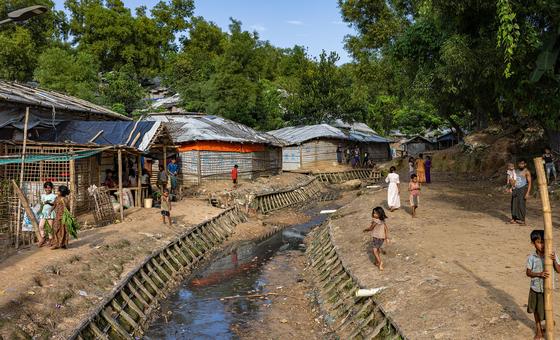
They joined thousands of others who had escaped earlier waves of violence and discrimination now living in refugee camps just across the border in the Cox’s Bazar district.

Violence and funding cuts

In a statement to mark the anniversary, UN Spokesman Stéphane Dujarric noted that the Rohingya people both in and outside Myanmar are facing a further deterioration of their already dire circumstances.

“In Rakhine State, Rohingya and other civilians are caught in the crossfire between the Myanmar military and the Arakan Army and subjected to forced recruitment, human rights violations and other abuse,” he said.

The ongoing violence has forced more Rohingya to flee, including to Bangladesh which is already hosting more than one million refugees from Myanmar. 

A military coup forced Myanmar’s democratically elected Government from power in 2021, fuelling armed insurgencies throughout Myanmar following a brutal military crackdown on protests.

Mr. Dujarric said reports of pushbacks, removals and deportations across the region raise serious concerns over potential violations of the principle of non-refoulement and shrinking asylum space.

This is happening amid funding cuts which are severely curtailing education, food assistance, healthcare, livelihood opportunities and protection services.

Protect all civilians

The Spokesman said UN Secretary-General António Guterres has repeated his call for the protection of all civilians in accordance with applicable obligations under international law. 

The Secretary-General also recalled his visit to Cox’s Bazar, Bangladesh, where he witnessed the resilience of Rohingya communities.

He stressed the urgent need for strengthened international solidarity and increased support, in parallel to efforts toward a comprehensive political solution that meaningfully includes the Rohingya and addresses their displacement and the root causes of the protracted crisis.

Hopes for upcoming conference

“The Secretary-General is hopeful that the 30 September High–level Conference on Rohingya and other minorities in New York, as mandated by the United Nations General Assembly, will draw renewed international attention to the urgency of finding durable solutions,” said Mr. Dujarric.

He added that the Special Envoy of the Secretary-General on Myanmar continues to engage all stakeholders towards ending the brutal civil conflict and supporting a viable Myanmar-led political process.

This should also lead to the voluntary, safe, dignified, and sustainable return of the Rohingya to Myanmar. 

Source link

150,000 Rohingya flee to Bangladesh amid renewed Myanmar violence

As armed clashes intensify and conditions worsen inside Myanmar, thousands continue to cross the border seeking safety in the overcrowded camps of Cox’s Bazar, where nearly one million Rohingya refugees already live in densely populated camps.

This is the largest movement of Rohingya refugees into Bangladesh since 2017,” said Babar Baloch, spokesperson for the UN refugee agency, UNHCR, briefing journalists in Geneva on Friday.  

He clarified that unlike the mass influx in 2017, when some 750,000 Rohingya fled deadly violence in Rakhine state, this uptick in refugees has unfolded more gradually.

Advocating for asylum

UNHCR is working closely with local authorities to respond to urgent humanitarian needs.  

“As the conflict in Myanmar continues unabated, we are advocating with the Bangladeshi authorities to provide managed access to safety and asylum for civilians fleeing the conflict,” he said.

Bangladesh has long provided refuge to the Rohingya, a mostly Muslim minority community in Myanmar, which is mainly Buddhist. 

The country currently hosts nearly one million people in the refugee camps and the recent arrivals – many of them women and children – are placing further strain on resources. Many are relying heavily on local solidarity and sharing limited resources with those already living in the camps.

Appeal for support

By the end of June, nearly 121,000 newly arrived refugees had been biometrically registered, although many more are believed to be residing informally in the camps. Access to adequate shelter remains a major concern as facilities struggle to absorb the new population.

“These new arrivals join another nearly one million Rohingya refugees crammed into just 24 square kilometres,” said Mr. Baloch. “More humanitarian support is urgently required.”

Aid partners have been able to provide basic services including food, medical care, education, and essential relief items. However, the response is now under serious threat due to a lack of funding.

UNHCR warned that the 2024 humanitarian appeal for $255 million is only 35 per cent funded. Without immediate financial support, the entire operation could face systemic collapse.

Action needed now

Unless additional funds are secured, health services will be severely disrupted by September and essential cooking fuel — liquefied petroleum gas (LPG) – will run out by December. Food assistance will stop and education for some 230,000 Rohingya children, including 63,000 new arrivals, is in danger of being discontinued.

Despite a strictly controlled and officially closed border, the Government of Bangladesh has allowed new arrivals to access emergency services in the camps. The UN agency expressed deep appreciation for this humanitarian gesture under highly challenging conditions.

“We don’t have the resources to take care of the new arrivals and also those who were there before them,” said Mr. Baloch. “Everything will be impacted.”

As displacement from Rakhine state continues, UNHCR and its partners are urging the international community to act swiftly. Without immediate and sustained support, the already fragile humanitarian response in Cox’s Bazar could begin to unravel  – with devastating consequences for more than one million people who rely on it for survival. 

Source link

UNHCR underscores plight of Rohingya refugees amid alarming reports

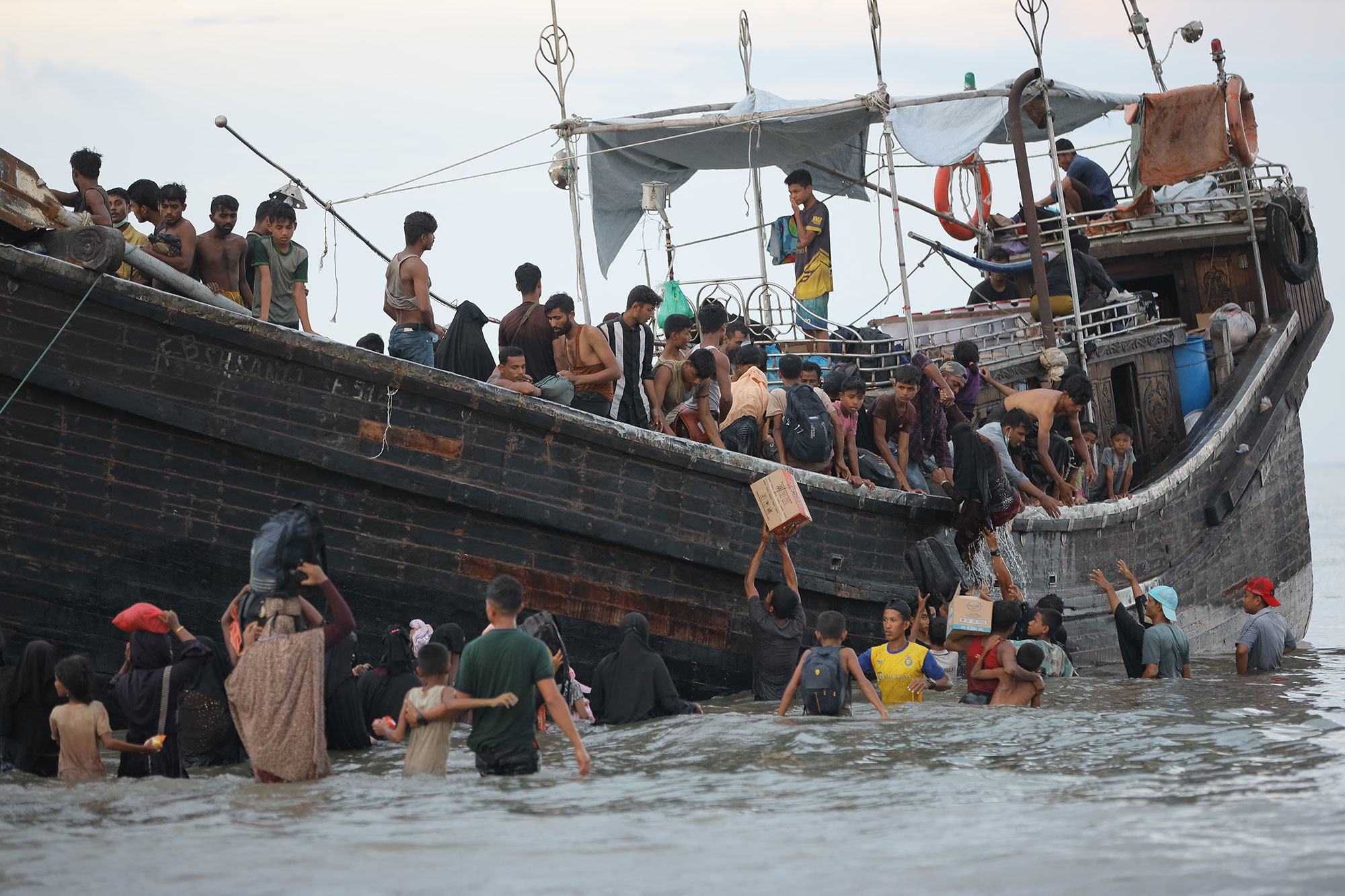
According to reports, one boat carrying 267 people from Cox’s Bazar in Bangladesh and Rakhine State in Myanmar, sank on 9 May, with only 66 survivors, UNHCR said. 

The following day, a second boat fleeing with 247 people capsized, leaving just 21 survivors. In a separate incident, reports indicate that on 14 May, a third vessel carrying 188 Rohingya was intercepted while departing from Myanmar.

Since August 2017, mass violence, armed attacks and human rights violations have forced hundreds of thousands of mainly-Muslim Rohingya to flee Myanmar’s Rakhine State to seek refuge in neighbouring Bangladesh, particularly in the Cox Bazar’s region.

Last week, UNHCR voiced alarm over reports that Rohingya refugees had been forced off an Indian navy vessel into the Andaman Sea. News reports said that dozens of refugees were detained in Delhi, blindfolded, flown to the Andaman and Nicobar Islands, then transferred to a naval ship and forced to swim ashore.

UN response

In Friday’s statement, Hai Kyung Jun, Director of UNHCR’s Regional Bureau for Asia and the Pacific, warned that the worsening humanitarian situation exacerbated by funding cuts to UN agencies is pushing more Rohingya to risk dangerous sea journeys.

She stressed the urgent need for stronger protection in first-asylum countries and greater responsibility-sharing to prevent further tragedies.

Deputy UN Spokesperson Farhan Haq highlighted during Friday’s press briefing that, with the annual monsoon season now underway, the perilous sea conditions reflect the desperation of those attempting to flee.

Rohingya refugees arrive in North Aceh, Indonesia, after a dangerous sea voyage from Bangladesh.

He also noted that so far this year, one in five people undertaking such sea journeys in the region has been reported dead or missing, underscoring the scale of risk and despair facing the Rohingya.

According to UNHCR data, as of 30 April, there are 1,272,081 Rohingya refugees officially displaced and stateless from Myanmar. Some 89 per cent are seeking asylum in Bangladesh and 8.8 per cent in Malaysia.

The refugee agency requires $383.1 million to sustain essential support for Rohingya refugees and host communities across Bangladesh, Malaysia, India, Indonesia, and Thailand in 2025. To date, only 30 per cent of that funding target has been met.

Source link