‘Alarming’ increase in use of death penalty last year, despite global trend towards abolition

The UN advocates for the universal abolition of the death penalty. The International Covenant on Civil and Political Rights, ratified by 175 countries, protects the right to life and stipulates that, for countries that have not abolished capital punishment, it be imposed only for the ‘most serious crimes’ in exceptional cases. 

OHCHR said the sharp increase in capital punishment last year was driven by executions for drug-related violations, for crimes people committed as children and for offences not meeting the ‘most serious crimes’.

The death penalty is not an effective crime-control tool, and it can lead to the execution of innocent people,” said Volker Türk, UN Commissioner for Human Rights. 

“In practice, the death penalty is also often applied arbitrarily and discriminatorily, in violation of fundamental principles of equality before the law.” 

Geography of death 

OHCHR’s monitoring reveals that no one region claimed the monopoly over capital punishment. 

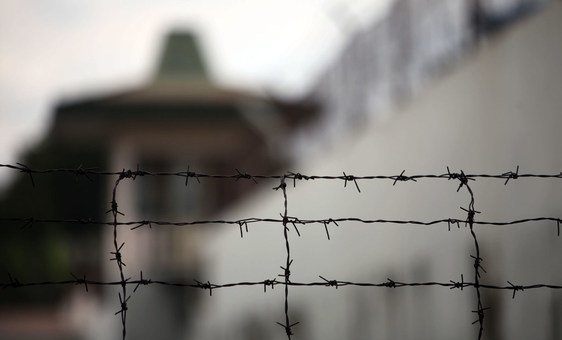
In Iran, at least 1,500 individuals were reportedly executed in 2025, with at least 47 per cent relating to drug offences. 

In Israel, a series of legislative proposals is seeking to expand the use of the death penalty by introducing mandatory capital punishment provisions that would apply exclusively to Palestinians.

In Saudi Arabia, the reported number of executions exceeded the previous record of 2024, mounting to at least 356 people, where 78 per cent of cases were for drug-related offences. In Afghanistan, public executions continued, in breach of international law.

In the Americas, the United States saw the highest number of executions in 16 years – some 47 inmates who had been on death row.

Further south, at least 24 people were executed in Somalia and 17 in Singapore.

‘Encouraging steps’

However, OHCHR noted that several countries took ‘encouraging steps’ last year to limit capital punishment. 

Vietnam reduced the number of offences punishable by death. Pakistan also removed two non-lethal capital offences but still retained 29. 

Zimbabwe abolished on 31 December 2024 the death penalty for ordinary crimes, while Kenya initiated a legislative review of capital punishment. 

Malaysia’s resentencing process reduced the number of people at risk of execution by more than 1,000 and in Kyrgyzstan, the Constitutional Court reaffirmed the prohibition of the death penalty.

So far, 170 countries have abolished or introduced a moratorium on the death penalty either in law or in practice.

Source link

Israeli strike in Doha marks ‘alarming escalation’, warns top UN official, in call to uphold diplomatic norms

Rosemary DiCarlo described Tuesday’s strike in a residential area of the Qatari capital – which targeted Hamas’s political leadership killing several affiliates along with a Qatari security officer – as potentially opening a “new and perilous chapter in this devastating conflict, seriously threatening regional peace and stability.

The attack occurred on 9 September in residential compounds reportedly housing members of the Hamas’ political bureau, including the son of its chief negotiator, Khalil al-Hayya.

While Hamas leaders survived, the organization said, the incident disrupted ongoing negotiations over a US-mediated ceasefire and hostage release agreement to end the war in Gaza.

Respect sovereignty

The sovereignty and territorial integrity of any country, including Qatar – a valued partner in advancing peacemaking and conflict resolution – must be respected,” Ms. DiCarlo told ambassadors.

She urged all parties to exercise restraint and reaffirmed the need to preserve negotiation and mediation channels to prevent further suffering in Gaza and the wider region.

Israel claimed responsibility for the strike, with Prime Minister Benjamin Netanyahu describing it as “a wholly independent operation” following a deadly attack on civilians in Jerusalem on 8 September, which Hamas said it carried out.

Qatar, the Gulf Cooperation Council, the League of Arab States, and the Organization of Islamic Cooperation condemned the action and expressed concern over further escalation.

Confidence undermined

Ms. DiCarlo told ambassadors that Israel’s strike came “at the height of ongoing consultations.”

Any action that undermines the work of mediation and dialogue weakens confidence in the very mechanisms we depend on for conflict resolution,” she said, stressing that durable solutions in the Middle East cannot be achieved through further violence.

She called for renewed commitment to diplomacy, warning that the urgency of a ceasefire and hostage release has never been greater.

I call on all stakeholders to exercise utmost restraint at this sensitive time and recommit to diplomacy. The urgency of a ceasefire and hostage release deal in Gaza has never been greater. Strike a deal. Free the hostages. End the suffering of the people of Gaza.”

Gaza crisis spiralling

Meanwhile, the humanitarian and security situation in Gaza and the occupied West Bank remains critical.

Since the conflict in Gaza erupted in October 2023 – following attacks by Hamas and other Palestinian armed groups on communities in southern Israel, tens of thousands have died – mostly civilians – infrastructure and basic services are largely destroyed, and the enclave lies in ruins while a new offensive to take Gaza City is ongoing.

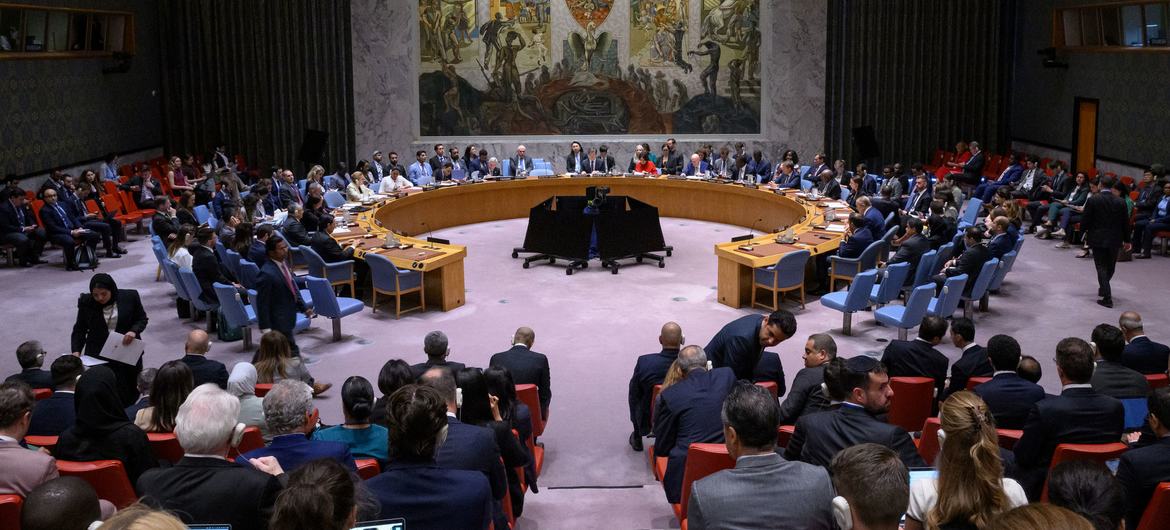
The UN Security Council meets to discuss the situation in the Middle East in the aftermath of an Israeli strike in Doha, the capital of Qatar..

Security Council press statement

Ahead of Thursday’s session, the Security Council issued a press statement expressing condemnation of the strikes in Doha and deep regret over the loss of civilian life.

The statement reaffirmed support for Qatar’s sovereignty and territorial integrity and acknowledges the country’s key role in mediation efforts to end the devastating war, alongside Egypt and the United States.

It emphasised that releasing hostages – including those killed by Hamas – ending hostilities, and ensuring civilian protection in Gaza, remain the Council’s highest priorities.

It also on all parties to seize ongoing diplomatic opportunities for peace.

Source link

Human Rights Council hears alarming updates on executions in Iran and global civic space crackdown

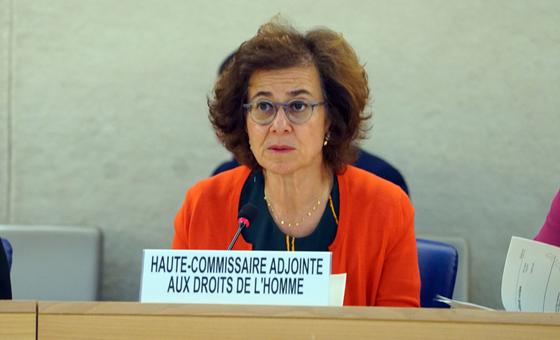
At least 975 people were executed in Iran in 2024, the highest number reported since 2015, according to a report Deputy High Commissioner for Human Rights, Nada Al-Nashif, presented to the Geneva-based Council on Wednesday. 

Of the total executions, just over half were for drug-related offenses, 43 per cent for murder, two per cent for sexual offenses, and three per cent for security-related charges. At least four executions were carried out publicly. 

“These cases are marked by serious allegations of torture and due process violations, including lack of access to a lawyer,” said Ms. Al-Nashif. 

Violence and discrimination against women

At least 31 women were reportedly executed in Iran last year, up from 22 in 2023. Of the 19 women executed for murder, nine had been convicted of killing their husbands in cases involving domestic violence or forced or child marriage, areas in which Iranian women have no legal protections.

Some executions were reportedly linked to protests that began in September 2022 under the banner “Women, Life, and Freedom.”

Beyond executions, femicide cases surged, with 179 reported in 2024 compared to 55 the year before. Many stemmed from so-called “honour” crimes or family disputes, often involving women and girls seeking divorce or rejecting marriage proposals.

Ms. Al-Nashif also warned that the suspended Chastity and Hijab Law, if enacted, would pose a serious threat to women’s rights. Penalties for violations such as improper dress could include heavy fines, travel bans, long-term imprisonment, or even the death penalty.

In addition, of the 125 journalists prosecuted in 2024, 40 were women, many reporting on human rights and women’s rights issues.

Religious and ethnic minorities

“In 2024, the death penalty continued to have a disproportionate impact on minority groups,” Ms. Al-Nashif told the Council.

At least 108 Baluchi and 84 Kurdish prisoners were executed in 2024, representing 11 and 9 per cent of the total, respectively.

The report also raised concerns over the lack of official data on the socioeconomic conditions of ethnic and ethno-religious minorities and non-citizens, which hampers efforts to assess their situation and measure the impact of targeted policies and programmes.

Looking ahead

While Iran continued engagement with the Office of the UN High Commissioner and other human rights mechanisms, it denied access to the Independent International Fact-Finding Mission on the Islamic Republic of Iran.

“Our Office remains ready to continue and build on its engagement with the Iranian authorities on the range of issues highlighted in the report of the Secretary-General for the promotion and protection of all human rights,” Ms. Al-Nashif concluded. 

Global ‘Super Election’ cycle undermined democratic participation

In the Council’s afternoon session, Gina Romero, UN Special Rapporteur on the rights to freedom of peaceful assembly and association, presented her report on how the 2023–2025 “super election” cycle has affected civic space around the world.  

In 2024, half of the world’s population elected their local, national and international representatives. While Ms. Romero’s report on this cycle does not assess the integrity of the elections, it identifies troubling global patterns of systematic repression of the exercise of peaceful assembly and association.

“The misuse of restrictive laws, smear campaigns, disinformation targeting civil society intensified globally in the super electoral cycle, undermining electoral participation and freedom of association,” she said.  

Political repression and violence

As criminal justice systems are used to repress the opposition, leaders and members of political parties faced undue restrictions and political persecution. Civil society activists and election observers have also faced harassment, arbitrary detention, torture and murder.  

“When political parties, civil society, and peaceful assemblies are suppressed, genuine political pluralism and competition cannot exist,” argued Ms. Romero. “I stress that these conditions are incompatible with free and genuine elections and risk legitimising undemocratic rule.”

Minority representation

Ms. Romero also underscored that women’s political leadership remains severely underrepresented, while LGBTIQ individuals and their organizations faced attacks during the super electoral cycle.  

Both groups experienced physical and online political violence, restricting their electoral participation and accelerating the decline of their rights after the elections.

Calls to protect freedoms  

Amid global crises and a rapid democratic decline, Ms. Romero emphasized the urgent need to protect the rights to peaceful assembly and association throughout the entire electoral cycle.  

She outlined key recommendations, including strengthening legal protections before elections, ensuring accountability afterward, regulating digital technologies and promoting non-discriminatory participation throughout.  

“Dissent is a fundamental element of democratic societies,” she concluded in Spanish. “Rather than being suppressed, it should be welcomed and permanently protected.” 

Source link

Ongoing Russian strikes continue alarming civilian casualty trend

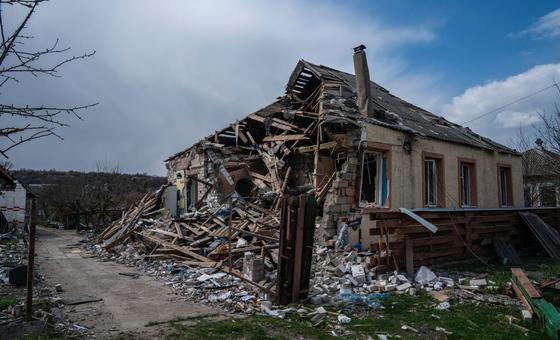
The toll includes 1,389 casualties in April (221 killed, 1,168 injured) – the highest monthly total so far this year – followed by 1,019 in May (183 killed, 836 injured).

Casualties were reported across 17 out of 24 regions and the city of Kyiv, including areas far from the frontline.

The vast majority of attacks (97 per cent) led to civilian casualties occurred in areas under Ukrainian Government control.

“This year has been devastating for civilians across Ukraine, with significantly more deaths and injuries than during the same period in 2024,” said Danielle Bell, Head of the HRMMU – the monitoring mission set up by the UN rights office, OHCHR, at the invitation of the Ukrainian Government.

“The intensification of long-range attacks with missiles and loitering munitions and frequent attacks with short-range drones along the frontline are a deadly combination for civilians.”   

Weapons and impact

Long-range missile and drone attacks caused the largest proportion of civilian casualties – some 28 per cent of casualties during May.

On the other hand, short-range drones remained the leading cause in frontline areas.

Russian armed forces carried out at least five attacks on port infrastructure in the Odesa region on the Black Sea, resulting in civilian casualties and damage to facilities.

One such attack on 23 May killed three men and injured 12 more, including port workers, according to the report.

Continuing trends in June

The mission noted that long-range attacks have intensified this month. Since 6 June, Russian forces have launched over 1,500 long-range weapons, according to Ukrainian authorities.

The HRMMU is in the process of verifying reports that these attacks (or subsequent falling debris) have killed at least 19 civilians and injured 205 others nationwide in just a five-day span. If confirmed, June could match or surpass April and May in total casualties.

At this pace and scale, further loss of civilian life is not just possible – it is inevitable,” said Ms. Bell.

Source link

UNHCR underscores plight of Rohingya refugees amid alarming reports

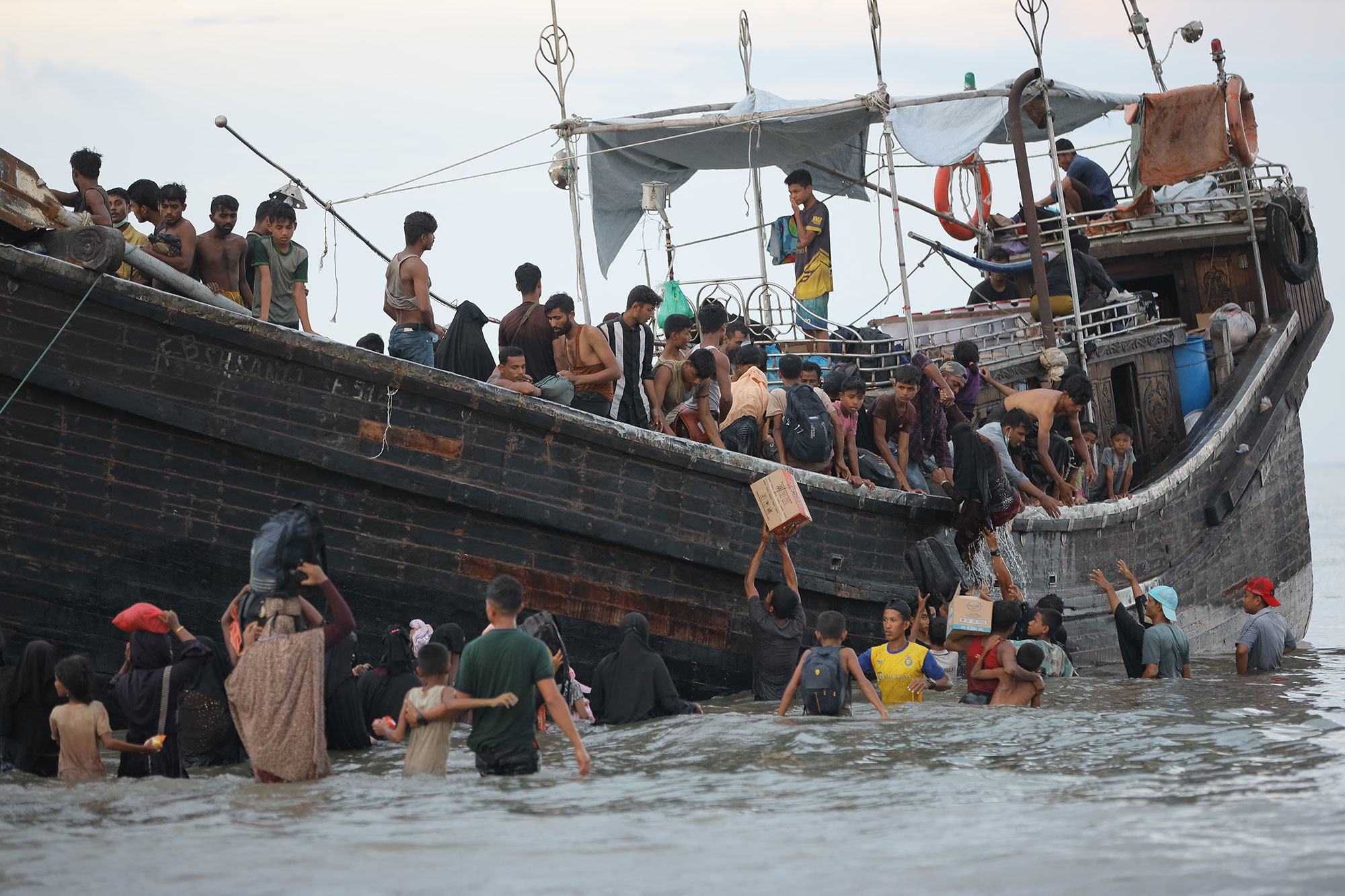
According to reports, one boat carrying 267 people from Cox’s Bazar in Bangladesh and Rakhine State in Myanmar, sank on 9 May, with only 66 survivors, UNHCR said. 

The following day, a second boat fleeing with 247 people capsized, leaving just 21 survivors. In a separate incident, reports indicate that on 14 May, a third vessel carrying 188 Rohingya was intercepted while departing from Myanmar.

Since August 2017, mass violence, armed attacks and human rights violations have forced hundreds of thousands of mainly-Muslim Rohingya to flee Myanmar’s Rakhine State to seek refuge in neighbouring Bangladesh, particularly in the Cox Bazar’s region.

Last week, UNHCR voiced alarm over reports that Rohingya refugees had been forced off an Indian navy vessel into the Andaman Sea. News reports said that dozens of refugees were detained in Delhi, blindfolded, flown to the Andaman and Nicobar Islands, then transferred to a naval ship and forced to swim ashore.

UN response

In Friday’s statement, Hai Kyung Jun, Director of UNHCR’s Regional Bureau for Asia and the Pacific, warned that the worsening humanitarian situation exacerbated by funding cuts to UN agencies is pushing more Rohingya to risk dangerous sea journeys.

She stressed the urgent need for stronger protection in first-asylum countries and greater responsibility-sharing to prevent further tragedies.

Deputy UN Spokesperson Farhan Haq highlighted during Friday’s press briefing that, with the annual monsoon season now underway, the perilous sea conditions reflect the desperation of those attempting to flee.

Rohingya refugees arrive in North Aceh, Indonesia, after a dangerous sea voyage from Bangladesh.

He also noted that so far this year, one in five people undertaking such sea journeys in the region has been reported dead or missing, underscoring the scale of risk and despair facing the Rohingya.

According to UNHCR data, as of 30 April, there are 1,272,081 Rohingya refugees officially displaced and stateless from Myanmar. Some 89 per cent are seeking asylum in Bangladesh and 8.8 per cent in Malaysia.

The refugee agency requires $383.1 million to sustain essential support for Rohingya refugees and host communities across Bangladesh, Malaysia, India, Indonesia, and Thailand in 2025. To date, only 30 per cent of that funding target has been met.

Source link

‘Alarming’ slowdown in human development – could AI provide answers?

For several decades, human development indicators showed a steady, upward curve and UN researchers predicted that by 2030, a high level of development would be enjoyed by the global population.

Those hopes have been dashed in recent years following a period of exceptional crises such as the COVID-19 pandemic – and progress has stalled across all regions of the world.

‘Very real threat’ to progress

The Human Development Report, an annual publication from the UN Development Programme (UNDP), shows that inequalities between rich and poor countries have widened for the fourth year in a row.  

Global pressures, such as increasing trade tensions and a worsening debt crisis which limits the ability of governments to invest in public services, are narrowing traditional paths to development.

“This deceleration signals a very real threat to global progress,” said Achim Steiner, UNDP Administrator. “If 2024’s sluggish progress becomes ‘the new normal’, that 2030 milestone could slip by decades – making our world less secure, more divided, and more vulnerable to economic and ecological shocks.”

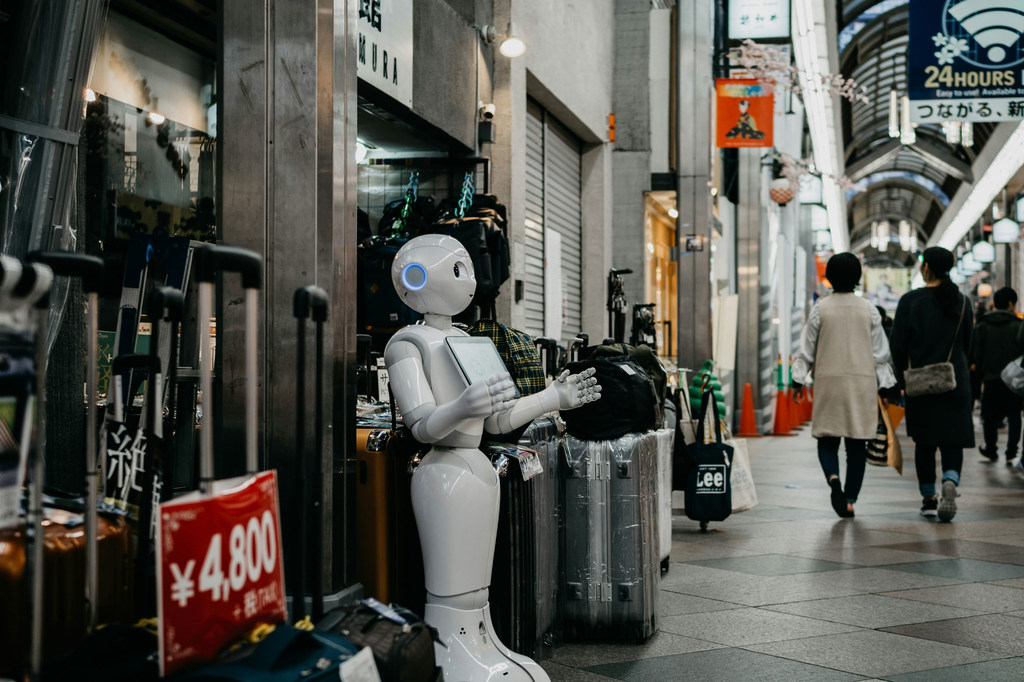
A robot which could carry out tasks assigned to humans stands in a shopping mall in Kyoto, Japan.

Maybe the robots aren’t coming for our jobs after all

Despite the gloomy indicators, the report is strikingly upbeat about the potential of artificial intelligence, noting the breakneck pace at which free or low-cost tools have been embraced by businesses and individuals alike.

UNDP researchers carried out a survey to gauge opinions on AI and discovered that around 60 per cent of respondents expect the technology to positively impact their work and create new opportunities.  

Those living in low and medium levels of development were particularly keen: 70 per cent expect AI to increase their productivity, and two thirds anticipate using AI in education, health, or work within the next year. 

Action stations

The report’s authors include recommendations for action to make sure that AI is as beneficial as possible, including the modernisation of education and health systems to adequately meet today’s needs – building an economy focused on human collaboration with AI (rather than competition) – putting humans at the heart of AI development, from design to deployment.

“The choices we make in the coming years will define the legacy of this technological transition for human development,” said Pedro Conceição, Director of UNDP’s Human Development Report Office.  

“With the right policies and focus on people, AI can be a crucial bridge to new knowledge, skills, and ideas that can empower everyone from farmers to small business owners.”

Ultimately, the report’s message is that the impact of AI is hard to predict. Rather than being an autonomous force, it is a reflection and amplifier of the values and inequalities of the societies that shape it.  

To avoid what it calls “development disappointment”, UNDP urges stronger global cooperation on AI governance, alignment between private innovation and public goals, and a renewed commitment to human dignity, equity, and sustainability.

“The 2025 HDR is not a report about technology,” writes Mr.  Steiner in the foreword. “It is a report about people – and our ability to reinvent ourselves in the face of profound change.”

© IMF/Andrew Caballero-Reynolds

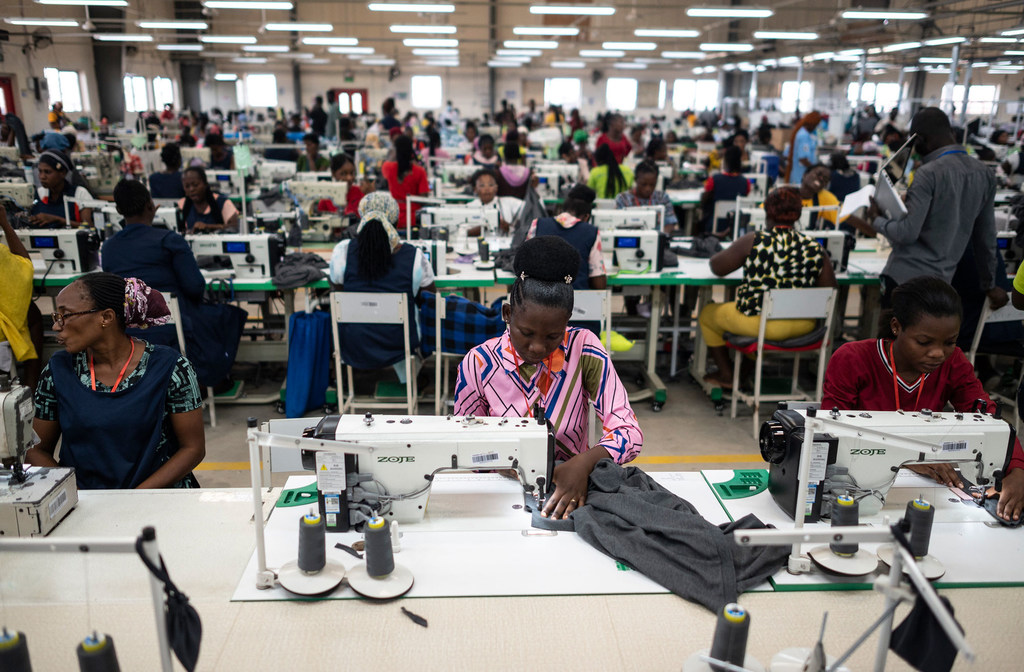
Workers sew fabric at an apparel factory in Ghana.

Source link