3 Emerging scenarios as Oil and Gas shock hits Bangalore

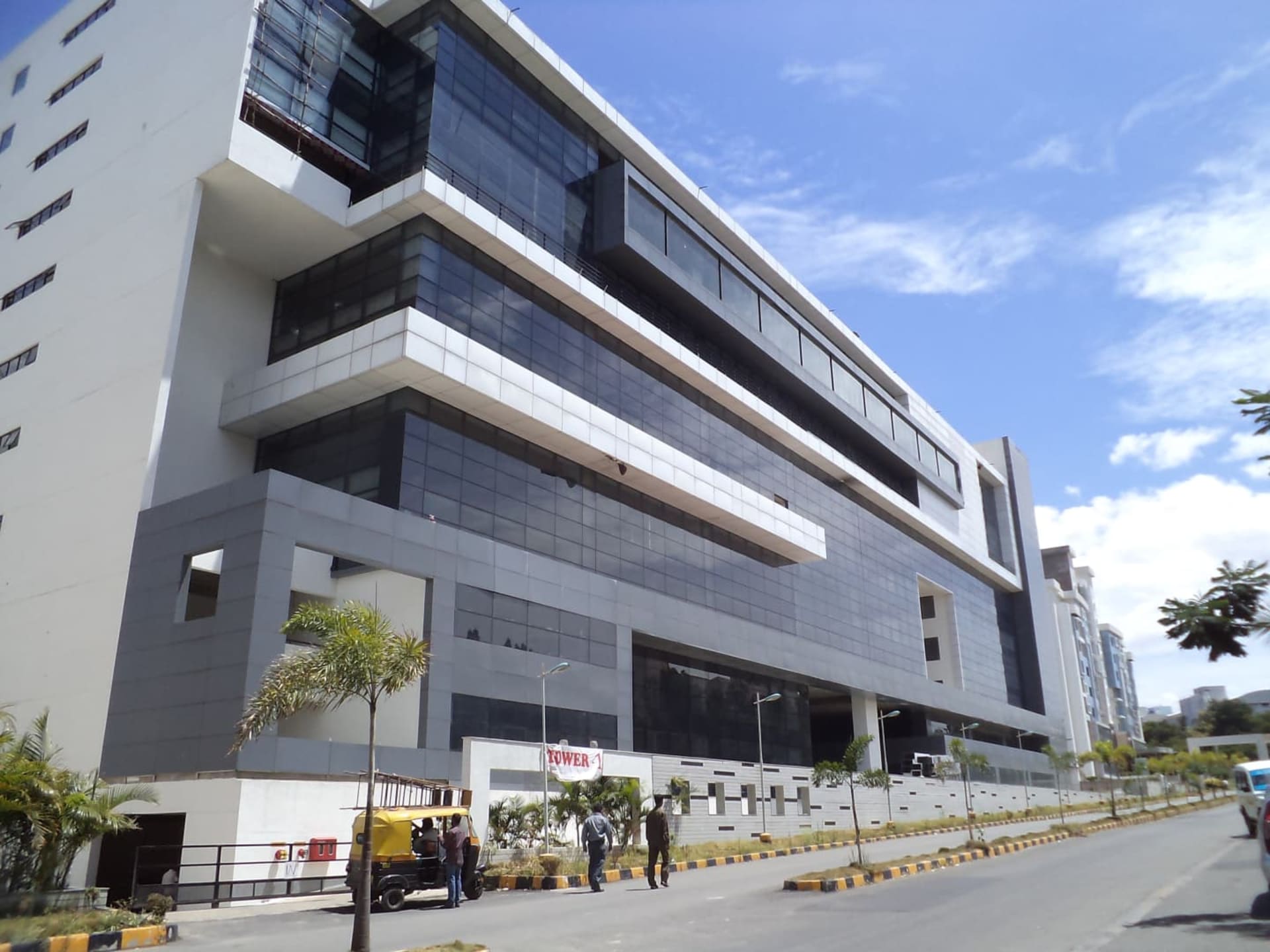
Bengaluru’s housing market is closely tied to the fortunes of the technology industry. Nearly 60–70 percent of homebuyers in many new projects come from IT or tech-linked sectors, according to industry estimates. With the oil shock shaking the metropolitan cities in India, here are three scenarios emerging in 2026:

IT Sector Hiring Slowdown

Over the past year, however, global technology firms have slowed hiring as they restructure around artificial intelligence and automation. Several outsourcing companies have also signalled a cautious outlook on recruitment.

Real-estate consultants say the biggest risk to the city’s property market is not geopolitical events but employment sentiment.

“When tech hiring slows, housing demand reacts within six to twelve months,” said Anuj Puri, chairman of property consultancy ANAROCK. “Bengaluru’s residential market is deeply linked to white-collar employment growth.”

If hiring weakens significantly, especially in IT corridors such as Whitefield, Sarjapur Road and Outer Ring Road, demand for both rentals and home purchases could soften.

Rising Home Loan Interest Rates

Housing affordability is another key variable. Many Bengaluru buyers rely heavily on large home loans to finance property purchases.

If global oil prices remain high due to Middle East tensions, inflation could rise. Higher inflation often pushes central banks to keep interest rates elevated.

For homebuyers, even a small increase in borrowing costs can significantly affect monthly payments. On a ₹1-crore loan, a one-percentage-point increase in interest rates can raise EMIs by several thousand rupees per month.

Property analysts say that while demand in Bengaluru’s premium segment remains strong, mid-income buyers are far more sensitive to financing costs.

If interest rates stay high for an extended period, developers could see slower sales in the ₹60 lakh to ₹1.5 crore housing category, which forms a large part of the city’s market.

Rapid Supply Of New Housing

Another factor being closely monitored is the rapid expansion of housing supply.

Developers have launched a large number of new residential projects across Bengaluru in the past two years, particularly in expanding suburbs such as North Bengaluru, Sarjapur Road, Devanahalli and Yelahanka.

This surge in supply was driven by strong demand after the pandemic, when many professionals sought larger homes and better living spaces.


However, if new launches continue rising faster than actual sales, the market could gradually shift toward a buyer-friendly environment. In such a scenario, prices may stabilise or grow more slowly.

Real-estate consultant Knight Frank has noted that Bengaluru already ranks among the top cities globally for housing price growth, which means sustained increases may become harder to maintain without strong demand.


For now, Bengaluru remains one of India’s strongest housing markets due to tech employment, migration and infrastructure expansion.

But analysts say three trends will determine the direction of prices in the coming year:

• the strength of the IT job market
• interest rate movements
• the balance between housing supply and demand

If all three weaken at the same time, the city could see its first meaningful property slowdown in several years, even if prices do not fall.


‘Alarming’ slowdown in human development – could AI provide answers?

For several decades, human development indicators showed a steady, upward curve and UN researchers predicted that by 2030, a high level of development would be enjoyed by the global population.

Those hopes have been dashed in recent years following a period of exceptional crises such as the COVID-19 pandemic – and progress has stalled across all regions of the world.

‘Very real threat’ to progress

The Human Development Report, an annual publication from the UN Development Programme (UNDP), shows that inequalities between rich and poor countries have widened for the fourth year in a row.  

Global pressures, such as increasing trade tensions and a worsening debt crisis which limits the ability of governments to invest in public services, are narrowing traditional paths to development.

“This deceleration signals a very real threat to global progress,” said Achim Steiner, UNDP Administrator. “If 2024’s sluggish progress becomes ‘the new normal’, that 2030 milestone could slip by decades – making our world less secure, more divided, and more vulnerable to economic and ecological shocks.”

A robot which could carry out tasks assigned to humans stands in a shopping mall in Kyoto, Japan.

Maybe the robots aren’t coming for our jobs after all

Despite the gloomy indicators, the report is strikingly upbeat about the potential of artificial intelligence, noting the breakneck pace at which free or low-cost tools have been embraced by businesses and individuals alike.

UNDP researchers carried out a survey to gauge opinions on AI and discovered that around 60 per cent of respondents expect the technology to positively impact their work and create new opportunities.  

Those living in low and medium levels of development were particularly keen: 70 per cent expect AI to increase their productivity, and two thirds anticipate using AI in education, health, or work within the next year. 

Action stations

The report’s authors include recommendations for action to make sure that AI is as beneficial as possible, including the modernisation of education and health systems to adequately meet today’s needs – building an economy focused on human collaboration with AI (rather than competition) – putting humans at the heart of AI development, from design to deployment.

“The choices we make in the coming years will define the legacy of this technological transition for human development,” said Pedro Conceição, Director of UNDP’s Human Development Report Office.  

“With the right policies and focus on people, AI can be a crucial bridge to new knowledge, skills, and ideas that can empower everyone from farmers to small business owners.”

Ultimately, the report’s message is that the impact of AI is hard to predict. Rather than being an autonomous force, it is a reflection and amplifier of the values and inequalities of the societies that shape it.  

To avoid what it calls “development disappointment”, UNDP urges stronger global cooperation on AI governance, alignment between private innovation and public goals, and a renewed commitment to human dignity, equity, and sustainability.

“The 2025 HDR is not a report about technology,” writes Mr.  Steiner in the foreword. “It is a report about people – and our ability to reinvent ourselves in the face of profound change.”

© IMF/Andrew Caballero-Reynolds

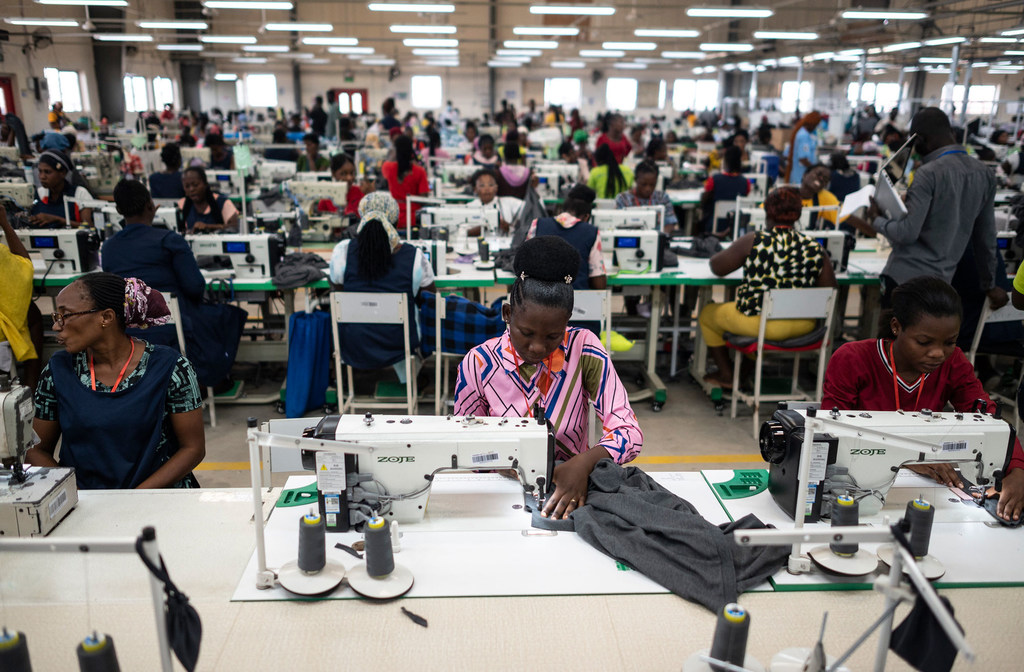
Workers sew fabric at an apparel factory in Ghana.

Source link