Global alliance meets in Doha to confront hunger crisis

Addressing heads of state, ministers and international partners, President of the UN General Assembly Annalena Baerbock said today’s hunger crisis is not the result of scarcity, but of inequality, conflict and policy choices.

Last year, more than 670 million people experienced hunger, and 2.3 billion faced moderate or severe food insecurity. “That is billions wondering where their next meal will come from. Parents having to see their children go to bed hungry,” she said.

This is occurring in a world that wastes over one billion meals every day.

“The crisis of hunger is not lack of food. It is entirely preventable,” she stressed, pointing to failures in access, affordability and social protection.

The meeting took place as Doha hosts the Second World Summit for Social Development, where nearly 14,000 attendees are discussing how to strengthen social systems, expand opportunity and reduce inequality.

As the planet heats, hunger spreads

Ms. Baerbock highlighted climate change as a rapidly accelerating driver of hunger. Recalling a recent visit to the Sahel, she described fertile land turned to dust as heat rises and rains fail. “This is the new frontline of food insecurity,” she said.

If global warming continues unchecked, as many as 1.8 billion additional people could face food insecurity, she warned. But limiting warming to 1.5°C, backed by investment in adaptation and resilience, could prevent millions from falling deeper into poverty.

Launched under Brazil’s G20 Presidency in 2024, the Global Alliance Against Hunger and Poverty now includes nearly 200 members – over 100 countries, regional organizations, international agencies and civil society groups. Monday’s meeting was its first at leaders’ level, aimed at accelerating practical cooperation, from scaling up social protection to strengthening climate-resilient agriculture.

“In a world of plenty – where there should be more than enough to go around – ensuring that everyone, everywhere has enough to eat is entirely possible,” Ms. Baerbock said. “A world free from hunger and poverty is not a distant aspiration. It is within reach, if we reach for it together.”

 

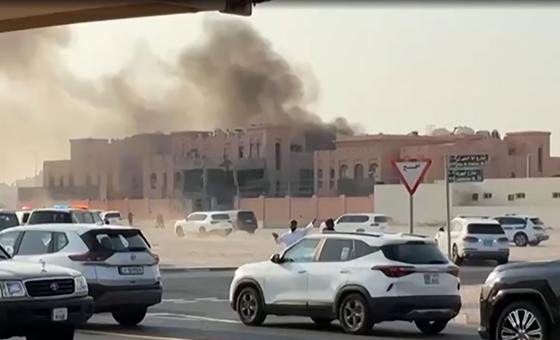
Israeli strike in Doha marks ‘alarming escalation’, warns top UN official, in call to uphold diplomatic norms

Rosemary DiCarlo described Tuesday’s strike in a residential area of the Qatari capital – which targeted Hamas’s political leadership killing several affiliates along with a Qatari security officer – as potentially opening a “new and perilous chapter in this devastating conflict, seriously threatening regional peace and stability.

The attack occurred on 9 September in residential compounds reportedly housing members of the Hamas’ political bureau, including the son of its chief negotiator, Khalil al-Hayya.

While Hamas leaders survived, the organization said, the incident disrupted ongoing negotiations over a US-mediated ceasefire and hostage release agreement to end the war in Gaza.

Respect sovereignty

The sovereignty and territorial integrity of any country, including Qatar – a valued partner in advancing peacemaking and conflict resolution – must be respected,” Ms. DiCarlo told ambassadors.

She urged all parties to exercise restraint and reaffirmed the need to preserve negotiation and mediation channels to prevent further suffering in Gaza and the wider region.

Israel claimed responsibility for the strike, with Prime Minister Benjamin Netanyahu describing it as “a wholly independent operation” following a deadly attack on civilians in Jerusalem on 8 September, which Hamas said it carried out.

Qatar, the Gulf Cooperation Council, the League of Arab States, and the Organization of Islamic Cooperation condemned the action and expressed concern over further escalation.

Confidence undermined

Ms. DiCarlo told ambassadors that Israel’s strike came “at the height of ongoing consultations.”

Any action that undermines the work of mediation and dialogue weakens confidence in the very mechanisms we depend on for conflict resolution,” she said, stressing that durable solutions in the Middle East cannot be achieved through further violence.

She called for renewed commitment to diplomacy, warning that the urgency of a ceasefire and hostage release has never been greater.

I call on all stakeholders to exercise utmost restraint at this sensitive time and recommit to diplomacy. The urgency of a ceasefire and hostage release deal in Gaza has never been greater. Strike a deal. Free the hostages. End the suffering of the people of Gaza.”

Gaza crisis spiralling

Meanwhile, the humanitarian and security situation in Gaza and the occupied West Bank remains critical.

Since the conflict in Gaza erupted in October 2023 – following attacks by Hamas and other Palestinian armed groups on communities in southern Israel, tens of thousands have died – mostly civilians – infrastructure and basic services are largely destroyed, and the enclave lies in ruins while a new offensive to take Gaza City is ongoing.

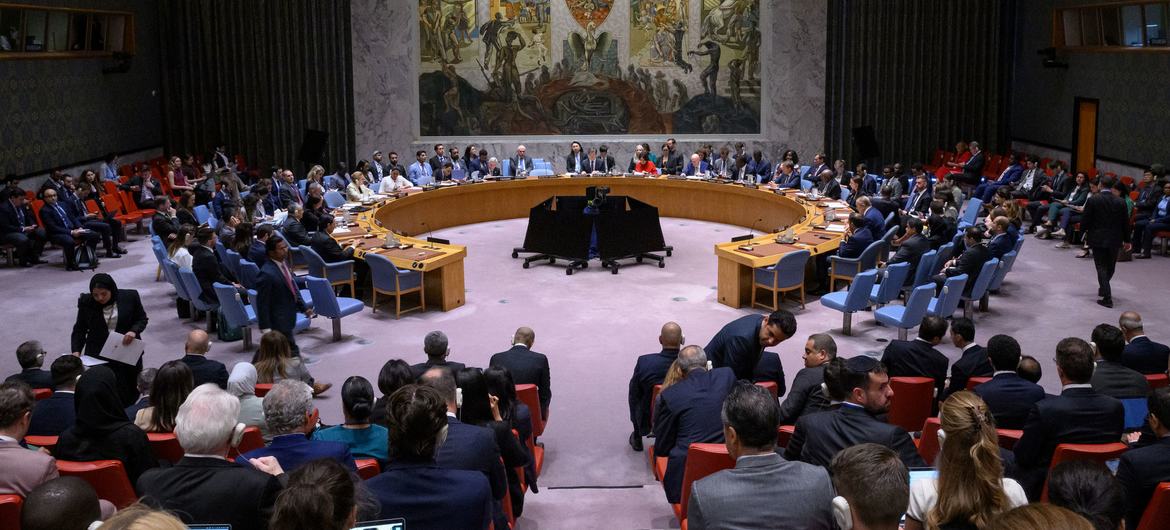
The UN Security Council meets to discuss the situation in the Middle East in the aftermath of an Israeli strike in Doha, the capital of Qatar..

Security Council press statement

Ahead of Thursday’s session, the Security Council issued a press statement expressing condemnation of the strikes in Doha and deep regret over the loss of civilian life.

The statement reaffirmed support for Qatar’s sovereignty and territorial integrity and acknowledges the country’s key role in mediation efforts to end the devastating war, alongside Egypt and the United States.

It emphasised that releasing hostages – including those killed by Hamas – ending hostilities, and ensuring civilian protection in Gaza, remain the Council’s highest priorities.

It also on all parties to seize ongoing diplomatic opportunities for peace.

Source link

MIDDLE EAST LIVE: Israeli attack on Hamas leaders in Doha ‘potentially opens a new and perilous chapter’

The UN Secretary-General has condemned an Israeli strike targeting Hamas leaders in Doha, the capital of Qatar, on Tuesday, while highlighting the “very positive role” played by the country in achieving a ceasefire in Gaza and securing the release of hostages.

Source link

Doha agreement brings DR Congo government and M23 rebels a step closer to peace

In a statement released on 19 July, MONUSCO said that the Declaration of Principles, signed in Doha under the mediation of Qatar, “reflects the parties’ resolve to prioritise peaceful means, establish a ceasefire, and set up a joint mechanism to define its practical implementation.”

“This important declaration marks a shift towards easing tensions and protecting civilians seriously affected by the conflict,” declared Mr. Bruno Lemarquis, Deputy Special Representative of the UN Secretary-General in the DRC and Acting Head of MONUSCO. “We commend the commitments made and call for their timely and good-faith implementation.”

These commitments include measures to facilitate the voluntary, safe, and dignified return of internally displaced persons and refugees to their places or countries of origin, and the encouragement of inclusive dialogue, seen as vital to addressing the root causes of the conflict and achieving lasting peace.

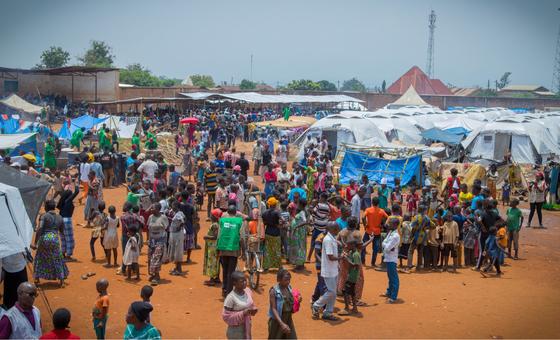
Earlier this year, the M23 launched an offensive in North and South Kivu provinces, capturing cities and villages, including provincial capitals Goma and Bukavu. Thousands of civilians were killed, hundreds of thousands more were displaced, and serious human rights violations were committed.

The Declaration of Principles comes less than a month after a peace agreement signed by Congo and Rwanda, long accused by the Congolese Government of supporting the M23.

The Mission’s statement highlighted the Declaration’s emphasis on civilian protection and support for the ceasefire, with assistance from MONUSCO and other partners, and reaffirmed its readiness to support the cessation of hostilities, particularly through the establishment of a credible and jointly agreed verification mechanism.

MONUSCO’s statement concluded by urging all parties to honour their commitments, act in good faith throughout the process, and prioritise human rights, security, and the aspirations of the Congolese people in all decisions. 

Source link