
M23 rebels: UN sees progress in talks but warns violence persists

Qatar is facilitating discussions between the Congolese government and the M23 armed group, which controls large areas of North Kivu and South Kivu provinces.

The latest developments follow months of intense fighting that has displaced civilians and destabilised the region.

However, the UN warns that despite diplomatic momentum, the security situation on the ground remains volatile.

M23, also known as the March 23 Movement, controls large areas of North Kivu and South Kivu provinces. In January 2025, after a rapid offensive, the group seized Goma, the capital of North Kivu. 

Weeks later, it captured Bukavu, the capital of South Kivu. Since then, the rebels have set up parallel administrations in areas under their control. The UN says the group is supported by the Rwandan armed forces, an allegation Kigali has repeatedly denied.

© MONUSCO/Sylvain Liechti

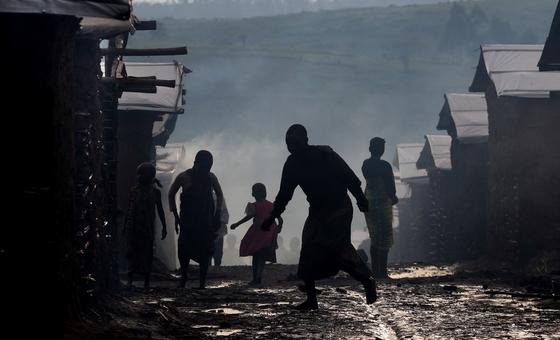
Uvira, a major city in South Kivu on the shores of Lake Tanganyika, Democratic Republic of the Congo. (file)

Framework agreement

On 2 February, the Congolese authorities and M23 signed a document setting out the terms of reference for a ceasefire monitoring and verification mechanism under the Doha Framework Agreement, signed in November 2025. The Doha talks are being mediated by Qatar.

Separate discussions have also taken place between the DRC and Rwanda, with mediation by the United States. 

In December, Presidents Félix Tshisekedi of the DRC and Paul Kagame of Rwanda signed the Washington Agreements, raising hopes of an end to the fighting. However, the UN says the security situation at the start of this year remains volatile and continues to deteriorate.

Immediate ceasefire call

Against this backdrop, the UN peacekeeping mission in the DRC, known as MONUSCO, has renewed its call for an immediate cessation of hostilities. 

It recalled that a UN Security Council resolution adopted last year authorises the Mission to support the implementation of a permanent ceasefire, including through technical and logistical assistance to a regional verification mechanism.

“MONUSCO stands ready to support a credible ceasefire monitoring and verification mechanism within the limits of its mandate as defined by the Security Council and in full respect of the sovereignty of the Democratic Republic of Congo,” said Vivian van de Perre, the Deputy Special Representative of the Secretary-General and Acting Head of MONUSCO.

“The Mission will continue to engage constructively with relevant stakeholders within the established ceasefire architecture and to communicate transparently on the scope and modalities of its support,” she added.

‘Positive signal’ from Doha

Speaking to UN News, MONUSCO spokesperson Ndeye Khady Lo described the progress in Doha as “a positive signal” that helps make “the ceasefire architecture more concrete and operational”.

She said an initial team of UN peacekeepers would be deployed to the town of Uvira, in South Kivu, to support the monitoring mechanism. 

MONUSCO stressed, however, that this would not mark a permanent return to the province, which the Mission left in June 2024, but a limited and strictly defined role linked to the ceasefire process.

Source link

Ceasefire in doubt as Rwanda-backed rebels kill hundreds in eastern DR Congo

The UN human rights office (OHCHR) said it had received first-hand accounts indicating that at least 319 civilians were killed by M23 fighters, aided by members of the Rwanda Defence Force, between 9 and 21 July in North Kivu province.

Most of the victims, including at least 48 women and 19 children, were local farmers camping in their fields during the planting season.

Stop attacks immediately

Volker Türk, UN High Commissioner for Human Rights, condemned the “surge of deadly violence”.

“I am appalled by the attacks on civilians by the M23 and other armed groups in eastern DRC amid continued fighting, despite the ceasefire that was recently signed in Doha,” he said in a news release on Wednesday.

All attacks against civilians must stop immediately and all those responsible must be held to account.

The latest massacre marks one of the highest civilian death tolls documented since the M23 – a group largely composed of Congolese Tutsi fighters established over 15 years ago – re-emerged as a major military threat in 2022.

Peace agreement faltering

The spike in violence comes just weeks after two high-level peace initiatives appeared to offer a path forward.

On 27 June, Rwanda and the DRC signed a bilateral peace agreement in Washington, followed by the so-called Doha Declaration between the DRC Government and M23 rebel leaders on 19 July, which committed both sides to a ceasefire and further negotiations.

However, humanitarian NGOs say little has changed on the ground.

“I urge the signatories and facilitators of both the Doha and Washington agreements to ensure that they rapidly translate into safety, security and real progress for civilians,” Mr. Türk said.

Attacks from all sides

Meanwhile, other armed groups continue to terrorise civilians across eastern Congo. In July alone, the UN documented deadly attacks by the Allied Democratic Forces (ADF), Coopérative pour le développement du Congo (CODECO) and Raia Mutomboki/Wazalendo militias in Ituri, South Kivu and North Kivu.

On 27 July, ADF fighters attacked a Christian congregation in Ituri’s Komanda village, killing at least 40 worshippers – including 13 children – and torching homes, shops and vehicles. Earlier in the month the same group killed at least 70 civilians in a single attack on Pikamaibo village.

Women and girls are also enduring systematic sexual violence as a weapon of war. On 27 July, eight women were raped by Raia Mutomboki/Wazalendo fighters in South Kivu’s Busolo village.

Worsening humanitarian crisis

The growing insecurity is fuelling what humanitarians describe as one of the world’s most acute humanitarian crises.

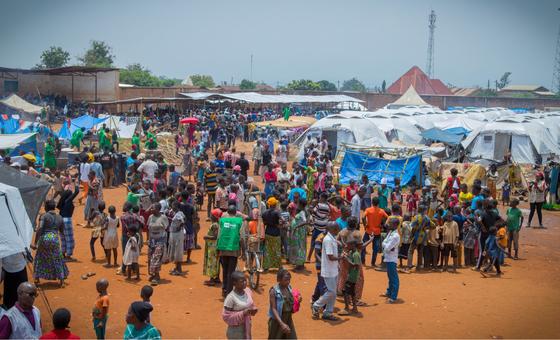
According to UN figures, over 7.8 million people are now internally displaced (IDPs) in eastern DRC – the highest figure on record – while 28 million people are facing food insecurity, including nearly four million at emergency levels.

Adding to the strain, more than 30,000 refugees from South Sudan have fled into Ituri province since April, escaping a wave of killings and active hostilities across Central Equatoria State.

The World Food Programme (WFP) has warned that funding shortfalls may soon force it to suspend lifesaving assistance to hundreds of thousands.

Health services are also collapsing under pressure. In the first half of 2025, 33 attacks were recorded on health workers and facilities – a 276 per cent increase from the previous six months, according to the UN reproductive health agency, UNFPA.
Source link

Doha agreement brings DR Congo government and M23 rebels a step closer to peace

In a statement released on 19 July, MONUSCO said that the Declaration of Principles, signed in Doha under the mediation of Qatar, “reflects the parties’ resolve to prioritise peaceful means, establish a ceasefire, and set up a joint mechanism to define its practical implementation.”

“This important declaration marks a shift towards easing tensions and protecting civilians seriously affected by the conflict,” declared Mr. Bruno Lemarquis, Deputy Special Representative of the UN Secretary-General in the DRC and Acting Head of MONUSCO. “We commend the commitments made and call for their timely and good-faith implementation.”

These commitments include measures to facilitate the voluntary, safe, and dignified return of internally displaced persons and refugees to their places or countries of origin, and the encouragement of inclusive dialogue, seen as vital to addressing the root causes of the conflict and achieving lasting peace.

Earlier this year, the M23 launched an offensive in North and South Kivu provinces, capturing cities and villages, including provincial capitals Goma and Bukavu. Thousands of civilians were killed, hundreds of thousands more were displaced, and serious human rights violations were committed.

The Declaration of Principles comes less than a month after a peace agreement signed by Congo and Rwanda, long accused by the Congolese Government of supporting the M23.

The Mission’s statement highlighted the Declaration’s emphasis on civilian protection and support for the ceasefire, with assistance from MONUSCO and other partners, and reaffirmed its readiness to support the cessation of hostilities, particularly through the establishment of a credible and jointly agreed verification mechanism.

MONUSCO’s statement concluded by urging all parties to honour their commitments, act in good faith throughout the process, and prioritise human rights, security, and the aspirations of the Congolese people in all decisions. 

Source link