Monsoon floods kill more than 700 in Pakistan, with heavy rains set to continue

The National Disaster Management Authority has also reported 978 injuries and the destruction or damage of more than 2,400 houses, while over 1,000 livestock have been lost as of Thursday, 21 August.

Severe weather is forecast to continue into early September, raising the risk of further flooding, landslides and crop losses, according to the UN Office for the Coordination of Humanitarian Affairs (OCHA).

Khyber Pakhtunkhwa hit hardest

The northwestern province of Khyber Pakhtunkhwa has borne the brunt of the disaster. 

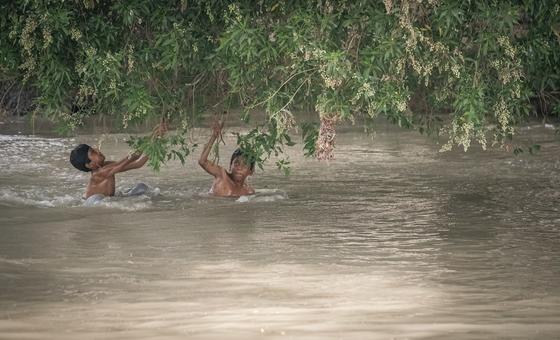
Authorities declared a state of emergency in nine districts, including Buner, Shangla and Mansehra, after torrential rains between 15 and 19 August left 368 people dead, 182 injured and damaged more than 1,300 homes. Nearly 100 schools were also destroyed.

The international charity CARE said its teams found widespread devastation in Buner, where families reported homes and livelihoods swept away within minutes by torrents of floodwater carrying boulders and debris.

Children most affected

The toll on children has been particularly severe, with displacement, loss of schooling and limited access to safe water putting their health and well-being at grave risk. 

According to the UN Children’s Fund (UNJCEF), at least 21 children were among those killed in Khyber Pakhtunkhwa since 15 August.

Many schools have been destroyed or are now being used as temporary shelters, further restricting access to education and safe spaces.

Urban flooding in Karachi

In Sindh province, heavy rains on 19 August triggered urban flooding in Karachi – Pakistan’s largest city – where at least six people were killed in wall collapses and electrocutions. Rainfall reached up to 145 millimetres (about 5.75 inches) in parts of the city, inundating roads and leaving many neighbourhoods without power for hours.

The province of Punjab also suffered extensive flooding along the Indus and Chenab rivers, which has displaced more than 2,300 families and damaged cash crops across thousands of acres.

Scaling up support

Federal and provincial authorities are leading the response, having mobilized over 2,000 personnel for rescue and evacuation. In coordination with the UN and partners, they have dispatched key relief items, including food, tents and medical supplies to affected areas.

OCHA said it has deployed field coordinators to the hardest-hit districts and activated emergency mechanisms, including the release of funds from its regional humanitarian envelope for Pakistan – prioritising life-saving assistance in health, water, food security and shelter.

For its part, UNICEF has dispatched essential medicines and hygiene kits to affected districts. Each kit includes soap, water containers and other hygiene supplies to help prevent disease outbreaks.

Worrying trend

Pakistan has endured devastating monsoon seasons in recent years. In 2022, unprecedented floods killed more than 1,700 people, displaced millions, and caused an estimated $40 billion in economic losses.

Erratic and intensified rainfall patterns, amplified by climate change, are compounding the country’s vulnerability, threatening lives, livelihoods and long-term recovery across southern Asia. 
Source link

Ceasefire in doubt as Rwanda-backed rebels kill hundreds in eastern DR Congo

The UN human rights office (OHCHR) said it had received first-hand accounts indicating that at least 319 civilians were killed by M23 fighters, aided by members of the Rwanda Defence Force, between 9 and 21 July in North Kivu province.

Most of the victims, including at least 48 women and 19 children, were local farmers camping in their fields during the planting season.

Stop attacks immediately

Volker Türk, UN High Commissioner for Human Rights, condemned the “surge of deadly violence”.

“I am appalled by the attacks on civilians by the M23 and other armed groups in eastern DRC amid continued fighting, despite the ceasefire that was recently signed in Doha,” he said in a news release on Wednesday.

All attacks against civilians must stop immediately and all those responsible must be held to account.

The latest massacre marks one of the highest civilian death tolls documented since the M23 – a group largely composed of Congolese Tutsi fighters established over 15 years ago – re-emerged as a major military threat in 2022.

Peace agreement faltering

The spike in violence comes just weeks after two high-level peace initiatives appeared to offer a path forward.

On 27 June, Rwanda and the DRC signed a bilateral peace agreement in Washington, followed by the so-called Doha Declaration between the DRC Government and M23 rebel leaders on 19 July, which committed both sides to a ceasefire and further negotiations.

However, humanitarian NGOs say little has changed on the ground.

“I urge the signatories and facilitators of both the Doha and Washington agreements to ensure that they rapidly translate into safety, security and real progress for civilians,” Mr. Türk said.

Attacks from all sides

Meanwhile, other armed groups continue to terrorise civilians across eastern Congo. In July alone, the UN documented deadly attacks by the Allied Democratic Forces (ADF), Coopérative pour le développement du Congo (CODECO) and Raia Mutomboki/Wazalendo militias in Ituri, South Kivu and North Kivu.

On 27 July, ADF fighters attacked a Christian congregation in Ituri’s Komanda village, killing at least 40 worshippers – including 13 children – and torching homes, shops and vehicles. Earlier in the month the same group killed at least 70 civilians in a single attack on Pikamaibo village.

Women and girls are also enduring systematic sexual violence as a weapon of war. On 27 July, eight women were raped by Raia Mutomboki/Wazalendo fighters in South Kivu’s Busolo village.

Worsening humanitarian crisis

The growing insecurity is fuelling what humanitarians describe as one of the world’s most acute humanitarian crises.

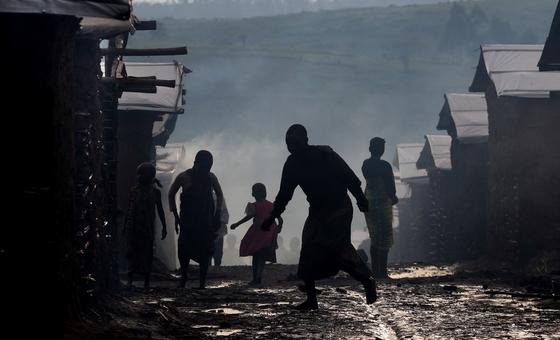
According to UN figures, over 7.8 million people are now internally displaced (IDPs) in eastern DRC – the highest figure on record – while 28 million people are facing food insecurity, including nearly four million at emergency levels.

Adding to the strain, more than 30,000 refugees from South Sudan have fled into Ituri province since April, escaping a wave of killings and active hostilities across Central Equatoria State.

The World Food Programme (WFP) has warned that funding shortfalls may soon force it to suspend lifesaving assistance to hundreds of thousands.

Health services are also collapsing under pressure. In the first half of 2025, 33 attacks were recorded on health workers and facilities – a 276 per cent increase from the previous six months, according to the UN reproductive health agency, UNFPA.

Source link

Outrage as Russian overnight attacks on Ukraine cities kill at least nine civilians

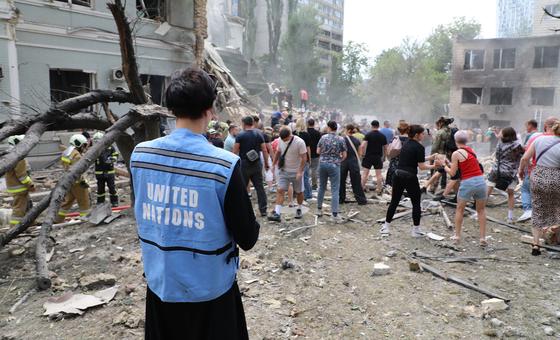
Reports indicate that the latest Russian strikes damaged 12 buildings in the capital, causing widespread damage to homes, businesses and key services, while phones have been heard ringing from the rubble.

Other Ukrainian cities targeted included Zhytomyr – due west of Kyiv – and the northeastern cities of Sumy –  where a daytime missile strike killed at least 34 people on 13 April – and Kharkiv – where the authorities reported 24 drone and missile strikes in total.

“The casualty count is expected to rise as emergency teams continue search-and-rescue operations amid,” said the UN aid coordination office, OCHA.

The development follows Ukrainian President Volodymyr Zelensky’s reported decision on Wednesday to reject a US-led proposal to seek a peace deal with Russia that would have involved ceding territory lost during the war. In theory, this would include the eastern Ukrainian regions of Donetsk, Luhansk, Kherson and Zaporizhzhia, in addition to Crimea, which Russia annexed illegally in 2014.

“Last night’s large-scale attack by the armed forces of the Russian Federation on residential areas in Kyiv and surrounding regions is yet another appalling violation of international humanitarian law,” said the UN’s top aid official in Ukraine, Matthias Schmale.

Children and a pregnant woman were among the more than 70 people injured by Wednesday night’s reported missile and drone strikes. “This senseless use of force must stop… Civilians must never be targets”, insisted Mr. Schmale, UN Humanitarian Coordinator for Ukraine.

Echoing that message, the UN Children’s Fund, UNICEF, appealed for an end to the use of explosive weapons in civilian areas.

Source link