
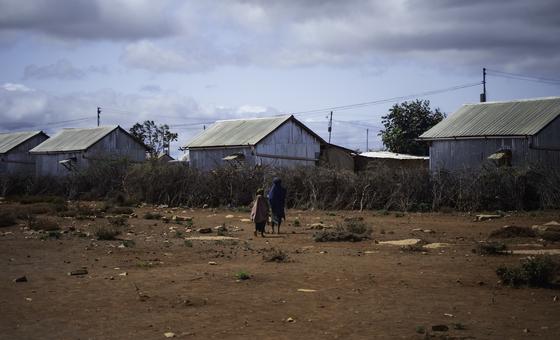
Somalia declares drought emergency as millions face hunger after failed rains

On 10 November, the Federal Government of Somalia formally declared a drought emergency and appealed for urgent international assistance as conditions continued to deteriorate across northern, central and southern regions, according to the UN relief coordination office, OCHA.

Puntland is among the worst affected areas, where authorities estimate that nearly one million people need support, including 130,000 in immediate life-threatening need.

A UN assessment mission to Bari and Nugaal regions earlier this month found communities grappling with acute water and food shortages, with residents warning that catastrophe could unfold in the coming months.

“We have not received rain since last year; this is the worst drought in years,” said Abdiqani Osman Omar, the mayor of Shaxda village in Bari region.

“Hundreds of displaced families moved here three months ago, and more are coming. The new arrivals are mostly women and children as the men have moved to nearby Ethiopia in search of pasture and water.”

The village has no capacity to support them, he added, stating that even host communities need water and food assistance.

Dried up water sources, abandoned settlements

Across Puntland, water points have dried up, vegetation has withered and once-inhabited pastoral settlements now stand abandoned.

In Dhaxan town, where brief Gu’ season (April-June) showers offered short-lived hope earlier this year, residents are now dependent on expensive trucked water after the local borehole was found to be contaminated.

Community leader Jama Abshir Hersi said around 150 families moved to the town after the rains.

“We used to receive food and nutrition assistance, and medical supplies for our health unit. All that assistance has dwindled,” he said.

Funding shortfalls

Funding shortfalls are compounding the crisis.

As of 23 November, Somalia’s 2025 Humanitarian Response Plan was only 23.7 per cent funded, forcing major reductions in assistance. The number of people receiving emergency food aid plunged from 1.1 million in August to just 350,000 this month.

In Puntland alone, 89 supplementary feeding sites and 198 health and stabilization centres are facing severe supply shortages.

Millions going hungry

The drought is unfolding amid an already dire humanitarian landscape. At least 4.4 million people are projected to face acute food insecurity through December, while 1.85 million children under five are expected to suffer acute malnutrition through mid-2026.

Weather forecasts indicate little immediate relief. The UN Food and Agriculture Organization (FAO) warned that dry and hot conditions are expected to persist across most of the country, particularly in central and northern regions.

“The prevailing high temperatures and poor rain are likely to exacerbate water stress and limit pasture regeneration in most areas,” the agency said.
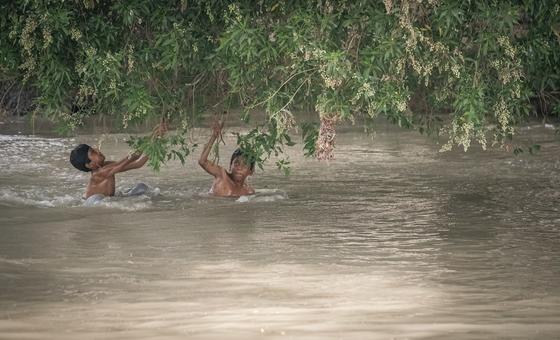
Monsoon floods kill more than 700 in Pakistan, with heavy rains set to continue

The National Disaster Management Authority has also reported 978 injuries and the destruction or damage of more than 2,400 houses, while over 1,000 livestock have been lost as of Thursday, 21 August.

Severe weather is forecast to continue into early September, raising the risk of further flooding, landslides and crop losses, according to the UN Office for the Coordination of Humanitarian Affairs (OCHA).

Khyber Pakhtunkhwa hit hardest

The northwestern province of Khyber Pakhtunkhwa has borne the brunt of the disaster. 

Authorities declared a state of emergency in nine districts, including Buner, Shangla and Mansehra, after torrential rains between 15 and 19 August left 368 people dead, 182 injured and damaged more than 1,300 homes. Nearly 100 schools were also destroyed.

The international charity CARE said its teams found widespread devastation in Buner, where families reported homes and livelihoods swept away within minutes by torrents of floodwater carrying boulders and debris.

Children most affected

The toll on children has been particularly severe, with displacement, loss of schooling and limited access to safe water putting their health and well-being at grave risk. 

According to the UN Children’s Fund (UNJCEF), at least 21 children were among those killed in Khyber Pakhtunkhwa since 15 August.

Many schools have been destroyed or are now being used as temporary shelters, further restricting access to education and safe spaces.

Urban flooding in Karachi

In Sindh province, heavy rains on 19 August triggered urban flooding in Karachi – Pakistan’s largest city – where at least six people were killed in wall collapses and electrocutions. Rainfall reached up to 145 millimetres (about 5.75 inches) in parts of the city, inundating roads and leaving many neighbourhoods without power for hours.

The province of Punjab also suffered extensive flooding along the Indus and Chenab rivers, which has displaced more than 2,300 families and damaged cash crops across thousands of acres.

Scaling up support

Federal and provincial authorities are leading the response, having mobilized over 2,000 personnel for rescue and evacuation. In coordination with the UN and partners, they have dispatched key relief items, including food, tents and medical supplies to affected areas.

OCHA said it has deployed field coordinators to the hardest-hit districts and activated emergency mechanisms, including the release of funds from its regional humanitarian envelope for Pakistan – prioritising life-saving assistance in health, water, food security and shelter.

For its part, UNICEF has dispatched essential medicines and hygiene kits to affected districts. Each kit includes soap, water containers and other hygiene supplies to help prevent disease outbreaks.

Worrying trend

Pakistan has endured devastating monsoon seasons in recent years. In 2022, unprecedented floods killed more than 1,700 people, displaced millions, and caused an estimated $40 billion in economic losses.

Erratic and intensified rainfall patterns, amplified by climate change, are compounding the country’s vulnerability, threatening lives, livelihoods and long-term recovery across southern Asia. 

Source link

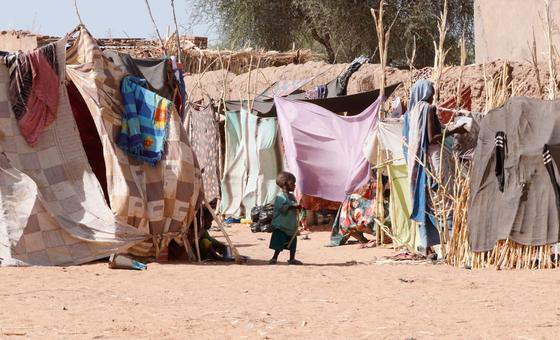
Sudan: Humanitarian needs deepen amid rising hostilities and heavy rains

Nearly 27 months have passed since fighting broke out between the Sudanese Armed Forces (SAF) and a former ally, the paramilitary Rapid Security Forces (RSF), creating an unprecedented humanitarian crisis.

The UN voiced grave alarm over escalating hostilities in El Fasher, the besieged capital of North Darfur state. 

Serious risk of renewed violence

Large numbers of RSF fighters reportedly entered the city on Friday for the first time since the siege began over a year ago.

Local sources report that recent fierce fighting, particularly in the southwest and east of El Fasher, has led to civilian casualties.

“The situation remains highly volatile and unpredictable, with a serious risk of renewed violence, as well as further displacement and disruption of humanitarian operations – which are already under severe strain,” OCHA said.

Insecurity in North Kordofan state

Meanwhile, in North Kordofan State, growing insecurity forced 3,400 people to flee their homes over the weekend, according to the UN International Organization for Migration (IOM). 

Local reports indicate that at least 18 civilians were killed, and homes were burned in several villages.

OCHA reminded all parties that attacks on civilians and civilian infrastructure are prohibited under international humanitarian law, and that civilians must be protected at all times.

Rainy season constraints

Meanwhile, heavy rains have been reported in West and Central Darfur states, which may affect road conditions in some locations and worsen the challenges humanitarians are already facing in accessing people in need.

“With the rainy season continuing through October, the risk of floods, access constraints and disease outbreaks is growing – especially during this critical lean season, a time between harvests when food stocks traditionally run low,” OCHA warned.

Families return to West Darfur

The agency said that despite the crisis, signs of small-scale returns are visible in West Darfur state, where displaced families have been returning from Chad to three localities – Sirba, Jebel Moon and Kulbus – to cultivate their farms. 

Furthermore, local authorities report about 40 people returning daily to Kulbus, with 300 arriving over the past week.

OCHA urged all parties to enable safe and unimpeded access to all people in need across Sudan, and for donors to step up their support.

Some 30 million people nationwide – more than half the population – need vital aid and protection this year. 

Source link

Torrential rains in Bengaluru trigger social media war on migrants issue

As Bangalore is struggling to withstand torrential rains, the appalling picture of inadequate infrastructure is getting zoomed in international headlines with pictures of techies, CEOs travelling by boats and tractors to reach workplaces or shifting from their inundated residences.

Meanwhile, social media is abuzz with a debate on India’s Silicon City’s infrastructure, while the locals retaliated with the Twitter campaign for “Leave Bengaluru” is trending, as some users are asking migrants to leave the city and go back to their native places..

The tech communities and the Outer Ring Road Companies Association have asked the government that if they are not ensured proper infrastructure, they would find new destinations.

It ensued twitter campaigns titled “#LeaveBengalurua, “#GetLostMigrants’ and a#Bengaluru_nammadu’ (It’s our Bengaluru) are trending.
One Virat Rocky slammed trolls as “migrant mindset” and said it’s “double standard” mindset. He said, “If you don’t love me in my crisis, then you don’t deserve me in my good times.” He has used photos of water flooding on arterial roads and pictures of the beautiful spring season in the city.

Another post stated: “Bengaluru is our city, not yours. Please go back to your native places.” “Listen migrants, you are in Bengaluru to earn your bread and butter, just complete your work and get lost, says yet another post.

On the other hand, “This is the result of paying taxes to the government. Forget about good infrastructure, they are not able to provide basic facilities as well,” stated a post while referring to the Global Technology Park on Outer Ring Road being inundated.

Meanwhile a minister too joined the debate.

“Those who say they can’t live in silicon city Bengaluru, should not come here. No one invited them to come and reside here,” stated Minister for Horticulture V. Munirathna, targetting the trolls.

Those who talk in demeaning manner about Bengaluru belong to low culture. It is not fair for them to bad mouth Bengaluru, the city which has given them food, shelter and livelihood, he said.

Bengaluru city is spoiled only because of people like this, ones whose history of the city will never talk about it. Those who come here first have to know the history. People from north India have settled in Bengaluru in large numbers. Those who tweet as per their whims and fancies must be taught a lesson legally, Minister Munirathna opined.


NASA-Cassini Probe: Image of Titan’s Tallest Mountain Measuring 10948 Ft Mesmerizes

NASA’s Cassini probe mission has sent images of Saturn’s moon Titan showing some tallest mountains on its surface measuring more than 10,000 feet.

The mountainous ridges called the Mithrim Montes showed three series of mountain ridges and the top measured 10,948 feet in height. Most of these mountain ridges are located near the equator. The region is called Xanadu.

“It’s not only the highest point we’ve found so far on Titan, but we think it’s the highest point we’re likely to find,” said Stephen Wall of the Cassini radar team at NASA. Another observer of the Cassini radar team Jani Radebaugh said, “Titan’s extremes also tell us important things about forces affecting its evolution.”

The mountainous cliffs point at the evolution of a planet where forces have shoved the surface upward from underneath. Earth too has similar mountains and cliffs and the tallest mountain Everest is one such star example. The Himalaya and Andes Mountains still manifest such forces of nature underneath.

Cassini has found that Titan also has rain and rivers and some active tectonic forces causing quakes. Titan’s rotation, tidal forces from Saturn or cooling of the crust are some of its natural effects tied to this phenomenon.

Since its arrival in 2004, Cassini’s observations have changed whole dimension of saturn and its largest moon Titan. It has revealed that Titan’s surface is shaped by rivers and lakes of liquid ethane and methane, which forms clouds and causes occasional rains from the sky as water does on Earth. Winds sculpt vast regions of dark, hydrocarbon-rich dunes that girdle the moon’s equator and low latitudes, while volcanoes erupt spewing liquid water as the lava.

On its journey to Saturn, Cassini carried the European-built Huygens probe, which landed on Jan. 14, 2005, becoming humankind’s first landing on a body in the Outer Solar System when it parachuted through Titan’s murky skies. Currently, scientists are eager to get new data that could confirm the presence of a liquid ocean beneath the Titan’s surface.

Radar images do not present scenes as they would appear to human eyes but use radio waves beamed by the spacecraft that are reflected and scattered off of Titan’s surface in order to see through Titan’s opaque atmosphere. Bright regions indicate materials that are rough or that otherwise scatter the beam; dark regions indicate materials that are relatively smooth or that otherwise absorb radar waves. A side effect of this technique is the grainy pattern called “speckle” that typically is present in Cassini radar images.

This view was produced using a technique for handling noise in Cassini radar images, called despeckling, that produces clearer, easier-to-interpret views. Titan’s icy crust sits atop a deep ocean of liquid water that probably acts much like Earth’s upper mantle — the layer of hot, high-pressure rock below the crust that can slowly flow and deform over time.

This radar view was obtained on May 12, 2008 taken from a location at 2 degrees south latitude, 127 degrees west longitude. The incidence angle is about 34 degrees.

The Cassini-Huygens mission is a cooperative project of NASA, the European Space Agency and the Italian Space Agency. NASA’s Jet Propulsion Laboratory, a division of the California Institute of Technology in Pasadena, manages the mission for NASA’s Science Mission Directorate, Washington.