
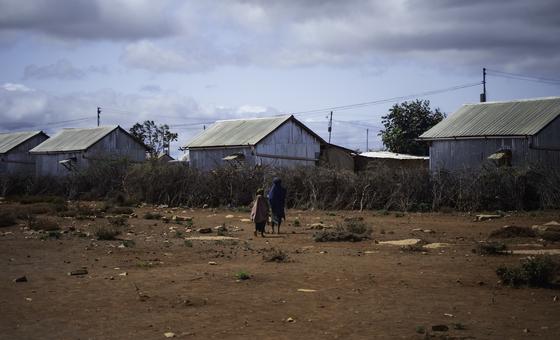
Somalia declares drought emergency as millions face hunger after failed rains

On 10 November, the Federal Government of Somalia formally declared a drought emergency and appealed for urgent international assistance as conditions continued to deteriorate across northern, central and southern regions, according to the UN relief coordination office, OCHA.

Puntland is among the worst affected areas, where authorities estimate that nearly one million people need support, including 130,000 in immediate life-threatening need.

A UN assessment mission to Bari and Nugaal regions earlier this month found communities grappling with acute water and food shortages, with residents warning that catastrophe could unfold in the coming months.

“We have not received rain since last year; this is the worst drought in years,” said Abdiqani Osman Omar, the mayor of Shaxda village in Bari region.

“Hundreds of displaced families moved here three months ago, and more are coming. The new arrivals are mostly women and children as the men have moved to nearby Ethiopia in search of pasture and water.”

The village has no capacity to support them, he added, stating that even host communities need water and food assistance.

Dried up water sources, abandoned settlements

Across Puntland, water points have dried up, vegetation has withered and once-inhabited pastoral settlements now stand abandoned.

In Dhaxan town, where brief Gu’ season (April-June) showers offered short-lived hope earlier this year, residents are now dependent on expensive trucked water after the local borehole was found to be contaminated.

Community leader Jama Abshir Hersi said around 150 families moved to the town after the rains.

“We used to receive food and nutrition assistance, and medical supplies for our health unit. All that assistance has dwindled,” he said.

Funding shortfalls

Funding shortfalls are compounding the crisis.

As of 23 November, Somalia’s 2025 Humanitarian Response Plan was only 23.7 per cent funded, forcing major reductions in assistance. The number of people receiving emergency food aid plunged from 1.1 million in August to just 350,000 this month.

In Puntland alone, 89 supplementary feeding sites and 198 health and stabilization centres are facing severe supply shortages.

Millions going hungry

The drought is unfolding amid an already dire humanitarian landscape. At least 4.4 million people are projected to face acute food insecurity through December, while 1.85 million children under five are expected to suffer acute malnutrition through mid-2026.

Weather forecasts indicate little immediate relief. The UN Food and Agriculture Organization (FAO) warned that dry and hot conditions are expected to persist across most of the country, particularly in central and northern regions.

“The prevailing high temperatures and poor rain are likely to exacerbate water stress and limit pasture regeneration in most areas,” the agency said.
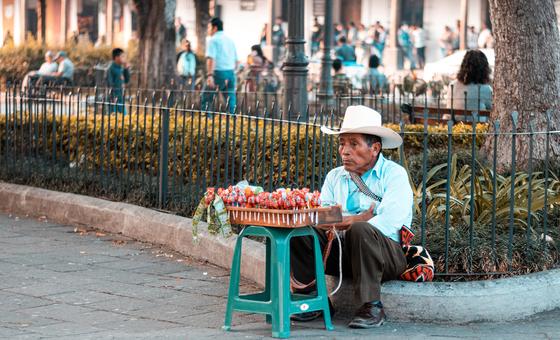
UN rights body rules Guatemala failed displaced Mayan Peoples

The landmark decision, announced on Thursday, also considered the harm caused to succeeding generations.

Forced displacement is permanent in nature until the victims benefit from a safe and dignified return to their place of habitual residence or are voluntarily resettled elsewhere,” said Committee member Hélène Tigroudja.

Conflict, displacement and violations

The Committee found that the 269 members of the K’iche’, Ixil and Kaqchikel Mayan Indigenous Peoples were violently uprooted from their traditional lands and forced to seek refuge in the capital, Guatemala City, in violation of the International Covenant on Civil and Political Rights (ICCPR).

They were forcibly displaced during “scorched earth” operations amid internal armed conflict in the 1980s.

Mayan leaders approached the Committee in 2021, claiming their rights under the UN treaty were violated.

Although they had reached a settlement with the Government and agreed on several reparation measures under the 2011 National Compensation Programme – which foresaw, in particular, the resettlement and construction of alternative housing – it was never implemented.

‘Stripped of cultural identity’

The UN Committee’s decision noted that while in the capital city, Mayans were also forced to conceal and ultimately change their identities, representing another violation.

The uprooting of the victims from their natural environment and lands had a deep, devastating, and lasting impact as they were irremediably stripped of their cultural identity,” Ms. Tigroudja said. 

“They had to abandon their cultural practices, stop wearing their traditional clothing and stop speaking their language, which also constitutes an irreparable loss for their children and grandchildren,” she added.

Transgenerational trauma

In a new approach, the Committee considered that the State violated not only the rights of those who were forcibly displaced but also the rights of third-generation children born in displacement, thus transmitting the trauma of being uprooted. 

“Indigenous Peoples’ rights are, by definition, intergenerational.  Transmission is a key condition for the continuity of Indigenous Peoples’ existence and cultures,” Ms. Tigroudja said.

The Committee also highlighted that the forced displacement and accompanying violence resulted in the victims having to leave behind the buried bodies of their relatives. 

Burial rites disrupted

Moreover, they were unable to perform funeral rituals for family members who died or were executed or forcibly disappeared during the conflict, in violation of their right not to be subjected to torture and inhumane treatment. 

In Mayan culture, not performing funeral rites is considered a moral transgression which can lead to spiritually caused illnesses that can manifest as physical diseases and can affect the entire lineage,” Ms. Tigroudja explained. 

“These are not only performative ceremonies and rituals but an integral part of the physical, moral and spiritual integrity of members of the communities as well as of the communities as a whole,” she added.

Action by authorities

The Committee requested Guatemala to search for and hand over the remains of the disappeared family members so that funeral rituals can be carried out in accordance with cultural requirements. 

The Government is also urged to undertake other measures, including providing victims, their children and grandchildren with the necessary medical, psychological and/or psychiatric treatment; and publicly acknowledging responsibility.

About the Committee

The Human Rights Committee comprises 18 independent experts who monitor implementation of the International Covenant on Civil and Political Rights (ICCPR).

More than 170 States are party to the UN treaty. Committee members are elected by States parties and serve in their personal capacity. They are not UN staff and do not receive payment for their work. 

Source link