From family farm to climate tech: How one Kenyan woman is helping farmers outsmart drought

In Kenya, agriculture employs up to 75 per cent of the population, but farmers’ livelihoods are being threatened by a changing climate and the loss of productive land, which is impacting the whole of Africa.

As droughts and extreme weather events in the East African nation increase in frequency and intensity, Maryanne Gichanga believes innovation is vital in helping Kenya’s agricultural community build resilience. 

Farmers in Kenya are using new data tools to improve their productivity.

16-01-2026-Maryanne-Gichanga-03

Speaking to the UN ahead of the International Day of Clean Energy Day, marked annually on 26 January, she explains how in a ‘male-dominated field’, she has succeeded in providing farmers with insights into soil and crop health as well as weather patterns by using solar-powered sensors and AI-powered satellite data. 

From farmers to helping farmers

“I grew up in a farming set-up. My parents are farmers. I witnessed a lot of harvests, but when climate change started happening, we could not understand what was happening. Since our source of income was farming, when the harvest was bad, it directly affected our quality of life, and it meant that we could not go to school. 

I always wanted to offer solutions to my parents and other people from farming families. That is what inspired me to start my company and get people who are like-minded to build this solution to support smallholder farmers. 

Greenovations Africa, an initiative supported by the UN which supports women entrepreneurs like myself, was a very important part of the process, because they believed in companies that are small and offered them training and seed capital to help them grow.

Giving up is not an option

In Africa, communities are quite patriarchal. So, trying to get into this male-dominated field is a thing. It is hard. It has its own challenges, because people would rather work with a man. They feel that men understand what you do better than you do. In many places, they do not believe in female leadership; Even women offering solutions is not a thing they would take up.

What really helped me on this journey was persistence and having training and demonstrations to show what we do and that we know what we are doing. You cannot give up. Collaborate with the people you meet and eventually it will work out. 

It is also important to keep your eyes on why you started; knowing that my parents are no longer struggling and thinking about the millions of children whose parents are farmers, and the futures of those children that would be jeopardized if their parents don’t have stable incomes. 

Sometimes you look at how far you have come and think, giving up is not an option. So many people depend on you. That is what keeps me focused. 

The reward

My highest point is when I see lives changed directly.

When you empower farmers, their lives change. 

When you see a direct increase in crop yields or when people are no longer struggling, it makes you want to work even harder. 

When you see that the farmer, who did not even have the money to buy seeds, is in control of the prices they sell their harvest on, that is very encouraging for me. 

The call to others

To other women and girls who want to innovate in agriculture or climate action, I would just say go for it.

You will learn along the way, and there are a lot of people who will support you financially or offer technical support, advice, and training. There is no right time to start, and you will never be prepared enough – you just have do it…don’t be scared!”

World News in Brief: Winter attacks in Ukraine, looming food aid cuts in Nigeria, drought in Kenya

They include attacks in Odesa region on Wednesday that killed a 17-year-old boy, according to UN child rights agency UNICEF which called for an “end to attacks on civilian areas and the infrastructure children rely on.” 

The UN Office for the Coordination of Humanitarian Affairs (OCHA) reported that attacks on the southeastern city of Kryvyi Rih on Wednesday had recommenced on Thursday. 

Aid deliveries 

“Teams delivered shelter materials to cover damaged homes and provided protection services to the affected residents,” OCHA said in a tweet, stressing that “the cold weather is worsening the needs, requiring urgent aid.” 

Russia continues to target energy infrastructure in Ukraine, knocking  out heat, electricity and water supply, UN human rights chief Volker Türk said on Tuesday. 

“Civilians are bearing the brunt of these attacks. They can only be described as cruel. They must stop,” he said. 

Nigeria: Looming food aid cuts put one million at risk 

More than a million people in northeast Nigeria could lose emergency food and nutrition assistance unless funding can be found “within weeks”, the World Food Programme (WFPwarned on Thursday. 

Nigeria is facing one of the worst hunger crises in recent times, with nearly 35 million people projected to face acute and severe food insecurity during the lean season. 

They include roughly 15,000 people in Borno state who risk falling into catastrophic hunger, which is one step away from famine. These are the worst levels of hunger recorded in a decade, WFP said.  

The crisis is unfolding amid renewed violence in the north which has devastated rural communities, displaced families and destroyed food reserves. 

‘Catastrophic’ consequences 

“Now is not the time to stop food assistance,” said David Stevenson, WFP’s Nigeria Country Director.  

He warned of “catastrophic humanitarian, security and economic consequences” for Nigeria’s most vulnerable people, who had been forced to flee their homes in search of food and shelter.   

WFP is urgently seeking $129 million to sustain its operations in the northeast over the next six months, warning that this work could shut down unless funds are received.   

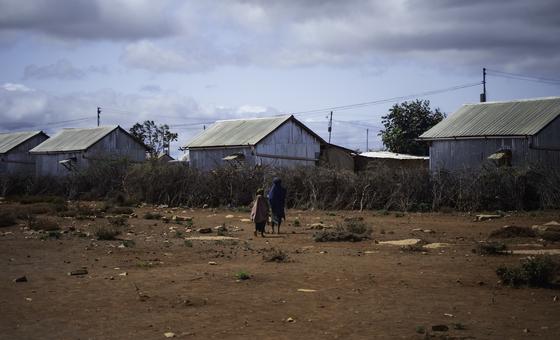
People living in Turkana in northern Kenya are dealing with the impact of drought.

Kenya drought impacts over two million people 

More than two million people in Kenya are facing worsening food insecurity in the wake of the October to December 2025 rainy season – among the driest on record, the World Health Organization (WHOsaid on Thursday. 

The prolonged drought has led to rising malnutrition rates, increased risk of disease outbreaks and disrupted access to essential health services. 

Regional drought 

The impacts are also being felt in neighbouring Somalia, Tanzania and Uganda, where millions more people are at risk due to similar weather patterns and water shortages. 

In Kenya, 10 counties are currently experiencing drought conditions, one of which is in the “alarm” phase. Furthermore, another 13 counties in the Arid and Semi-Arid Lands (ASAL) regions are showing signs of drought stress. 

While severe, the emergency was part of a known seasonal risk, WHO said.  The UN agency has supported the Kenyan authorities including by providing cholera kits, pneumonia kits and essential supplies, as well as pre-positioning equipment in high-risk counties before the drought intensified. 

WHO stressed the need to mobilize urgently to ensure both people and livestock have access to adequate food supply and safe water, and to prevent the situation from worsening. 


Source link

Somalia declares drought emergency as millions face hunger after failed rains

On 10 November, the Federal Government of Somalia formally declared a drought emergency and appealed for urgent international assistance as conditions continued to deteriorate across northern, central and southern regions, according to the UN relief coordination office, OCHA.

Puntland is among the worst affected areas, where authorities estimate that nearly one million people need support, including 130,000 in immediate life-threatening need.

A UN assessment mission to Bari and Nugaal regions earlier this month found communities grappling with acute water and food shortages, with residents warning that catastrophe could unfold in the coming months.

“We have not received rain since last year; this is the worst drought in years,” said Abdiqani Osman Omar, the mayor of Shaxda village in Bari region.

“Hundreds of displaced families moved here three months ago, and more are coming. The new arrivals are mostly women and children as the men have moved to nearby Ethiopia in search of pasture and water.”

The village has no capacity to support them, he added, stating that even host communities need water and food assistance.

Dried up water sources, abandoned settlements

Across Puntland, water points have dried up, vegetation has withered and once-inhabited pastoral settlements now stand abandoned.

In Dhaxan town, where brief Gu’ season (April-June) showers offered short-lived hope earlier this year, residents are now dependent on expensive trucked water after the local borehole was found to be contaminated.

Community leader Jama Abshir Hersi said around 150 families moved to the town after the rains.

“We used to receive food and nutrition assistance, and medical supplies for our health unit. All that assistance has dwindled,” he said.

Funding shortfalls

Funding shortfalls are compounding the crisis.

As of 23 November, Somalia’s 2025 Humanitarian Response Plan was only 23.7 per cent funded, forcing major reductions in assistance. The number of people receiving emergency food aid plunged from 1.1 million in August to just 350,000 this month.

In Puntland alone, 89 supplementary feeding sites and 198 health and stabilization centres are facing severe supply shortages.

Millions going hungry

The drought is unfolding amid an already dire humanitarian landscape. At least 4.4 million people are projected to face acute food insecurity through December, while 1.85 million children under five are expected to suffer acute malnutrition through mid-2026.

Weather forecasts indicate little immediate relief. The UN Food and Agriculture Organization (FAO) warned that dry and hot conditions are expected to persist across most of the country, particularly in central and northern regions.

“The prevailing high temperatures and poor rain are likely to exacerbate water stress and limit pasture regeneration in most areas,” the agency said.

World News in Brief: Gaza aid crisis latest, deadly floods in India and Pakistan, funding cuts exacerbate Somalia drought

In an alert from the World Food Programme (WFP), the agency said that half a million people “are on the brink of famine”, a claim backed up by multiple humanitarian agencies. The latest worrying data is showing widespread acute malnutrition.

A ceasefire is the only way to scale up aid deliveries, the UN agency insisted. It explained that although teams are doing everything they can to deliver food assistance, only 47 per cent of the daily target amount is getting in.

No meals, no bread

Unless the fighting stops, organized aid distributions and WFP-supported hot meals and bakeries can’t restart, the agency stated.

The UN relief agency for Palestine refugees, UNRWA, reported on Monday that instead of being able to prepare for the start of a new school year, children in Gaza are instead searching for water and queuing for food while their classrooms have “turned into crowded refuges”.

Three years of schooling has now been lost, the agency stressed in a tweet.

UN chief expresses ‘deep sorrow’ over deadly flash floods in India and Pakistan

UN Secretary-General António Guterres on Monday expressed his deep sorrow at the tragic loss of life due to flash floods in India and Pakistan in recent days, with many still missing and forecasts showing the possibility of further flooding and landslides ahead.

Indian rescue services responded to a deadly flood on Friday which reportedly killed at least 60 after it crashed through a village in the Himalayas while in remote villages of northwestern Pakistan, torrents of water killed more than 300, according to news reports.

Hundreds were also injured, Pakistani authorities reported. Buner district was the worst hit, with more than 200 deaths reported there, said the provincial disaster management authorities.

Standing in solidarity

“The Secretary-General offers his sincere condolences to the victims’ families and stands in solidarity with those affected by this disaster,” said the statement issued by his Spokesperson.

UN country teams in India and Pakistan have also been placed are at the disposal of authorities although no request for assistance has been made so far.

Impacts of Somalia drought made worse by funding cuts: OCHA

In Somalia, severe drought and funding cuts are undermining lifesaving assistance there, the UN aid coordination office, OCHAsaid on Monday.

Because of the reduction in the amount of support for aid work, food assistance has declined, health centres are closing and malnutrition is high, the UN agency warned.

OCHA said that 4.6 million people now face high levels of food insecurity while two million more are at risk from funding cuts.

Funding cuts mean ‘lives lost’

Without scaled-up support, “lives will be lost and progress reversed” across the east African nation, where cash shortfalls have left one million people without food assistance every month.

The global trend seeing less humanitarian assistance has curtailed vital support for healthcare across Somalia. So far this year, it has impacted at least 150 medical facilities and left hundreds of thousands of Somalis without the medical care they need.

OCHA noted that because of the cuts, the number of people being targeted for assistance in Somalia has had to be reduced by a staggering 72 per cent.

Source link

Peacekeepers find weapons trove in southern Lebanon, as drought threatens millions

On Tuesday and Wednesday this week, peacekeepers with the UN Interim Force in Lebanon (UNIFIL) discovered rocket launchers, rocket shells, mortar rounds, bomb fuses and a tunnel containing munitions in separate incidents in Sectors East and West, UN Spokesperson Stéphane Dujarric told reporters in New York.

All finds were referred to the Lebanese Armed Forces in line with standard procedure.

UNIFIL also observed continued Israel Defense Forces activity, including an airstrike in Sector West and artillery fire from south of the Blue Line – which separates Israeli and Lebanese armed forces – into Sector East.

To strengthen Lebanese military capacity, the mission has been training personnel in surveying and removing explosive devices, securing contaminated sites and navigating mined areas.

“Such training activities are crucial now as the Lebanese Armed Forces engages daily in identifying and securing areas contaminated with unexploded ordnances and explosive remnants of war,” Mr. Dujarric said.

Complex operational space

Southern Lebanon remains a challenging operational environment, where UNIFIL works to implement Security Council resolution 1701, which brought an end to the 2006 hostilities between Israel and Hezbollah militants.

The Mission’s mandate includes monitoring the cessation of hostilities, supporting the deployment of the Lebanese Armed Forces in the south, and helping to ensure that the area between the Blue Line and the Litani River remains free of unauthorized weapons.

The region has experienced recurring tensions, including a sharp escalation last year marked by numerous Israeli airstrikes and ground operations. These incidents have affected local communities and resulted in damage to several UN positions, and injuries to several ‘blue helmets’ serving with UNIFIL.

Unprecedented water crisis

Lebanon’s largest reservoir, Lake Qaraoun, has dropped to its lowest level on record, the Litani River National Authority said.

Inflows during this year’s wet season reached just 45 million cubic metres – compared to an annual average of 350 million – following months of low rainfall and an intense heat wave.

The decline comes amid a wider nationwide emergency.

In early July, the UN Children’s Fund (UNICEF)-led water, sanitation and hygiene (WASH) group reported that rainfall had fallen by more than half in many regions along with decreased snow-melt, and several reservoirs and aquifers had dried up.

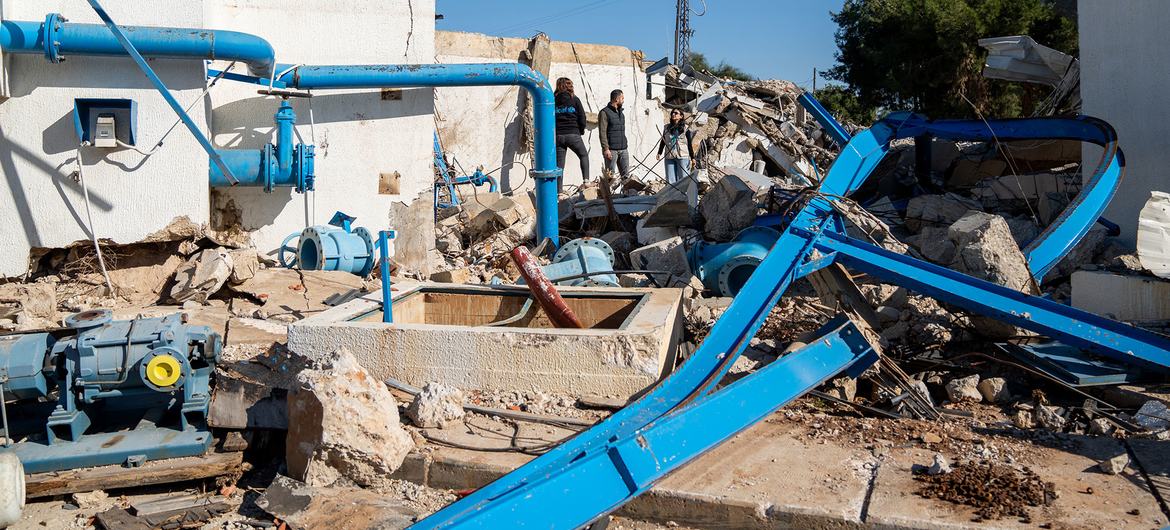
A water pumping station in southwest Lebanon damaged during the recent conflict.

Health risks rising

The drought is affecting all sectors, from agriculture and healthcare to education and local governance. An estimated 1.85 million people live in areas highly vulnerable to drought, with more than 44 per cent of the population dependent on costly and often unsafe water trucking services.

The severe strain on public water systems have been compounded by damaged infrastructure stemming from the recent fighting between Israel and Hezbollah and electricity shortages.

Health risks are rising, particularly in overcrowded settlements with poor sanitation, where residents may resort to unsafe water sources, heightening the threat of waterborne disease outbreaks, the WASH cluster warned.

Food security worries

The drought has also caused a sharp decline in food production and increased reliance on expensive imports, deepening food insecurity.

Wildfire risks are also mounting due to prolonged dry conditions.

The WASH cluster warned that without urgent international support to restore water systems and protect vulnerable communities, the crisis could further destabilize an already fragile nation.

World News in Brief: Funding schools in Afghanistan, Seaweed farming in Latin America, drought in Somalia

The agency plans to procure over 1,200 metric tons of fortified biscuits, which will provide 200,000 primary school-aged girls and boys with sustenance for around three months.  

“For many children, the daily snack they receive in the first break of the day is often their only nutritious meal, giving them the energy to stay healthy, focused, and ready to learn,” said Mutinta Chimuka, Deputy Country Director for WFP in Afghanistan.  

Food security  

“WFP in Afghanistan launched its school feeding programme more than two decades ago to link food security and better nutrition with education,” said Ms. Chimuka.

School feeding activities have played a crucial role in improving attendance, retention and learning outcomes.

Primary schools participating in the programme saw enrollment increase by nearly 11 percent in 2024 compared to 2023, while attendance also improved, reaching an average of 87 per cent in the classroom, two percentage points above WFP’s target.

Seaweed farming, a potential key driver of sustainable development in Latin America

In the last decade, seaweed farming grew by 66 percent in Latin America and the Caribbean, a new report from the Food and Agriculture Organization (FAO) has found.

The practice of cultivating and harvesting seaweed or algae in the marine environment offers a relatively low-carbon method to produce highly nutritious food while supporting rural livelihoods, according to international experts gathered at a regional workshop in Chile.  

Seaweed farming is vital to sustainable coastal development in Latin America, experts argue, highlighting its nutritional value and the need for clearer, coordinated regulation.

Untapped potential

Expanding seaweed cultivation holds significant untapped potential for sustainable development in Latin America and the Caribbean.

However, while countries like Brazil, Chile and Venezuela lead production, most initiatives across the region remain small-scale.  

Yet, with a 66 per cent increase over the past decade, experts see major opportunities for growth. Supporting emerging producers, diversifying species and investing in research and technology – including AI and biotechnology – could  deliver both economic and environmental benefits.  

Strengthening community participation, particularly among women and youth, will also be essential. With coordinated action and inclusive policies, seaweed farming could become a key driver of resilient coastal development.

Hundreds of thousands impacted by severe drought in Somalia

Hundreds of thousands of people have been impacted by severe drought in Somalia’s central and northern regions, according to the UN’s humanitarian coordination office, OCHA.  

With food insecurity escalating, dwindling access to water and pasture and major disruption to livelihoods, a joint assessment by UN agencies and partners is currently underway in Puntland and Somaliland to determine key needs.

Wells run dry

An analysis from the Food and Agriculture Organization (FAO) noted that more than 880,000 Somalis are currently living in severely drought-affected areas across 16 districts, humanitarians on the ground reported that water wells have dried up and that more than 160 boreholes are no longer functioning.

Although the UN-managed Somalia Humanitarian Fund is preparing to allocate resources for urgent life-saving assistance, only 17 per cent of the plan has been funded to date. 

Source link

ZimParks relocates 100 elephants, 70 giraffes, 10 lions due to drought

Harare, Sep 15 (IANS) Amid an ongoing drought, the Zimbabwe National Parks and Wildlife Management Authority (ZimParks) said it has relocated 100 elephants since July and a significant number of other wild animals from the arid southern parts of the country to the north where there is better vegetation and water.

ZimParks spokesperson Tinashe Farawo told Xinhua news agency on Wednesday that the Authority issued permits for the transfer of 2,650 animals from the Save Valley Conservancy to three national parks in the north namely Tsapi, Chizarira and Matusadonha.

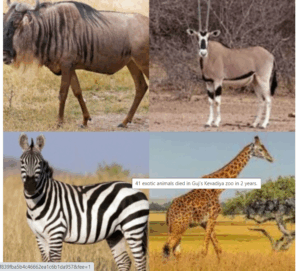
The animals targeted for relocation include 400 elephants, 2,000 impalas, 70 giraffes, 50 zebras, 50 buffaloes, 50 elands, 10 lions and 10 wild dogs.

The relocation exercise began in July and so far, 100 elephants and a “significant number of other wild animals” had been relocated, he said.

He said the main reason for relocation was to depopulate overcrowded areas and create a balance in the ecosystem.

Climate change induced-drought resulting in loss of habitat, food, and water was posing a risk to the animals and the only way to protect the habitat was to make sure that we create a balance by relieving pressure on overcrowded areas, Farawo said.

Zimbabwe has become prone to frequent droughts in recent years due to climate change, posing the risk of hunger not only to humans but also to wild animals.

The country has an overpopulation of elephants numbering over 100,000 against an ecological carrying capacity of 45,000.

The jumbos are located in four main ecological zones, and two of the zones are overpopulated.

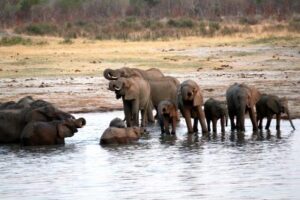
An elephant herd is spotted near nyamandhlovu pan, a popular water-hole in the Hwange National Park, Matabeleland North Province, Zimbabwe

The four zones are North West Matabeleland where the country’s biggest game park Hwange is located; South East Lowveld, home to the second biggest park Gonarezhou; as well as the Sebungwe region and mid Zambezi in the northern part of the country.

This is not the first time that ZimParks has moved the animals.

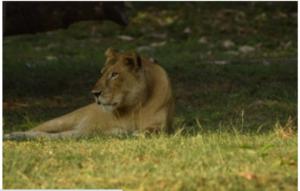
Lions

In 2018, it moved 100 elephants from the South East Lowveld to mid Zambezi while plans to relocate 600 elephants in 2020 were affected by the Covid-19 pandemic.

The relocation program is an expensive exercise and ZimParks has in the past lamented inadequate funds to successfully carry out the program.

We know flash floods; what are ‘flash’ droughts [Details]