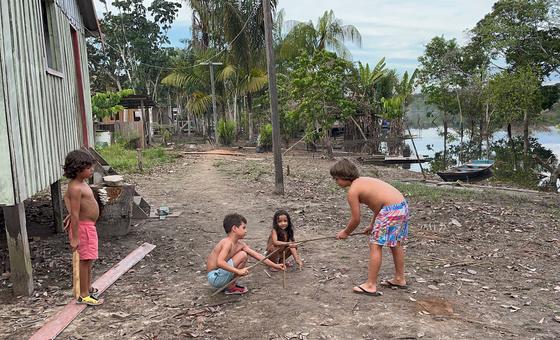
Latin America and Caribbean: Millions more children could face poverty due to climate change

Even worse, the number could triple if countries do not meet their commitments to reduce greenhouse gas (GHG) emissions and to ensure that climate financing prioritises social and climate resilience services for children.

The finding comes in a report by the UN Economic Commission for Latin America and the Caribbean (ECLAC) and the UN Children’s Fund (UNICEF), published on Thursday in Panama.

Bearing the brunt

The report examines the potential effects of extreme weather events on increasing poverty levels among children and youth, along with national efforts to reduce GHG emissions as well as strategies to adapt and reduce losses and damage caused by climate change.

The 5.9 million figure represents the most optimistic scenario. However, if governments are slow in implementing actions to address mitigation and adaptation, as well as loss and damage, the number could reach 17.9 million.

Roberto Benes, UNICEF Regional Director for Latin America and the Caribbean, said that children and adolescents bear the greatest burden of climate change. 

Their developing bodies are more vulnerable to cyclones, heatwaves and other extreme phenomena which at the same time disrupt their families’ livelihoods and their education.

“If children and young people don’t have the resources to meet their basic needs and develop their potential, and if adequate social protection systems are not in place, the region’s inequalities will only be perpetuated,” he said.

Protect children and youth

Yet despite their vulnerability, climate finance does not prioritise the resilient services for health, nutrition, education, water and sanitation that children and young people need, to ensure their optimal cognitive and physical development. 

In Latin America and the Caribbean, only 3.4 per cent of all multilateral climate finance is dedicated to children, according to the report.  This is happening at a time of funding cuts and reduced development aid amid unprecedented needs.  

The report recommends that regional governments take action, including by strengthening the climate resilience of social services and critical infrastructure to better protect children and youth, with a particular focus on the first 1,000 days of life.

Authorities are urged to increase child-sensitive climate policy financing, with actions that specifically target the needs of children at different ages.

They also must promote greater climate awareness, education, empowerment and participation of children and youth. Additionally, environmental and climate education should be included in school curricula and educational programmes.

The report further recommends that countries promote adaptive social protection and emergency response policies that account for the specific needs of children and adolescents. 

Source link

World News in Brief: Funding schools in Afghanistan, Seaweed farming in Latin America, drought in Somalia

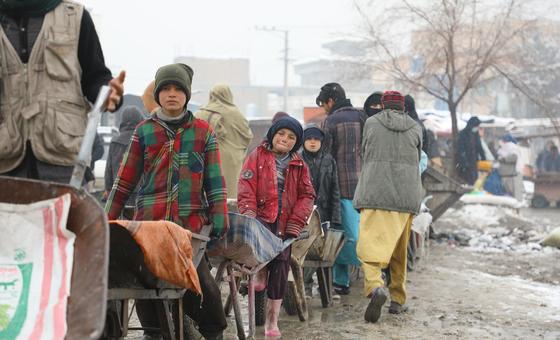
The agency plans to procure over 1,200 metric tons of fortified biscuits, which will provide 200,000 primary school-aged girls and boys with sustenance for around three months.  

“For many children, the daily snack they receive in the first break of the day is often their only nutritious meal, giving them the energy to stay healthy, focused, and ready to learn,” said Mutinta Chimuka, Deputy Country Director for WFP in Afghanistan.  

Food security  

“WFP in Afghanistan launched its school feeding programme more than two decades ago to link food security and better nutrition with education,” said Ms. Chimuka.

School feeding activities have played a crucial role in improving attendance, retention and learning outcomes.

Primary schools participating in the programme saw enrollment increase by nearly 11 percent in 2024 compared to 2023, while attendance also improved, reaching an average of 87 per cent in the classroom, two percentage points above WFP’s target.

Seaweed farming, a potential key driver of sustainable development in Latin America

In the last decade, seaweed farming grew by 66 percent in Latin America and the Caribbean, a new report from the Food and Agriculture Organization (FAO) has found.

The practice of cultivating and harvesting seaweed or algae in the marine environment offers a relatively low-carbon method to produce highly nutritious food while supporting rural livelihoods, according to international experts gathered at a regional workshop in Chile.  

Seaweed farming is vital to sustainable coastal development in Latin America, experts argue, highlighting its nutritional value and the need for clearer, coordinated regulation.

Untapped potential

Expanding seaweed cultivation holds significant untapped potential for sustainable development in Latin America and the Caribbean.

However, while countries like Brazil, Chile and Venezuela lead production, most initiatives across the region remain small-scale.  

Yet, with a 66 per cent increase over the past decade, experts see major opportunities for growth. Supporting emerging producers, diversifying species and investing in research and technology – including AI and biotechnology – could  deliver both economic and environmental benefits.  

Strengthening community participation, particularly among women and youth, will also be essential. With coordinated action and inclusive policies, seaweed farming could become a key driver of resilient coastal development.

Hundreds of thousands impacted by severe drought in Somalia

Hundreds of thousands of people have been impacted by severe drought in Somalia’s central and northern regions, according to the UN’s humanitarian coordination office, OCHA.  

With food insecurity escalating, dwindling access to water and pasture and major disruption to livelihoods, a joint assessment by UN agencies and partners is currently underway in Puntland and Somaliland to determine key needs.

Wells run dry

An analysis from the Food and Agriculture Organization (FAO) noted that more than 880,000 Somalis are currently living in severely drought-affected areas across 16 districts, humanitarians on the ground reported that water wells have dried up and that more than 160 boreholes are no longer functioning.

Although the UN-managed Somalia Humanitarian Fund is preparing to allocate resources for urgent life-saving assistance, only 17 per cent of the plan has been funded to date. 

Source link

‘You have to be able to rule your life’: The care revolution in Latin America

The workers we don’t pay or see are grandmothers, mothers, daughters — the women who take care of children, look after ill family members, and give dignity to the elderly. 

To do this vital care work, they give up formal employment with pay cheques. 

“Our system is designed as if women didn’t do care work. And that forces us to choose between raising children or working,” said Meredith Cortés Bravo, a founder of a grassroots organization in Chile that supports these women.

But in Latin America, this is slowly changing — a care revolution is underway that is asking governments and employers to consider what it would mean to recognize, protect and fund care work. 

“Care is essential for every family and for every community. The revolution is to make it visible, to make it valuable and to invest,” María Noel Vaeza, UN Women’s regional director for Latin America and the Caribbean, told UN News.

The most off-track goal

The High-Level Political Forum (HLPF) on Sustainable Development is convening at UN Headquarters in New York in order to discuss progress – or lack thereof – towards the globally agreed Sustainable Development Goals (SDGs).

While 18 per cent of the Goals are on track for 2030, achieving gender equality remains the Goal that is most off-track. Discriminatory laws and gender-based norms persist worldwide, with women dedicating approximately twice as many hours to unpaid care work as men.   

“Gender equality is not a side issue. It is central to peace, it is central to justice, and it is central to sustainable development and the credibility of the multilateral system itself,” Sima Bahous, Executive Director of UN Women said at an HLPF session this week.

The revolution is underway

Before the revolution began, Latin America faced a care crisis during the COVID-19 pandemic, according to Ms. Vaeza.  There was not enough care available outside of the home for sick people, forcing society to recognize that taking care of others is work. 

“Unpaid care work is what keeps the economy running, but it’s unfair because it’s invisible, undervalued and underfunded. We must recognize it,” Ms. Vaeza said. 

In Latin America, 17 are countries actively working to redesign their care economies, ensuring more protections and income for the women and men who provide this work. 

“The biggest shift has been putting care at the centre of public policy, not just academic debates,” said Virginia Gontijo, UN Women programme lead in Brazil.

This work is already bearing fruit. 

In Chile, one of the region’s most ambitious care systems is already delivering in 151 municipalities, with the ultimate goal of reaching 75,000 people in the next few years.  

UN Women is working with State governments and civil society groups to ensure that these new systems, policies and laws are shaped by and for caregivers.

A care system in Brazil worked closely with a care activist network to train caregivers in labour rights and promote long-term professional development.  

“I never felt my work was valued. But after this project, I feel better prepared to take part in political discussions and make our voices heard,” said Lucileide Mafra Reis, a domestic worker activist in Brazil.

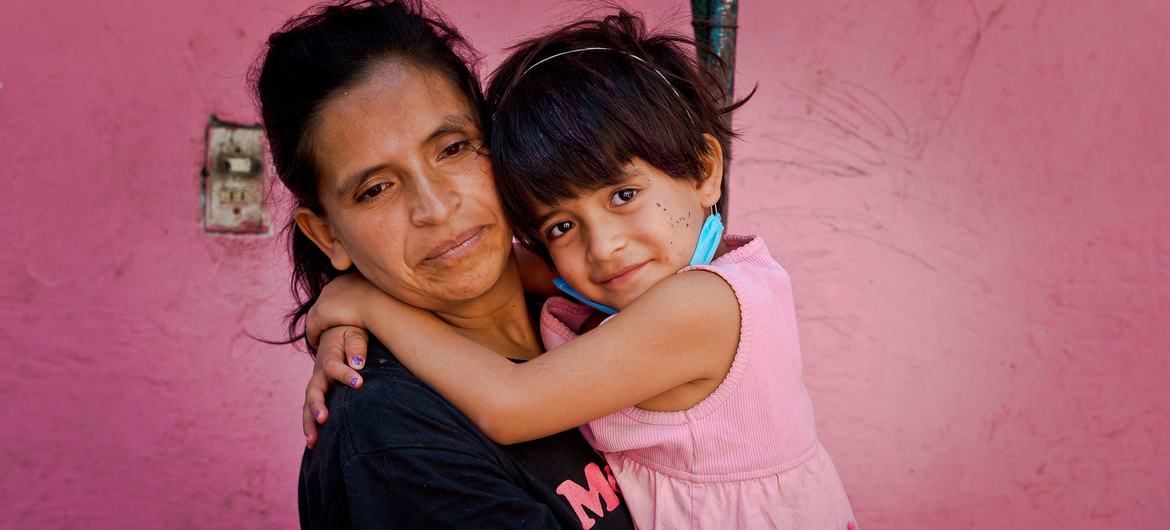
A woman and young girl in Mexico.

Care is a human right

Mexico and Peru have taken a more rights-based approach to care, codifying it as a basic human right. 

While the international community has yet to make a similar guarantee, Ms. Vaeza said that the human rights framework is an exceptionally effective one — it restores dignity and recognizes that care is a fundamental part of human life trajectories, from birth to death.

“If you say that care is a human right, it means that the government and the state have to provide support,” she Ms. Vaeza.  

For Aideé Zamorano González — a mother who founded Mama Godin, an organization in Mexico which evaluates the impact of care policies on women — it is equally as important that employers protect women’s right to do care work. 

This means ensuring that workplaces have policies that are supportive of mothers as workers, such as schedules that allow them to drop their children off at school.

For her, these sorts of policies are crucial for women’s rights and particularly for their freedom and autonomy.

“You have to be able to rule your life,” Ms. Zamorano González told UN News

Beyond just autonomy, however, it is also about safety. If a woman can make her own money — and therefore, her own decisions — she can leave abusive relationships and avoid economic exploitation. 

“Every other type of violence depends on the economic power that you have. If you have the ability to make your own decisions and own money, you are safer,” said Ms. Zamorano González. 

An economic investment

Changes to legal classifications and governmental support for care work not only benefit the caregivers but also promote economic growth across societies. 

“[Care] is an investment, a strategic investment for social justice, for gender equality and for sustainable development,” Ms. Vaeza said.

She noted that dedicating government funds to paying caregivers will return the investment threefold — both by increasing caregivers’ purchasing power and by generating tax revenue. 

In Chile and Colombia, new care systems are estimated to contribute 25.6 per cent and 19.6 percent respectively to their national GDPs, according to UN Women.

“When you invest in a women’s organization, you strengthen a living network, a tree with many branches that reaches places no office or institutional programme ever could,” Ms. Bravo said. 

Export the revolution

Latin America’s progress on care is a model for other regions around the world, Ms. Vaeza said, and demonstrates the importance of changing legal frameworks for women and girls. 

“It’s extremely important that this revolution be exported. It’s an investment, a strategic investment for social justice, for gender equality and for sustainable development,” she said. 

But while the revolution is ongoing, Ms. Zamorano González underlined the importance of economic empowerment for women as a means to protect their own rights even when laws and policies fall short. 

“We are under capitalism, so while we change the system, let’s play the game. Let’s get our own means to have freedom,” she said. 

Source link