
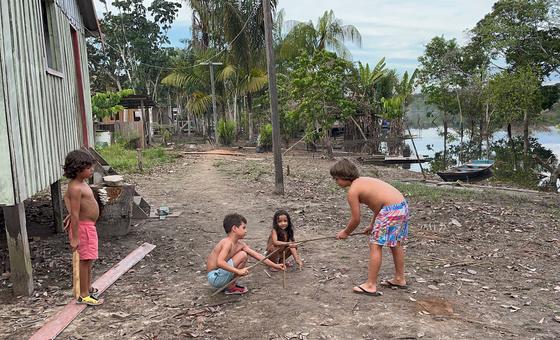
Latin America and Caribbean: Millions more children could face poverty due to climate change

Even worse, the number could triple if countries do not meet their commitments to reduce greenhouse gas (GHG) emissions and to ensure that climate financing prioritises social and climate resilience services for children.

The finding comes in a report by the UN Economic Commission for Latin America and the Caribbean (ECLAC) and the UN Children’s Fund (UNICEF), published on Thursday in Panama.

Bearing the brunt

The report examines the potential effects of extreme weather events on increasing poverty levels among children and youth, along with national efforts to reduce GHG emissions as well as strategies to adapt and reduce losses and damage caused by climate change.

The 5.9 million figure represents the most optimistic scenario. However, if governments are slow in implementing actions to address mitigation and adaptation, as well as loss and damage, the number could reach 17.9 million.

Roberto Benes, UNICEF Regional Director for Latin America and the Caribbean, said that children and adolescents bear the greatest burden of climate change. 

Their developing bodies are more vulnerable to cyclones, heatwaves and other extreme phenomena which at the same time disrupt their families’ livelihoods and their education.

“If children and young people don’t have the resources to meet their basic needs and develop their potential, and if adequate social protection systems are not in place, the region’s inequalities will only be perpetuated,” he said.

Protect children and youth

Yet despite their vulnerability, climate finance does not prioritise the resilient services for health, nutrition, education, water and sanitation that children and young people need, to ensure their optimal cognitive and physical development. 

In Latin America and the Caribbean, only 3.4 per cent of all multilateral climate finance is dedicated to children, according to the report.  This is happening at a time of funding cuts and reduced development aid amid unprecedented needs.  

The report recommends that regional governments take action, including by strengthening the climate resilience of social services and critical infrastructure to better protect children and youth, with a particular focus on the first 1,000 days of life.

Authorities are urged to increase child-sensitive climate policy financing, with actions that specifically target the needs of children at different ages.

They also must promote greater climate awareness, education, empowerment and participation of children and youth. Additionally, environmental and climate education should be included in school curricula and educational programmes.

The report further recommends that countries promote adaptive social protection and emergency response policies that account for the specific needs of children and adolescents. 
Source link

GAZA LIVE: Security Council to meet on aid crisis amid ‘critical risk of famine’ due to Israeli blockade

The Security Council is set to meet this afternoon at 3 PM in New York to discuss the deepening crisis in Gaza, where humanitarians warn of “a critical risk of famine” and aid shipments have been blocked for over 70 days. UN relief chief Tom Fletcher is expected to brief ambassadors. Follow live for key updates from UN Headquarters and reports from the region. App users can follow coverage here.

Largely eradicated diseases at risk of returning due to budget cuts

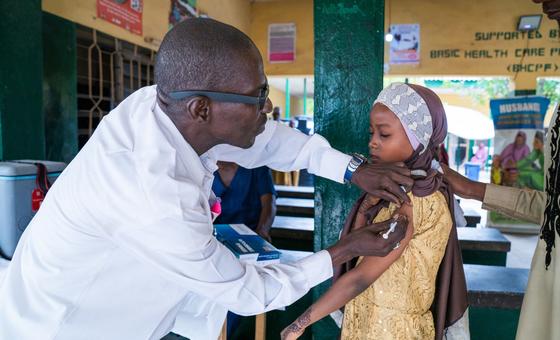
Cuts to global health funding are leading to a rise in outbreaks of diseases that vaccines had nearly wiped out, the UN health agency, WHO, is warning on Thursday.

In Africa’s “meningitis belt”, which spans parts of sub-Saharan Africa, vaccination campaigns had successfully eliminated meningitis A. Similarly, improved routine immunization and emergency vaccine stockpiles drastically reduced cases of yellow fever and related deaths.

But this progress is now at risk. “Funding cuts to global health have put these hard-won gains in jeopardy,” warned Tedros Adhanom Ghebreyesus, Director-General of the World Health Organization.

Outbreaks on the rise

In 2023, measles cases were estimated at more than 10.3 million – a 20 per cent increase compared to 2022.

WHO, UN Children’s Fund UNICEF and their partners warned in a statement marking the beginning of World Immunization Week that this upward trend is expected to continue into 2025.

Yellow fever is also making a comeback. After years of declining cases in Africa thanks to improved vaccine access, 2025 has already seen a rise in outbreaks across the continent. Cases have also been confirmed in the Americas.

Misinformation threat

Vaccination efforts are increasingly under pressure due to a combination of misinformation, population growth, humanitarian crises, and funding cuts.

Earlier this month, a WHO review across 108 countries found that nearly half are experiencing moderate to severe disruptions to vaccination campaigns, routine immunisations, and supply chains due to falling donor support.

The global funding crisis is severely limiting our ability to vaccinate over 15 million vulnerable children in fragile and conflict-affected countries against measles,” said Catherine Russell, Executive Director of UNICEF.

Vaccines offer high returns

Vaccines save around 4.2 million lives each year, protecting against 14 different diseases. Almost half of those lives are saved in Africa.

Despite this, falling investment now risks the re-emergence of diseases once thought to be under control.

Health experts emphasise that immunization is one of the most cost-effective health interventions. Every $1 invested in vaccines brings an estimated return of $54 through better health and economic productivity.

UNICEF, WHO, and their partners are calling on parents, the public, and political leaders to support immunization programmes and ensure long-term investment in vaccines and public health systems.

Source link