Attacks on schools surge by ‘staggering’ 44 per cent over the past year

Over 41,000 incidents of violence against school-age children were reported by the UN in 2024.

Countries with the highest levels of violations in were Israel and the Occupied Palestinian Territory, notably the Gaza Strip, the Democratic Republic of the Congo (DRC), Somalia, Nigeria, and Haiti.

In a message to mark the International Day to Protect Education, commemorated annually on 9 September, the UN Secretary-General, António Guterres said that “each violation carries profound consequences, not only for teachers and young learners, but for the future of entire communities and countries,” adding that “no child should risk death to learn.”

The UN chief’s Annual Report on Children and Armed Conflict for 2024 highlights not only an upsurge in attacks on schools but also a 34 per cent increase in rape and other forms of sexual violence perpetrated against children.

In addition, the number of children victims of what the UN calls grave violations increased by 17 per cent as a result of abduction, recruitment, and other types of violence, characterised by the UN as “an alarming escalation in brutality.”

Gaza children deprived of right to education

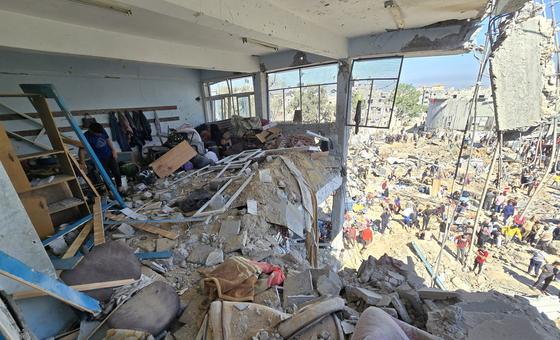
In Gaza where more than 2.3 million people have been displaced by the two-year-long war, 660,000 children remain out of school and classrooms have been converted into shelters. 

“There is no education now. We live inside the school, where we are displaced, eating and sleeping,” said Diana, a child living in Gaza. 

Despite the ongoing conflict more than 68,000 children in Gaza have been reached through temporary learning spaces offering education and psychosocial support.

The UN Children’s Fund, UNICEF, is also recycling pallets into school furniture and converting supplied boxes into tables and chairs.

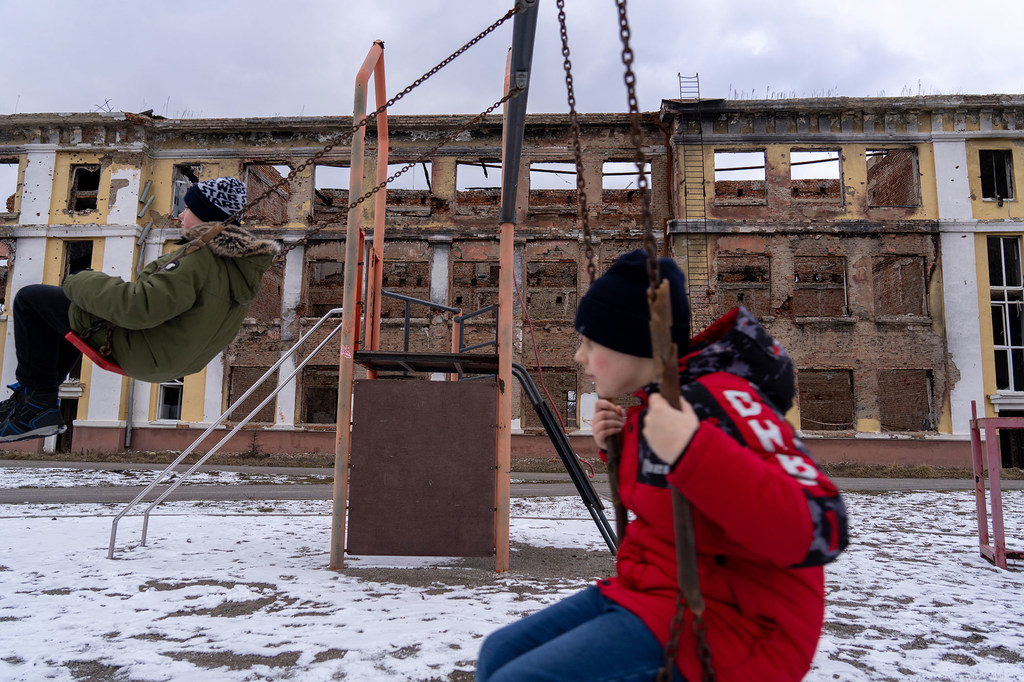
© UNICEF/Oleksii Filippov

Boys play amidst the ruins of a school in Kharkiv, Ukraine.

Barriers to education in Ukraine

In Ukraine, 5.3 million children face barriers to education, and around 115,000 are completely out of school due to the ongoing war.

“1,850 facilities have been damaged since the beginning of the conflict,” said Nelson Rodrigues, Education Specialist at UNICEF.

With many schools on the front lines either closed or operating remotely, over 420,000 children attend school fully online, while one million use a hybrid model. 

UNICEF has supported the rehabilitation of 57,000 war-affected school facilities, which has allowed a considerable number of children to return to the classroom. 

The UN agency has also provided catch-up and remedial learning, enabling children to recover from disruptions and continue their education. 

Meanwhile, between January and July of this year, the UN and its humanitarian partners have supported 370,000 children and teachers, mainly in front-line and host communities. 

Respect schools 

Parties to conflict anywhere in the world are obliged under international law, to respect schools as places of safety, and hold accountable those responsible for attacks.

“The pen, the book, and the classroom are all mightier than the sword,” said UN Secretary-General Guterres.

“Let’s keep it that way and protect the fundamental right of every child to learn in safety and peace.”  

Source link

World News in Brief: Funding schools in Afghanistan, Seaweed farming in Latin America, drought in Somalia

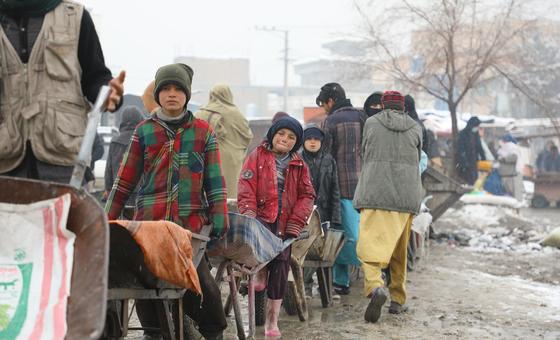
The agency plans to procure over 1,200 metric tons of fortified biscuits, which will provide 200,000 primary school-aged girls and boys with sustenance for around three months.  

“For many children, the daily snack they receive in the first break of the day is often their only nutritious meal, giving them the energy to stay healthy, focused, and ready to learn,” said Mutinta Chimuka, Deputy Country Director for WFP in Afghanistan.  

Food security  

“WFP in Afghanistan launched its school feeding programme more than two decades ago to link food security and better nutrition with education,” said Ms. Chimuka.

School feeding activities have played a crucial role in improving attendance, retention and learning outcomes.

Primary schools participating in the programme saw enrollment increase by nearly 11 percent in 2024 compared to 2023, while attendance also improved, reaching an average of 87 per cent in the classroom, two percentage points above WFP’s target.

Seaweed farming, a potential key driver of sustainable development in Latin America

In the last decade, seaweed farming grew by 66 percent in Latin America and the Caribbean, a new report from the Food and Agriculture Organization (FAO) has found.

The practice of cultivating and harvesting seaweed or algae in the marine environment offers a relatively low-carbon method to produce highly nutritious food while supporting rural livelihoods, according to international experts gathered at a regional workshop in Chile.  

Seaweed farming is vital to sustainable coastal development in Latin America, experts argue, highlighting its nutritional value and the need for clearer, coordinated regulation.

Untapped potential

Expanding seaweed cultivation holds significant untapped potential for sustainable development in Latin America and the Caribbean.

However, while countries like Brazil, Chile and Venezuela lead production, most initiatives across the region remain small-scale.  

Yet, with a 66 per cent increase over the past decade, experts see major opportunities for growth. Supporting emerging producers, diversifying species and investing in research and technology – including AI and biotechnology – could  deliver both economic and environmental benefits.  

Strengthening community participation, particularly among women and youth, will also be essential. With coordinated action and inclusive policies, seaweed farming could become a key driver of resilient coastal development.

Hundreds of thousands impacted by severe drought in Somalia

Hundreds of thousands of people have been impacted by severe drought in Somalia’s central and northern regions, according to the UN’s humanitarian coordination office, OCHA.  

With food insecurity escalating, dwindling access to water and pasture and major disruption to livelihoods, a joint assessment by UN agencies and partners is currently underway in Puntland and Somaliland to determine key needs.

Wells run dry

An analysis from the Food and Agriculture Organization (FAO) noted that more than 880,000 Somalis are currently living in severely drought-affected areas across 16 districts, humanitarians on the ground reported that water wells have dried up and that more than 160 boreholes are no longer functioning.

Although the UN-managed Somalia Humanitarian Fund is preparing to allocate resources for urgent life-saving assistance, only 17 per cent of the plan has been funded to date. 

Source link

Israeli attacks on Gaza schools could be crimes against humanity: UN probe

The UN Human Rights Council-mandated Independent International Commission of Inquiry (COI) report found that Israeli forces have used airstrikes, shelling, burning, and controlled demolitions to damage or destroy more than 90 per cent of schools and university buildings across Gaza.

This destruction in the wake of the 7 October 2023 Hamas-led terror attacks on Israel has made education impossible for over 658,000 children, many of whom have been out of school for nearly two years.

“We are seeing more and more indications that Israel is carrying out a concerted campaign to obliterate Palestinian life in Gaza,” said Navi Pillay, Chair of the Commission.

“Israel’s targeting of the educational, cultural and religious life of the Palestinian people will harm the present generations and generations to come, hindering their right to self-determination.”

Classroom-turned military base

The COI documented cases where Israeli forces seized and used educational institutions as military bases, including the conversion of part of Al-Azhar University’s Al-Mughraqa campus into a synagogue for troops.

The report also noted one instance where Hamas militants used a school for military purposes. Such conduct is a breach of international humanitarian law, which mandates the distinction between civilian objects and military targets.

Targeting of religious sites

More than half of Gaza’s religious and cultural sites have been damaged or destroyed, including places serving as refuges for civilians – killing hundreds, including women and children.

The Commission stated that Israeli forces knew or should have known the cultural significance of these sites and failed to prevent harm.

In the occupied West Bank, including East Jerusalem, Israeli authorities appropriated, developed and profited from cultural heritage sites representing Palestinian, Jewish and other cultures, while displaced Palestinian residents.

They have also blocked or severely restricted Palestinians from accessing the sites.

“Attacks on cultural and religious sites have deeply impacted intangible culture, such as religious and cultural practices, memories and history,” said Ms. Pillay.

“The targeting and destruction of heritage sites, the limiting of access to those sites in the West Bank and the erasure of their heterogenic history erode Palestinians’ historical ties to the land and weaken their collective identity.”

Recommendations

The Commission called on Israel to immediately cease attacks on cultural, religious, and educational institutions and to end the seizure and military use of such facilities. It urged Israel to end its occupation and settlement activities, especially near religious and cultural sites, and to comply fully with International Court of Justice (ICJ) orders.

Investigators also urged Palestinian authorities to protect and preserve cultural heritage sites, including those of diverse origins, calling on de facto authorities in Gaza to stop using civilian objects for military purposes.

Humanitarian crisis spiralling

UN agencies continue to warn of a worsening humanitarian crisis in Gaza.

The UN Children’s Fund (UNICEF) highlighted the case of a five-year-old malnourished child whose recovery depends on adequate food and sustained care.

Aid at scale must be allowed into Gaza for children’s health and survival,” the agency urged.

‘Another day of death traps’

Philippe Lazzarini, head of the UN agency assisting Palestine refugees, expressed deep concern over delays and obstacles in aid delivery, urging Israel to allow the UN safe and unhindered access to bring in supplies and distribute it safely.

“This is the only way to avert mass starvation including among one million children,” he said.

Mr. Lazzarini warned that casualties and injuries continue to be reported daily at US-backed distribution points managed by Israeli and private security forces – creating in effect, daily death traps.

He described the system as humiliating, forcing thousands of hungry and desperate people to walk tens of miles, while excluding the most vulnerable and those living too far from aid centres.

Source link

From summits to street art to schools: Here’s how we’re marking World Environment Day

Around the world, civil society groups and UN teams are hosting webinars, forums, summits and other diverse celebrations. It’s a collective effort that’s drawing together different wings of the UN from Educational, Scientific and Cultural Organization (UNESCO) to UN Peacekeeping.

Worldwide events

On Tuesday, Qatar launched a national biodiversity database, concluding a three-year UNEP-led project.

In the Indian capital New Delhi, UNEP hosted the Tide Turners Plastic Challenge National Youth Summit on Tuesday to empower young people to take action to end plastic pollution.

As host, Jeju held a commemoration ceremony and the Future Generation Forum on Thursday.

Mexico launched its 2025–2030 National Beach and Coastal Clean-Up and Conservation Campaign in Puerto Progreso, Yucatán, with volunteer brigades and a formal ceremony.

In Geneva, UNEP and the Orchestre des Nations are presenting a one-hour concert, Our Home, blending music, images and spoken word to highlight ecological emergencies.

Brussels is screening the documentary Ocean with legendary environmental campaigner and broadcaster Sir David Attenborough, in honour of World Environment Day, World Oceans Day and the UN Ocean Conference.

In the United States, Street Art for Mankind unveiled a 245-foot mural for World Environment Day as part of the UN Decade on Ecosystem Restoration, calling for better protection for vulnerable communities.

UNESCO initiative

In a statement released Thursday, UNESCO reported that over 80,000 schools across 87 countries are following the recommendations in the Green school quality standard released in May 2024.

The initiative promotes green learning environments through governance, facilities and operations, teaching, and community engagement. This includes setting up “green governance committees” and training teachers in sustainable management practices.

Peacekeeping and the environment

In a video released Wednesday, UN Under-Secretary-General for Operational Support Atul Khare and Environment Section Chief Joanna Harvey outlined how UN Peacekeeping is reducing its environmental footprint.

Efforts over the past decade include bringing renewable energy to missions, requiring newer, more efficient generators, supporting local energy providers, and investing in sustainable infrastructure.

“We want to leave behind a legacy… [of] projects that are created by us which are finally beneficial to the local communities,” said Mr. Khare. 

Top marks for Lebanon schools project helping marginalised kids

According to UNICEF, there are an estimated 300,000 children with disabilities in Lebanon today, although data is limited. To help them access learning opportunities, the UN agency and Lebanese authorities launched a pilot project in 2018 to create inclusive schools in 30 public institutions across all governorates.

Today, that number has grown to 117 inclusive schools nationwide.

Equal right to learning

All children need access to inclusive schools and inclusive environments, Amal El Jabali, an Education Officer with UNICEF Lebanon, told UN News.

“It is not about society including them – it is about society adapting its ways to ensure they are part of the community and have an equal right to be there.”

Under the programme, children with disabilities can receive therapy and gain access to assistive devices at participating schools, creating a more level playing field.

Follow their dreams

At Al Fadila Inclusive Public School in Tripoli, 10-year-old Lama studies alongside her classmates, supported by teachers, paraprofessionals and special educators. She is determined that her dwarfism will not hold her back.

She dreams of becoming a chef and believes that anything is possible, said Ms. El Jabali, adding that with the right support, children like Lama can be empowered to follow their dreams and reach their full potential.

After all, every child has a right to education, UNICEF insists.

UNRWA condemns ‘storming’ of schools in East Jerusalem

According to the agency, heavily armed personnel entered the schools in Shu’fat refugee camp on Thursday while classes were in session, forcing more than 550 Palestinian girls and boys – some as young as six – out of their classrooms.

One UNRWA staff member was detained, and all of the agency-run schools in East Jerusalem were subsequently evacuated as a precaution.

‘Assault on children’

This is an assault on children. An assault on education,” UNRWA Commissioner-General Philippe Lazzarini said in a statement.

Storming schools and forcing them shut is a blatant disregard of international law.

He added that by enforcing the closure orders issued against UNRWA schools in April, Israeli authorities are denying Palestinian children their basic right to learn.

These schools are inviolable premises of the United Nations. UNRWA schools must continue to be open to safeguard an entire generation of children,” Mr. Lazzarini said.

Immediate risk

Roland Friedrich, Director for UNRWA Affairs in the West Bank, warned the Palestine refugee children are at an “immediate risk” of losing their access to education.

“Israel’s actions today are a grave violation of its obligations as a UN Member State under international law,” he said in a social media post.

He called on the international community to uphold UNRWA’s mandate and humanitarian space in the West Bank.

Gaza: Water, sanitation crisis deepens

Meanwhile, the humanitarian crisis in Gaza continues unabated, with more than three-quarters of households reporting reduced access to water, ten weeks into Israel’s aid blockade.

A survey conducted by humanitarians in April found that 90 per cent of families faced critical water shortages, often having to choose between basic hygiene and cooking. They also reported an increase in reliance on private vendors for drinking water – with public infrastructure in ruins.

Fuel shortages and limited access to repair equipment, have further complicated the situation. The southern Gaza desalination plant remains offline due to a severed power line, while key water pipes damaged earlier this year have yet to be repaired.

Overflowing waste and rodent infestation

The UN aid coordination office, OCHA, also reported widespread sanitation issues, including a lack of functioning latrines, soap shortages and sewage overflows in hard-hit areas like Jabalia and Nazla.

Overcrowded shelters are facing rodent and insect infestations, further raising fears of disease outbreaks amid strained medical services, OCHA said, warning of a looming public health disaster if the crisis continues unchecked.

UNRWA warns against closure of six schools in East Jerusalem

It’s a grave threat to the right of those children to education,” Roland Friedrich, Director of UNRWA Affairs for the West Bank, told UN News.

The development follows two Israeli laws that went into effect in late January which ban UNRWA from operating in its territory and prohibit Israeli authorities from having any contact with the agency.

UNRWA is the largest provider of healthcare, education and other services for nearly six million Palestine refugees across the Middle East, including in war-torn Gaza.

This week the International Court of Justice – the UN’s highest court – began hearings to examine Israel’s restrictions on the work of the UN and other international organizations in Gaza and the Occupied Palestinian Territories.

Mr. Friedrich spoke about how the affected students are anxious over the prospect of being shut out of the classroom.  He also underlined UNRWA’s commitment to continue to deliver in East Jerusalem “as long as we can.”

This interview has been edited for clarity and length.

Roland Friedrich: Roughly four weeks ago we received notifications from the Israeli Ministry of Education that the three schools we operate in Shu’fat refugee camp and another three schools we operate inside East Jerusalem shall be closed. 

We have 800 students in these schools and these children have no adequate access to education beyond these schools. This is very concerning for the children, for their families, and it comes while the school year is still ongoing. So, this is unprecedented. It’s a grave threat to the rights of those children to education and it’s very concerning particularly because these closure orders are supposed to come into effect on 8 May, which is less than a week from now.

UN News: What other UNRWA programmes are at risk in the West Bank?

Roland Friedrich: I think we have to make a distinction between our work in occupied East Jerusalem, which according to the Israeli legislation is banned, and our work in the rest of the West Bank where, according to Israel, all our work is not banned. 

In East Jerusalem we operate, in addition to the six schools with 800 children, two health centres – one in the Old City and another in Shu’fat refugee camp – with  roughly 60,000 patients: vulnerable patients who have no adequate access to other health facilities, patients with non-communicable diseases, patients who have West Bank ID who have no access to alternative health facilities, and low-income patients. 

We are also responsible for garbage collection in Shu’fat refugee camp, which is on the Palestinian side of the so-called separation barrier. 

In addition to that, we also operate a vocational training centre in the north of Jerusalem, also on the Palestinian side of the barrier, with 350 trainees, all from the West Bank. 

Our main headquarters in occupied East Jerusalem is in the Sheikh Jarah neighbourhood. We currently cannot operate from it because of continuing security threats: threats to the safety and security of our staff, ongoing attacks against the compound. 

We again had an arson attack against these facilities three weeks ago, and continuous destruction of the fence, of cameras, of security infrastructure with high material damage. 

So that’s a place that’s not safe for our staff to work despite the fact that it is a facility protected by the privileges and immunities of the United Nations. 

When it comes to the West Bank overall, our operations there largely continue. That means our 90 schools, our 41 health centres, our microfinance installations, continue to operate. 

But we do have a severe humanitarian crisis in the northern West Bank due to an ongoing Israeli security forces operation that started in late January and that has led to the displacement of more than 40,000 Palestinian refugees from three refugee camps.  

UN News: What messages did you hear from students, parents and teachers during your latest visit to Shu’fat camp? How is the community coping with this uncertainty?

Roland Friedrich: There is anxiety among children. They are worried that they can’t continue the school year, which runs until the end of June. They’re worried that they will be separated from their friends. 

They’re worried that they will lose access to education. They are worried that they will have to be placed in education facilities that are maybe very far away or not available at all.

These are free schools, and we teach from grades one to nine. A lot of them are young girls who feel safe there in an appropriate learning environment that they will possibly lose.

Parents are also concerned. UNRWA has been delivering services in that refugee camp since the 1960s, predating Israeli occupation of East Jerusalem, so there’s a history of UNRWA teaching in that place and an appreciation for the quality of the services we deliver. 

Given the fact that all international UN staff have not received visas from the Israeli authorities since late January, it’s our local staff on the ground who are taking high risks in continuing to serve their communities.

UN News: In this challenging environment, what steps is UNRWA considering to support the continuity of its services in East Jerusalem?

Roland Friedrich: We’ve been very clear since these laws against UNRWA entered into effect on 29 January. We’ve been seeking to live up to our humanitarian commitment, to our mandate to continue to deliver these services to communities in East Jerusalem.

There have been legal efforts by Israeli civil society organizations before the courts against these laws and against these disclosure orders. Some of these proceedings are still pending.

We clearly call upon all actors to respect the obligations under international law, particularly to respect the inviolability of the premises of the United Nations in East Jerusalem. 

We are providing these services based on a mandate by the General Assembly.

UNRWA clearly enjoys full privileges and immunities like any other UN agency, and our staff there are taking grave personal risks.

We are assessing the situation on a daily basis. Is it still safe for our staff to operate or not? As a matter of principle, we will be there as long as we can. 


Source link