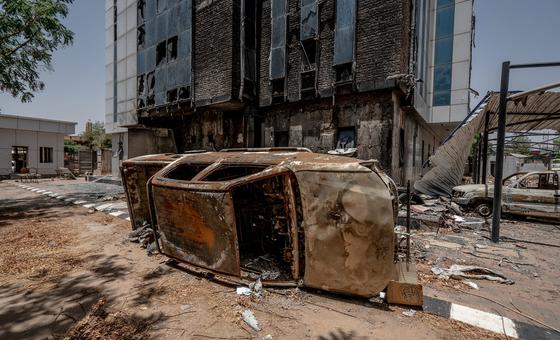
Sudan’s people tortured and killed in ‘slaughterhouses’, rights probe says

Shortly after presenting a mandated report to the Human Rights Council in Geneva on Tuesday, chair of the Fact-Finding Mission on Sudan, Mohamed Chande Othman, insisted that both the Sudanese Armed Forces (SAF) and Rapid Support Forces (RSF) militia had carried out atrocity crimes.

Among the testimonies gathered for the report, survivors from RSF detention sites described the locations as “slaughterhouses”.

Tortured, staved, denied medical care

In one notorious RSF facility, dozens of detainees died between June and October this year after being tortured, denied food and medical care, the independent rights expert said.

Equally, in SAF-run detention facilities, “civilians were also subjected to torture, including electric shock, sexualized abuse and they were held in cells so overcrowded that some prisoners had to sleep standing,” he added.

In addition, girls as young as 12 were forced into marriage, “sometimes under the threat of death to their families”, the fact-finding mission chair continued.

“Men and boys were also subjected to sexualized torture and such acts are rooted in racism, prejudice and impunity and they devastate entire communities.”

Highlighting the lack of diplomatic solutions to the conflict which began in April 2023, and its massive impact of the war on civilians, report co-author Mona Rishmawi insisted that “everybody knows you cannot rape, you cannot loot, you cannot destroy property. You cannot starve people…But if there is no accountability, of course they will continue doing it.”

Extermination goal

Asked why the report had decided not to describe what has been happening in Sudan as genocide, Ms. Rishmawi replied that the evidence “basically looks at more or less the same kind of violations as genocide”.

She added: “You kill, [you provide] no food, no water, you don’t allow food production. You don’t allow access to food, to markets…and you don’t allow access to humanitarian aid. What you do want is to kill the population…So, the effect of this is really the crime against humanity…of extermination.”

Hunger crisis

The investigative body created by the Human Rights Council in October 2023 highlighted the devastating humanitarian emergency that has resulted from the war.

“In displacement camps such Zamzam and Abu Shouk, witnesses describe children dying of hunger and dehydration in the streets, including people eating animal food,” said Joy Ngozi Ezeilo, Expert Member of the Fact-Finding Mission.

Addressing the council earlier, fact-finding mission chair Mr. Othman insisted that the war was “destroying not only lives but also the means of survival”, with hospitals, markets, water and electricity systems – and even humanitarian convoys – systematically attacked.

“Markets, the backbone of food access, have been repeatedly bombed,” he said, adding that in October 2024, SAF airstrikes on El Koma market killed at least 45 civilians.

Dying of thirst

“Two months later, Kabkabiya market was struck, killing more than 100. In March this year, SAF bombed Tora market during peak hours, killing and injuring hundreds.”

The mission report underscored how the RSF had also shelled markets, pillaged entire areas and destroyed Zamzam camp’s market.

RSF drone strikes hit the Merowe Dam and water towers, leaving communities without drinking water, while “one mother told us she lost all four of her children to thirst while fleeing”, said Mr. Othman, who like the other members of the panel is an independent human rights expert and not a UN staff member.
Source link

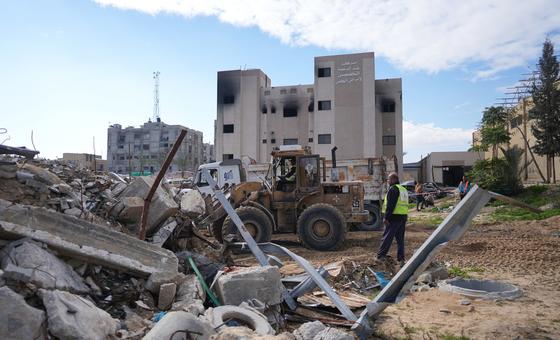
Gaza: UN calls for probe following deadly strikes on Nasser Hospital

At least 20 people were killed, including four health workers and five journalists, WHO Director-General Tedros Adhanom Gebreyesus said in a tweet.

Fifty other people were injured, including critically ill patients who were already receiving care.

Healthcare under attack

While people in Gaza are being starved, their already limited access to healthcare is being further crippled by repeated attacks,” Tedros remarked.

“We cannot say it loudly enough: STOP attacks on healthcare. Ceasefire now.”

He said the hospital’s main building, which houses the emergency department, inpatient ward, and surgical unit, was hit. 

The strikes also damaged the emergency staircase.

Global indifference and inaction

The head of UN Palestine refugee agency UNRWA also took to social media in the wake of the news.

Silencing the last remaining voices reporting about children dying silently and famine with the world’s indifference and inaction is shocking,” said Commissioner-General Philippe Lazzarini.

He called for compassion to prevail, saying “let us undo this manmade famine by opening the gates without restrictions, ⁠protecting journalists and humanitarian and health workers,” stressing the need for political will now.

The UN recently noted that more than 240 journalists have been killed in Gaza since the war began nearly two years ago following deadly Hamas-led attacks on Israel. 

Roughly 1,200 people were killed and 250 hostages were taken to the enclave, some of whom remain in captivity.

Guterres calls for investigation

UN Secretary-General António Guterres strongly condemned the deadly airstrikes and called for a prompt and impartial investigation.

These latest horrific killings highlight the extreme risks that medical personnel and journalists face as they carry out their vital work amid this brutal conflict,” UN Spokesman Stéphane Dujarric said in a statement. 

The UN Office for the Coordination of Humanitarian Affairs (OCHA) said that among the reporters killed was female journalist Mariam Abu Dagga who partnered with the agency last year on a photo essay depicting the dire situation in Gaza.

The Secretary-General reiterated that medical personnel and journalists must be able to perform their essential duties without interference, intimidation, or harm, in full accordance with international humanitarian law. 

He also renewed his call for an immediate and permanent ceasefire in Gaza, unfettered humanitarian access across the enclave, and the immediate and unconditional release of all hostages.

The Israeli Prime Minister’s office issued a statement later in the day saying the Government “deeply regrets the tragic mishap” which occurred at the Nasser Hospital. 

Famine spreading

The number of deaths in Gaza has surpassed 61,000, according to the local health authorities.

Last week, food security experts confirmed that famine has taken root in Gaza Governorate, projecting that it will spread. 

The Gaza Ministry of Health said on Tuesday that 11 people have died from malnutrition and starvation in the past 24 hours, bringing the overall total to 300.

Displacement deepens

Meanwhile, people across the enclave continue to be displaced while seeking safety and shelter.  

Humanitarians said that between 20 and 24 August, some 5,000 people are estimated to have been displaced from northern Gaza to Deir Al-Balah and Khan Younis. Roughly 8,000 more have been displaced to the west of Gaza City. 

Overall, new displacements have surpassed 800,000 since the end of the ceasefire in mid-March. 

Obstructions to aid delivery

At the same time, aid convoys in Gaza continue to face delays, movement obstructions and other challenges. 

On Sunday, only seven out of 15 humanitarian missions that required coordination with Israel were facilitated, including the collection of fuel from the Kerem Shalom border crossing for distribution to areas where it is needed most. 

“Four missions had to be either cancelled by the organisers or were denied outright by Israeli authorities,” OCHA said.

“The remaining ones were initially approved but then impeded on the ground and only partially accomplished, including the collection of food and vaccines from the crossings.”

Education on hold

As children around the world start heading back to school, their counterparts in Gaza continue to miss out on education.

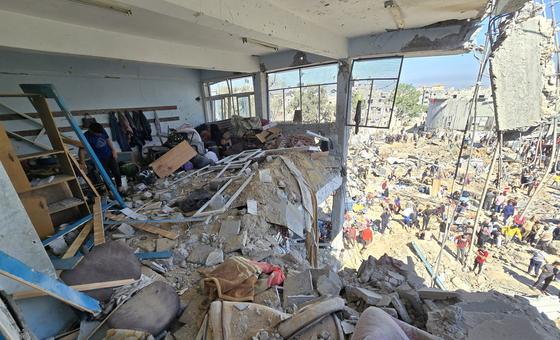
Several education facilities that are being used as shelters for displaced people were attacked last week, according to aid partners.

“With local authorities announcing that final exams for over 35,000 high school students are due to be held in two weeks, the UN and its partners reiterate their call for the protection of education facilities in accordance with international law,” OCHA said. 

Source link

Gaza: Guterres urges probe into killing of journalists, as child malnutrition deaths rise

The reporters – five of whom worked for the Al Jazeera media network – were killed in a targeted Israeli strike in Gaza City the previous day. 

These latest killings highlight the extreme risks journalists continue to face when covering the ongoing war,” UN Spokesperson Stéphane Dujarric said during his regular media briefing from New York.

“The Secretary-General calls for an independent and impartial investigation into these latest killings.” 

Respect the press

Mr. Dujarric pointed out that at least 242 journalists have been killed in Gaza since the war began nearly three years ago.

“The Secretary-General underscores that journalists and media workers must be respected, they must be protected and they must be allowed to carry out their work freely, free from fear and free from harassment,” he said.

© UNICEF/Mohammed Nateel

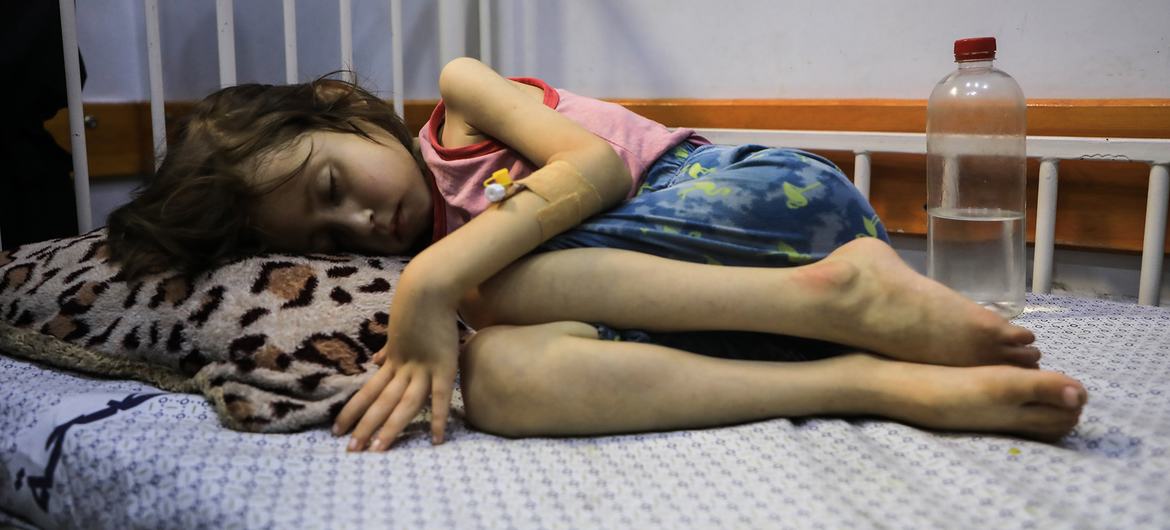
A child suffering from malnutrition lies on a bed in the Patient Society Hospital in Gaza City.

Hungry children dying

Meanwhile, the number of children in Gaza who have died from malnutrition since October 2023 has surpassed 100, according to the Gazan health authorities, the UN aid coordination office, OCHA, said in an update.

More than a third of the population is not eating for days at a time, according to the UN World Food Population (WFP).  Furthermore, acute malnutrition is spiking, with over 300,000 children at severe risk.

This comes amidst a recent warning by the UN Food and Agriculture Organization (FAO) that a mere 1.5 per cent of cropland in the enclave remains both accessible and undamaged, “signaling a near-total collapse of the local production of food.”

Aid taken from trucks

On the aid front, the UN and its partners collected food and hygiene kits from the Kerem Shalom/Karem Abu Salem border crossing on Wednesday.

“However, supplies were offloaded directly from these trucks before reaching their destination, given the extreme desperation pervasive in Gaza today,” OCHA said.

The agency stressed that people there “need a predictable lifeline – not a trickle of aid – so they do not feel they need to take desperate measures to survive.”

WFP said that just to cover basic humanitarian food assistance needs, more than 62,000 metric tonnes are required to enter Gaza every month, and so far, humanitarians have not been permitted to bring in enough supplies to support the population. 

Fuel shortages continue

Humanitarians also collected fuel from the Kerem Shalom crossing on Wednesday. Israel is allowing, on average, the entry of about 150,000 litres of fuel daily, which is still far below the minimum required. As a result, life-saving operations continue to be at risk.

The Palestine Civil Defence organization has warned that more than half of their ambulances have stopped operating across Gaza due to the shortage of both fuel and spare parts. 

“Israeli authorities must allow aid to enter through all crossings and via all available corridors so that humanitarians can deliver – at scale, in a safe and dignified manner – to reach the most vulnerable, including women, children and older people,” OCHA said. 

Source link

Israeli attacks on Gaza schools could be crimes against humanity: UN probe

The UN Human Rights Council-mandated Independent International Commission of Inquiry (COI) report found that Israeli forces have used airstrikes, shelling, burning, and controlled demolitions to damage or destroy more than 90 per cent of schools and university buildings across Gaza.

This destruction in the wake of the 7 October 2023 Hamas-led terror attacks on Israel has made education impossible for over 658,000 children, many of whom have been out of school for nearly two years.

“We are seeing more and more indications that Israel is carrying out a concerted campaign to obliterate Palestinian life in Gaza,” said Navi Pillay, Chair of the Commission.

“Israel’s targeting of the educational, cultural and religious life of the Palestinian people will harm the present generations and generations to come, hindering their right to self-determination.”

Classroom-turned military base

The COI documented cases where Israeli forces seized and used educational institutions as military bases, including the conversion of part of Al-Azhar University’s Al-Mughraqa campus into a synagogue for troops.

The report also noted one instance where Hamas militants used a school for military purposes. Such conduct is a breach of international humanitarian law, which mandates the distinction between civilian objects and military targets.

Targeting of religious sites

More than half of Gaza’s religious and cultural sites have been damaged or destroyed, including places serving as refuges for civilians – killing hundreds, including women and children.

The Commission stated that Israeli forces knew or should have known the cultural significance of these sites and failed to prevent harm.

In the occupied West Bank, including East Jerusalem, Israeli authorities appropriated, developed and profited from cultural heritage sites representing Palestinian, Jewish and other cultures, while displaced Palestinian residents.

They have also blocked or severely restricted Palestinians from accessing the sites.

“Attacks on cultural and religious sites have deeply impacted intangible culture, such as religious and cultural practices, memories and history,” said Ms. Pillay.

“The targeting and destruction of heritage sites, the limiting of access to those sites in the West Bank and the erasure of their heterogenic history erode Palestinians’ historical ties to the land and weaken their collective identity.”

Recommendations

The Commission called on Israel to immediately cease attacks on cultural, religious, and educational institutions and to end the seizure and military use of such facilities. It urged Israel to end its occupation and settlement activities, especially near religious and cultural sites, and to comply fully with International Court of Justice (ICJ) orders.

Investigators also urged Palestinian authorities to protect and preserve cultural heritage sites, including those of diverse origins, calling on de facto authorities in Gaza to stop using civilian objects for military purposes.

Humanitarian crisis spiralling

UN agencies continue to warn of a worsening humanitarian crisis in Gaza.

The UN Children’s Fund (UNICEF) highlighted the case of a five-year-old malnourished child whose recovery depends on adequate food and sustained care.

Aid at scale must be allowed into Gaza for children’s health and survival,” the agency urged.

‘Another day of death traps’

Philippe Lazzarini, head of the UN agency assisting Palestine refugees, expressed deep concern over delays and obstacles in aid delivery, urging Israel to allow the UN safe and unhindered access to bring in supplies and distribute it safely.

“This is the only way to avert mass starvation including among one million children,” he said.

Mr. Lazzarini warned that casualties and injuries continue to be reported daily at US-backed distribution points managed by Israeli and private security forces – creating in effect, daily death traps.

He described the system as humiliating, forcing thousands of hungry and desperate people to walk tens of miles, while excluding the most vulnerable and those living too far from aid centres.

Source link

Gaza: Guterres urges probe into killings at food distribution sites

More than 30 people were killed and over 100 wounded while waiting in the early morning to get food from two sites in Rafah and Middle Gaza run by the newly established Gaza Humanitarian Foundation (GHF), according to media reports.

The organization is backed by Israel and the United States and uses private US security contractors supervised by the Israeli military. Aid distributions began at the end of May, bypassing the UN and other humanitarian agencies.

Risking their lives

UN chief António Guterres issued a statement on Monday saying he was “appalled” by the reports.

“It is unacceptable that Palestinians are risking their lives for food,” he said.

“I call for an immediate and independent investigation into these events and for perpetrators to be held accountable.”

He stressed that Israel has clear obligations under international humanitarian law to agree to and facilitate humanitarian aid. 

Allow UN operations

“The unimpeded entry of assistance at scale to meet the enormous needs in Gaza must be restored immediately,” he said.

The UN must be allowed to work in safety and security under conditions of full respect of humanitarian principles.

Meanwhile, the Secretary-General continues to call for an immediate permanent, sustainable ceasefire in Gaza and the immediate and unconditional release of all hostages.

“This is the only path to ensuring security for all. There is no military solution to the conflict,” he said.

More to follow… 

Source link

International Criminal Court: Deputies take over amid Prosecutor misconduct probe

In a statement on Monday, the prosecutors’ office confirmed that deputies Nazhat Shameem Khan and Mame Mandiaye Niang are taking the lead, ensuring continuity across all cases and operations.

The transition follows Prosecutor Khan’s announcement on 16 May that he would temporarily step aside while the UN Office of Internal Oversight Services (OIOS) conducts an external inquiry into the allegations.

The investigation into widely reported allegations of sexual misconduct is being conducted by the OIOS at the request of the ICC’s governing body. Mr. Khan has denied the allegations.

Although the ICC’s Independent Oversight Mechanism typically handles such matters, the OIOS was brought in given the circumstances of the allegations and perceptions of possible and future conflicts of interest.

Duty of care

The prosecutors’ office said it would fully cooperate with the investigation, while underscoring the need to protect the privacy and rights of everyone involved – emphasising the importance of safeguarding the integrity of the OIOS investigation.

The Office is acutely aware of the duty of care it owes to all staff members and personnel, especially affected individuals,” the statement underscored.

Impartial and fair process

The Presidency of the Assembly of States Parties to the ICC – which elects the 18 judges – said on Sunday that the OIOS investigation was being carried out to ensure a full independent, impartial and fair process.

“The findings of the investigation will be handled in a transparent manner in accordance with the Rome Statute and the legal framework of the Court,” it noted.

Upholding ICC’s mandate

In assuming leadership, the Deputy Prosecutors underlined the importance of ensuring continuity of the office’s activities across all areas of work, and particularly in its mission to investigate and prosecute the most serious crimes – genocide, war crimes, crimes against humanity and the crime of aggression – with independence and impartiality.

Court in the spotlight

The Prosecutor’s leave of absence comes at a sensitive moment for the ICC, which is conducting investigations and prosecutions across multiple conflict zones, including Afghanistan, the Democratic Republic of the Congo, Libya, Sudan (Darfur) and Ukraine.

Last November, the ICC issued arrest warrants for senior Israeli officials, prompting the United States to announce punitive sanctions against the Court.

These include measures against senior personnel – including Prosecutor Khan – with threats of arrest should they travel to the US.

Relationship with the United Nations

The International Criminal Court (ICC) is an independent judicial body established under the Rome Statute, adopted in 1998 and in force since 2002. Although not part of the United Nations, the ICC works closely with it under a cooperative framework.

The UN Security Council can refer situations to the ICC, enabling the Court to investigate and prosecute most serious crimes. Notable referrals include the situations in Darfur, Sudan (2005) and Libya (2011).

In return, the ICC reports to the Security Council when needed involving referrals.

Source link

Missing Malaysian Airlines MH370 ‘deliberately crashed’ in 2014, shows new evidence

The sudden disappearance of the Malaysian Airlines flight MH370 on March 8, 2014 was a deliberate attempt to crash the plane, said a report by The Independent, citing the discovery of a landing gear door of the ill-fated plane by a Madagascar fisherman. It further, suggested that the pilot “deliberately downed” the aircraft resulting in the loss of lives of all 239 passengers onboard.

The report said the gear door, found at the home of a fisherman named Tataly 25 days ago, was the material evidence that explains how the pilot “intended to destroy” the plane. It quoted British engineer Richard Godfrey and an American MH370 wreckage hunter Blaine Gibson to support the claim.

“The level of damage with fractures on all sides and the extreme force of the penetration right through the debris item lead to the conclusion that the end of the flight was in a high-speed dive designed to ensure the aircraft broke up into as many pieces as possible. The crash of MH370 was anything but a soft landing on the ocean,” Godfrey was quoted as saying.

File photo of MH370; A Madagascar fisherman found door gear of MH370, shows new evidence

In 2017, the fisherman found the landing gear door that washed ashore after the tropical storm Fernando and kept it with him for five years without knowing its significance, while his wife used it as a washing board.

“The combination of the high speed impact designed to break up the aircraft and the extended landing gear designed to sink the aircraft as fast as possible both show a clear intent to hide the evidence of the crash,” Independent quoted a report published by the experts as saying.

How MH370 disappeared on March 8, 2014?

The Beijing-bound MH370 disappeared off the radar about 40 minutes after take-off from Kuala Lumpur on the fateful night of March 8, 2014 when its communication systems were switched off and the flight changed the route into the southern Indian Ocean.

The probe concluded that the plane crashed in a remote area of about 232,000 kilometers off the sea bed. So far, some suspected fragments of the aircraft have been recovered from beaches in Reunion, Mozambique, Mauritius, South Africa, and Pemba Island (Zanzibar).

Malaysia, Australia, and China, who carried out the first search at a cost of over $151 million, suspended the probe in January 2017. even the US-based seabed exploration company Ocean Infinity, which conducted a second search, yielded no result.

Chinese spy working at Twitter? FBI asks company after whistleblower reveals it

Chinese rights activists overseas have said that they are concerned but unsurprised at recent allegations that an agent of the Chinese Communist Party (CCP) was working at Twitter, saying such infiltration is part of Beijing’s global influence operation, media reports said.

The FBI informed Twitter of at least one Chinese agent among its employees, according to US Senator Chuck Grassley, while hacker and whistleblower Peiter Zatko said the company’s lax security sparked fears that personal data on Chinese users was being collected by authorities in China, RFA reported.

Zatko, Twitter’s former head of security, levelled the allegations during his testimony before the Senate Judiciary Committee, detailing internal clashes between some who sought advertising revenue from China, and others who were concerned about doing business inside China amid rising geopolitical tensions, the report said.

“This was a big internal conundrum,” Zatko told the hearing, adding that Twitter appeared reluctant to turn away from China. “In a nutshell, if we were already in bed, it would be problematic if we lost that revenue stream,” he said.

Zatko said the FBI had told the company that China’s secret service, the Ministry of State Security, had an agent on the payroll, RFA reported.

A Twitter spokesperson said the microblogging platforms hiring process was independent of foreign influence, and that access to personal data was subject to stringent controls, adding that Zatko’s allegations were “riddled with inconsistencies and inaccuracies.”

France-based commentator Wang Longmeng said the CCP has long targeted Western social media platforms to wage its overseas influence campaigns, and that some of the company’s regional executives have close ties to the CCP, including Kathy Chen, RFA reported.

Chen’s 2016 appointment as Twitter’s managing director for Greater China raised concerns in particular, as it emerged she had served as a software engineer in the People’s Liberation Army’s strategic missile force.

“Kathy Chen, who had a military background, joined [the company], then Fei-fei Li became an independent director,” Wang said. “The CCP’s infiltration of Western media is one of its key strategies.”

“It’s not surprising that the whistleblower revealed there are Chinese agents at Twitter, because there have been suspensions and deleted accounts, and yet Twitter still allows CCP diplomats to spread rumors and lies,” he said, RFA reported.

While China bans Twitter, Facebook and other US social media firms, government agencies and diplomats use the platforms to reach an international audience.