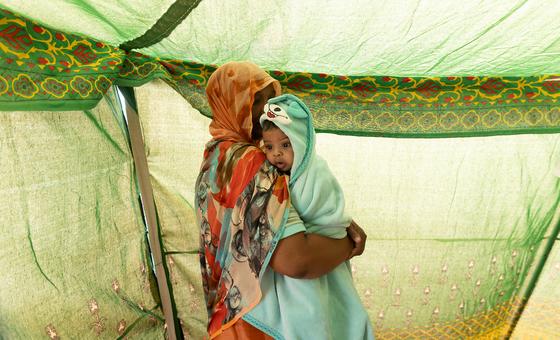
Attacks on schools surge by ‘staggering’ 44 per cent over the past year

Over 41,000 incidents of violence against school-age children were reported by the UN in 2024.

Countries with the highest levels of violations in were Israel and the Occupied Palestinian Territory, notably the Gaza Strip, the Democratic Republic of the Congo (DRC), Somalia, Nigeria, and Haiti.

In a message to mark the International Day to Protect Education, commemorated annually on 9 September, the UN Secretary-General, António Guterres said that “each violation carries profound consequences, not only for teachers and young learners, but for the future of entire communities and countries,” adding that “no child should risk death to learn.”

The UN chief’s Annual Report on Children and Armed Conflict for 2024 highlights not only an upsurge in attacks on schools but also a 34 per cent increase in rape and other forms of sexual violence perpetrated against children.

In addition, the number of children victims of what the UN calls grave violations increased by 17 per cent as a result of abduction, recruitment, and other types of violence, characterised by the UN as “an alarming escalation in brutality.”

Gaza children deprived of right to education

In Gaza where more than 2.3 million people have been displaced by the two-year-long war, 660,000 children remain out of school and classrooms have been converted into shelters. 

“There is no education now. We live inside the school, where we are displaced, eating and sleeping,” said Diana, a child living in Gaza. 

Despite the ongoing conflict more than 68,000 children in Gaza have been reached through temporary learning spaces offering education and psychosocial support.

The UN Children’s Fund, UNICEF, is also recycling pallets into school furniture and converting supplied boxes into tables and chairs.

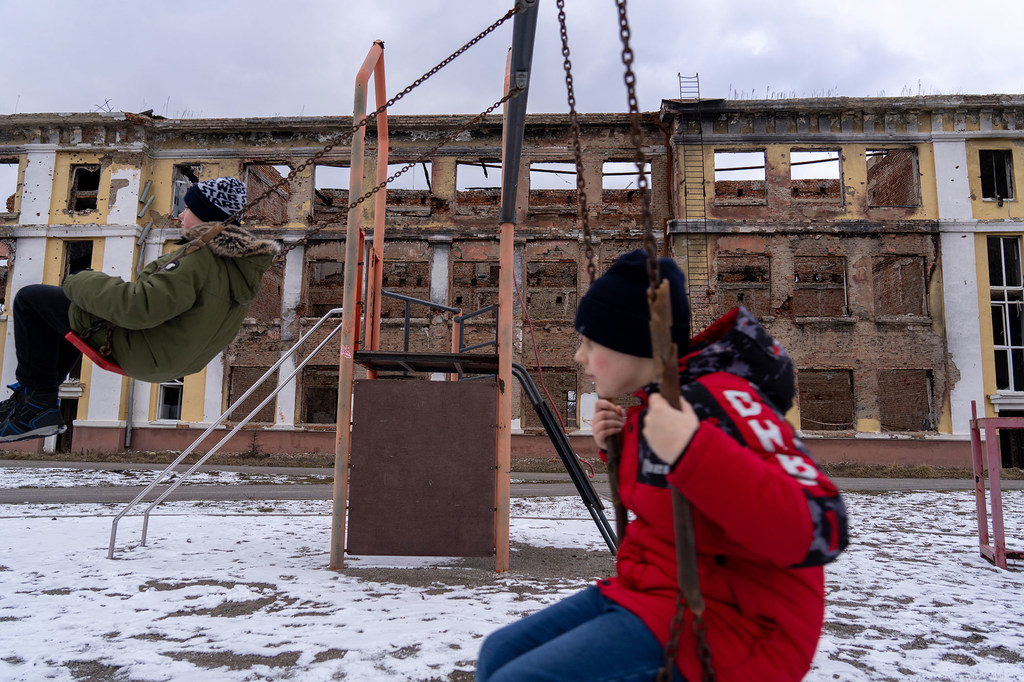
© UNICEF/Oleksii Filippov

Boys play amidst the ruins of a school in Kharkiv, Ukraine.

Barriers to education in Ukraine

In Ukraine, 5.3 million children face barriers to education, and around 115,000 are completely out of school due to the ongoing war.

“1,850 facilities have been damaged since the beginning of the conflict,” said Nelson Rodrigues, Education Specialist at UNICEF.

With many schools on the front lines either closed or operating remotely, over 420,000 children attend school fully online, while one million use a hybrid model. 

UNICEF has supported the rehabilitation of 57,000 war-affected school facilities, which has allowed a considerable number of children to return to the classroom. 

The UN agency has also provided catch-up and remedial learning, enabling children to recover from disruptions and continue their education. 

Meanwhile, between January and July of this year, the UN and its humanitarian partners have supported 370,000 children and teachers, mainly in front-line and host communities. 

Respect schools 

Parties to conflict anywhere in the world are obliged under international law, to respect schools as places of safety, and hold accountable those responsible for attacks.

“The pen, the book, and the classroom are all mightier than the sword,” said UN Secretary-General Guterres.

“Let’s keep it that way and protect the fundamental right of every child to learn in safety and peace.”  

Source link

Sudan: A staggering 30 million are in need, as war grinds on

Edem Wosornu, Director of Operations and Advocacy for the humanitarian affairs office, OCHA, briefed journalists on her recent visit to Sudan and neighbouring Chad – a critical entry point for aid and a haven for some 850,000 people who have fled fighting between the Sudanese army and the Rapid Support Forces (RSF) militia. 

The war erupted in April 2023 and has created one of the world’s largest humanitarian crises, with some 30 million people needing assistance.  

Homes, hospitals and schools have been destroyed, and basic services have ceased. Malnutrition and food insecurity are on the rise.

Aid trucks waiting

Ms. Wosornu voiced concern over the situation in El Fasher, which has been under siege for 500 days, with fresh shelling reported that morning. The North Darfur capital is also in the grip of deadly cholera which “doesn’t care whether you’re in uniform or a civilian”.

She said some 70 trucks from the World Food Programme (WFP), the UN Children’s Fund (UNICEF), and the World Health Organization (WHO) are waiting in Nyala, South Darfur, to enter the city.

Meanwhile, two other cities – Kadugli in South Kordofan state and El Obeid in North Kordofan – are also under siege.

“We have some good news”, Ms. Worsonu said, announcing that UNICEF trucks have delivered assistance to hundreds of thousands of people in Kadugli in recent days. 

Khartoum now ‘a ghost town’

The senior OCHA official recalled that Sudan was once the “breadbasket” of the Horn of Africa, but last year famine conditions were reported in the Zamzam camp in North Darfur. 

The current lean season finds some 680,000 people nationwide in a state of catastrophic food insecurity.

Although fighting has died down in the capital, Khartoum, she said the sheer scale and destruction is devastating, with “streets and buildings littered with explosive remnants of war”. The once vibrant city is now “completely a ghost town” with a “palpable sense of trauma everywhere”. 

However, she also witnessed signs of hope.  She saw “a city trying to come back to life, people sweeping the streets, a population determined to come back to what they once were. But it will take, of course, many, many, many years.”

In Chad, she thanked the authorities for their support, including ensuring that the Adre border with Sudan remains open. 

The war has made travel within Sudan extremely difficult, so humanitarian aid has to go from Douala in Cameroon through Chad’s capital, N’Djamena, and onto several more cities before arriving at Adre for entry into Darfur – “a mammoth effort”, she said.

More funding and aid access

Ms. Wosornu concluded by making four “key asks” to the international community, including for sustained improvements in aid access and more funding. 

“What we need is 55 cents per person, per day. That’s it for Sudan,” she said. 

Harder to deliver were her final plea to the warring parties for a lasting peace and an end to the fighting.

“Our humanitarian partners are also saying that this needs to stop so we can continue to deliver assistance,” she said. “Because after the war and everything has stopped, and when the guns are silenced, people still need recovery.”  

Source link

Syrians face staggering needs amid insecurity and healthcare crisis

Wrapping up a visit to the country, Edem Wosornu, who heads operations and advocacy for the UN humanitarian affairs coordination office (OCHA) said that she could “feel the momentum for change” on the ground after years of suffering and hardship under the Assad regime ended with its overthrow last December.

But formidable challenges remain as 16.5 million Syrians require humanitarian assistance and protection, and needs are “staggering”.

Speaking from Gaziantep, a humanitarian hub in Türkiye just across the Syrian border, Ms. Wosornu noted an “encouraging trend of returns” since last December.

Over one million internally displaced people have come back to their areas of origin, she said, and more than half a million refugees have returned from neighbouring countries according to the UN refugee agency (UNHCR).

Devastated homes and opportunities

The OCHA official cited insecurity, damaged homes, inadequate services, lack of livelihood opportunities and the threat of unexploded ordnance as “key barriers” preventing people returning.

“People say, first and foremost they want security,” she stressed.

While the level of hostilities in the country has subsided, Ms. Wosornu said, localized tensions and clashes remain a “major concern”.

Remnants of heavy fighting pose a continued threat to civilians, said Dr Altaf Musani, the UN World Health Organization (WHO)’s Director of Health Emergencies.

He pointed to at least 909 casualties from unexploded ordnance since December 2024, including some 400 deaths – a majority of them women and children.

We’re starting to see the admission rates and consultation rates in emergency rooms increase… Children and women, going about their daily life, trying to get water, trying to get food, trying to rebuild,” are walking through agricultural land, roads and rivers where unexploded munitions could be hiding, he said.

Camp residents at highest risk

Diseases, such as cholera and acute watery diarrhoea, are spreading, Dr. Musani said, stressing that more than 1,444 suspect cases of cholera and seven associated deaths have been recorded.

“This is particularly in Latakia and Aleppo, particularly around displacement camps,” he said.

“We know that when cholera gets hold in camps, it can serve as a brush fire, increasing both morbidity and mortality.”

The WHO official warned that more than 416,000 children in Syria are at risk from severe malnutrition and that more than half of children under five suffering from severe acute malnutrition are not receiving treatment.

“From a public health standpoint, we need to be able to watch that risk and intervene and save those children,” he said.

Boys play in an informal camp in Syria.

Pregnancy dangers

Dr. Musani also noted that half of the maternity hospitals in northwest Syria have suspended operations since September 2024 owing to financial cuts, which humanitarians are “witnessing globally” but which are “really apparent” in Syria.

Underfunding of the humanitarian operation in Syria is already severe. Earlier this week, OCHA’s Coordination Division head, Ramesh Rajasingham, told the Security Council that out of the $2 billion required for the UN and its partners to reach eight million of the most vulnerable people from January through June 2025, only 10 per cent has been received.

The country’s cash-strapped health facilities face a lack of skilled workers and equipment, said WHO’s Dr. Musani. The war had pushed some 50 to 70 per cent of the health workforce to leave the country in search of other opportunities, and the health infrastructure is in dire need of investment.

The WHO official noted that for the health system – the “heartbeat of the nation” – the sanctions imposed on the country during the Assad regime had resulted in a lack of much-needed upgrades, compromising the purchase of new MRI machines, CT scanners, laboratory equipment and software upgrades.

Over the past two weeks, both the United States and the European Union have moved to lift the sanctions. OCHA’s Ms. Wosornu expressed hope that thanks to this development “we’ll see the impact on goods and services, on the cost of doing operations in the country, on the ability to move goods quicker into the country”.

But “it will take time”, she added. “I believe the people of Syria are hopeful that this will change their everyday lives.”