Peacekeepers find weapons trove in southern Lebanon, as drought threatens millions

On Tuesday and Wednesday this week, peacekeepers with the UN Interim Force in Lebanon (UNIFIL) discovered rocket launchers, rocket shells, mortar rounds, bomb fuses and a tunnel containing munitions in separate incidents in Sectors East and West, UN Spokesperson Stéphane Dujarric told reporters in New York.

All finds were referred to the Lebanese Armed Forces in line with standard procedure.

UNIFIL also observed continued Israel Defense Forces activity, including an airstrike in Sector West and artillery fire from south of the Blue Line – which separates Israeli and Lebanese armed forces – into Sector East.

To strengthen Lebanese military capacity, the mission has been training personnel in surveying and removing explosive devices, securing contaminated sites and navigating mined areas.

“Such training activities are crucial now as the Lebanese Armed Forces engages daily in identifying and securing areas contaminated with unexploded ordnances and explosive remnants of war,” Mr. Dujarric said.

Complex operational space

Southern Lebanon remains a challenging operational environment, where UNIFIL works to implement Security Council resolution 1701, which brought an end to the 2006 hostilities between Israel and Hezbollah militants.

The Mission’s mandate includes monitoring the cessation of hostilities, supporting the deployment of the Lebanese Armed Forces in the south, and helping to ensure that the area between the Blue Line and the Litani River remains free of unauthorized weapons.

The region has experienced recurring tensions, including a sharp escalation last year marked by numerous Israeli airstrikes and ground operations. These incidents have affected local communities and resulted in damage to several UN positions, and injuries to several ‘blue helmets’ serving with UNIFIL.

Unprecedented water crisis

Lebanon’s largest reservoir, Lake Qaraoun, has dropped to its lowest level on record, the Litani River National Authority said.

Inflows during this year’s wet season reached just 45 million cubic metres – compared to an annual average of 350 million – following months of low rainfall and an intense heat wave.

The decline comes amid a wider nationwide emergency.

In early July, the UN Children’s Fund (UNICEF)-led water, sanitation and hygiene (WASH) group reported that rainfall had fallen by more than half in many regions along with decreased snow-melt, and several reservoirs and aquifers had dried up.

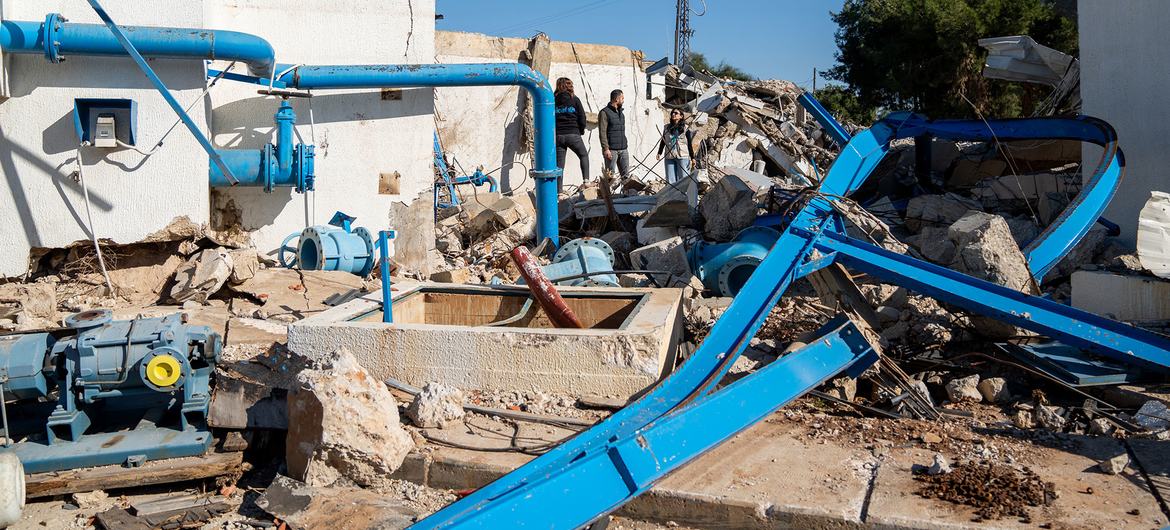
A water pumping station in southwest Lebanon damaged during the recent conflict.

Health risks rising

The drought is affecting all sectors, from agriculture and healthcare to education and local governance. An estimated 1.85 million people live in areas highly vulnerable to drought, with more than 44 per cent of the population dependent on costly and often unsafe water trucking services.

The severe strain on public water systems have been compounded by damaged infrastructure stemming from the recent fighting between Israel and Hezbollah and electricity shortages.

Health risks are rising, particularly in overcrowded settlements with poor sanitation, where residents may resort to unsafe water sources, heightening the threat of waterborne disease outbreaks, the WASH cluster warned.

Food security worries

The drought has also caused a sharp decline in food production and increased reliance on expensive imports, deepening food insecurity.

Wildfire risks are also mounting due to prolonged dry conditions.

The WASH cluster warned that without urgent international support to restore water systems and protect vulnerable communities, the crisis could further destabilize an already fragile nation.

Sudan: You can run – but we will find you, militias warn terrified civilians

“People told me multiple times that when they were fleeing from Zamzam [displacement camp], armed people would threaten them while they were in flight, saying sure, ‘Flee, go to that place, run here, run there, we will follow you, we will find you’,” said Jocelyn Elizabeth Knight, a Protection Officer for the UN refugee agency, UNHCR.

Briefing journalists in Geneva, Ms. Knight described speaking to one traumatized child at a UNHCR shelter, whose experience mirrors that of countless other youngsters across the nation.

“A tiny boy told me, ‘You know, during the day things are okay here, but I’m afraid to go to sleep at night in case the place where we’re living is attacked again’.

UNHCR’s Jocelyn Knight speaks with UN News on the situation on the ground.

Forced into squalor

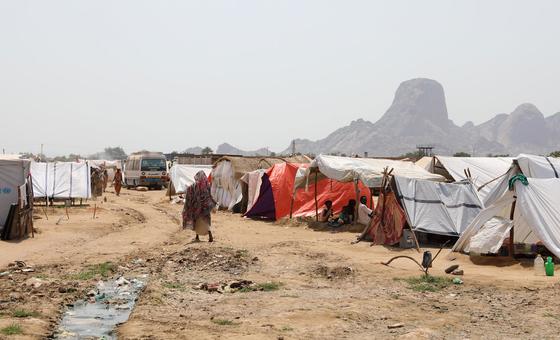
In Darfur in western Sudan, many people uprooted by violence gather in disused public buildings with few essentials to water and sanitation.  

Meanwhile, new displacement and attacks on civilians continue within Darfur and neighbouring Kordofan region, UNHCR warned, in communities “that are already devastated and have been subjected to unspeakable atrocities”.

The ongoing fighting has also severely constrained humanitarian access and disrupted aid delivery for over two years. With seasonal rains underway, many roads will be impassable for months, further complicating the delivery of aid, the UN agency noted.  

The persistent insecurity has also impeded farming, deepening deprivation in areas at risk of famine or already experiencing famine-like conditions.

Latest UNHCR data indicates that more than 873,000 Sudanese refugees have fled Darfur and crossed into Chad, which now hosts the largest number of registered Sudanese refugees since the start of the conflict. One in three people in eastern Chad is now a refugee.

Deadly disease

In addition to heavy fighting between the Sudanese Armed Forces (SAF) and their former allies-turned opponents – the Rapid Support Forces (RSF) paramilitaries – that began in April 2023, civilians now face a fast-spreading and deadly cholera outbreak.

Cholera has swept across Sudan with all the states reporting outbreaks,” said Dr. Ilham Nour, Senior Emergency Officer with the UN World Health Organization (WHO).

She noted that since last July, nearly 100,000 cases have been reported.

Lives on the line

The highly contagious disease spreads rapidly in unsanitary conditions. As of early August, 264 cases and 12 deaths have been identified at Dougui refugee settlement in eastern Chad hosting Sudanese arrivals from Darfur.

Surrounding villages have also reported suspected cases, while others have emerged in Treguine settlement, one of many UNHCR camps in eastern Chad that host Sudanese refugees.

Help to contain the disease is urgent, insisted UNHCR’s Dossou Patrice Ahouansou, Principal Situation Coordinator for Eastern Chad.

“We still have more than 230,000 refugees at the border in very difficult situation,” he said. “Without urgent action including enhancing access to medical treatment, to clean water, to sanitation, to hygiene and most important, relocation from the border, many more lives are on the line.

As part of the response and to prevent new cases, the UN agency has suspended the relocation of refugees from border points.

UNHCR is seeking $130 million in flexible funding to provide life-saving aid to an estimated 800,000 people in Darfur. In addition, the UN agency will respond to the cholera outbreak and relocate 239,000 Sudanese refugees from the Chad-Sudan border.

Unexploded weapons alert

Meanwhile, the UN Mine Action Service (UNMAS) confirmed fears that unexploded ordnance from ongoing battles are killing and maiming non-combatants who are unaware of the extent of the danger.

The sad reality of this ongoing conflict is it is not happening in rural areas, it’s mainly happening in urban areas, in the areas which are highly populated,” said Mohammad Sediq Rashid, Chief of UNMAS Sudan.

Last week, six minefields were confirmed in Khartoum and three of them contained anti-personnel landmines – the first time this has been reported – he told journalists in Geneva.

Contamination is on the roads, in homes, in schools and airstrips, medical facilities, humanitarian bases,” the UNMAS official continued.

This is a population [that] is largely unaware of the dangers that are waiting for them…this problem is only growing every day.

Source link

Gaza: ‘No one should ever be forced to risk their life to find food,’ says UN humanitarian agency

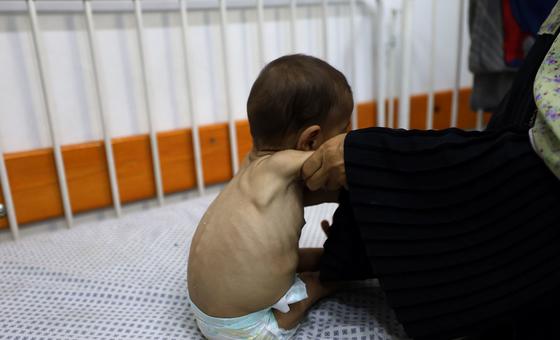
The months-long deprivation of most life-sustaining basic goods has led to a deepening of the crisis.  More than 100 people were killed, and hundreds of others injured, along food convoy routes and near Israeli-militarised distribution hubs in the past two days alone.  

As one in three people currently going days without food, OCHA reiterated that no one should ever be forced to risk their life to get something to eat.  

Ted Chaiban, Deputy Director of UN children’s agency UNICEF, who is fresh from a visit to Gaza, noted that “the marks of deep suffering and hunger were visible on the face of families and children.”

He was briefing journalists in New York about his five-day visit in Gaza, the West Bank and Israel. 

Grave risk of famine

“Gaza now faces a grave risk of famine,” he said, briefing journalists in New York about his five-day mission to the enclave, the West Bank and Israel.

“This is something that has been building up, but we now have two indicators that have exceeded the famine threshold.”  

The crisis can only be addressed through unrestricted flow of aid into Gaza, with commercial supplies also allowed to enter to help address people’s needs.  

Nearly a week since the Israeli announcement to allow the scale up of aid and tactical pauses to allow safe passage of UN convoys, OCHA reported that the aid that has entered Gaza so far remains insufficient, while UN convoys continue to face impediments and danger along the routes provided by the Israeli authorities.  

“Civilians must always be protected and community-level aid delivery at scale must be facilitated, not obstructed,” said OCHA.  

Starved, bombed and displaced  

“The children I met are not victims of a natural disaster. They are being starved, bombed, and displaced,” Mr. Chaiban said.  He noted that more than 18,000 boys and girls have been killed since the beginning of the war, “an average of 28 children a day, the size of a classroom, gone.”  

While in Gaza, Mr. Chaiban met with the families of the 10 children killed and 19 injured by an Israeli airstrike as they were queuing for food with their mothers and fathers at a UNICEF-supported nutrition clinic in Deir Al-Balah.  

Discussion with Israeli authorities

Engaging with Israeli authorities in Jerusalem and Tel Aviv, UNICEF “pressed for a review of [Israel’s] military rules of engagement to protect civilians and children,” Mr. Chaiban said.

Simultaneously, UNICEF also called for more humanitarian aid and commercial traffic to come in to stabilise the situation and reduce the desperation of the population.

“Children should not be getting killed waiting in line at a nutrition centre or collecting water, and people should not be so desperate as to have to rush a convoy,” he said.  

“What is happening on the ground is inhumane.” Mr. Chaiban said, hoping for a sustained ceasefire and a political way forward.  


Source link

Home-bound Syrians find few of the basics needed to survive

Hopes rose last week in Damascus when fuel prices dropped instantly following Donald Trump’s move to end punitive sanctions.

But after more than 13 years of civil war that ended with the fall of the Assad regime last December, ordinary Syrians face an exhausting list of other problems.

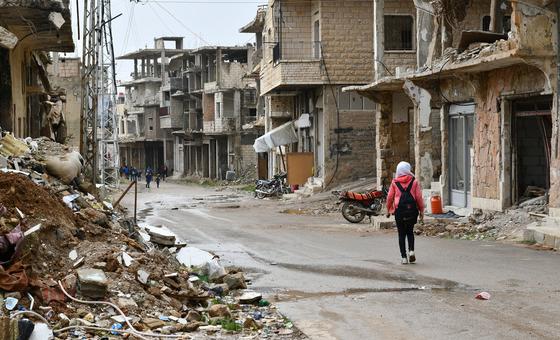
These include an absence of housing – caused by bomb damage on a scale with Gaza – unreliable access to electricity, clean water, healthcare and work.

Refugee agency call

Since last December, half a million Syrians have returned home, many for the first time since the war began, according to the UN refugee agency, UNHCR.  

“We must ensure that people who return can stay and thrive: that is also why the lifting of sanctions is crucial, as reconstruction is urgently needed,” said High Commissioner Filippo Grandi, in an online message.

Today, transitional authorities govern Syria under President Ahmad al-Sharaa.  

‘Destroyed at all levels’

But the once-prosperous country remains scarred – “the infrastructure in Syria is almost completely destroyed at all levels,” said Hail Khalaf, Officer-in-Charge for Syria at the UN International Organization for Migration (IOM).

Mr. Khalaf, who spoke to UN News from the capital Damascus where electricity only comes on for four hours a day, confirmed that the protracted war had impacted Syrian society in its entirety – not least education.

“The impact of the removal of US sanctions on Syria was observed very quickly on the daily lives of Syrians,” he said. “There was an instant drop in fuel prices in Syria the moment the removal of sanctions was announced.”

“We hope that the American government will expedite the removal of the Caesar Act,” he stressed, referring to the sanctions package against the former Syrian Government signed into law by the first Trump administration in 2019.

Dilapidated economy 

Those returning to Syria and looking for a job in the agricultural sector in particular are confronted with an industry in shambles, IOM said in a report.

Farmers make up the great majority of those who were internally displaced by the fighting to camps. Most – 88 per cent – say they cannot work the soil again, as most farms are either operating at half-capacity or unable to function at all, according to IOM’s Displacement Tracking Matrix.

“The country is exhausted, and the economy is also exhausted,” explained Mr. Khalaf.

Today, more than 90 per cent of Syria’s population lives below the poverty line as of December 2024, according to UNHCR data.

The war uprooted around 7.4 million people inside Syria and at least six million are refugees, mainly in neighboring countries including Türkiye, Lebanon and Jordan, the UN agency noted.

Working at a loss

The national currency – the Syrian lira – has been exponentially devalued by the conflict.

Before the war, one US dollar was equivalent to 50 Syrian lira. Today it is worth about 9,000 Syrian lira – leaving livelihoods in disarray.  

“Most Syrians do not earn enough,” Mr. Khalaf explained. “In the public sector, most employees earn approximately $35 to $40 a month, which is not even enough for transportation between work and home.”

Missing paper trail

Gaps in civil documentation also complicate people’s ability to claim housing and land rights.

Damaged public infrastructure has also fuelled outbreaks of waterborne diseases, vaccine-preventable illnesses and malnutrition, aid teams have warned.

“Syrians are resilient and innovative, but they need significant help to rebuild their communities and their lives,” insisted IOM Director General Amy Pope.  

In a bid to help, UN agencies including IOM are working with the Syrian Government to “find a formula for action” and “sustainable solutions” for all returnees so that they can rebuild their lives again.

Source link