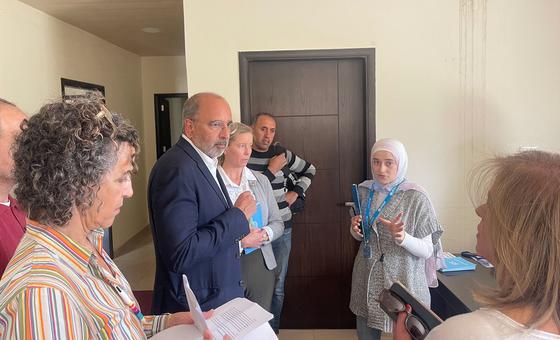
Peacekeepers find weapons trove in southern Lebanon, as drought threatens millions

On Tuesday and Wednesday this week, peacekeepers with the UN Interim Force in Lebanon (UNIFIL) discovered rocket launchers, rocket shells, mortar rounds, bomb fuses and a tunnel containing munitions in separate incidents in Sectors East and West, UN Spokesperson Stéphane Dujarric told reporters in New York.

All finds were referred to the Lebanese Armed Forces in line with standard procedure.

UNIFIL also observed continued Israel Defense Forces activity, including an airstrike in Sector West and artillery fire from south of the Blue Line – which separates Israeli and Lebanese armed forces – into Sector East.

To strengthen Lebanese military capacity, the mission has been training personnel in surveying and removing explosive devices, securing contaminated sites and navigating mined areas.

“Such training activities are crucial now as the Lebanese Armed Forces engages daily in identifying and securing areas contaminated with unexploded ordnances and explosive remnants of war,” Mr. Dujarric said.

Complex operational space

Southern Lebanon remains a challenging operational environment, where UNIFIL works to implement Security Council resolution 1701, which brought an end to the 2006 hostilities between Israel and Hezbollah militants.

The Mission’s mandate includes monitoring the cessation of hostilities, supporting the deployment of the Lebanese Armed Forces in the south, and helping to ensure that the area between the Blue Line and the Litani River remains free of unauthorized weapons.

The region has experienced recurring tensions, including a sharp escalation last year marked by numerous Israeli airstrikes and ground operations. These incidents have affected local communities and resulted in damage to several UN positions, and injuries to several ‘blue helmets’ serving with UNIFIL.

Unprecedented water crisis

Lebanon’s largest reservoir, Lake Qaraoun, has dropped to its lowest level on record, the Litani River National Authority said.

Inflows during this year’s wet season reached just 45 million cubic metres – compared to an annual average of 350 million – following months of low rainfall and an intense heat wave.

The decline comes amid a wider nationwide emergency.

In early July, the UN Children’s Fund (UNICEF)-led water, sanitation and hygiene (WASH) group reported that rainfall had fallen by more than half in many regions along with decreased snow-melt, and several reservoirs and aquifers had dried up.

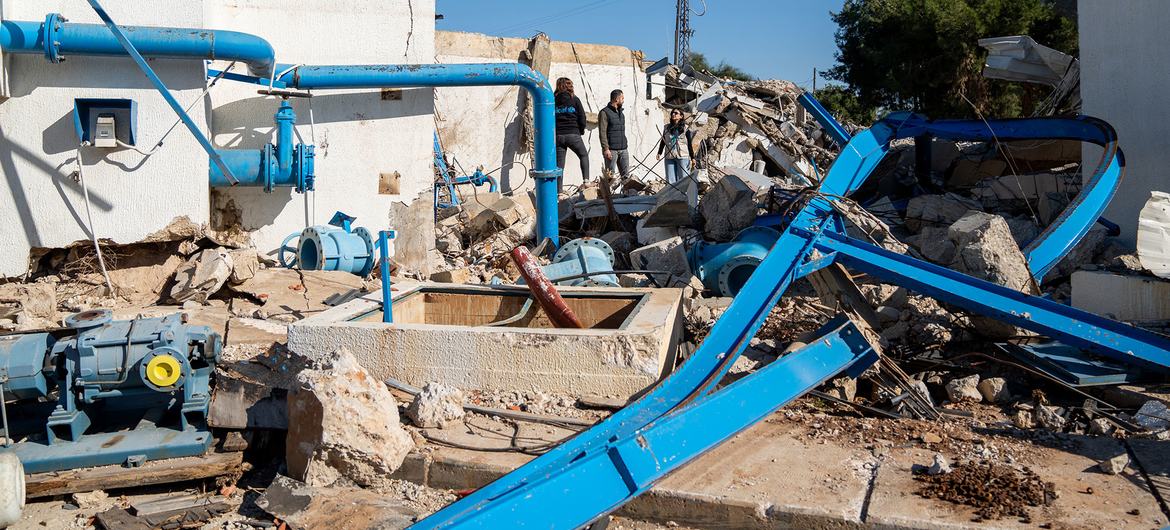
A water pumping station in southwest Lebanon damaged during the recent conflict.

Health risks rising

The drought is affecting all sectors, from agriculture and healthcare to education and local governance. An estimated 1.85 million people live in areas highly vulnerable to drought, with more than 44 per cent of the population dependent on costly and often unsafe water trucking services.

The severe strain on public water systems have been compounded by damaged infrastructure stemming from the recent fighting between Israel and Hezbollah and electricity shortages.

Health risks are rising, particularly in overcrowded settlements with poor sanitation, where residents may resort to unsafe water sources, heightening the threat of waterborne disease outbreaks, the WASH cluster warned.

Food security worries

The drought has also caused a sharp decline in food production and increased reliance on expensive imports, deepening food insecurity.

Wildfire risks are also mounting due to prolonged dry conditions.

The WASH cluster warned that without urgent international support to restore water systems and protect vulnerable communities, the crisis could further destabilize an already fragile nation.

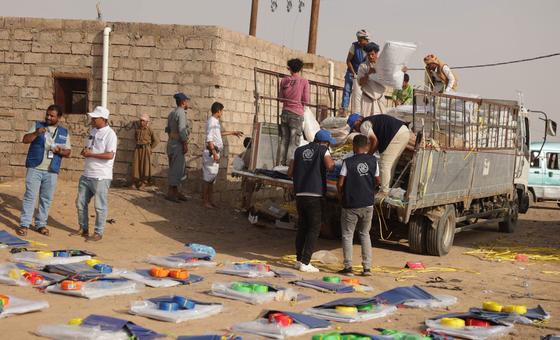
Yemen: Nearly half the population facing acute food insecurity in some southern areas

Yemen remains trapped in a prolonged political, humanitarian and development crisis, after enduring years of conflict between government forces and Houthi rebels, with populations in the south of the country now facing a growing food insecurity crisis.

partial update released Monday by the UN-backed Integrated Food Security Phase Classification (IPC) system – which ranks food insecurity from Phase 1 to famine conditions, or Phase 5 – paints a grim picture.

Starting in May 2025, around 4.95 million people have been facing crisis-level food insecurity or worse (Phase 3+), including 1.5 million facing emergency-level food insecurity (Phase 4).

These numbers mark an increase of 370,000 people suffering from severe food insecurity compared to the period from November 2024 to February 2025.

Further deterioration

The UN World Food Programme (WFPwarned that “looking ahead, the situation [was] expected to deteriorate further,” with 420,000 people potentially falling into crisis-level food insecurity or worse.

This would bring the total number of severely food-insecure people in southern governorate areas to 5.38 million – more than half the population.

Multiple compounded crises – such as sustained economic decline, currency depreciation in southern governorates, conflict, and increasingly severe weather – are driving food insecurity in Yemen.

High-risk areas

Amid Yemen’s growing food crisis, humanitarian agencies including WFP, the UN Children’s Fund (UNICEF), and the Food and Agriculture Organization (FAO) are reorienting their efforts towards high-risk areas, delivering integrated support across food security, nutrition, sanitation, health, and protection to maximise life-saving impact.

“The fact that more and more people in Yemen don’t know where their next meal will come from is extremely concerning at a time when we are experiencing unprecedented funding challenges,” said Siemon Hollema, Deputy Country Director of WFP in Yemen.

Immediate support needed

WFP, UNICEF and FAO are urgently calling for sustained and large-scale humanitarian and livelihood assistance to prevent communities from falling deeper into food insecurity, and to ensure that the UN “can continue to serve the most vulnerable families that have nowhere else to turn,” he said.

Internally displaced persons, low-income rural households, and vulnerable children are particularly affected, and are now facing increased vulnerability, as approximately 2.4 million children under the age of five and 1.5 million pregnant and lactating women are currently suffering from acute malnutrition.

The situation is dire, but with urgent support, “we can revitalise local food production, safeguard livelihoods, and move from crisis to resilience building, ensuring efficiency and impact,” said FAO Representative in Yemen, Dr. Hussain Gadain.

Source link

‘Recovery must move ahead’ in southern Lebanon, top aid official says

Imran Riza made the appeal following a visit to Bint Jbeil and Tyre districts on Tuesday.

What I saw in South Lebanon was both depressing and inspiring. The scale of destruction – to villages, health facilities, and water systems – is disturbing,” he said in a statement.

Fighting, ceasefire and escalation

The crisis stems from fighting that erupted between Hezbollah militants in Lebanon and Israeli forces following the 7 October 2023 Hamas-led attacks on Israel, which killed some 1,200 people.

Israel launched an incursion into southern Lebanon in late September 2024 and carried out airstrikes across the country that killed thousands and displaced nearly a million people. 

Last November, Lebanon and Israel signed a ceasefire agreement to end the fighting. 

It called for Israeli forces and Hezbollah militants to withdraw from the south, while the Lebanese military would redeploy to the region to guarantee the peace alongside troops from UN peacekeeping mission UNIFIL, who monitor the Blue Line of separation between the two countries. 

Since then, ceasefire violations have occurred and violence has escalated, including recent Israeli strikes on areas of Lebanon’s capital, Beirut, reportedly targeting Hezbollah.

‘No time to lose’

Mr. Riza described the people he met in the south as truly inspiring. 

It’s clear they want to return home, rebuild, and restart their productive lives,” he said.

“Everyone continues to feel a palpable sense of insecurity. Many still lack basics like water and electricity. Too many are still displaced, their homes flattened.”

He said people spoke of their need for peace, safe movement, basic services, and support to rebuild.

“They also shared the trauma they and their children have endured, and the importance of addressing mental health in the wake of what they have lived through,” he added.

The Humanitarian Coordinator stressed the critical need for sustained funding to restore water, electricity, healthcare, and education, and to assist people eager to get on with their lives.

“There is no time to lose – recovery must move ahead,” he said.

Diplomats reinforce support for UN mission

Meanwhile, diplomats from dozens of countries showed their solidarity with UNIFIL’s work in south Lebanon in a visit to the mission’s headquarters in Naqoura on Tuesday.

The diplomatic visit included representatives of 38 countries, including all five permanent members of the UN Security Council

Peacekeepers from 47 countries currently serve with UNIFIL, which was established in March 1978 to confirm Israel’s withdrawal from Lebanon. 

Its mandate was most recently defined in Security Council resolution 1701 (2006), which called for a full cessation of hostilities between Hezbollah and Israel following their 34-day war on Lebanese territory that year. 

An encouraging sign

UNIFIL Head and Force Commander, Lt. Gen. Aroldo Lázaro, welcomed the delegation and noted it would have been impossible to host the diplomats just a few months ago. 

Your presence here is an encouraging indication of the increased stability in the south and the progress made since the understanding on a cessation of hostilities came into effect on 27 November 2024,” he said. 

“The support of UNIFIL’s troop-contributing countries – and the countries who contribute in other ways – is essential to restoring stability to south Lebanon and along the Blue Line. I thank them and their peacekeepers serving on the ground for their continued contributions.”

The delegation also visited two UNIFIL positions along the Blue Line, near Marwahin and in Labbouneh. 

Ambassadors expressed their appreciation for the mission’s important work. 

Source link