UN warns civilians remain at risk as airstrikes continue across Gaza

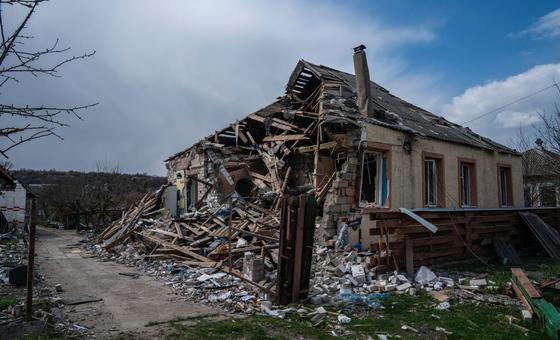
UN Spokesperson Stéphane Dujarric told journalists at the regular news briefing in New York that the UN aid coordination office, OCHA, had received additional reports of airstrikes, bombing, shelling – including from at sea – and shootings in residential areas.

The violence, he said, “puts civilians in danger and adds to the immense hardship they have endured over the past 28 months.”

He added that civilians are protected under international humanitarian law wherever they are, “even if they cross military demarcation lines or are near them…civilians must always be protected and during military operations and constant care must be taken to spare them.”

Health centre reopens

Amid the ongoing hostilities, UN agencies reported limited but important progress in restoring essential services.

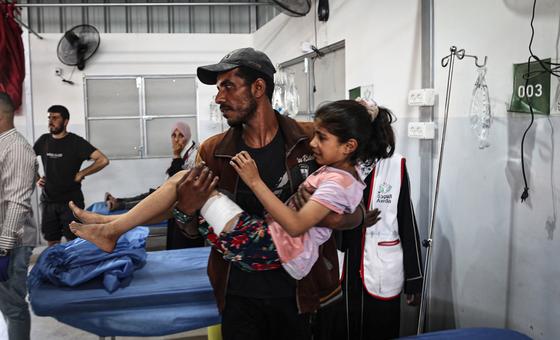
The UN ‘s Palestine refugee relief agency (UNRWA) said it has reopened the Bureij Health Centre in Deir al Balah after months of closure. The facility is now providing primary healthcare, maternal health services, laboratory testing and dental care.

However, thousands of patients remain without access to treatment and recovery, as critical services are still unavailable in Gaza.

“Their top priority is to scale up local services, including by rehabilitating damaged facilities and expanding critical care. This requires more medical supplies, including items that are not easily approved for entry by Israeli authorities, such as X-ray machines and laboratory equipment,” Mr. Dujarric said.

Shelter, protection needs remain acute

UN shelter partners said that by last week they had provided more than 5,600 families with emergency shelter assistance in just over one week, including nearly 5,000 tarpaulins and more than 12,000 bedding items.

Last month alone, similar assistance – including nearly 8,000 tents – reached more than 85,000 families. However, durable solutions are urgently needed, which requires permission from Israeli authorities to bring in machinery and construction materials to repair damaged structures, partner organizations said.

Source link

Sudan: As children continue to suffer, school remains a distant hope

After more than two years of civil war, more than 25 million people are now acutely hungry and at least 20 million require health services urgently.

The UN World Food Programme (WFP) also warned that displaced families in some areas have not received any aid for three months, as it announced that for the first time, funding shortfalls have forced it to pull back support in areas where it does not have access.

The scale of needs in Sudan are so big that we have to make tough decisions on who receives assistance and who doesn’t. Those are heartbreaking decisions to make,” said WFP’s Leni Kinzli, in an urgent appeal for more international funding to help all those affected by more than two years of war.

Children are especially vulnerable, humanitarians have warned, with malnutrition “surging”, particularly among youngsters and their mothers.

Education the latest victim

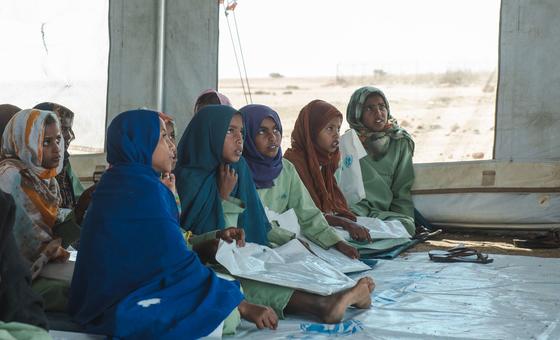
According to the UN reproductive health agency UNFPA, and partners working in education, around 13 million of the 17 million youngsters who have remained in Sudan are now out of school.

This includes seven million who are enrolled but unable to attend classes because of the conflict or displacement – plus six million school-age children who haven’t registered for the school year.

Nonetheless, UNFPA said that as of this month, 45 per cent of schools in Sudan – nearly 9,000 – have now re-opened, citing the Global Education Cluster that groups 60 UN and NGO entities.

And while the situation in Sudan remains so dire, going back to school might not appear to be a priority, but aid agencies insist that without it the impact on young lives can be devastating, given how much additional support can be provided in schools, over and above learning.

In schools helped to reopen by UN-partner Save The Children, for instance, additional support includes meals, safe water, sanitation and counselling training for teachers to help youngsters process their trauma.

Picking up the pieces

From November 2024 to July this year, more than two million people have returned to their former homes across Sudan, to some 1,611 locations.

The bulk of these returnees have reached Aj Jazirah (48 per cent), Khartoum (30 per cent), Sennar (nine per cent), Blue Nile (seven per cent) and White Nile (five per cent). The UN migration agency (IOM)’s Displacement Tracking Matrix notes that only around one per cent went to River Nile and West Darfur.

breakdown of IOM data indicates that around 77 per cent (or 1.5 million) returned from temporary homes inside Sudan, while 23 per cent (around 455,000) came back from abroad.

This is a fraction of the more than 4.2 million refugees who crossed into neighbouring countries since war erupted on 15 April 2023, between the Sudanese Armed Forces (SAF) and the paramilitary Rapid Support Forces (RSF).

Other key IOM findings of Sudanese displacement impacting all 18 states:

  • When war erupted, people were uprooted primarily from Khartoum (31 per cent), South Darfur (21 per cent), and North Darfur (20 per cent).   
  • The highest proportion of internally displaced people were in South Darfur (19 per cent), North Darfur (18 per cent), and Central Darfur (10 per cent).
  • Over half (53 per cent) of those fleeing violence were reportedly children.

Case study: Life slipping away

Among the young victims of the conflict, 18-month-old Aysha Jebrellah has been admitted for treatment for severe acute malnutrition in Port Sudan Paediatric Hospital.

Her mother, Aziza, has been by her daughter’s side as medical teams provide lifesaving nutritional support and address the medical complications that Aysha has suffered, linked to her condition.

Aziza was displaced with her family from Khartoum when conflict erupted more than two years ago, fleeing first to Kassala, then moving to Port Sudan where she lives with relatives.

She described how her daughter had diarrhoea and fever for about two weeks before she was admitted to hospital. By that time she had stopped eating and appeared to be slipping away before their eyes.

“When she refused to even taste anything and kept getting weaker, I was afraid I would lose her,” Aziza says. “Now I have hope that she will recover.”

To support health needs in Sudan, the UN World Health Organization (WHO)’s $135 million appeal is just one-fifth funded. “It’s only a fraction of what is urgently needed,” the agency said.
Source link

‘Wars, disasters, displacement, hunger’ continue to burden Myanmar

Four years after the military coup which deposed the democratically elected government, Myanmar’s civil conflict grinds on, leaving millions displaced and without a home.

The suffering of millions of people across Myanmar is immense,” said UNHCR chief Filippo Grandi. “With aerial bombardments, destruction of property, and forced recruitment, they live in daily fear for their lives.”

He added that “civilian men, women and children must be protected from violence, and solutions found so that they can choose to return home in safety and dignity.”

Many crises in need of response

A brutal civil war is not all Myanmar has to face.

In March, a 7.7 magnitude earthquake hit the country affecting multiple regions including the capital, Nay Pyi Taw. The UN relief chief Tom Fletcher said then on X that the humanitarian response “has been hampered by lack of funding.”

Mr. Grandi, who visited the affected communities earlier this year, urged wider humanitarian access and discussed solutions for the forcibly displaced.

“Millions of people forcibly displaced within the country and as refugees throughout the region, want nothing more than to be able to return home. They demand – and are entitled to – the safety and security that comes with peace.” Mr. Grandi said.

Homes destroyed

Thousands of people also had their homes destroyed after floods swept through many regions in July.

“Wars, disasters, displacement, hunger: the forgotten plight of so many people in Myanmar, like the Rohingya, never ends,” Mr. Grandi said in a post on X.

In the last year and a half, 150,000 Rohingya, a mainly Muslim minority in the majority Buddhist country, have fled to neighbouring Bangladesh. This marks the largest exodus to the country since 2017, when 750,000 Rohingya sought refuge from the violence in Rakhine state.

A call for solutions

UNHCR works with other UN agencies, NGO partners and communities in Myanmar to address the basic needs, physical safety and well-being of forcibly displaced and stateless people.

But many communities still suffer from lack of access to vital aid. This year’s UN response plan for Myanmar is currently only funded at 22 per cent.

Later this month in New York, Mr. Grandi will attend a high-level conference on the Rohingya and other minorities in Myanmar, calling for greater regional and international efforts to address the crisis.

All parties – with the support of the international community – must engage seriously to find solutions to their plight. This is particularly needed for the Rohingya, who have not only been attacked and displaced, but deprived of their basic rights for far too long,” the UNHCR chief said.

Source link

Daily malnutrition deaths continue as Israeli forces push further into Gaza City

Military activities continue in and around Gaza City, but also in the south, taking a heavy toll on civilians, including deaths, injuries and further displacement,” said UN Spokesperson Stéphane Dujarric at the daily press briefing in New York: “Our colleagues report that people continue to flee, mainly towards the coast.”

More than 76,000 people have been newly displaced since mid-August, with most occurring in the north, he said, citing the latest reports from UN agencies on the ground that are monitoring population movements. More than 23,000 people were displaced from northern Gaza.

Coastal areas are also crowded with tents, forcing many people to flee from Gaza City in the north towards central areas, according to the UN humanitarian coordination agency, OCHA.

Famine response: ‘We can do this again’

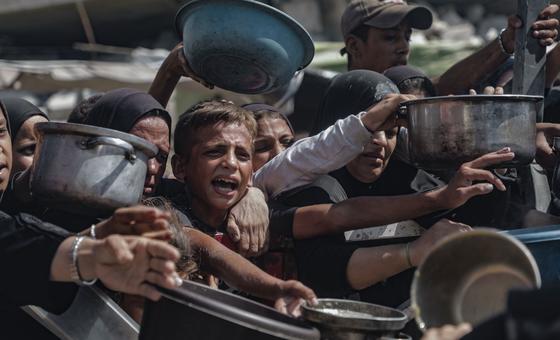
Daily reports of malnutrition deaths continue, the UN Spokesperson said. Since the start of the nearly two-year-long war, more than 300 people, including many children, have died of malnutrition in the Strip, according to local authorities.

The World Food Programme (WFP) reported that the situation “continues to deteriorate”, the UN Spokesperson added, adding that families without able-bodied members to fetch food are facing the highest risks.

As such, the UN agency resumed last week its distribution system of digital vouchers, reaching 22,000 people, including vulnerable groups, following a five-month pause.

“We and our partners are continuing to transport aid and other medical supplies to and from the crossings [into Gaza], but the current situations on the ground have not yet allowed us to resume community-based distribution,” Mr. Dujarric said. “Only a ceasefire will ensure necessary conditions for a massive response to prevent famine from spreading further.”

During the previous ceasefire from January to March, he said “we reached nearly every single person in the Gaza Strip with lifesaving aid, and we can do this again.”

Obstacles delay urgent aid deliveries

WFP said obstacles include supply shortages and violent unrest around convoys which is making distributions “nearly impossible”.

According to the UN humanitarian agency, the movement of aid teams inside Gaza remains heavily restricted. OCHA also reported that about one in three planned missions were “impeded or outright denied by Israeli authorities” between Friday and Monday, the UN Spokesperson said.

As a result, many missions could not be completed, he said, also noting that strict Israeli inspections continue to significantly delay aid clearance at Ashdod Port.

Visas for top Palestinian officials blocked

News reports indicated that the United States announced last week that it would not issue visas to senior Palestinian leaders ahead of the high-level General Assembly meetings later this month at UN Headquarters in New York.

That includes a conference on 22 September where Heads of State and Government are expected to endorse a political declaration adopted by leaders attending an international conference in late July, endorsing the two-State solution.

Responding to a reporter’s question on the matter, Mr. Dujarric said “the participation of a senior Palestinian delegation to the conference is essential.”

UNRWA chief levels charge of ‘scholasticide’

Philippe Lazzarini, Commissioner-General of the UN agency for Palestine refugees, UNRWA, raised alarms at what would have been the start to the school year for more than 600,000 children in Gaza.

Gaza is in ruins; so is its education system,” he said in a statement on Monday. “Instead of going back to school, like most children around the world, around 660,000 girls and boys in Gaza will be sifting through the rubble, desperate, hungry, traumatised and mostly bereaved.”

The longer they stay out of school with their trauma, the higher the risk they become “a lost generation, sowing the seeds for more hatred and violence”, the UNRWA chief warned.

“Ceasefire is the only way forward to reverse the famine and the ‘scholasticide’ hitting the children of Gaza,” he said.

Source link

SECURITY COUNCIL LIVE: Push for peace in Ukraine could rapidly fade if large-scale Russian attacks continue

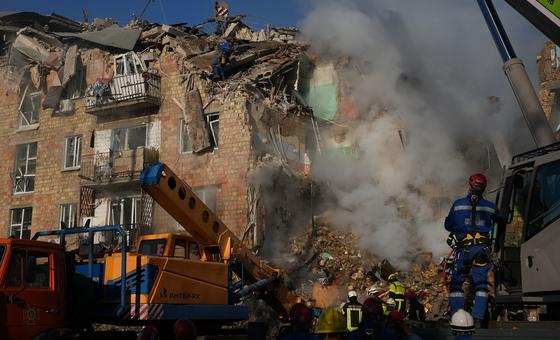
The UN Security Council met in emergency session in New York on Friday afternoon following overnight strikes early on Thursday by Russia on Ukrainian cities including the capital, which left at least 23 dead, including four children. Assistant Secretary-General Miroslav Jenča told ambassadors that diplomatic momentum towards a possible peace deal was “at risk of rapidly fading” if large-scale attacks by Moscow continue. Follow our live meetings coverage below. 

Source link

Monsoon floods kill more than 700 in Pakistan, with heavy rains set to continue

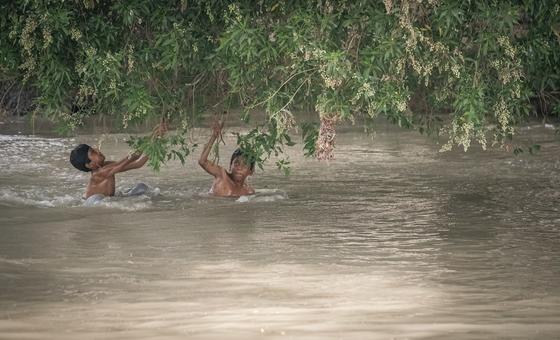
The National Disaster Management Authority has also reported 978 injuries and the destruction or damage of more than 2,400 houses, while over 1,000 livestock have been lost as of Thursday, 21 August.

Severe weather is forecast to continue into early September, raising the risk of further flooding, landslides and crop losses, according to the UN Office for the Coordination of Humanitarian Affairs (OCHA).

Khyber Pakhtunkhwa hit hardest

The northwestern province of Khyber Pakhtunkhwa has borne the brunt of the disaster. 

Authorities declared a state of emergency in nine districts, including Buner, Shangla and Mansehra, after torrential rains between 15 and 19 August left 368 people dead, 182 injured and damaged more than 1,300 homes. Nearly 100 schools were also destroyed.

The international charity CARE said its teams found widespread devastation in Buner, where families reported homes and livelihoods swept away within minutes by torrents of floodwater carrying boulders and debris.

Children most affected

The toll on children has been particularly severe, with displacement, loss of schooling and limited access to safe water putting their health and well-being at grave risk. 

According to the UN Children’s Fund (UNJCEF), at least 21 children were among those killed in Khyber Pakhtunkhwa since 15 August.

Many schools have been destroyed or are now being used as temporary shelters, further restricting access to education and safe spaces.

Urban flooding in Karachi

In Sindh province, heavy rains on 19 August triggered urban flooding in Karachi – Pakistan’s largest city – where at least six people were killed in wall collapses and electrocutions. Rainfall reached up to 145 millimetres (about 5.75 inches) in parts of the city, inundating roads and leaving many neighbourhoods without power for hours.

The province of Punjab also suffered extensive flooding along the Indus and Chenab rivers, which has displaced more than 2,300 families and damaged cash crops across thousands of acres.

Scaling up support

Federal and provincial authorities are leading the response, having mobilized over 2,000 personnel for rescue and evacuation. In coordination with the UN and partners, they have dispatched key relief items, including food, tents and medical supplies to affected areas.

OCHA said it has deployed field coordinators to the hardest-hit districts and activated emergency mechanisms, including the release of funds from its regional humanitarian envelope for Pakistan – prioritising life-saving assistance in health, water, food security and shelter.

For its part, UNICEF has dispatched essential medicines and hygiene kits to affected districts. Each kit includes soap, water containers and other hygiene supplies to help prevent disease outbreaks.

Worrying trend

Pakistan has endured devastating monsoon seasons in recent years. In 2022, unprecedented floods killed more than 1,700 people, displaced millions, and caused an estimated $40 billion in economic losses.

Erratic and intensified rainfall patterns, amplified by climate change, are compounding the country’s vulnerability, threatening lives, livelihoods and long-term recovery across southern Asia. 

Source link

Gaza horrors continue as the weakest succumb to injuries and disease

“I met a little boy who was wounded by a tank shell at one of these sites on the final day of me leaving Gaza – I learnt that this little boy had since died of those injuries,” said UN Children’s Fund (UNICEF) spokesperson James Elder. “That speaks to both what is happening at these sites and what is not happening when it comes to medical evacuations.”

A recent online video featuring a dying 13-year-old Abed al-Rahman who Mr. Elder met while on mission in Gaza has been seen thousands of times since it was published on 6 June. In the clip, Abed explains that he has been asking for pain relief for his shrapnel wounds, but none is available.

Speaking to journalists from Amman, Mr. Elder explained that partly destroyed hospitals including Nasser Medical Complex in Khan Younis continue to treat wounded children, despite a shortage of medicine and medical supplies.

“Humanitarian aid is so much more than food in a box; it’s oxygen kits, it’s ventilators, it’s hygiene packs; it’s medicines, it’s incubators,” he explained. “It’s all those things the United Nations was doing just a couple of months ago.”

Mr. Elder added that parents whose children need oxygen have been leaving hospital “because of the fear that Nasser may come under attack again. As the doctors told me, if you have a child who needs oxygen and they leave without the oxygen, they will, over a matter of time, die in a tent.”

Desperation, starvation

The dire shortage of the most basic life-sustaining aid linked to Israeli restrictions continues to create desperation and starvation across Gaza.

“I spoke to a grandmother in tears saying, how am I possibly to get to these sites?” Mr. Elder explained. “I’ve met young men who’ve been seven times and never returned with anything. So, there’s a complete lack of equity. There’s a complete lack of sites. You cannot distribute aid in a militarised zone, in a combat zone, by one party to the conflict.”

Those most susceptible to the lack of fresh drinking water, food and fuel are the weakest Gazans: the young, pregnant women, the elderly and amputees, Mr. Elder said. 

It would be impossible for them to walk the long distances required to fetch scant supplies from controversial non-UN aid hubs.

Lethal choice

“You have half a million people facing starvation with a lethal choice of being forced into very small pockets where most people can’t access into what are officially known as combat sites,” the UNICEF spokesperson explained. “We know children [who have been] killed at these sites.”

Meanwhile, malnutrition and the impact of it on people’s weakened immune systems continues to take its toll, the UN World Health Organization (WHO) warned.

“The latest reports say 610 patients have been admitted due to severe malnutrition complications,” said WHO spokesperson Christian Lindmeier. “But what does that mean? That means these are the lucky ones who made it so far to get to a place. 

“This does not count the many who were too weak to reach any point, who are too weak, who cannot be transported because the roads are blocked, because there are no ambulances, or because the hospitals, some of the health emergency centres have been shelled and bombed and are being constantly shelled and bombed.”

Source link

UN warns of mounting humanitarian toll as Israel-Iran hostilities continue

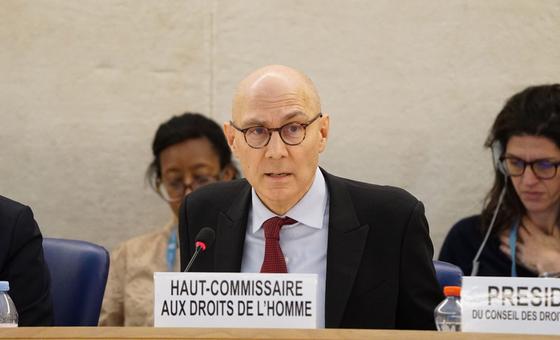
UN High Commissioner for Human Rights Volker Türk on Thursday called for “maximum restraint” and reiterated that both Israel and Iran are bound by international humanitarian law.

“The widescale, continuing attacks by Israel across Iran, and the missile and drone strikes launched in response by Iran, are inflicting severe human rights and humanitarian impacts on civilians, and risk setting the whole region ablaze,” he said in a statement.

The only way out of this spiralling illogic of escalation is maximum restraint, full respect for international law, and return in good faith to the negotiating table,” he stressed.

Appalling collateral damage

The UN rights chief also expressed deep concern over the impact on civilians.

It is appalling to see how civilians are treated as collateral damage in the conduct of hostilities,” he said, adding that threats and inflammatory rhetoric by senior officials on both sides suggest a “worrying intention” to inflict harm on civilians.

The airstrikes, missile and drone attacks – launched by both Israel and Iran since 13 June – have caused heavy damage to civilian infrastructure and claimed hundreds of lives.  

According to Iranian authorities, at least 224 people have been killed, while human rights groups report significantly higher figures. In Israel, officials report 24 deaths and more than 840 injuries so far.

Widespread panic

Warnings from both governments have also prompted widespread panic among civilians.

Israel’s call for civilians to evacuate on Tuesday triggered panic across Tehran, resulting in heavy traffic jams on highways. Movement has reportedly been hampered across the country by fuel shortages, leading to hours-long queues at petrol stations.

Concern for refugees

The Office of the UN High Commissioner for Refugees (UNHCR) expressed grave concern over the deteriorating humanitarian situation, adding that it is monitoring reports that people are on the move within Iran and that some are leaving for neighbouring countries.

UNHCR Spokesperson Babar Baloch cautioned that the situation remained fluid and hard to verify.

Iran has long hosted the largest Afghan refugee population in the world. Now, its own people are experiencing devastation and fear,” Mr. Baloch added.

He also emphasised the principle of non-refoulement, calling on neighbouring countries to grant protection to anyone fleeing violence, and not turn them back.

UNHCR Spokesperson Baloch on the crisis.

Iran hosts an estimated 3.5 million refugees and those in refugee-like situations, including some 750,000 registered Afghans and over 2.6 million undocumented individuals.

Regional worries

There is already regional fallout, with missile launches from Yemen towards Israel and the Occupied Palestinian Territory and heightened tensions reportedly involving armed groups in Iraq, according to OCHA.

This escalation takes place as the region already grapples with mounting humanitarian needs, sharply reduced funding, and constrained operational space for humanitarian action,” the Office said in a flash update issued on Wednesday.

“De-escalation is vital to preventing further suffering of civilians and population displacements,” OCHA underscored.

Source link

Ongoing Russian strikes continue alarming civilian casualty trend

The toll includes 1,389 casualties in April (221 killed, 1,168 injured) – the highest monthly total so far this year – followed by 1,019 in May (183 killed, 836 injured).

Casualties were reported across 17 out of 24 regions and the city of Kyiv, including areas far from the frontline.

The vast majority of attacks (97 per cent) led to civilian casualties occurred in areas under Ukrainian Government control.

“This year has been devastating for civilians across Ukraine, with significantly more deaths and injuries than during the same period in 2024,” said Danielle Bell, Head of the HRMMU – the monitoring mission set up by the UN rights office, OHCHR, at the invitation of the Ukrainian Government.

“The intensification of long-range attacks with missiles and loitering munitions and frequent attacks with short-range drones along the frontline are a deadly combination for civilians.”   

Weapons and impact

Long-range missile and drone attacks caused the largest proportion of civilian casualties – some 28 per cent of casualties during May.

On the other hand, short-range drones remained the leading cause in frontline areas.

Russian armed forces carried out at least five attacks on port infrastructure in the Odesa region on the Black Sea, resulting in civilian casualties and damage to facilities.

One such attack on 23 May killed three men and injured 12 more, including port workers, according to the report.

Continuing trends in June

The mission noted that long-range attacks have intensified this month. Since 6 June, Russian forces have launched over 1,500 long-range weapons, according to Ukrainian authorities.

The HRMMU is in the process of verifying reports that these attacks (or subsequent falling debris) have killed at least 19 civilians and injured 205 others nationwide in just a five-day span. If confirmed, June could match or surpass April and May in total casualties.

At this pace and scale, further loss of civilian life is not just possible – it is inevitable,” said Ms. Bell.

Source link

Port Sudan: Aid officials call for greater protection as drone attacks continue

The escalation is occurring as war grinds on between the Sudanese Armed Forces (SAF) and the paramilitary Rapid Support Forces (RSF), who appear to be targeting airports in each other’s areas of control.

“Very concerned by ongoing drone strikes on Port Sudan,” UN Emergency Relief Coordinator Tom Fletcher tweeted on Wednesday. 

“International humanitarian law must be respected. Constant care must be taken to spare civilians and civilian infrastructure.”

Suffering will worsen

The latest strikes in Port Sudan took place early on Tuesday morning, reportedly targeting the international airport and other infrastructure, including a fuel storage facility and a power transformer. 

The UN Resident and Humanitarian Coordinator in Sudan, Clementine Nkweta-Salami, issued a statement that day, saying the attacks “will deepen humanitarian suffering and needs, as well as exacerbate the already severe access and logistical challenges that humanitarian actors face in the delivery of urgently needed aid to the rest of the country.” 

She underlined that the airport is a “lifeline for humanitarian operations” as it is the primary entry point for aid personnel, medical supplies and other life-saving relief. 

“Moreover, the availability of fuel in Port Sudan is critical to the dispatch of humanitarian supplies to areas across Sudan in dire need of assistance,” she added.

She stressed that damage to critical infrastructure could also disrupt supply chains and increase the price of basic goods, thus worsening what is already the world’s largest humanitarian crisis.

Displacement and aid suspension

Drone attacks have also affected Kassala and River Nile states, according to the UN humanitarian affairs office OCHA.

Earlier this week, strikes near the airport in Kassala displaced about 2,900 people and led to the temporary suspension or relocation of some aid activities.

Meanwhile, River Nile state is still facing a power blackout following a drone strike on the transformer station in Atbara on 25 April. The outage is contributing to growing fuel and bread shortages and long lines at gas stations and bakeries.

Cease hostilities now

Ms. Nkweta-Salami noted that since January, attacks on infrastructure across Sudan, such as power stations, water sub-stations, and oil refineries, have caused widespread electricity outages and disrupted access to essential services, including safe drinking water, healthcare and food supplies. 

These are serious violations of international humanitarian law and “reflect a consistent failure to comply with the principles of distinction, proportionality and precaution,” she said. 

“Every measure must be taken to spare civilians and civilian objects,” she said. “Once again, I call on all those involved in this conflict to cease hostilities.”

Source link