From war zones to outer space, radio remains essential

Every 13 February marks World Radio Day, a celebration timed to the moment UN Radio first crackled to life 80 years ago.

UN News teams have gathered stories from every corner of the world that reveal a simple truth: in places fractured by conflict, disasters or deep digital divides, radio remains a steady, reliable pulse – carrying information, reassurance and connection where other signals cannot reach.

From UN Radio to UN News

This enduring role is deeply woven into the history of the United Nations itself. Eighty years ago, as the world emerged from the devastation of the Second World War, UN Radio began broadcasting from modest studios at UN Headquarters in New York, reaching audiences with news bulletins and feature programmes in five languages, often transmitting entire Security Council proceedings.

L to R: UN Radio staff José Quijano-Santos, Luis Marron, Hernando Solano, Jorge A. Carvallo, Luis Carlos Sanchez, Osvaldo Lopez Noguerol, Beatrix Alcapra Cuellar and Guillermo Caram, record a special broadcast for Latin American radio networks.

Over the decades, iconic voices such as Edward R. Murrow, Marlon Brando, Audrey Hepburn and Frank Sinatra helped narrate global stories, while listeners heard historic speeches from leaders including John F. Kennedy, Mikhail Gorbachev, Nelson Mandela, Fidel Castro and Pope John Paul II.

That legacy evolved into what is now UN News, a multimedia platform publishing in 10 languages and connecting with audiences in more than 170 countries. It brings breaking news, interviews, live coverage and richer storytelling on the world’s most urgent challenges – and the efforts under way to solve them.

For all the transformations brought by new technology, one guiding principle endures: providing dependable information to the people who need it most, through audio formats that bridge both heritage and innovation.

Rebuilding radio broadcasting in Gaza

Nowhere is this mission more urgent than in conflict zones. In Gaza, before October 7, 2023, a total of 23 local radio stations operated across the territory. Following the war triggered by Hamas attacks on Israel, every station was destroyed.

Yet Rami Al‑Sharafi, director of Zaman FM, is working to piece broadcasting back together – a fragile but determined effort in the midst of profound damage.

Journalist Rami Al-Sharfi, is the director of radio at Gaza’s ZMN 90.60 FM radio station.

When UN News Arabic visited the station, he put it plainly: “Zaman FM has resumed broadcasting, and we are currently the only radio station transmitting FM frequencies from inside the Gaza Strip after this massive destruction.”

The need for reliable broadcasting is profound, particularly as Gaza faces the spread of diseases, the collapse of educational structures, and disrupted public services.

A crucial tool for peacekeeping

Across other conflict zones, radio serves as a steadying presence. In the Democratic Republic of the Congo, Radio Okapi, has become a trusted voice since its creation in 2002 as part of the UN peacekeeping mission there, known as MONUSCO.

Broadcasting in French and four national languages, the station offers reliable information in regions of the country affected by violence and displacement, according to testimonies gathered by UN News French.

In Bukavu, deep in the country’s restive eastern region, one listener described how Radio Okapi “plays a key role in promoting peace by broadcasting information that is reliable and impartial,” noting that “when people want to be sure that information is true, they often turn to Radio Okapi.”

Radio Okapi and Radio nationale congolaise have made a commitment to broadcast didactic sequences on the main subjects of the primary and secondary cycle in the DRC during the Covid-19 pandemic

For many communities, the station is also a vital channel for civic participation and accountability. “It ensures that victims of war can express their suffering so that it can reach the authorities,” said another Bukavu resident.

The station’s influence extends beyond information, actively countering hate speech and strengthening social cohesion. In Lubumbashi, a listener credited Radio Okapi with helping “stop or reduce messages inciting hatred,” while praising programmes like Inter-Congolese Dialogue, which he said, “allow national cohesion to produce outcomes of peace.”

Lifesaving information in conflict zones

For refugees such as Bahati Yohane, now living in Kyangwali Refugee camp in Uganda, Okapi became a literal lifeline during escalating violence in DRC. In an interview to UN News Kiswahili, he said: “To be honest, if there had been no radio to tell us anything about security, we would not be alive in this world today”.

In the Central African Republic, radio continues to bridge isolation in remote and insecure areas. The UN Mission, MINUSCA, supports both its own station, Guira FM, and local broadcasters to strengthen access to trusted information.

Radio GUIRA-FM – 4 years anniversary

Through recent campaigns that put more than 500 radios into local hands, communities have not only improved the flow of reliable information but also curbed the kinds of rumors that can disrupt travel, trade and relations between neighbours.

These efforts revive a tradition that began decades ago, when UN News Kiswahili partnered with Radio Tanzania – now the Tanzania Broadcasting Corporation – to air the weekly programme Mwangaza wa Umoja wa Mataifa from the 1970s through the 1990s.Former programme controller Edda Sanga remembers that “the program helped build hope and aspirations for many people,” offering stories of progress and practical solutions.

It became, she said, a programme “eagerly awaited” by listeners looking for reliable updates on peace, human rights, environmental issues and conflicts unfolding in neighbouring countries.

The UN Educational, Scientific and Cultural Organization, UNESCO, is also a key partner for radio stations across fragile environments, helping them remain operational during crises and continue delivering life‑saving information. In Afghanistan, the agency backs 10 stations that broadcast guidance on basic services, reaching as many as 20 million listeners, about 40 per cent of whom are women and girls.

Radio amateurs as national heroes

Outside conflict areas, radio’s quiet strength becomes even clearer during climate‑driven emergencies. As storms or floods knock out phone lines and internet connections, radio signals frequently remain the last dependable link to the outside world.

Eloísa Farrera/CINU México

Jesús Miguel Sarmiento, with the call sign XE1EW as a radio operator, presides over the Mexican Federation of Radio Experimenters

In Mexico, amateur radio operators were recognized as national heroes following the 1985 earthquake, when traditional communication systems failed entirely.

Today, the Mexican Federation of Radio Amateurs coordinates the National Emergency Network, due to its ability of transmitting vital information during hurricanes, floods, and earthquakes.

During Hurricane Otis in 2023, operators quickly improvised communication systems under extreme conditions. As Federation President Jesús Miguel Sarmiento Montesinos told UN News Spanish, “They turned copper wires into antennas, used their equipment and batteries, and immediately began transmitting, reporting on the situation in the affected areas, the extent of the flooding, and whether the areas were accessible or inaccessible”.

An inclusive platform

Radio also serves as a powerful force for accessibility and inclusion. In India, Radio Udaan was launched in 2014 as the country’s first online station operated entirely by visually impaired presenters and staff. Today, it reaches 125,000 listeners across 120 countries, addressing disability rights, education, technology and social inclusion, and challenging stereotypes through fashion shows, singing competitions, matchmaking, talent hunts and other community‑driven programmes.

UN News Hindi spoke with Founder Danish Mahajan, who explained that his lived experience as a visually impaired person helps shape programming tailored to audience needs.

An Online Radio Station Giving Voice to India’s Visually Impaired.

He highlighted the importance of UN News content, noting, “Whenever there is a programme, discussion, or special UN commemoration related to disability, the themes, dialogues, and inspirational talks produced by the United Nations greatly benefit the community”.

Mr. Mahajan also sees new opportunities through artificial intelligence, AI, describing it as a “game-changing technology” capable of expanding accessibility through tools such as smart glasses that help visually impaired individuals make sense of their surroundings.

Empathy that algorithms can’t replicate

Artificial intelligence is transforming the global audio landscape. In China, these shifts are unfolding at remarkable speed, with the podcast audience already exceeding 150 million and expected to grow further.

UN News Chinese heard from Professor Sun Shaojing of Fudan University that audio content is becoming deeply woven into daily life – from electric vehicles navigating crowded cities to smart devices accompanying moments of solitude.

The UN Global Digital Compact aims to bring together governments and industry to ensure that technology, like AI, works for all humanity.

He notes that AI‑generated news presenters and synthetic voices are becoming increasingly common, offering accuracy, efficiency and multilingual reach on a scale once unimaginable. Yet within this technological precision, Professor Sun identifies a paradox: the very imperfections of human speech – the pauses, hesitations and emotional textures – are what give voice its soul.

“When reporting on disaster scenes, affected individuals, their suffering, and their needs, AI would lose many of the emotional and empathetic dimensions that require human compassion and connection. It would not achieve the same depth of emotional impact or resonance”, he said.

Demand increases for radio communications in outer space

Even beyond Earth, radio continues to underpin communication and discovery. From the moment the first satellite broke through the atmosphere in 1957, radio waves have carried the quiet work of exploration, becoming the unseen bridge behind space communications, Earth monitoring and navigation.

As space exploration accelerates, these frequencies are becoming even more critical. Alexandre Vallet, Chief of Space Services at the International Telecommunication Union, ITU, told UN News Portuguese that satellites equipped with highly sensitive sensors rely on ITU’s protected spectrum bands to accurately track the accelerating impacts of climate change.

A satellite, as seen from space, tracks over South America.

He explained that expanding lunar plans by major space powers – including proposals from the United States and China to build permanent bases – are likely to drive a steep increase in radio‑communication needs. That surge, he warned, could threaten the Moon’s Shielded Zone, protected under a 1970s ITU treaty to preserve the lunar silence essential for studying the universe’s earliest moments.

“For the next conference on the radio regulations, at the end of 2027, we will discuss establishing for the first time a regulatory framework for radio spectrum management on the moon. So, this will include finding a good balance between the need for communication links and also the need to protect the spectrum for scientific purposes,” he said.

Looking ahead, the rapid transformation of the space economy will only deepen humanity’s reliance on radio spectrum. Mr. Vallet added that emerging industries such as space tourism, orbital manufacturing, space mining, and even data centers beyond Earth will depend on reliable radio-based communication channels.

A signal that endures

Across conflict zones, disaster response, accessibility efforts, digital innovation and even the far reaches of space, radio continues to demonstrate its quiet but remarkable strength.

Amid a world overwhelmed by images and accelerating technology, these invisible waves endure as a reminder that the simplest forms of communication often hold the greatest power to inform, protect and unite.

Listen to daily news bulletins and podcasts on SoundCloud or here.

Source link

Nuclear disarmament at breaking point as mistrust grows – but hope remains

Yet even as the architecture weakens, signs of progress – including nuclear-weapon-free zones and rising youth engagement – offer grounds for cautious hope, a UN researcher on nuclear non-proliferation has told UN News.

Gaukhar Mukhatzhanova, a fellow with the UN Institute for Disarmament Research (UNIDIR) – an autonomous institute studying disarmament and international security issues – said that decades of arms control built through painstaking negotiations are now at risk of unravelling.

“The situation right now is very difficult,” she added.  

“We are observing the disintegration of the arms control architecture that was built primarily through negotiations between [the then] Soviet Union – and subsequently Russia – and the United States.”

Gaukhar Mukhatzhanova, briefs the Security Council on nuclear disarmament and non-proliferation. (November 2025)

Arms control architecture under strain

That erosion has left the global non-proliferation regime increasingly fragile, with most Cold War-era agreements either abandoned or expired. The 2010 US-Russia New START accord – which capped deployed strategic nuclear warheads – expired this week without a successor in place.

While both American and Russian presidents acknowledged the dangers of a renewed nuclear arms race, no replacement for the New START is currently under negotiation.

This is a troubling backdrop for the next review conference of the Treaty on the Non-Proliferation of Nuclear Weapons (NPT), scheduled for April-May in New York, Ms. Mukhatzhanova said.

Opened for signature in 1968 and extended indefinitely in 1995, the NPT remains the only binding multilateral treaty requiring nuclear-weapon States to pursue disarmament.  

However, the political conditions that once made cooperation possible have deteriorated sharply, added Ms. Mukhatzhanova.

We are back to a period of severe mistrust between the major actors – arguably worse than during the Cold War,” she said.

We are back to a period of severe mistrust between the major actors – arguably worse than during the Cold War

Challenges and emerging risks

Statements by the US suggesting a possible resumption of certain forms of nuclear testing have raised alarm, even if limited to so-called “subcritical experiments” – highly explosive tests where no chain reaction is involved.

Such moves, Ms. Mukhatzhanova said, risk undermining the Comprehensive Nuclear-Test-Ban Treaty (CTBT) and reopening questions many hoped were settled.

“If full-scale explosive testing were to return,” she warned, “we are talking about a really drastic and very negative change – one that would open the door for others to resume nuclear testing.

New technology, new risks

Hypersonic weapons, autonomous systems and artificial intelligence are accelerating arms competition and increasing the risk of miscalculation.

The concern is that too much is left to the decision of a machine,” Ms. Mukhatzhanova said, warning that AI-driven early-warning systems could misinterpret data and trigger inadvertent escalation.

She noted recent UN resolutions calling for “meaningful human control” over nuclear-related technologies.

Hiroshima, shortly after a nuclear bomb was dropped on this city in August 1945.

Room for progress remains

Despite the grim outlook, she highlighted areas where progress continues.

Nuclear-weapon-free zones – covering Latin America and the Caribbean, Africa, Southeast Asia, the South Pacific and Central Asia – demonstrate how states can pursue security without nuclear weapons.

“They are a feel-good story,” she said, describing them as practical examples of cooperation even amid global tensions. The Central Asian zone stands out for its strong verification standards and links to broader non-proliferation commitments.

Young people engaging

Ms. Mukhatzhanova also pointed to growing engagement by younger generations, who increasingly question the long-standing narrative that nuclear weapons guarantee security.

They are ready to challenge that framing,” she said. “That gives me hope.

While the arms control system may be fraying, she argued that history shows it can be rebuilt.

Source link

UN watchdog warns Ukraine war remains world’s biggest threat to nuclear safety

Addressing the International Atomic Energy Agency (IAEA) Board of Governors, Director General Rafael Grossi said the agency remains focused on preventing a nuclear accident as fighting continues to endanger critical infrastructure.

“The conflict in Ukraine is about to enter its fifth year,” Mr. Grossi said. “It continues to pose the world’s biggest threat to nuclear safety.

IAEA teams remain deployed at all nuclear power plants affected by the conflict and publish regular updates on nuclear safety and security conditions.

The Board of Governors is the IAEA’s main decision-making body, bringing together representatives of 35 countries to oversee nuclear safety, security and safeguards, and to guide the work of the UN nuclear watchdog. Its current membership includes, among others Russia, the United States, United Kingdom, and France.

Off-site power a critical safety lifeline

Mr. Grossi stressed that a central safety requirement is reliable off-site power – the electricity a plant receives from the national grid. Without it, nuclear sites must rely on backup systems to run cooling and other essential safety functions.

“There must be secure off-site power supply from the grid for all nuclear sites,” he said, pointing to the IAEA’s “Seven Pillars” guidance for nuclear safety during armed conflict, where off-site power is pillar number four.

He also cited Principle 3 of the IAEA’s Five Principles for protecting the Zaporizhzhya Nuclear Power Plant (ZNPP) that “all efforts should be made to ensure off-site power remains available and secure at all times.”

Mr. Grossi said both sets of guidance have broad international support, including from the parties directly involved, and that he has repeatedly called for adherence to them, including at the UN Security Council.

Progress at Zaporizhzhya amid ongoing risks

He reported recent progress at ZNPP, where Europe’s biggest plant was reconnected on 19 January to its last remaining 330-kilovolt backup power line after repairs were carried out under a temporary ceasefire negotiated with Ukrainian and Russian counterparts.  

The line had been damaged and disconnected since 2 January, reportedly due to military activity.

Until the reconnection, ZNPP relied on its last remaining 750-kilovolt main line to provide off-site power for safety systems needed to cool its six shutdown reactors and spent fuel pools. IAEA teams are also monitoring the plant’s ability to manage winter conditions, including keeping water in cooling and sprinkler ponds from freezing.

Beyond the plants themselves, Mr. Grossi warned that Ukraine’s electrical substations are also crucial to nuclear safety. “Damage to them undermines nuclear safety and must be avoided,” he said. An IAEA expert mission is now assessing 10 substations vital to nuclear safety amid ongoing strikes on the country’s power infrastructure.

Other nuclear sites also affected

IAEA teams have also reported military activity near other nuclear facilities, including the Chornobyl site, where damage to a critical substation disrupted multiple power lines and forced temporary reliance on emergency diesel generators. The affected lines have since been reconnected.

Mr. Grossi said the IAEA has shown how international institutions can help reduce risks and provide predictability in a volatile war. But, he added, technical measures have limits.

“The best way to ensure nuclear safety and security,” he said, “is to bring this conflict to an end.

Source link

‘Yawning gap’ remains between climate adaptation funds and funding pledges

That’s the main message in this year’s Adaptation Gap Report from the UN Environment Programme (UNEP).

By 2035, developing nations will need well over $310 billion per year in dedicated funding to adapt to a planet increasingly altered by polluting fossil-fuel emissions, the report states.

“Climate adaptation” refers to the ways countries respond to actual or expected climate change and its effects, to moderate the harm caused.

Examples include flood defences such as seawalls, improved drainage systems, or elevating roads and buildings. In 2023, vulnerable countries received around $26 billion. 

‘Adaptation is a lifeline’

UN Secretary-General António Guterres, who warned on Tuesday that humanity’s failure to limit man-made global warming to 1.5ºC above pre-industrial levels will lead to “devastating consequences,” said on Wednesday that the adaptation gap leaves the world’s most vulnerable people exposed to rising seas, deadly storms, and searing heat.

“Adaptation is not a cost – it is a lifeline,” declared the UN chief. “Closing the adaptation gap is how we protect lives, deliver climate justice, and build a safer, more sustainable world. Let us not waste another moment.”

Although far more needs to be done, the report notes that visible progress is being made to close the gap.

For example, most countries have at least one national adaptation plan in place, and climate funding for new adaptation projects rose in 2024 (although the current financial landscape means future funding is in jeopardy).

Baku to Belém, to $1.3 trillion

The latest adaptation data will help negotiations focused on tackling the climate crisis at the annual UN Climate Conference.

This year’s event, COP30, is being held next month in Belém, Brazil, where ramping up financing for developing nations will be high on the agenda.

At last year’s UN Climate Conference in Baku, Azerbaijan (COP29), a new goal – the Baku to Belém Roadmap – was launched: $1.3 trillion for climate finance – from public and private sources – by 2035.

This is not just for adaptation, it also covers the transition to economies that don’t rely on fossil fuels for energy.

The authors of the Adaptation Gap report agree that the roadmap could, if implemented, make a huge difference, but the devil is in the detail.

They argue that funding should come from grants rather than loans, which would make it even harder for vulnerable countries to invest in adaptation.

Speaking at the launch of the report on Wednesday, Inger Andersen, Executive Director of UNEP, called for a global push to increase adaptation finance – from both public and private sources – without adding to the debt burdens of vulnerable nations.

Investment now, she said, will avoid the cost of adaptation escalating.

Climate inaction is claiming millions of lives every year.

Climate inaction costing ‘millions of lives’: WHO

Underscoring the urgency of adapting to the changing climate, the World Health Organization (WHO) announced on Wednesday that climate inaction costs millions of lives each year.

The findings are contained within the latest Lancet Countdown on Health and Climate Change on Wednesday, which shows continued over-reliance on fossil fuels, coupled with a failure to adapt to a heating world, are already having a devastating toll on human health in all countries, rich and poor.

The rate of heat-related deaths, for example, has gone up by 23 per cent since the 1990s, to an average 546 000 deaths per year. Droughts and heatwaves added 124 million people to the numbers facing moderate or severe food insecurity in 2023, and heat exposure caused productivity losses equivalent to US$ 1.09 trillion to be lost.

Despite the human and economic costs, governments spent $956 billion on net fossil fuel subsidies in 2023, more than triple the annual amount pledged to support climate-vulnerable countries: fifteen countries spent more subsidising fossil fuels than on their entire national health budgets.

‘We have the solutions at hand’

“We already have the solutions at hand to avoid a climate catastrophe,” said Dr Marina Romanello, Executive Director of the Lancet Countdown at University College London. “Communities and local governments around the world are proving that progress is possible. From clean energy growth to city adaptation, action is underway and delivering real health benefits – but we must keep up the momentum.”

Dr. Romanello described the rapid phase out of fossil fuels in favour of clean renewable energy and efficient energy use as the most powerful lever to slow climate change and cut deaths, estimating that a shift to healthier, climate-friendly diets and more sustainable agricultural systems would massively cut pollution, greenhouse gases and deforestation, potentially saving over ten million lives a year.

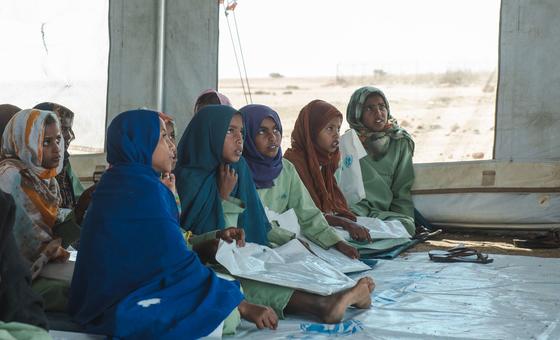
Sudan: As children continue to suffer, school remains a distant hope

After more than two years of civil war, more than 25 million people are now acutely hungry and at least 20 million require health services urgently.

The UN World Food Programme (WFP) also warned that displaced families in some areas have not received any aid for three months, as it announced that for the first time, funding shortfalls have forced it to pull back support in areas where it does not have access.

The scale of needs in Sudan are so big that we have to make tough decisions on who receives assistance and who doesn’t. Those are heartbreaking decisions to make,” said WFP’s Leni Kinzli, in an urgent appeal for more international funding to help all those affected by more than two years of war.

Children are especially vulnerable, humanitarians have warned, with malnutrition “surging”, particularly among youngsters and their mothers.

Education the latest victim

According to the UN reproductive health agency UNFPA, and partners working in education, around 13 million of the 17 million youngsters who have remained in Sudan are now out of school.

This includes seven million who are enrolled but unable to attend classes because of the conflict or displacement – plus six million school-age children who haven’t registered for the school year.

Nonetheless, UNFPA said that as of this month, 45 per cent of schools in Sudan – nearly 9,000 – have now re-opened, citing the Global Education Cluster that groups 60 UN and NGO entities.

And while the situation in Sudan remains so dire, going back to school might not appear to be a priority, but aid agencies insist that without it the impact on young lives can be devastating, given how much additional support can be provided in schools, over and above learning.

In schools helped to reopen by UN-partner Save The Children, for instance, additional support includes meals, safe water, sanitation and counselling training for teachers to help youngsters process their trauma.

Picking up the pieces

From November 2024 to July this year, more than two million people have returned to their former homes across Sudan, to some 1,611 locations.

The bulk of these returnees have reached Aj Jazirah (48 per cent), Khartoum (30 per cent), Sennar (nine per cent), Blue Nile (seven per cent) and White Nile (five per cent). The UN migration agency (IOM)’s Displacement Tracking Matrix notes that only around one per cent went to River Nile and West Darfur.

breakdown of IOM data indicates that around 77 per cent (or 1.5 million) returned from temporary homes inside Sudan, while 23 per cent (around 455,000) came back from abroad.

This is a fraction of the more than 4.2 million refugees who crossed into neighbouring countries since war erupted on 15 April 2023, between the Sudanese Armed Forces (SAF) and the paramilitary Rapid Support Forces (RSF).

Other key IOM findings of Sudanese displacement impacting all 18 states:

  • When war erupted, people were uprooted primarily from Khartoum (31 per cent), South Darfur (21 per cent), and North Darfur (20 per cent).   
  • The highest proportion of internally displaced people were in South Darfur (19 per cent), North Darfur (18 per cent), and Central Darfur (10 per cent).
  • Over half (53 per cent) of those fleeing violence were reportedly children.

Case study: Life slipping away

Among the young victims of the conflict, 18-month-old Aysha Jebrellah has been admitted for treatment for severe acute malnutrition in Port Sudan Paediatric Hospital.

Her mother, Aziza, has been by her daughter’s side as medical teams provide lifesaving nutritional support and address the medical complications that Aysha has suffered, linked to her condition.

Aziza was displaced with her family from Khartoum when conflict erupted more than two years ago, fleeing first to Kassala, then moving to Port Sudan where she lives with relatives.

She described how her daughter had diarrhoea and fever for about two weeks before she was admitted to hospital. By that time she had stopped eating and appeared to be slipping away before their eyes.

“When she refused to even taste anything and kept getting weaker, I was afraid I would lose her,” Aziza says. “Now I have hope that she will recover.”

To support health needs in Sudan, the UN World Health Organization (WHO)’s $135 million appeal is just one-fifth funded. “It’s only a fraction of what is urgently needed,” the agency said.

Source link

Terror threat posed by ISIL ‘remains volatile and complex,’ Security Council hears

While multiple Da’esh leaders have perished in the past few years, “the group has managed to retain its operational capacity”, Vladimir Voronkov, head of the UN Office of Counter-Terrorism (UNOCT) told the Security Council Wednesday.  

Da’esh makes use of regional and domestic affiliates and continues to receive substantial global donations, operating through regional hubs and cross-border financial networks.  

The threat the extremist group poses is notably exacerbated in Africa’s Sahel region, where ISIL affiliates such as Islamic State West Africa Province have emerged as prolific producers of terrorist propaganda, which continues to attract foreign recruits.

 Despite significant national and international efforts to counter Da’esh – which rose to prominence in 2014 after taking over large swathes of Iraq and Syria – the continuing threat posed, underscores the urgency of sustained global cooperation.  

Security gaps

In Afghanistan, ISIL-Khorasan continues to represent one of the most serious threats to Central Asia and beyond, with the group continuing to target civilians, while exploiting discontent with the de facto authorities in the country.  

Meanwhile, Da’esh remains active in Iraq and Iraq – despite the military defeats in Mosul and Raqqa in 2017 – attempting to restore its operational capacity in the Badia region and renewing efforts to destabilise local authorities.

In Syria, where the situation remains fragile since the takeover led by Hay’at Tahrir al-Sham, ISIL continues to exploit security gaps, conduct covert operations and incite sectarian tensions in the country.  

Detention camps

The security, humanitarian and human rights situation in the camps and other facilities in the northeast of Syria remains deeply concerning,” said Mr. Voronkov.  

Camps such as al-Hol are currently hosting tens of thousands of individuals, primarily women and children – many with alleged ties to ISIL – who remain in prolonged detention under unsafe and undignified conditions.

These environments present serious risks of radicalisation to terrorism and are contrary to obligations under international law,” he said.  

Mr. Voronkov called for the “safe, voluntary, and dignified repatriation of all concerned individuals, with a particular focus on children.”  

New technology

“There is a marked increase in the interlinkage of diverse methods and the integration of digital technologies with conventional techniques,” Elisa de Anda Madrazo, President of close UN-partner the Financial Action Task Force, told ambassadors.  

The use of new and emerging technologies and artificial intelligence by Da’esh remains a growing challenge, notably as the group is increasingly employing these tools to raise funds and establish a broader communications network.  

As we stand at the crossroads of technological transformation and geopolitical uncertainty, the threat of terrorism is more diffuse and complex,” said Nathalia Gherman, head of the Counter-Terrorism Committee Executive Directorate (CTED).

Prevention still best cure

Prevention remains our best response to terrorism and violent extremism conducive terrorism,” said Mr. Voronkov.

He emphasised the importance of prioritising long-term, principled responses that tackle the drivers of terrorism and its enabling conditions.

“It is more effective – and cost efficient – to prevent terrorism than to remedy its impact,” he said. 

Source link

Just 1.5 per cent of Gaza’s agricultural land remains accessible and undamaged

A new report from the Food and Agriculture Organization (FAO) and the UN Satellite Centre (UNOSAT) reveals that just 8.6 percent of cropland in Gaza is still accessible, while only 1.5 per cent of cropland is both accessible and undamaged, as of 28 July.

More than 86 per cent of cropland is damaged, while 12.4 per cent is undamaged but out of reach, as fighting between Israeli forces and militants from Hamas and other armed groups continues.

Ongoing starvation

This report comes as Israel’s offensive inside Gaza continues to restrict aid distribution – and starvation-related deaths rise.  

The local Ministry of Health reported five new malnutrition-related deaths in the past 24 hours on Wednesday, bringing the total to almost 200 starvation-related deaths, half of whom are children.

Healthcare collapse

According to the UN aid coordination office (OCHA), hospitals are overstretched with many patients reduced to lying on the floor or in the streets.

This mass suffering is due to the lack of beds, medical supplies and equipment. Yet, emergency medical teams were again denied entry into Gaza on Tuesday.  

The World Health Organization (WHO) also reported that more than 100 health professionals, such as surgeons and other specialized medical staff, have been barred from entering the enclave since March.

Meanwhile, the limited availability of fuel continues to restrict lifesaving operations. The UN has collected around 300,000 litres from the Kerem Shalom crossing in the past two days, but this is far less than what is needed.

Due to the lack of fuel, UN health partners report that more than 100 premature babies are in imminent danger.

Renewed displacement orders

Additionally, the Israeli military on Wednesday renewed two displacement orders spanning five neighbourhoods in Gaza and Khan Younis governorates.  

Shelter materials have not been allowed to enter Gaza since 2 March when Israel withdrew from the ceasefire deal, and the few materials available on the local market are extremely expensive and limited in quantity, making them inaccessible to most families.  

Entry of commercial goods

On Tuesday, Israeli authorities reportedly allowed the entry of a limited number of trucks carrying commercial goods, including rice, sugar and vegetable oil – but the UN is still seeking more clarity on the situation.

Sugar remains one of the most expensive items on the market, with a two-ounce bag costing some $170. Eggs, poultry and meat have completely disappeared from marketplaces, forcing families to rely on pulses and bread to survive.  

At Wednesday’s daily briefing in New York, UN Deputy Spokesperson Farhan Haq stressed that “the worsening market situation underscores the urgent need for the entry of humanitarian aid and commercial goods at scale – and consistently.” 

Source link

While Gaza ceasefire remains elusive, UN readies for Conference around Israel-Palestine two-State solution

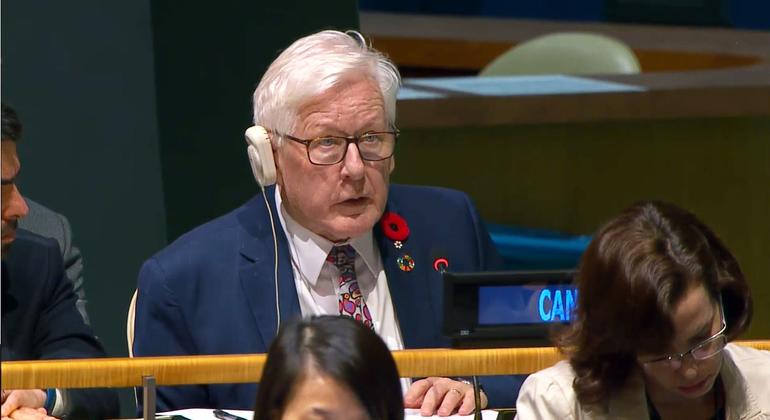
“It’s not a peace conference,” Bob Rae, Canada’s Ambassador to the UN, told UN News ahead of the event, mandated by the General Assembly, in which his country will play a leading role.

“It’s a way of trying to maintain the debate and get beyond the sticking points to the solutions. We hope there’ll be some listening, and we hope there’ll be some learning on the basis of what we hear.”

Mr. Rae’s caution reflects the high levels of uncertainty and concern surrounding the two-State solution. Neither one of the two parties to the conflict will be taking part, and the United States, a strong backer of Israel, is not expected to participate.

In an address to the Security Council in April, UN Secretary-General António Guterres warned that the process is “at risk of vanishing altogether.” Political will to achieve the goal, he said, “feels more distant than ever.”

However, in an exchange with the press on 5 June Mr. Guterres also said, “And for those that doubt about the two-state solution, I ask: What is the alternative? Is it a one-State solution in which either the Palestinians are expelled, or the Palestinians will be forced to live in their land without rights?” 

He reminded that it was “the duty of the international community to keep the two-state solution alive and then to materialize the conditions to make it happen.”

The Canadian Ambassador said that, whilst the organisers of the event continue to urge Israel and Palestine to engage with the conference, they understand the difficult situation they both find themselves in. “Many citizens [of Israel] are still being held as hostages by Hamas. They’ve suffered this tremendous attack, the worst attack on the Jewish population anywhere in the world since 1940. And now we’re having to deal with the outcome of that which has been the war in Gaza, which is hugely traumatic for the Palestinians and for many members of the Arab community.”

Making a difference on the ground

The conference, held in the Trusteeship Council at UN Headquarters in New York, was convened as a result of the adoption of a General Assembly Resolution (Resolution ES-10/22) in 2024. In a concept note released ahead of the event, the two nations declared that international consensus on the two-State solution “still enjoys near-universal support,” and that it is “clearly the only way to satisfy the legitimate aspirations, in accordance with international law, of both Israelis and Palestinians…and create the conditions for regional peace and stability.”

In a swipe at the failure of previous efforts to bring about peace, the statement declares that “the aim of this international conference would not be to ‘revive’ or to ‘relaunch’ another endless process, but to implement, once and for all, the two-State solution.”

In a preparatory meeting for the conference held at the UN in May, Anne-Claire Legendre, Middle East and North Africa advisor to French President Emmanuel Macron, said that “ the prospects of a Palestinian State must be maintained. Irreversible steps and concrete measures for the implementation thereof are necessary,” and called for a lasting ceasefire, an immediate influx of humanitarian aid and the release of hostages.

Her counterpart, Manal bint Hassan Radwan, head of the Saudi Arabian negotiating team, added that  efforts to end fighting and secure release of hostages and detainees must be “anchored in a credible and irreversible political plan that addresses the root cause of the conflict and offers a real path to peace, dignity and mutual security.”

“There has to be the basis for a broader political solution. It’s not just about saying there’s going to be a ceasefire and that will solve the problem. How do we reconstruct Gaza? How do we change the governance of Gaza? How do we approach the West Bank? How do we deal with issues which have long been the source of a lack of agreement between the parties? Let’s not forget that there has been one really successful negotiation, which was based on the 1993 Oslo Accords, and since that time we have not had a lot of substantive agreements. We’ve got to try to find a way to create a framework for actual discussion.”

Source link