Guterres strongly condemns terror attack in Jerusalem

UN Secretary-General António Guterres strongly condemned the terror attack, his Spokesperson said in a statement.

“He conveys his heartfelt condolences to the families of the victims and wishes a full and speedy recovery to those who were wounded,” it said.

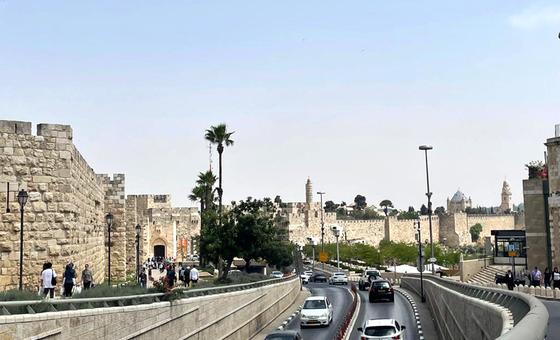
The incident took place at a busy intersection in Ramot, located in the northern outskirts of Jerusalem, on Monday morning.

Shot waiting for the bus

The gunmen reportedly opened fire on passengers waiting to board buses. Video footage from the scene showed that several buses had been hit extensively during the assault.

The attackers were identified by authorities as two Palestinians from the occupied West Bank. They were killed by a soldier and a civilian who were at the scene.

A Spanish national was among the victims, according to the country’s foreign ministry.

The shooting took place against the backdrop of the ongoing war in Gaza which has killed more than 63,000 Palestinians and injured more than 161,000 others, according to the local health authorities.


Source link

Terror threat posed by ISIL ‘remains volatile and complex,’ Security Council hears

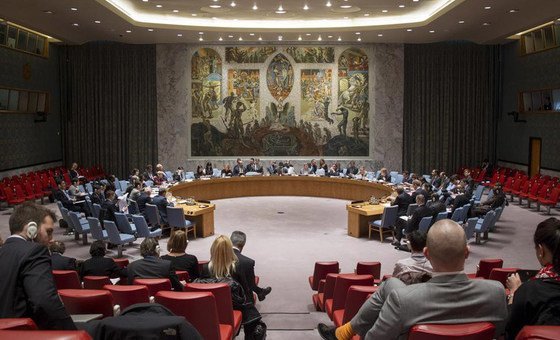
While multiple Da’esh leaders have perished in the past few years, “the group has managed to retain its operational capacity”, Vladimir Voronkov, head of the UN Office of Counter-Terrorism (UNOCT) told the Security Council Wednesday.  

Da’esh makes use of regional and domestic affiliates and continues to receive substantial global donations, operating through regional hubs and cross-border financial networks.  

The threat the extremist group poses is notably exacerbated in Africa’s Sahel region, where ISIL affiliates such as Islamic State West Africa Province have emerged as prolific producers of terrorist propaganda, which continues to attract foreign recruits.

 Despite significant national and international efforts to counter Da’esh – which rose to prominence in 2014 after taking over large swathes of Iraq and Syria – the continuing threat posed, underscores the urgency of sustained global cooperation.  

Security gaps

In Afghanistan, ISIL-Khorasan continues to represent one of the most serious threats to Central Asia and beyond, with the group continuing to target civilians, while exploiting discontent with the de facto authorities in the country.  

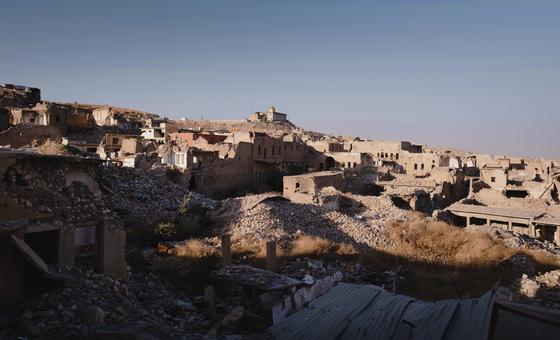
Meanwhile, Da’esh remains active in Iraq and Iraq – despite the military defeats in Mosul and Raqqa in 2017 – attempting to restore its operational capacity in the Badia region and renewing efforts to destabilise local authorities.

In Syria, where the situation remains fragile since the takeover led by Hay’at Tahrir al-Sham, ISIL continues to exploit security gaps, conduct covert operations and incite sectarian tensions in the country.  

Detention camps

The security, humanitarian and human rights situation in the camps and other facilities in the northeast of Syria remains deeply concerning,” said Mr. Voronkov.  

Camps such as al-Hol are currently hosting tens of thousands of individuals, primarily women and children – many with alleged ties to ISIL – who remain in prolonged detention under unsafe and undignified conditions.

These environments present serious risks of radicalisation to terrorism and are contrary to obligations under international law,” he said.  

Mr. Voronkov called for the “safe, voluntary, and dignified repatriation of all concerned individuals, with a particular focus on children.”  

New technology

“There is a marked increase in the interlinkage of diverse methods and the integration of digital technologies with conventional techniques,” Elisa de Anda Madrazo, President of close UN-partner the Financial Action Task Force, told ambassadors.  

The use of new and emerging technologies and artificial intelligence by Da’esh remains a growing challenge, notably as the group is increasingly employing these tools to raise funds and establish a broader communications network.  

As we stand at the crossroads of technological transformation and geopolitical uncertainty, the threat of terrorism is more diffuse and complex,” said Nathalia Gherman, head of the Counter-Terrorism Committee Executive Directorate (CTED).

Prevention still best cure

Prevention remains our best response to terrorism and violent extremism conducive terrorism,” said Mr. Voronkov.

He emphasised the importance of prioritising long-term, principled responses that tackle the drivers of terrorism and its enabling conditions.

“It is more effective – and cost efficient – to prevent terrorism than to remedy its impact,” he said. 

Source link

Terror and chaos for Gaza’s people now entering the ‘death phase’

In an alert, the UN agency for Palestine refugees, UNRWA, relayed desperate testimonies from its colleagues who are also struggling to survive in the war-torn enclave.

“We’re in the death phase,” one UNRWA worker said. “Everything around people at the moment is death, whether it’s bombs or strikes, children wasting away in front of their eyes from malnourishment, from dehydration, and dying.”

Doctors and nurses who continue to work in the UN agency’s clinics and medical centres “are watching children disappear and die in front of their eyes, and there’s absolutely nothing that they can do about it,” the worker continued.  

Civilians ‘faced sniper and tank-fire’

The development comes after desperate Gazans seeking aid came under fire at the weekend “from Israeli tanks, snipers and other gunfire”, according to the UN World Food Programme (WFP).

In a detailed statement after the incident on Sunday 20 July, it explained that a 25-truck lorry convoy crossed the Zikim border point in northern Gaza “destined for starving communities”. 

Shortly after passing the final checkpoint after the Zikim crossing point, the convoy encountered large crowds of civilians waiting to access food supplies. This was when the shooting began, leaving “countless” Gazans dead, WFP said, echoing reports by the health authorities.

Condemning the incident, WFP noted that the victims “were simply trying to access food to feed themselves and their families on the brink of starvation”.

The UN agency said furthermore that the violence had happened “despite assurances from Israeli authorities that humanitarian operational conditions would improve; including that armed forces will not be present nor engage at any stage along humanitarian convoy routes.”

Without such fundamental guarantees, it will not be possible to continue providing life-saving support across the Gaza Strip, WPF said, its reaction coming a day after a reported 36 people seeking aid were reportedly killed close to a Gaza Humanitarian Foundation hub run by the Israeli and US in the south of the Strip. 

Deir Al-Balah evacuation shock

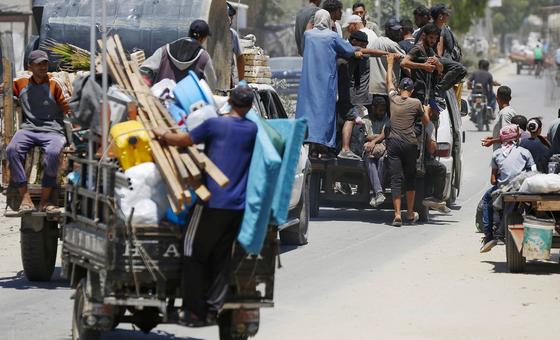
In central Gaza’s Deir Al-Balah, meanwhile, 50,000 to 80,000 people have been impacted by a mass displacement order issued by the Israeli military – the first since war erupted on 7 October 2023.

“The new order cuts through Deir Al-Balah all the way to the Mediterranean Sea, further splintering the Strip,” OCHA said. “It will limit the ability of the UN and our partners to move safely and effectively within Gaza, choking humanitarian access when it is needed most.”

UN staff remain in Deir Al-Balah across “dozens of premises” whose coordinates have been shared with the warring parties. “These locations – as with all civilian sites – must be protected, regardless of displacement orders,” OCHA insisted, as  Israeli tanks reportedly moved into southern and eastern areas of the city.

According to reports, this may be where some of the remaining hostages seized in Hamas-led terror attacks on 7 October 2023 in Israel may still be held.

Gaza cut in two

The latest evacuation order means that almost 88 per cent of Gaza is impacted by displacement orders or falls within Israeli-militarized zones. Some 2.1 million civilians who have been uprooted multiple times are now squeezed into the little remaining space, where essential services have collapsed.

“There’s nowhere for [Gazans] to escape. They are trapped,” said UNRWA Senior Emergency Officer Louise Wateridge. “They cannot leave the Gaza Strip. They’re trying to keep their children alive. They’re trying to keep themselves alive.”

In comments to UN News, the veteran humanitarian explained that no food is available and only very limited water, explaining why so many desperate Gazans risk their lives to fetch aid from the few distribution centres and arrival points still operational.

“Children are malnourished, they’re dehydrated, they are dying in front of their [parents’] eyes,” Ms. Wateridge continued. “The bombs and the strikes are continuing; there’s no way to run, there’s nowhere to hide. There’s no way to escape there.” 

Source link

Gazans ‘in terror’ after another night of deadly strikes and siege

Updating journalists in Geneva, Dr. Margaret Harris described another night of terror in the war-torn enclave.

She said that some of those injured in the attacks had sought help from the Indonesian hospital in northern Gaza, even though it was now “just a shell” after 19 months of war.  

“We’ve done our best to bring it back together and they are doing their best to treat everyone, but [medical teams] lack everything needed,” she insisted.

Rejecting accusations that relief supplies have been handed over to Hamas, the WHO spokesperson said that “in the health sector, we’ve not seen that. All we see is a desperate need at all times.”

Echoing that message, the UN aid coordination office, OCHA, explained that a stringent system of checks and reports to donors meant that all relief supplies were closely tracked in real time, making diversion highly unlikely.  

Even if it were happening, “it’s not at a scale that justifies closing down an entire life-saving aid operation,” OCHA spokesperson Jens Laerke said.

If you had been in a coma for the last three years and you woke up and saw this for the first time, anyone with common sense would say this is insane.

The development comes more than 10 weeks since the Israeli authorities stopped all food, fuel, medicines and more from reaching Gaza.  

To date, their proposal for an alternative aid distribution platform bypassing existing UN agencies – widely criticized by the humanitarian community – has not been implemented.  

The result has been rising malnutrition – unknown in Gaza before the war – and looming famine, while thousands of truckloads of essential supplies have had to be stored in Jordan and Egypt, according to UNRWA, the UN agency for Palestine refugees and the largest aid operation in Gaza.

In its latest update, OCHA said that the UN and its partners have 9,000 truckloads of vital supplies ready to move into Gaza. More than half contain food assistance which could provide months of food for the enclave’s 2.1 million people.

An inventory of the relief supplies “waiting just outside the borders to get in” illustrates their humanitarian purpose, Mr. Laerke said.

Pasta and stationary: Weapons of war?

“It includes educational supplies, children’s bags, shoes, size three to four years old and up to 10 years old; stationery and toys, rice, wheat flour and beans, eggs, pasta, various sweets, tents, water tanks, cold storage boxes, breastfeeding kits, breastmilk substitutes, energy biscuits, shampoo and hand soap, floor cleaner. I ask you, how much war can you wage with this?

Mr. Laerke said that UN officials have held 14 meetings with the Israeli authorities about their proposed aid scheme, which if implemented would restrict aid “to only part of Gaza” and exclude the most vulnerable.

It makes starvation a bargaining chip,” he maintained.

More than 53,000 people have been killed in Gaza since war erupted on 7 October 2023 in response to Hamas-led terror attacks on Israel, according to the health authorities.  

WHO said only 255 patients needing specialist care outside the Strip have been evacuated since 18 March leaving more than 10,000 patients – including approximately 4,500 children – who also need urgent medical attention outside Gaza.

In response to this week’s attack on the European General Hospital in Khan Younis, WHO’s Dr. Harris noted that it had been used as a meeting point for an evacuation. “That first bombing, as you probably know, destroyed two of the buses that we’d assembled to take children,” she added.

On Tuesday, the Security Council heard the UN’s top aid official Tom Fletcher call for immediate international pressure to stop Gaza’s “21st century atrocity” – a message amplified by OCHA’s Mr. Laerke:

The situation as it has developed now is so grotesquely abnormal that some popular pressure on leaders around the world needs to happen,” he said.

“We know it is happening, I’m not saying that people are silent, because they are not. But it doesn’t appear that their leaders are listening to them.”


UN Security Council condemns Jammu and Kashmir terror attack

In a press statement issued on Friday, Council members expressed their deepest sympathy and condolences to the families of the victims, as well as to the Governments of India and Nepal.

They also extended wishes for a speedy and full recovery to those injured in Tuesday’s attack in which a group of gunmen fired on tourists visiting the Himalayan region, which both India and Pakistan claim sovereignty over.

“Terrorism in all its forms and manifestations constitutes one of the most serious threats to international peace and security,” the ambassadors reaffirmed.

They underscored that such acts are “criminal and unjustifiable, regardless of their motivation, wherever, whenever and by whomsoever committed.”

They stressed that the perpetrators, organisers, financiers and sponsors must be held accountable and brought to justice.

They urged all States, in accordance with their obligations under international law and relevant Security Council resolutions, to cooperate actively with all relevant authorities.

Ambassadors reaffirmed the need for States to “combat by all means” threats to international peace and security resulting from acts of terrorism, in accordance with the UN Charter and other obligations under international law.

Following with deep concern

Meanwhile, the UN continues to follow the situation in the region “with very deep concern”, said UN Spokesperson Stéphane Dujarric.

“We again urge both the Government of India and the Government of Pakistan to exercise maximum restraint to ensure the situation does not deteriorate further,” he said during the regular news briefing in New York on Friday.

India and Pakistan both administer parts of Kashmir but claim the territory in its entirety.

Source link